Gold earned its reputation over thousands of years. So when a piece lands in your hands, whether it’s a family heirloom or a necklace you bought online, you naturally want to know how to tell if gold jewelry is real. Here are six beginner-friendly tests to help you find out.
First, What “Real Gold” Really Means
Before testing, clear up the mix-up that catches almost everyone: “real gold” and “pure gold” aren’t the same thing. Pure gold (24 karat, 99.9%) is too soft for daily wear — it dents and scratches with ordinary use. So nearly all gold jewelry is an alloy, real gold blended with stronger metals like copper, silver, or zinc. A 14K ring is real gold. So is an 18K pendant. They’re just not pure, and for everyday wear, you usually wouldn’t want them to be.
The karat scale, decoded
Karat (K) counts how many parts out of 24 are pure gold. Here’s the lineup you’ll run into:
• 24K (999) — 99.9% gold. Deep yellow, very soft, uncommon in daily-wear jewelry.
• 18K (750) — 75% gold. Rich and warm; a fine-jewelry favorite.
• 14K (585) — 58.3% gold. The US standard for engagement and wedding rings — durable, affordable, and the sweet spot for everyday wear.
• 10K (417) — 41.7% gold. The legal minimum to be sold as “gold” in the US, and the toughest of the bunch.
That three-digit number — 585, 750, 417 — is the international millesimal mark (parts per thousand). American pieces usually stamp the karat letters; European pieces lean toward the digits. Both are legitimate hallmarks.
Solid gold vs. gold-filled vs. gold-plated
Three labels get tangled up, and sorting them out saves a lot of confusion:
• Solid gold — a real gold alloy all the way through, marked 10K–24K. This is what the tests below check for.
• Gold-filled — a thick layer of real gold bonded to a base metal (often marked “GF” or “1/20 14K”). Sturdier than plating, but not solid.
• Gold-plated — a thin film of real gold over a base metal (marked “GP,” “GEP,” or “HGE”). It is real gold on the surface — just microns thin.
A plated piece isn’t a rip-off if it’s labeled honestly. It’s built differently, though, and won’t wear like solid gold over the years.
How to Tell if Gold Is Real: 6 Tests to Try at Home
Now that you know what real gold actually is, it’s time to put your jewelry to the test. You don’t need to try every method below, and you certainly don’t need any expensive equipment. In most cases, combining two or three different tests will give you a much clearer answer than relying on just one. If the results all point in the same direction, you can be fairly confident. If they don’t, that’s a good sign it’s time to let a jeweler take a closer look.
1. The hallmark
The first place to look is the hallmark—a tiny stamp that tells you the gold’s purity. You’ll usually find it inside a ring band, near a chain clasp, on an earring post, or on the back of a pendant bail. Since these marks are often incredibly small, using your phone’s camera with the zoom turned up and a flashlight can make them much easier to read. If you spot markings like 14K, 18K, 585, or 750, you’re off to a good start.
That said, don’t stop there. A hallmark is helpful, but it isn’t a guarantee.Think of the hallmark as your first clue, not your final answer. A clean, evenly stamped mark is reassuring, while one that’s blurry, crooked, or unusually shallow is worth taking a closer look at.
2. The magnet test
The magnet test is one of the quickest ways to spot an obvious fake. Grab a strong neodymium (rare-earth) magnet—a regular fridge magnet simply isn’t powerful enough. Hold it against the main part of the jewelry rather than the clasp, since some clasps contain small steel springs. If the piece sticks firmly, it’s very unlikely to be solid gold.
If there’s no reaction, that’s a good sign—but don’t stop there. Brass, copper, and several other metals used in imitation jewelry aren’t magnetic either, so they can pass this test just as easily. Think of the magnet test as a quick filter. It can help rule out obvious fakes, but it can’t confirm that your gold is genuine.
3. The ceramic scratch
This is one of the oldest at-home gold tests, and it’s surprisingly simple. Gently rub your jewelry across an unglazed ceramic surface, such as the unglazed bottom of a coffee mug or ceramic tile. If it leaves a gold-colored streak, there’s a good chance real gold is present on the surface. A black or dark gray streak usually points to brass, copper, pyrite, or another base metal instead.
Just keep one thing in mind: this test doesn’t tell you whether the piece is solid gold or gold plated, because both can leave a gold-colored streak. It can also leave a small scratch, so try it on a hidden area and skip this test altogether if the piece is valuable, antique, or means a lot to you.
4. The vinegar drop
If you’re looking for a quick test that won’t scratch your jewelry, white vinegar is another option. Place a small drop on a hidden area and let it sit for a minute or two before wiping it away. If the surface stays the same, that’s a positive sign. If you notice discoloration or the finish starts to dull, the piece may be made from another metal or have worn gold plating.
Like most DIY tests, this one has its limits. Vinegar only reacts with the surface, so it can’t tell you whether the jewelry is solid gold or simply coated with a thick layer of gold. Be sure to rinse the piece with water afterward, and remember that this test is best used alongside one or two others—not as your final answer.
5. The water-density test
If you’ve got time for one serious test, make it this one. Gold is one of the densest metals on earth, and cheap fakes can’t match it. To fool it, a counterfeiter would need tungsten (19.25 g/cm³ — almost identical to gold’s 19.3), a concern for bullion bars more than everyday jewelry.
You’ll need a kitchen scale accurate to 0.01 g, a cup of water, and some thread:
1. Weigh the piece dry — that’s your **dry weight**.
2. Note the exact water level in the cup.
3. Suspend the piece fully underwater (tied with thread, not touching the sides) and note the new level. The difference is the volume it pushed aside.
4. Divide dry weight by that volume to get density in g/cm³.
Where genuine gold lands: 24K ≈ 19.3, 18K ≈ 15.2–15.9, 14K ≈ 12.9–14.6, 10K ≈ 11.3–11.8 g/cm³. Brass, a common fake, sits around 8.4–8.7. A reading in the expected range for the stamped karat is a strong sign of genuine gold; a reading around 8–9 on a “14K” piece is a red flag.
What it doesn’t tell you: gemstones, hollow sections, solder, and trapped air all throw off the math. It works best on plain bands, solid bangles, and coins.
6. The skin and wear check
This one takes patience but costs nothing. Real gold — especially 14K and above — barely reacts with your skin. Wear the piece against bare skin for a few hours, then look underneath. A green mark usually means copper oxidizing against your sweat, which points to a plated piece worn through to a copper base. No mark is consistent with real gold.
Then check where the metal rubs most — the underside of a ring band, the inside of a bracelet, the links near a clasp. A different-colored metal showing through beneath the gold means the piece is plated, not solid. One caveat: some 10K alloys leave a faint mark on more acidic skin, and that doesn’t make the piece fake. Solid gold also develops a soft, even patina over the years; uneven, patchy wear is the real warning sign.
When to Hand It to a Jeweler
If a piece has real value and the home tests leave you uncertain, a professional settles it in minutes. Two methods remove all doubt:
• Acid test. The jeweler rubs the piece on a testing stone to leave a tiny streak, then applies a calibrated acid. Genuine gold resists; the color reaction reveals the karat. It’s the only everyday method that names the exact karat — which is why pawn shops and gold buyers use it daily.
• XRF analysis. A handheld X-ray fluorescence scanner reads the exact metal composition at the surface in seconds, with zero damage. It’s the gold standard for non-destructive testing; most jewelers and bullion dealers run one for a small fee.
Quick-Reference: How the Tests Stack Up
Run two or three together. Agreement builds confidence; conflict means call a jeweler.
| Test | Real gold usually… | Fake or plated tends to… | This test alone can’t… |
| Hallmark | Carry a clean 14K / 585 / 750 mark | Omit it, blur it, or stamp a fake | Prove the stamp is genuine (counterfeits exist) |
| Magnet | Show no attraction to the main body | Snap firmly to a strong magnet | Catch non-magnetic fakes like brass or copper |
| Ceramic streak | Leave a gold-colored streak | Leave a dark gray or black streak | Tell solid gold from thick gold plating |
| Vinegar | Stay unchanged on the surface | Discolor, dull, or bubble | Read past the surface or reveal the karat |
| Density | Land in the expected range for its karat | Fall well below (~8–9 for brass/copper) | Catch a tungsten-core fake (its density matches) |
| Skin & wear | Leave no mark; wear evenly | Stain green; reveal a different metal | Confirm 10K, which can stain some skin |
How to Buy Gold You Can Trust
Testing matters, but the cleanest win is sidestepping fake gold before you spend.
• Buy from sellers who name the metal. A listing that says “solid 14k gold” and stands behind it beats one vaguely labeled “gold tone” or “gold color.” Vague wording is usually telling you something.
• Remember that 14K and 18K are real gold. Some shoppers get suspicious when a piece isn’t 24K. Don’t. 14K and 18K are the standard alloys for fine jewelry, chosen because they’re durable enough for daily wear. A solid 14K ring is real gold, full stop.
• Get the karat in writing. Reputable jewelers state the karat clearly and accept returns if a piece tests otherwise. A seller who won’t put the metal in writing has already answered your question.
• Trust your gut on price. Gold has a floor tied to its weight. A chunky “solid gold” chain priced like a sandwich almost certainly isn’t.
Frequently Asked Questions
Is 14K real gold?
Yes. “14K” means the piece is 58.3% pure gold, blended with harder metals for strength — and it’s the most common standard for engagement and wedding rings in the US. It’s real gold, just not pure gold.
What’s the most reliable test I can do at home?
The water-density test, because gold’s density is hard and expensive to fake.
Does real gold stick to a magnet?
No. Gold is non-magnetic, so a strong magnet clinging to the main body means it isn’t solid gold.
Does real gold tarnish?
Pure 24K gold doesn’t. Lower-karat alloys like 10K and 14K can develop a slight discoloration, because the copper or silver in the alloy reacts to air and moisture. It’s normal, polishes off, and isn’t a sign of a fake.
Will real gold turn my skin green?
Rarely. Solid 14K and above almost never discolor skin. A green mark usually means a plated piece has worn through to a copper base.
The Bottom Line
Telling real gold from fake comes down to stacking a few quick checks — hallmark, magnet, ceramic streak, density — and reading them together instead of trusting any single one. Once karat clicks (and 14K and 18K are very much real gold), the piece in your hand stops being a mystery.
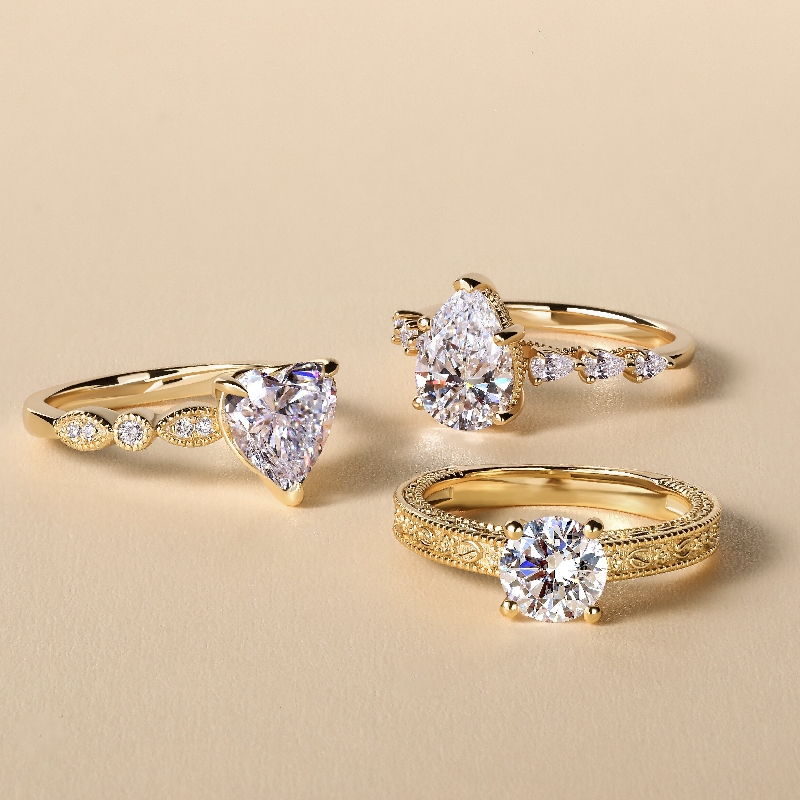
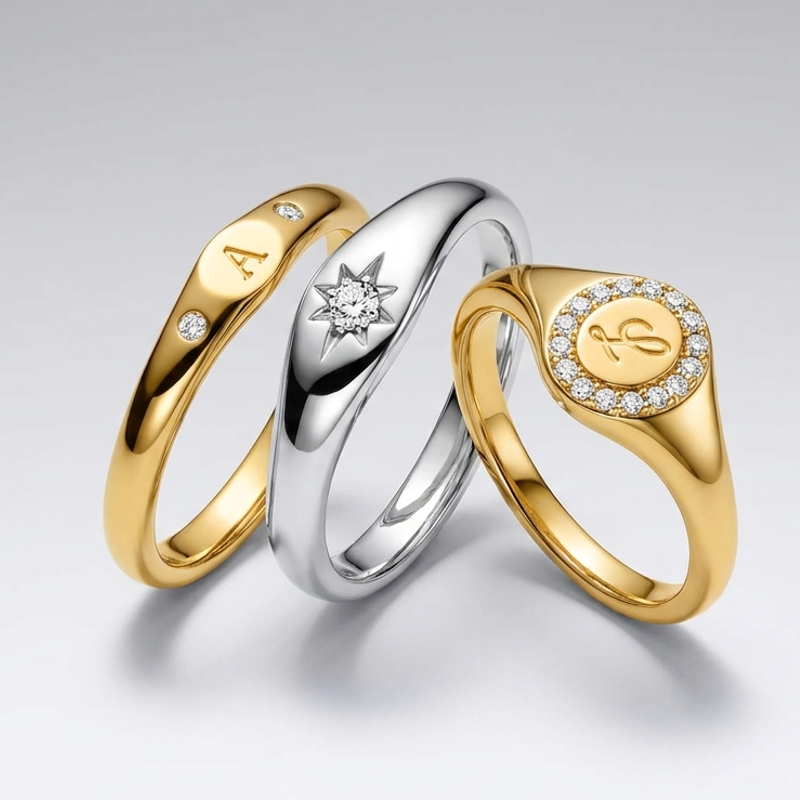
The easiest way to avoid fake gold is to buy from a jeweler that’s transparent about the materials they use. At She Said Yes, every engagement ring and wedding band is crafted in solid 14K or 18K recycled gold and clearly marked with its gold purity, giving you confidence from the moment you open the box.