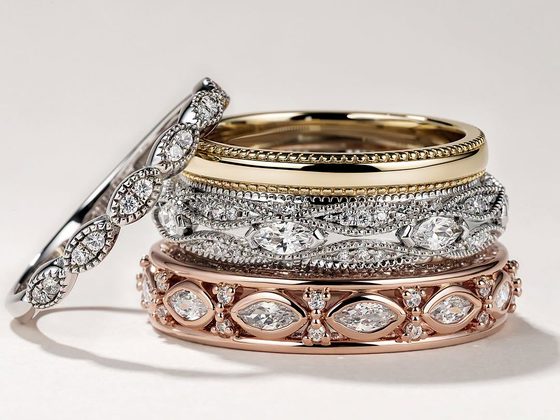
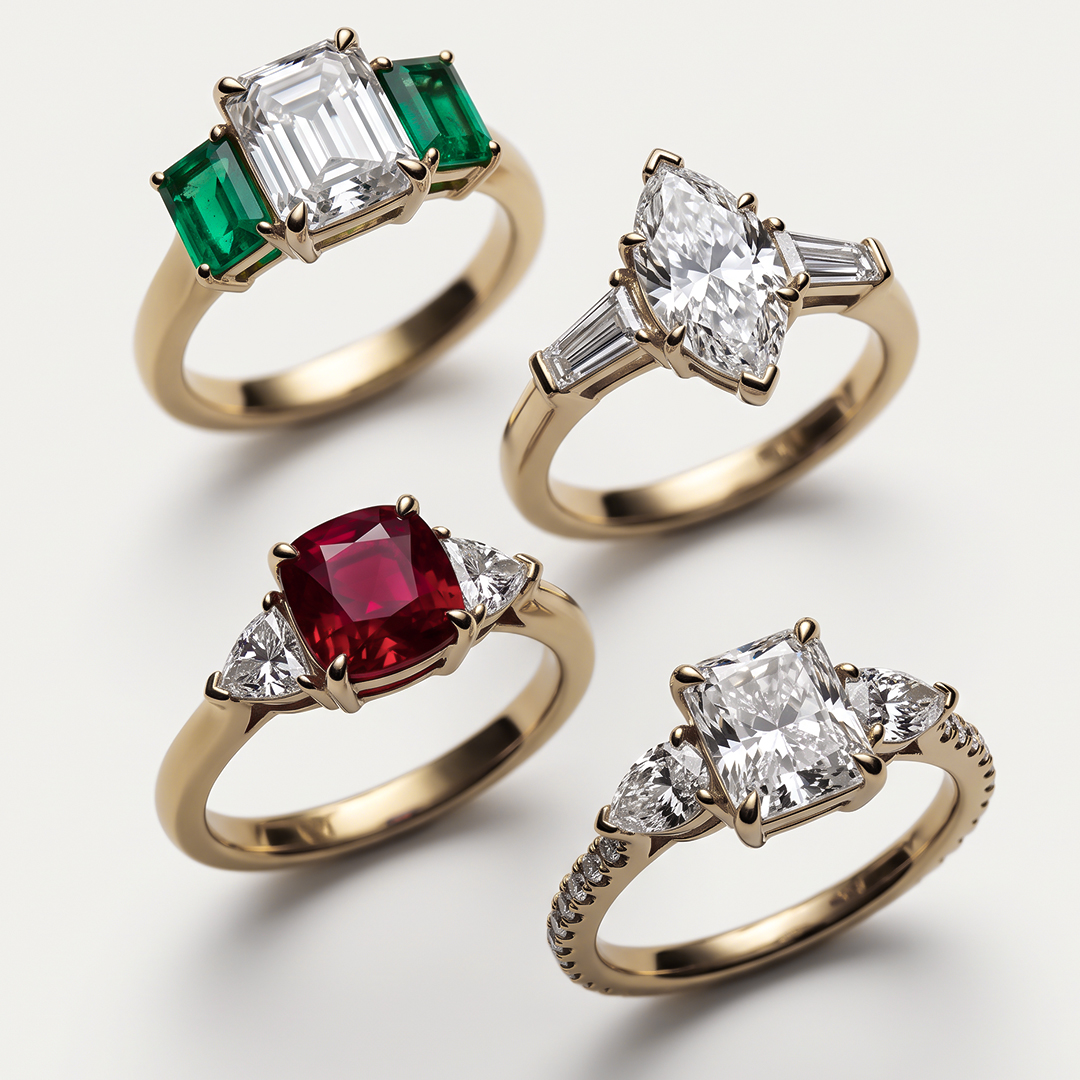
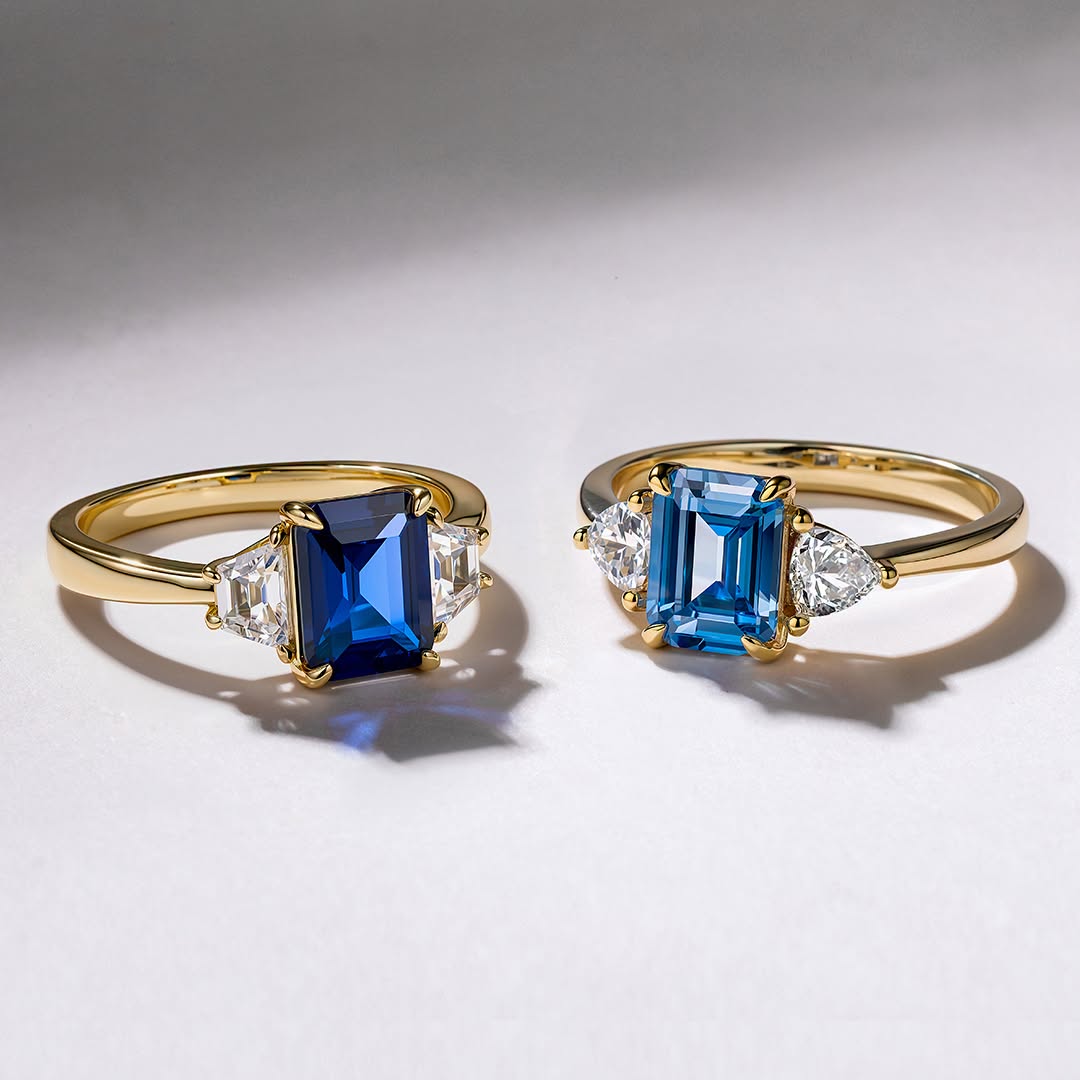
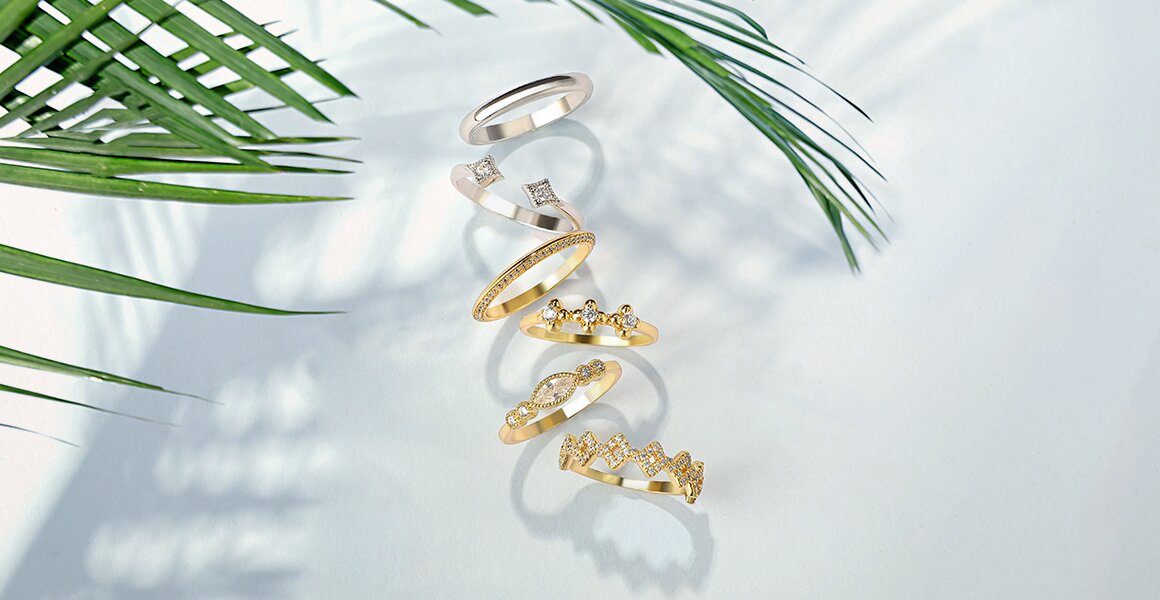
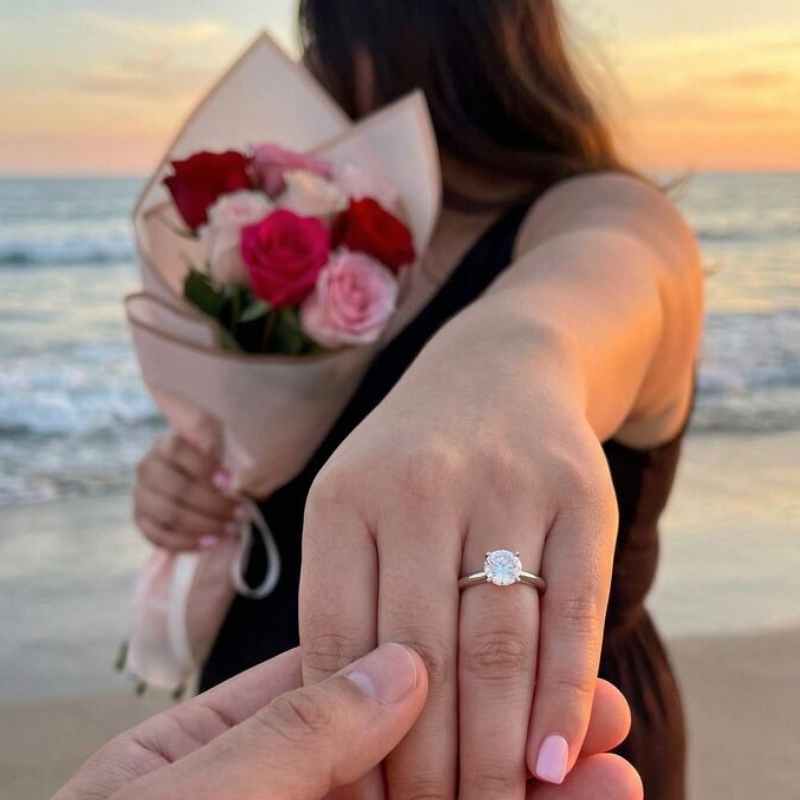
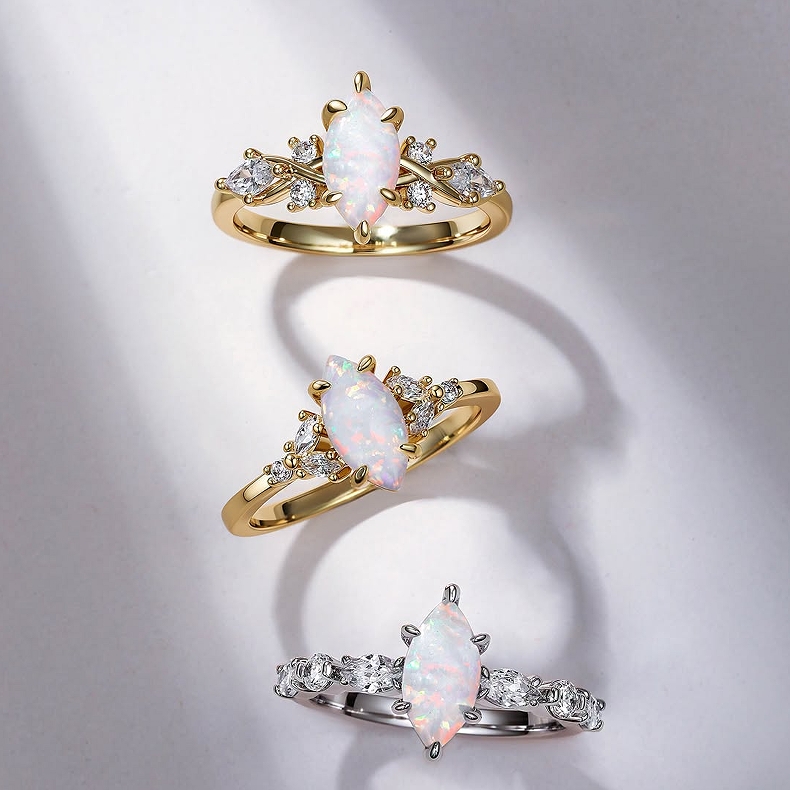
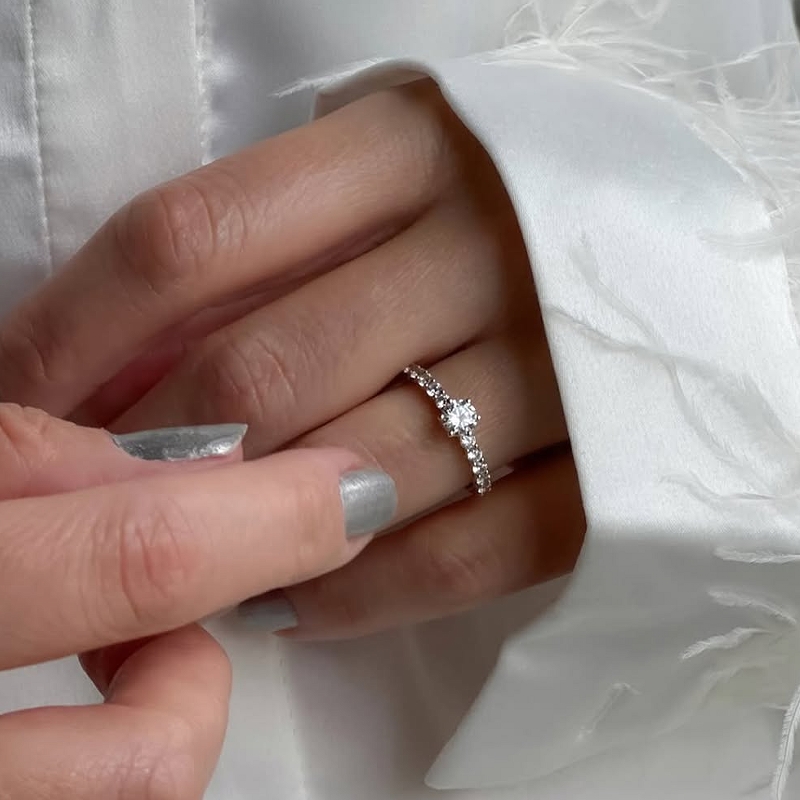
Half eternity rings are a popular choice for wedding bands and anniversary gifts, with stones across the front and plain metal at the back. A half eternity band is also commonly called a semi-eternity band or half-infinity ring. They can look delicate on their own or add sparkle beside an engagement ring, but the details make a difference. How far the stones extend, how high the setting sits and how the band fits all affect everyday wear. Here’s what to consider when choosing one.
Differences Between Half Eternity and Full Eternity Rings
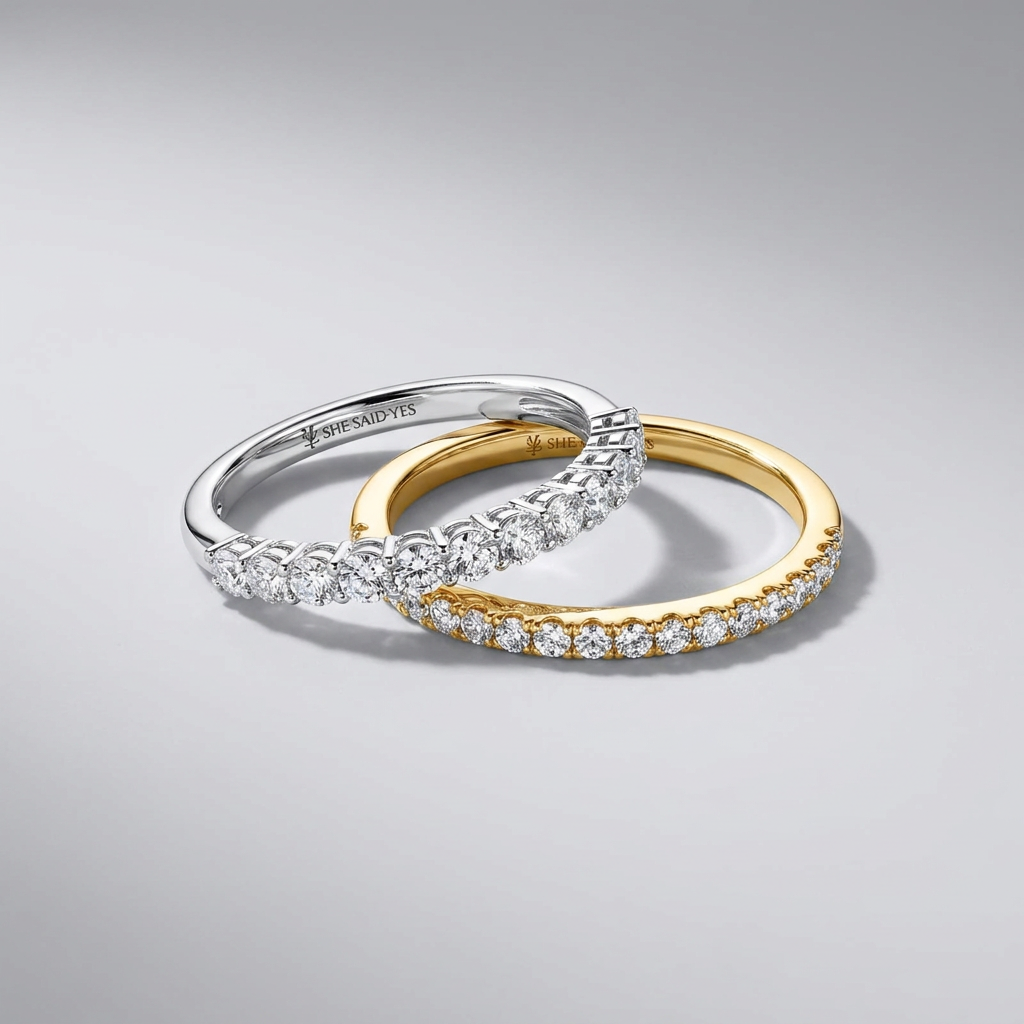
First, eternity rings come in two main styles: full and half eternity. As the names suggest, both feature a row of gemstones, but they differ in how far the stones extend around the band. That difference affects how the ring looks, feels and fits.
A half eternity ring keeps the diamonds across the front, where they’re most visible when your hand rests naturally, and leaves plain metal underneath that may allow for resizing, depending on the design. A full eternity ring has diamonds all the way around, so the sparkle stays visible even when the band turns on your finger. The table below compares how the two styles differ in appearance, comfort, resizing and cost.
| Feature | Half Eternity Ring | Full Eternity Ring |
|---|---|---|
| Stone coverage | Across the upper portion | Around the entire band |
| Appearance | Stones visible mainly from the front | Stones visible from every angle |
| Comfort | Plain metal underneath | Settings may touch adjacent fingers |
| Resizing | Sometimes possible, depending on the design | Usually difficult or impossible |
| Price | Often lower for comparable stones and materials | Usually higher because more stones are used |
| Everyday wear | Practical for many daily activities | Requires more attention to exposed settings |
Half Eternity Rings Offer Comfort for Daily Wear
Half eternity rings can be comfortable for daily wear, especially when the underside is smooth and the stones sit relatively low against the band.
Still, comfort depends on more than whether the ring is half or full eternity. Three details are worth checking.
1. The Height and Style of the Setting
A low-profile setting keeps the stones closer to the finger. This can make the ring easier to wear with other jewelry and may reduce how often it catches on clothing.
Prong settings expose more of each diamond, but raised or prominent prongs can sometimes snag delicate fabrics. Channel and bezel settings surround more of the stones with metal, which may provide smoother edges.
Look at the ring from the side, not just from above. The setting height can make a noticeable difference in how it feels.
2. The Band’s Width and Thickness
A narrow band takes up less space on your finger, which can be useful if you plan to wear several rings together. However, very thin bands may be more vulnerable to bending or deformation, particularly when worn during activities that put pressure on the hands.
A wider band may feel more substantial, but it can also fit more tightly than a narrow ring in the same size.
Pay attention to the band’s thickness as well as its width. Two rings with the same visible width can have different profiles and feel quite different when worn.
3. How the Ring Fits
A properly fitted half eternity ring should slide over your knuckle without excessive force and sit securely without feeling tight.
If the ring is too loose, it may rotate and move the diamonds away from the top of your finger. A ring that’s too tight can become uncomfortable when your fingers swell during warmer weather or throughout the day.
Try to measure your finger when your hands are at a comfortable, normal temperature rather than immediately after exposure to heat or cold.
How Thin Is Too Thin for a Half Eternity Ring?
Thin diamond bands are popular because they add sparkle without taking up much space. They’re also easy to combine with plain gold bands, engagement rings, and other jewelry.
However, there’s no single minimum width that’s right for everyone. The ring’s metal, thickness, setting, stone size, and construction all affect its strength.
Here’s how different widths can change the look of a half eternity ring:
| Band Width | Appearance | What to Consider |
|---|---|---|
| Around 1.4–1.5mm | Very slim and delicate | Check construction, durability, and suitability for daily wear |
| Around 1.8–2mm | Slim but slightly more substantial | Often works well alongside engagement rings |
| Around 2.5–3mm | More noticeable on the finger | Consider the combined width when stacking |
| 3.5mm and wider | Bolder appearance | Check comfort and how the ring fits beside other bands |
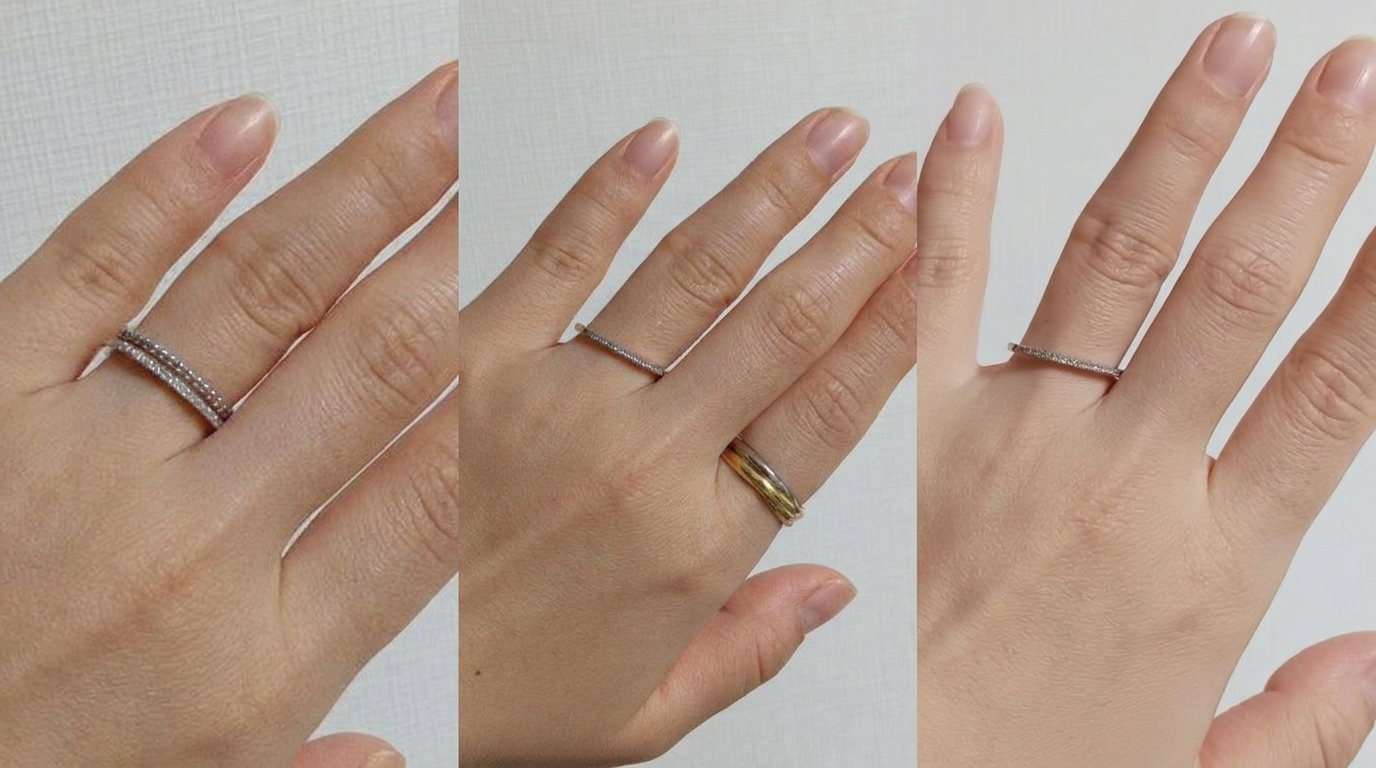
One of our customers shared her experience on her Ameblo blog after winning our “Vision Of Love” ring in a She Said Yes YouTube giveaway. Her ring was a 1.4mm band in 10K white gold with 23 lab-grown diamonds. Although slim, it had more presence than she expected, which she attributed to its fairly consistent width around the band. She wore it alone, stacked it with a beaded ring and liked how it balanced a wider ring on the same hand. She also noted that snagging hadn’t been an issue while wearing it.
How to Wear a Half Eternity Ring
Wearing it alone
For a subtle look, choose a narrow band with small, closely set diamonds. Larger stones or a wider band give the ring more presence if you want it to stand out on its own. A straight design is easy to wear independently, while a curved band creates a more distinctive outline.
Try bringing your fingers together to check whether the settings rub against neighboring fingers. Also notice where the diamonds end: if the band turns slightly, some plain metal may show. Choose a fit that feels secure without being tight.
Pairing it with an engagement ring
A fine half eternity band adds sparkle without drawing much attention away from the center stone, while a wider band creates a bolder pairing. Start with a straight band, then consider a curved or contoured style if your engagement ring’s setting prevents the two from sitting as close as you’d like.
Compare the rings from the side to check for diamonds or setting edges rubbing against each other. A small gap is fine if you like the look; a flush fit isn’t essential. Try the complete stack for comfort, since two rings together can feel snugger than either alone. Our matching wedding ring collection can help you explore coordinating styles.
A Short Checklist Before You Buy
Keep these questions beside you while comparing designs:
- Coverage: Where do the stones stop on the sides?
- Dimensions: What are the band’s width and setting height?
- Fit: How does it feel alone and in your intended stack? If you’re shopping online, look at photos of the ring being worn to get a sense of its proportions and how it sits beside other rings.
- Stone details: Are the stones natural diamonds, lab-grown diamonds, moissanite or another gemstone?
- Future changes: Can this particular design be resized?
- Returns: Do the terms cover your selected size and customization?
These details are more useful than choosing the largest carat figure within your budget.
Caring for a Half Eternity Ring
A plain underside does not make a stone-set ring suitable for every activity. Remove it before weight training, gardening or tasks involving heavy gripping and impacts. GIA similarly recommends protecting diamond rings from activities that can damage stones or settings. Read GIA’s ring protection advice.
Follow cleaning instructions for the actual metal and stones. If a prong begins catching, a stone moves or the band changes shape, stop wearing it and arrange an inspection.
Find the Band That Fits Your Life
You may choose a half eternity ring for one occasion and find yourself wearing it in ways you hadn’t planned. An anniversary band might become your favorite ring to wear alone; a wedding band might find a place beside different pieces over time. Part of its appeal is leaving room for those changes.