When shopping for an engagement ring, most people focus on the diamond’s shape, size, and setting style. But there’s another detail worth considering: how high the center stone sits above your finger. This small design difference can affect how the ring looks, feels, and pairs with a wedding band.
The main difference between high set vs. low set rings is the position of the center stone. High-set rings raise the stone farther above the band, creating a more prominent profile. Low-set rings keep it closer to the finger, offering a more compact design that’s often easier to wear every day. Both have advantages, so understanding how they compare can help you find a ring that suits your style and daily routine.
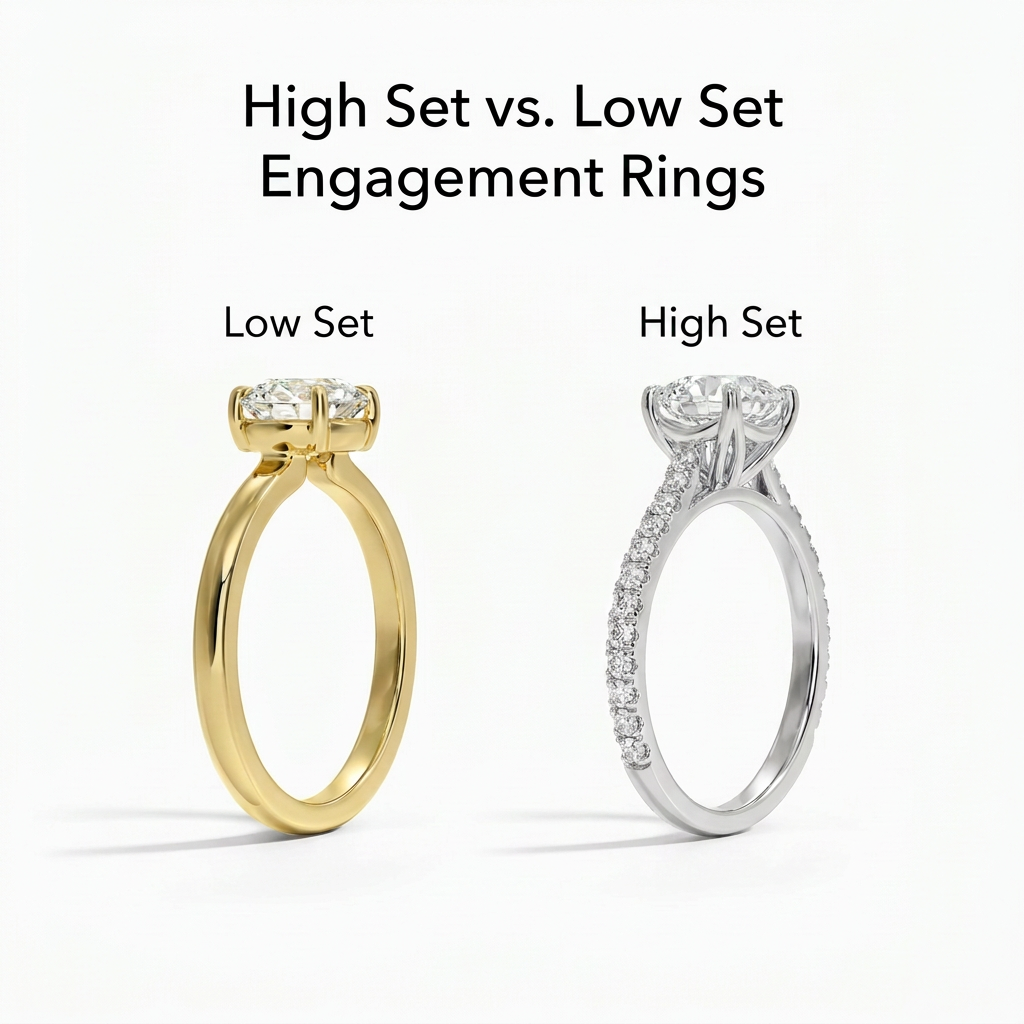
What Is a Low-Profile Engagement Ring?
A low-profile engagement ring, also called a low-set engagement ring, features a center stone positioned close to the band and finger. When viewed from the side, the stone sits relatively low, with little space between its base and the ring’s shank.
Low-set designs often use bezel settings, low basket settings, or carefully positioned prongs to keep the stone closer to the hand. They can feature anything from a simple solitaire diamond to a larger gemstone or an intricate cluster design. A low profile describes the height of the setting, not how simple or elaborate the ring looks.
Pros
- Comfortable for everyday wear: The center stone sits closer to the finger, making the ring less likely to interfere with daily activities.
- Less likely to snag: A lower setting reduces the chances of catching on clothing, hair, or gloves.
- Reduced exposure to accidental knocks: Keeping the stone closer to the hand can help limit contact with surrounding objects, although protection also depends on the setting’s construction.
- A streamlined appearance: Low-profile settings create a compact silhouette that works well with both minimalist and detailed ring designs.
Cons
- Wedding band limitations: The lower setting may prevent a straight wedding band from sitting flush against the engagement ring.
- Less side visibility: Some low-set designs conceal more of the diamond’s pavilion, giving the stone a less elevated appearance.
- Design restrictions: Larger or deeper gemstones may need additional height to accommodate their proportions, limiting how low they can be set.
A low-profile engagement ring is worth considering if you frequently use your hands, prefer a ring that sits close to your finger, or want to minimize snagging during everyday wear.
What Is a High-Profile Engagement Ring?
A high-profile engagement ring, also known as a high-set engagement ring, holds the center stone farther above the band. From the side, you can usually see more of the diamond and the metal structure supporting it.
High settings are common in traditional solitaire rings, cathedral settings, and certain hidden halo designs. The raised position makes the center stone more noticeable and can provide space for decorative details beneath it.
Pros
- A prominent center stone: Elevating the diamond creates a more noticeable silhouette, particularly when the ring is viewed from the side.
- Greater design flexibility: The additional space beneath the stone can accommodate decorative galleries, hidden halos, and other setting details.
- Easier wedding band pairing: Many high-set designs provide enough clearance for a straight wedding band to sit close to the engagement ring.
- More visibility from different angles: The elevated setting exposes more of the diamond’s sides, making its shape and setting details easier to appreciate.
Cons
- More likely to catch on objects: The raised stone and exposed prongs can snag on sweaters, hair, or gloves.
- Greater exposure to impact: Because the stone extends farther from the finger, it may be more vulnerable to accidental knocks.
- A more noticeable feel: Some high-set rings can feel bulky or top-heavy, especially when paired with a large center stone or a narrow band.
- Additional care: Exposed prongs should be checked regularly for signs of wear, bending, or loosening.
High-profile engagement rings appeal to people who want their center stone to stand out or prefer the look of a traditional raised solitaire. They can also be a practical choice when pairing an engagement ring with a straight wedding band is a priority.
High Set vs. Low Set Rings with Wedding Bands
If you plan to wear your engagement ring and wedding band together, setting height is an important detail to consider before choosing either ring.
The main concern is whether the two rings will sit flush against each other or leave a visible gap. This depends on the height and shape of the engagement ring’s setting, as well as the width and design of the wedding band.
High-Set Engagement Rings with Wedding Bands
High-set engagement rings often provide more room beneath the center stone, allowing a straight wedding band to sit alongside the engagement ring without hitting the stone’s basket.
This makes high settings a popular option for traditional bridal sets, especially when you want the two rings to form a continuous, closely fitted stack.
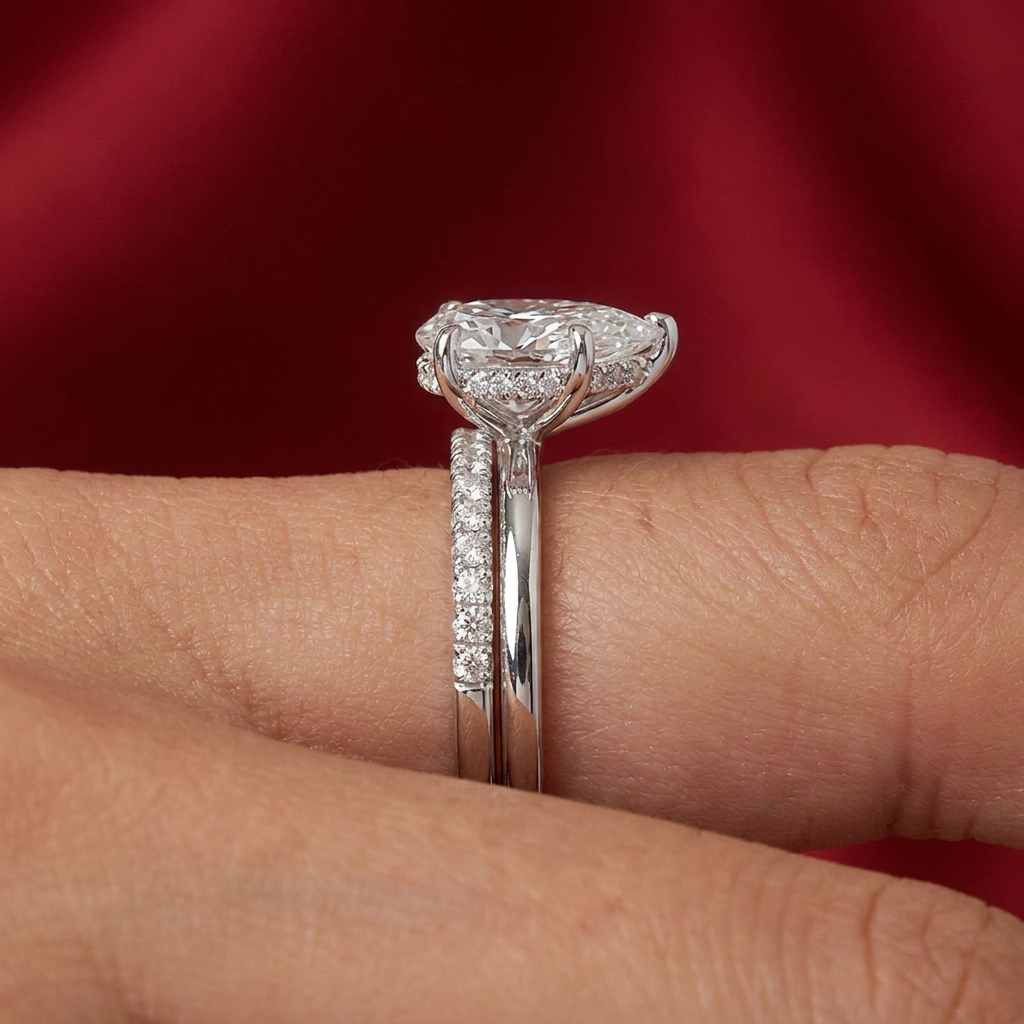
Side view high set engagement ring stacked with wedding bands
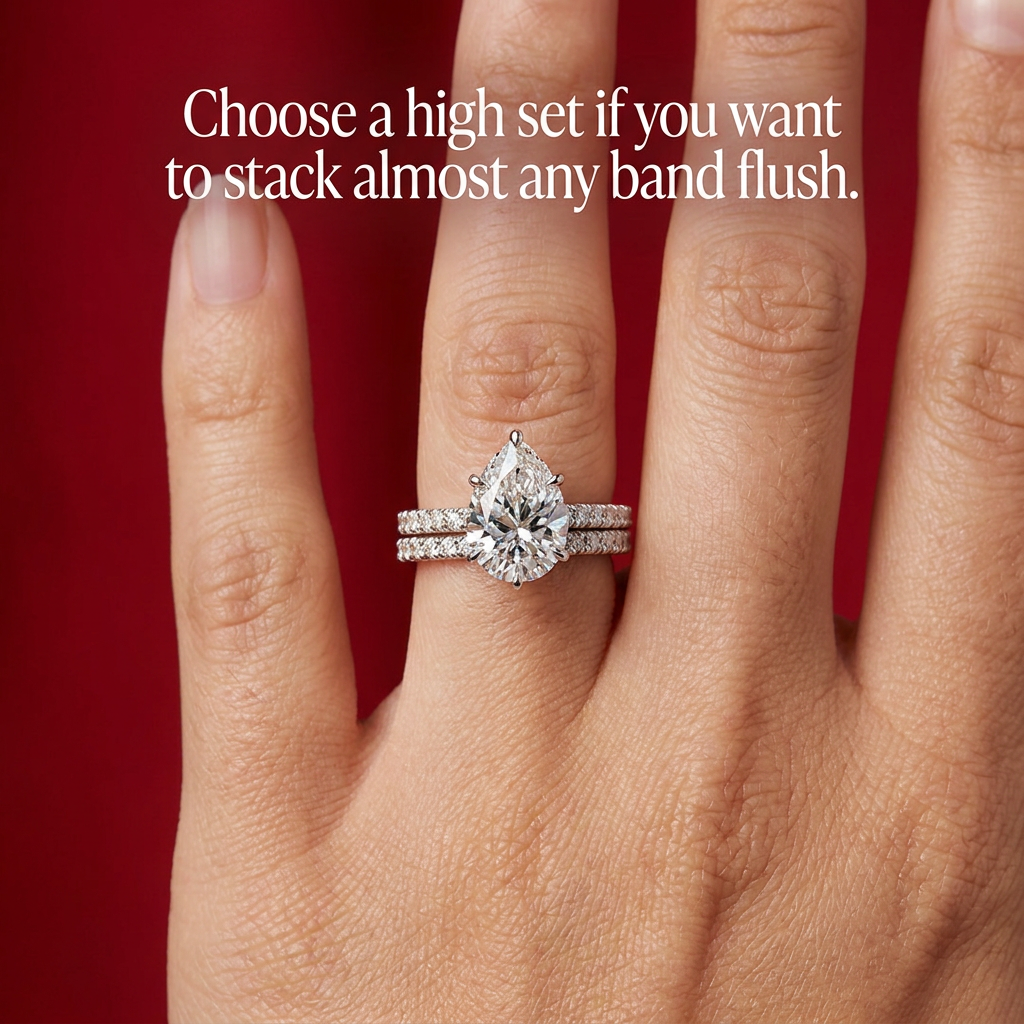
Front view high set engagement ring stacked with wedding bands
Low-Set Engagement Rings with Wedding Bands
Low-set engagement rings can be more challenging to pair with straight wedding bands. Because the center stone sits closer to the finger, its basket or surrounding metal may extend into the space where a wedding band would normally rest.
This can leave a small gap between the rings. Some people enjoy this separation, but if you prefer a closer fit, several wedding band styles can help.
- Curved wedding bands: These feature a gentle curve designed to follow the outline of the engagement ring.
- Contoured wedding bands: Their shaped edges accommodate the center setting, allowing the two rings to sit more closely together.
- Notched wedding bands: A small opening or indentation creates space for part of the engagement ring’s setting.
- Custom matching bands: A wedding band designed specifically for your engagement ring can provide a more precise fit.
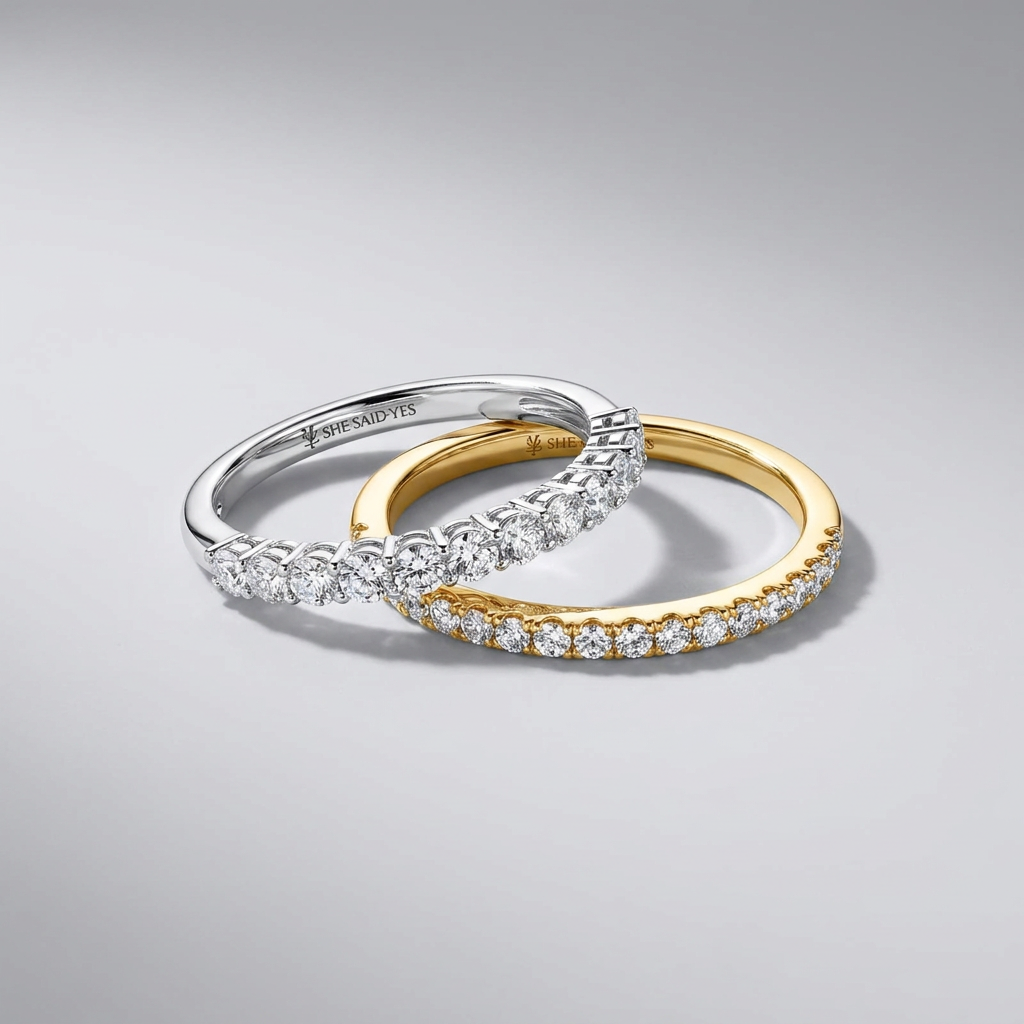
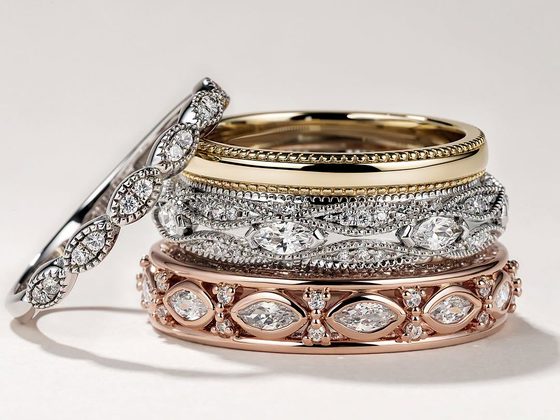
There is no requirement for an engagement ring and wedding band to sit perfectly flush. A small gap can be a deliberate design choice. What matters is whether the rings feel comfortable together and whether their settings rub against each other during wear.To see which styles you’d like to compare, browse our matching wedding rings.
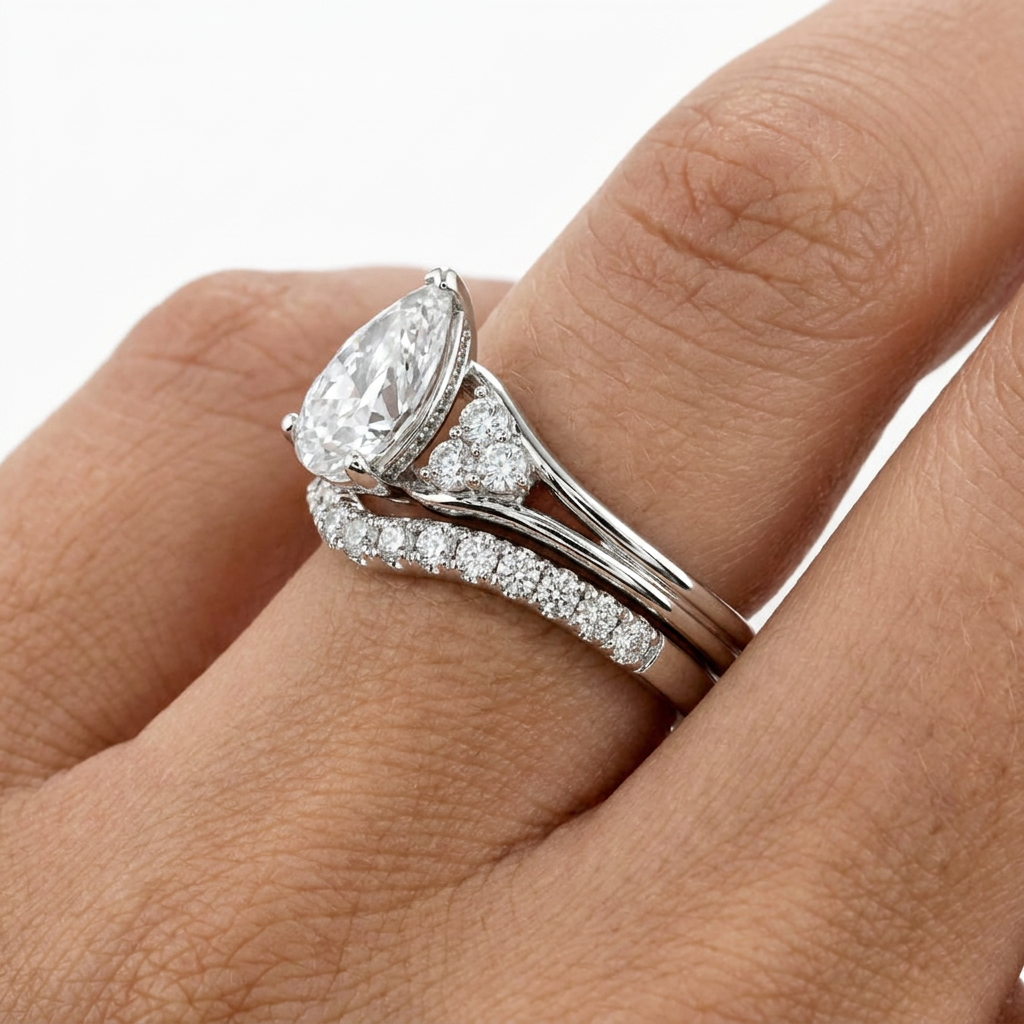
Side view low set engagement ring stacked with wedding bands
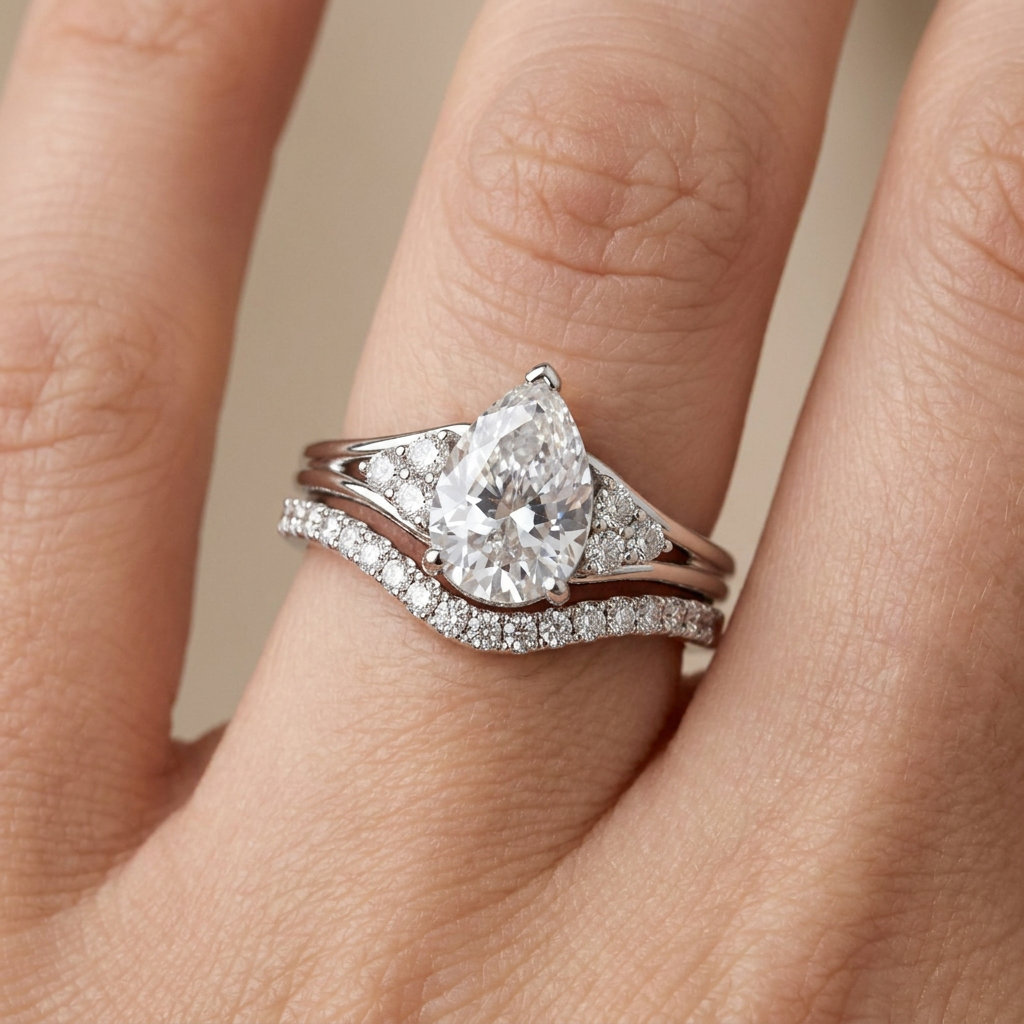
Front view high set engagement ring stacked with wedding bands
How to Choose Between a High-Set and a Low-Set Engagement Ring
Choosing between high-set and low-set engagement rings comes down to more than appearance. Consider how the ring will fit into your everyday life, what kind of center stone you prefer, and whether you plan to wear it alongside a wedding band.
1. Think About Your Daily Activities
If your work or hobbies involve frequent hand movement, a low-set ring may be easier to manage. Its compact profile is less likely to catch on clothing or get in the way during routine tasks.
If you prefer a raised setting, consider a design with a well-supported basket or cathedral shoulders. Regardless of setting height, remove your ring during activities that could expose it to hard impacts or heavy pressure.
2. Consider the Size and Shape of Your Center Stone
The size and proportions of your diamond can influence how low the setting can be.
A deeper stone may require additional clearance beneath the setting, while a smaller or shallower stone may offer more flexibility. Elongated shapes, such as oval and marquise diamonds, also require careful consideration of prong placement and protection at vulnerable points.
Remember that setting height alone does not determine a diamond’s sparkle. Cut quality, proportions, and the overall setting design play a much greater role in how the stone reflects light.
3. Decide How You Want Your Wedding Band to Fit
If you already know you want a straight wedding band that sits flush against your engagement ring, look for a setting specifically designed to accommodate one.
If you prefer a low-profile engagement ring, you can explore curved or contoured wedding bands instead. Trying both rings together is the most reliable way to check their fit.
4. Compare Comfort and Appearance
High-set engagement rings draw more attention to the center stone, while low-set designs create a closer-to-the-hand silhouette. Neither style is inherently more attractive; they simply offer different proportions.
Try viewing each ring from above and from the side. Consider how the setting feels when you bend your fingers, put on gloves, or move your hands naturally. A ring that looks appealing in a product photo should also feel comfortable when worn.
5. Pay Attention to the Setting’s Construction
Setting height is only one part of a ring’s durability. The quality of the prongs, the metal structure, the gemstone’s shape, and how securely the stone is held all matter.
A well-made high-set ring can provide reliable everyday wear, while a poorly constructed low-set ring may still leave a gemstone vulnerable to damage. Regular cleaning and periodic setting inspections are important for both styles.
Ultimately, a low-set engagement ring may be the better choice if comfort, a compact profile, and reduced snagging are your priorities. A high-set engagement ring may suit you better if you prefer a more elevated center stone or want greater flexibility when pairing it with a straight wedding band.