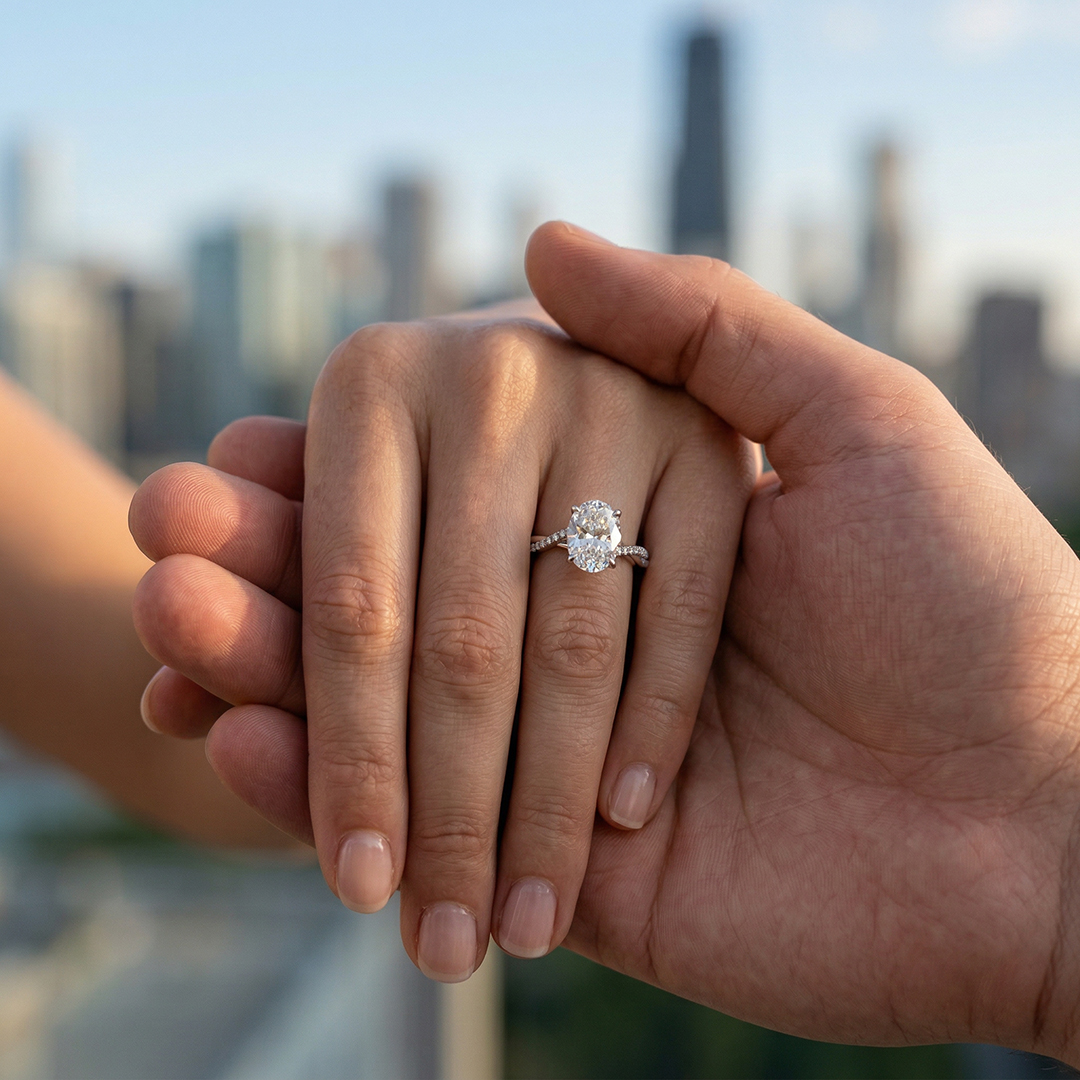
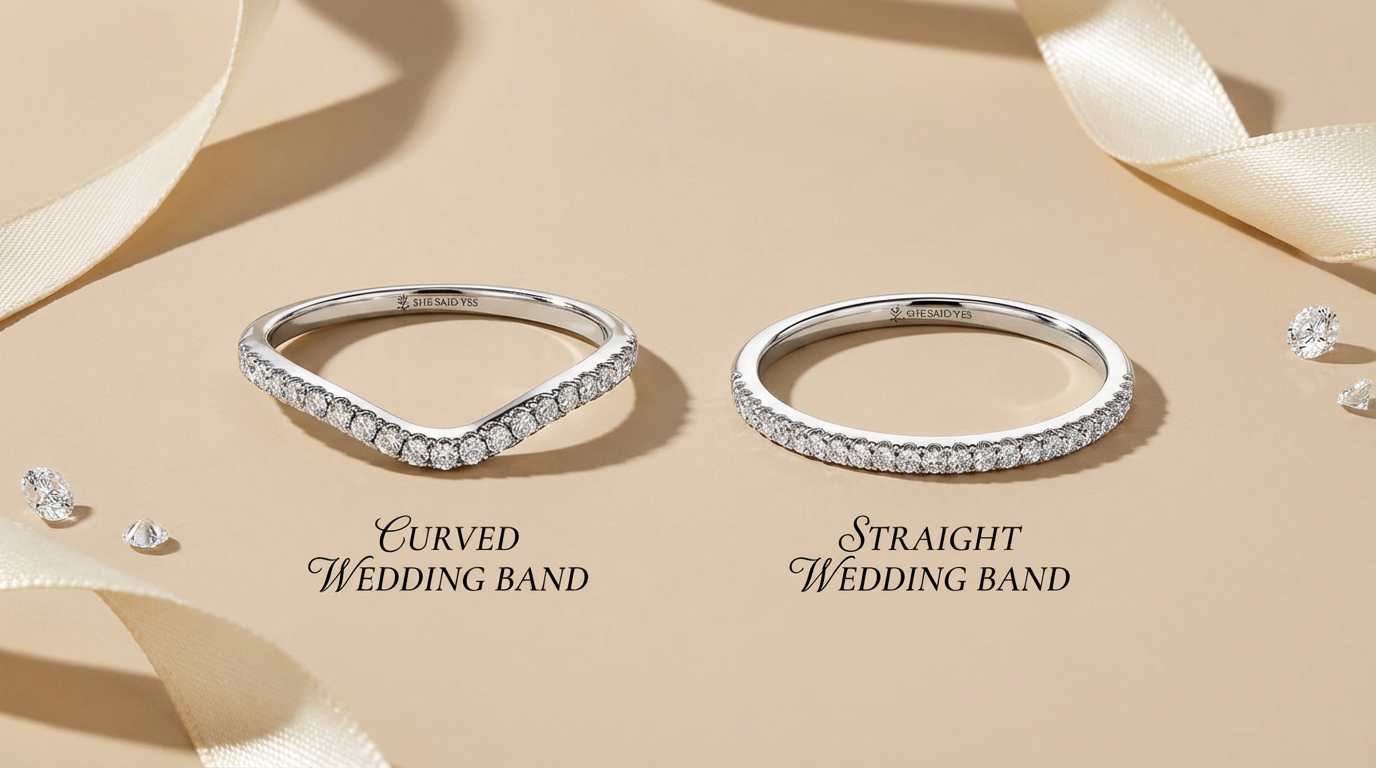
When it comes to wedding rings, most people immediately think of a simple, straight band. But if you’ve ever tried stacking a straight wedding band with a high-set engagement ring, you’ve probably noticed an awkward gap or some uncomfortable rubbing. That’s where curved wedding bands come in. Also called contour or chevron bands, curved rings are designed to follow the shape of your engagement ring, creating a seamless, polished look while adding comfort and style.
What is a Curved Wedding Band?
What is a curved wedding band called? It’s often referred to as a contour band or chevron ring. In simplest terms, a curved wedding ring is a band that has been intentionally shaped with a dip, a curve, or a notch to accommodate the center stone or setting of an engagement ring. Instead of a uniform circle, the metal bends to create a “niche” where your engagement ring can tuck in comfortably.
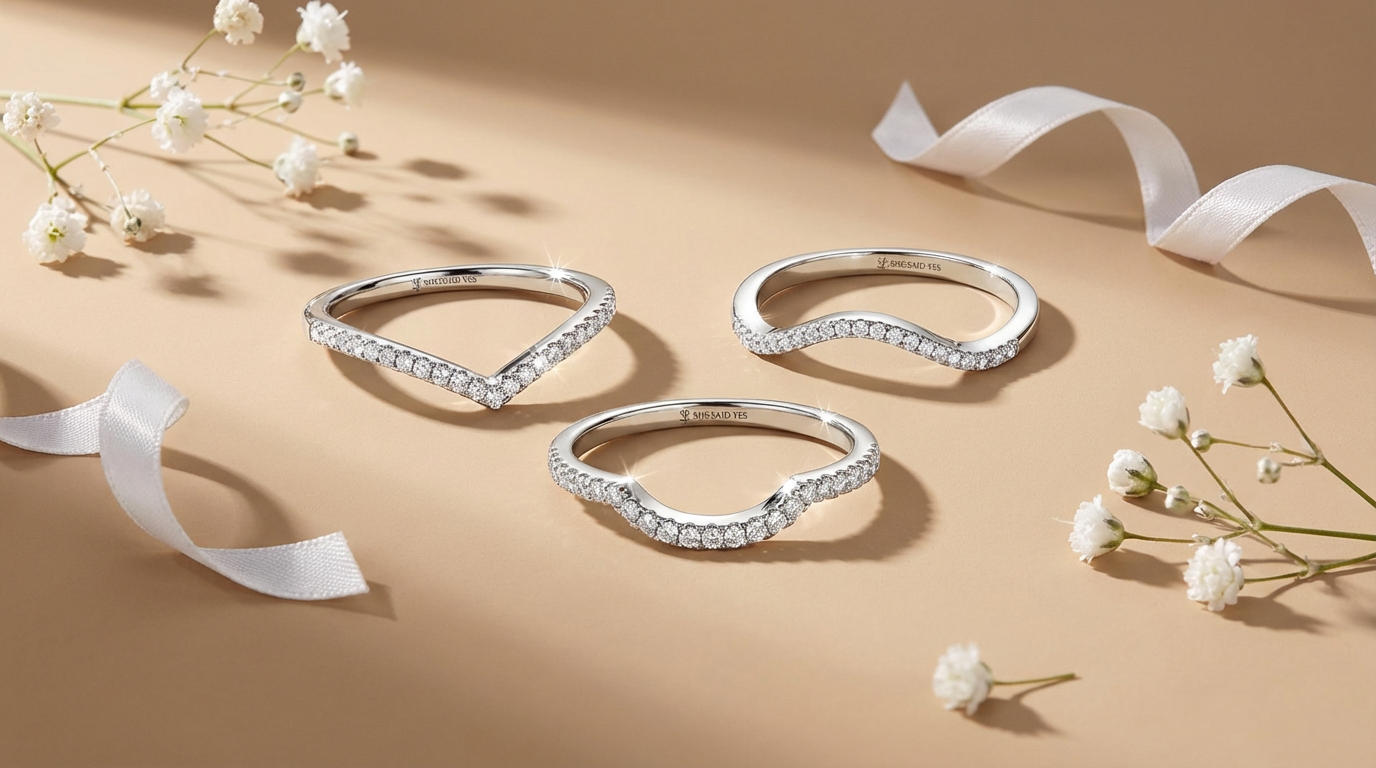
You’ll encounter three primary variations of this style:
- The Notched Band: A straight band with a small “cutout” that allows the base of the engagement ring setting to click into place like a puzzle piece.
- The Gentle Contour: A soft, shallow curve designed for engagement rings with modest protrusions.
- The Chevron (or V-Shape): A sharp, angular point that creates a more modern, geometric look. This is particularly popular with pear and marquise shaped stones.
Why Choose a Curved Wedding Ring?
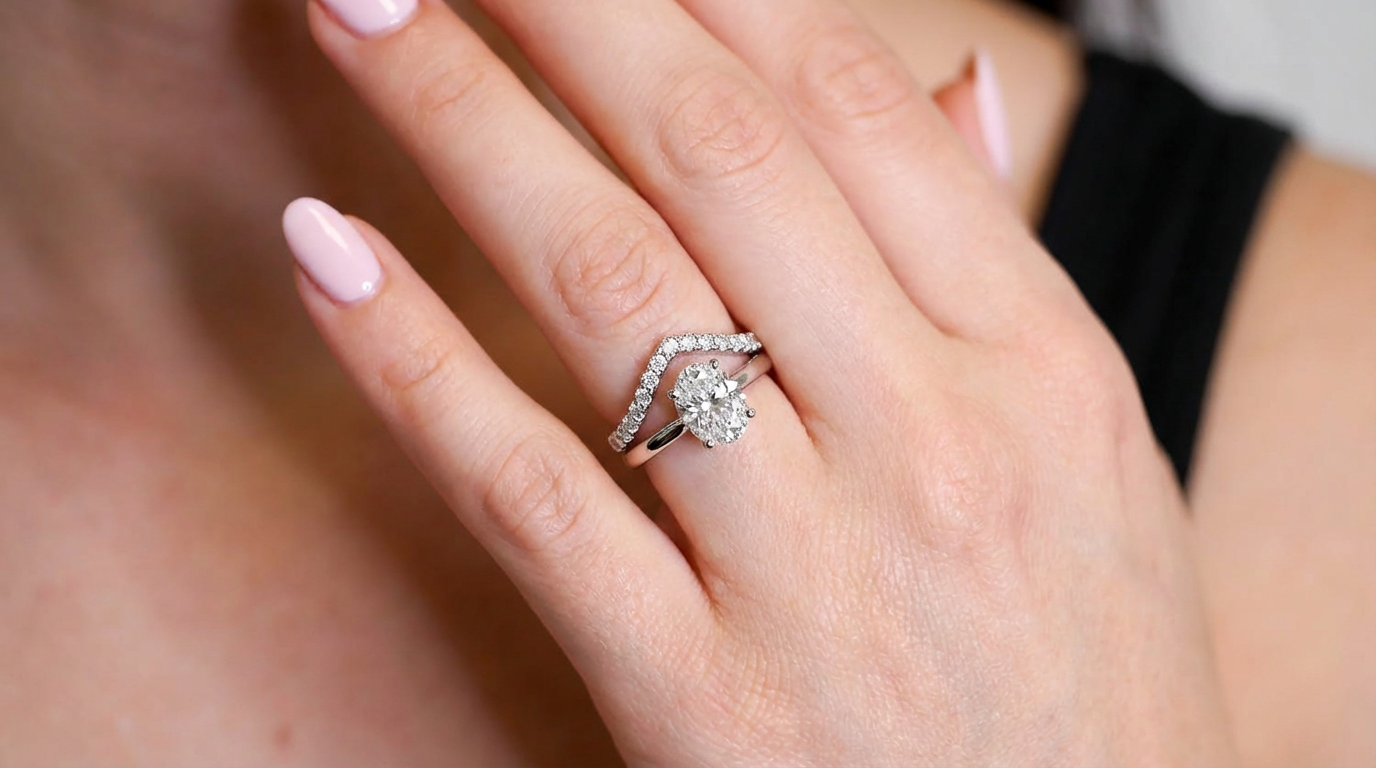
Why choose a curved band? A curved wedding band closes the gap between a high-set engagement ring and a straight band, giving the set a seamless, polished look. By fitting snugly around your engagement ring, it reduces metal friction that can wear down the band or loosen stones over time, helping protect your investment. On top of that, a curved band frames your center stone beautifully, making the whole set appear more elegant, intricate, and striking—a true “power set” for your finger.
How to Make Sure a Curved Band Fits Your Engagement Ring
Buying a curved band is slightly more technical than buying a straight one. Because the curve needs to align with your specific engagement ring, you can’t always buy “off the rack” without some consideration.
1. Test the “Alone” Look
Can a curved wedding band be worn without an engagement ring? The answer is yes!One of the main drawbacks of a curved band is that it can sometimes look a bit “unfinished” if you wear it by itself. If you envision yourself occasionally leaving your engagement ring at home (for gardening, the gym, or traveling), try on the curved band alone to see if you like the way the dip looks on its own. If it bothers you, look for a “shallow” curve that is more subtle.
2. Match Your Metals
While mixing metals (like a rose gold band with a white gold engagement ring) is a trendy “boho” look, most experts suggest keeping the metal type the same for curved sets. Why? Different metals have different hardness levels. If your platinum band rubs against your 14k gold engagement ring, the platinum will eventually wear down the gold.
3. Match Your Engagement Ring
If your engagement ring has a classic shape—like a solitaire or a simple setting—you can usually find a curved band that pairs well by choosing a style designed to complement standard designs. Many ready-made options are created to fit these common shapes nicely.
However, if your engagement ring is more unique or asymmetrical, a standard curved band may not sit perfectly. In that case, going custom is often the best choice.
Exploring Popular Styles
The beauty of the curved ring is in its versatility. No matter your personal aesthetic, there is a curve that matches your vibe.
The Minimalist Chic
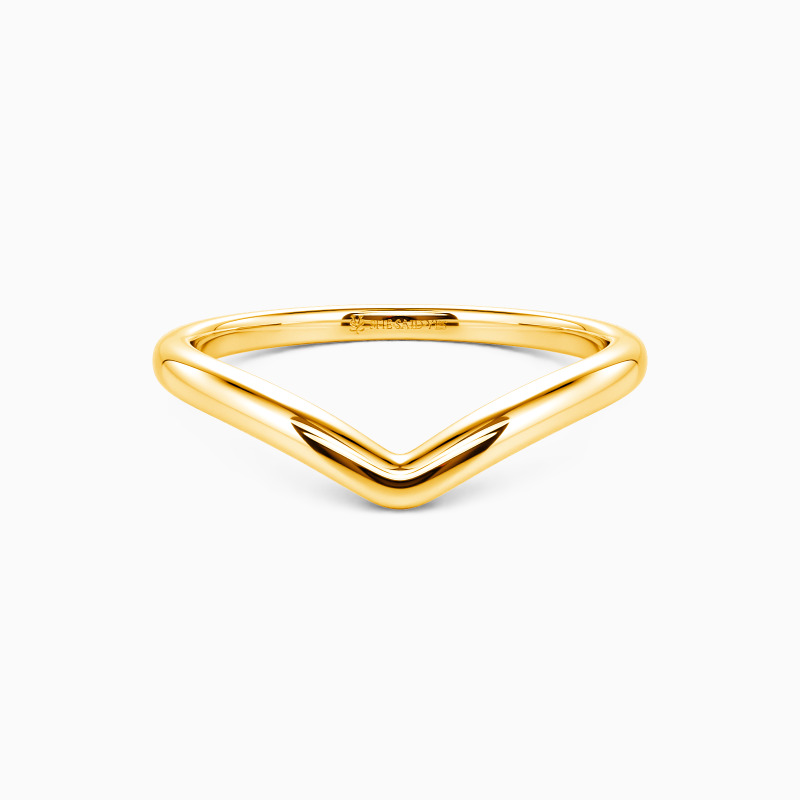
If you prefer “less is more,” you might opt for a plain gold or platinum curved band. Without the distraction of extra stones, the focus remains on the elegant silhouette. This is a perfect choice if your engagement ring is already quite ornate and you don’t want to overwhelm your finger.
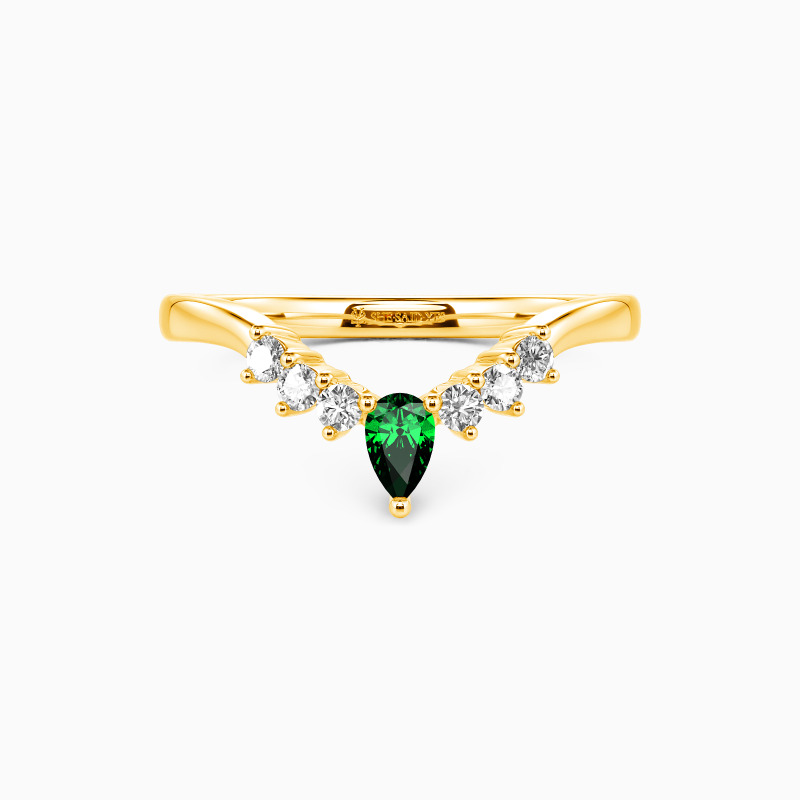
The Tiara or Crown Band
Do you want to feel like royalty? The tiara band features a curve adorned with varying sizes of diamonds or gemstones—often with a larger stone at the peak of the curve. When paired with a solitaire, it creates a “crown” effect that is incredibly feminine and vintage-inspired.
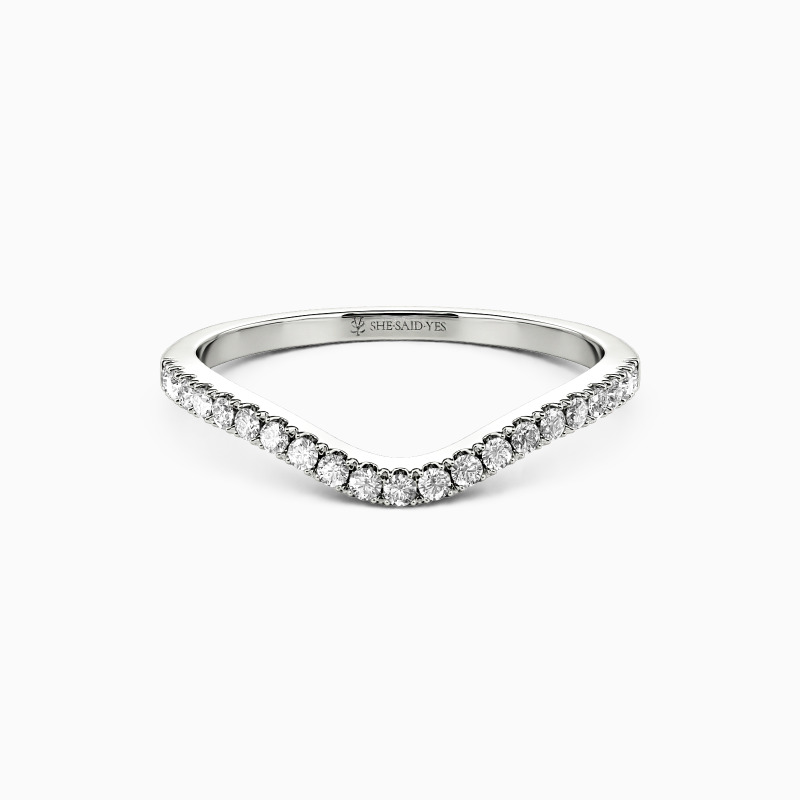
The Pave-Set V-Band
For the modern bride, a sharp V-shaped chevron band encrusted with pavé diamonds offers a sleek, edgy look. This style works exceptionally well with elongated stone shapes like ovals and marquise cuts, pointing toward the tip of the stone and elongating your fingers.
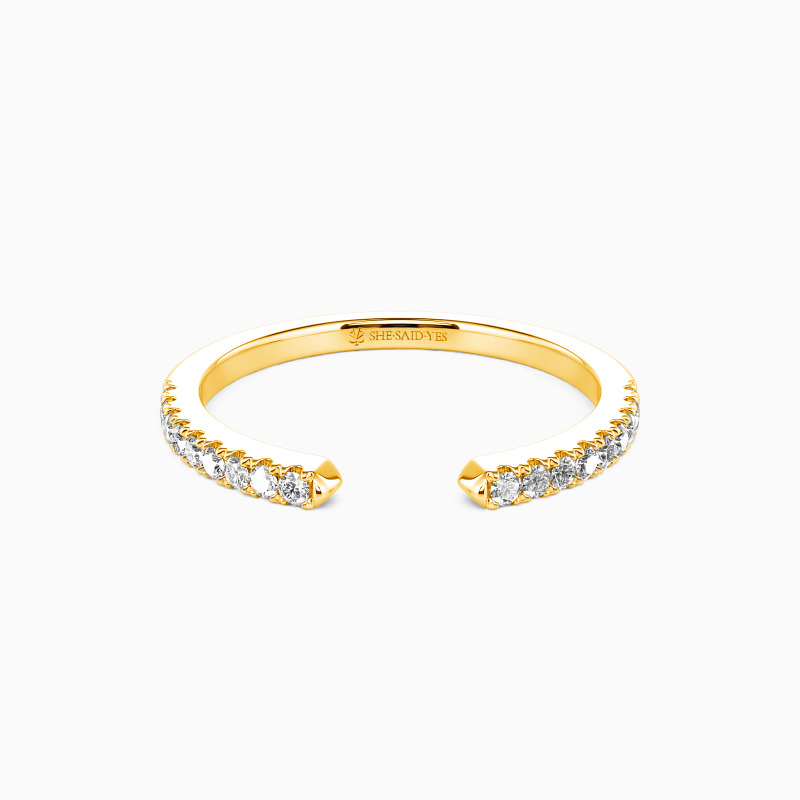
The “Open” Guard
While not strictly a single curved ring, many people looking for curves end up loving “ring guards” or “insert rings.” These are two curved bands joined at the bottom, allowing your engagement ring to sit right in the middle. It provides a balanced, symmetrical look that frames the center stone on both sides.
Budget and Practical Considerations
People often ask, “Is a curved wedding band in my budget?” Curved bands come in a wide range of materials and designs. You can find simple gold or platinum bands at reasonable prices, or choose diamond-accented designs for a more luxurious look. While they may be slightly more expensive than straight bands, the comfort, style, and perfect fit often make the investment worthwhile.
Curved bands are also incredibly comfortable for long-term wear. Because they sit flush against the engagement ring, there’s less chance of pinching, sliding, or irritation, making them a practical choice for everyday life.
How to Style Your High-Low Stack
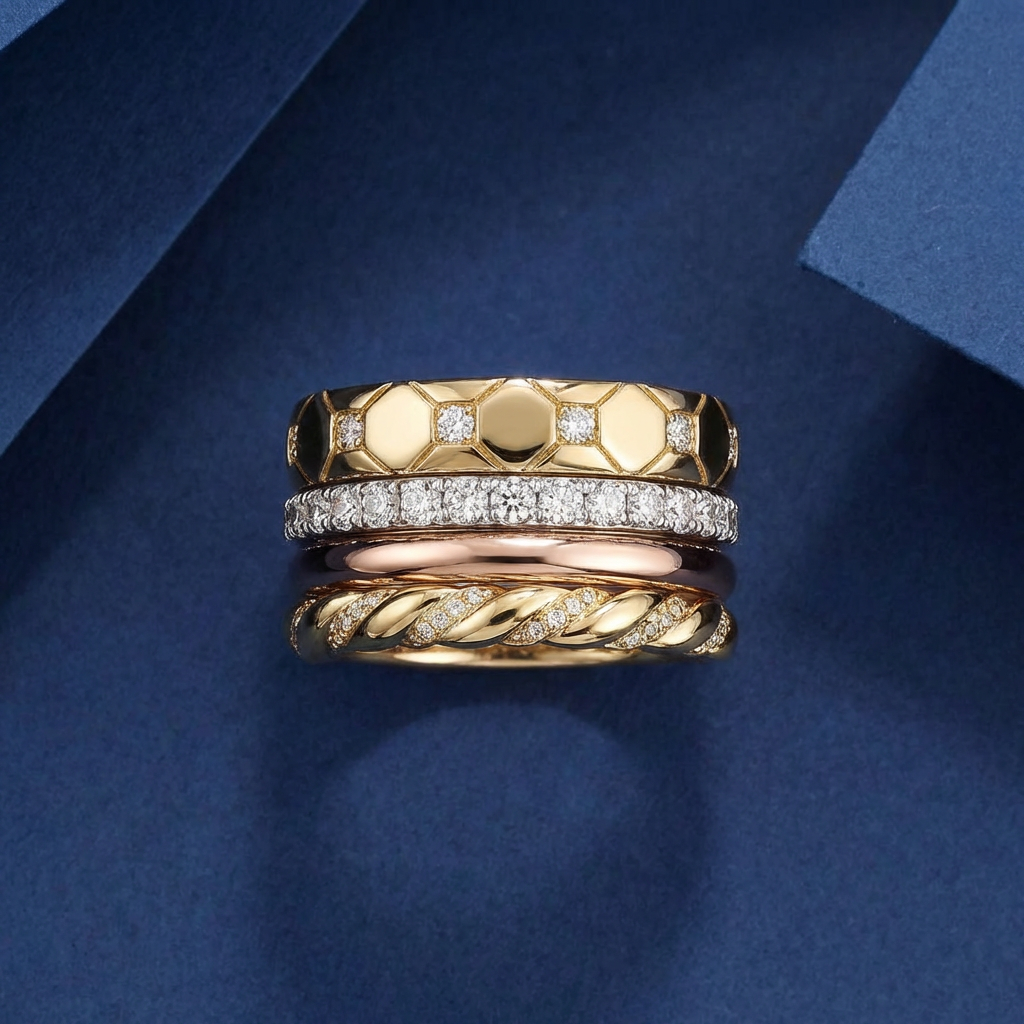
The fun doesn’t have to stop with two rings. The curved wedding ring has popularized the “stacking” trend. You can “sandwich” your engagement ring between two curved bands—one on top and one on bottom—to create a stunning, symmetrical ensemble.
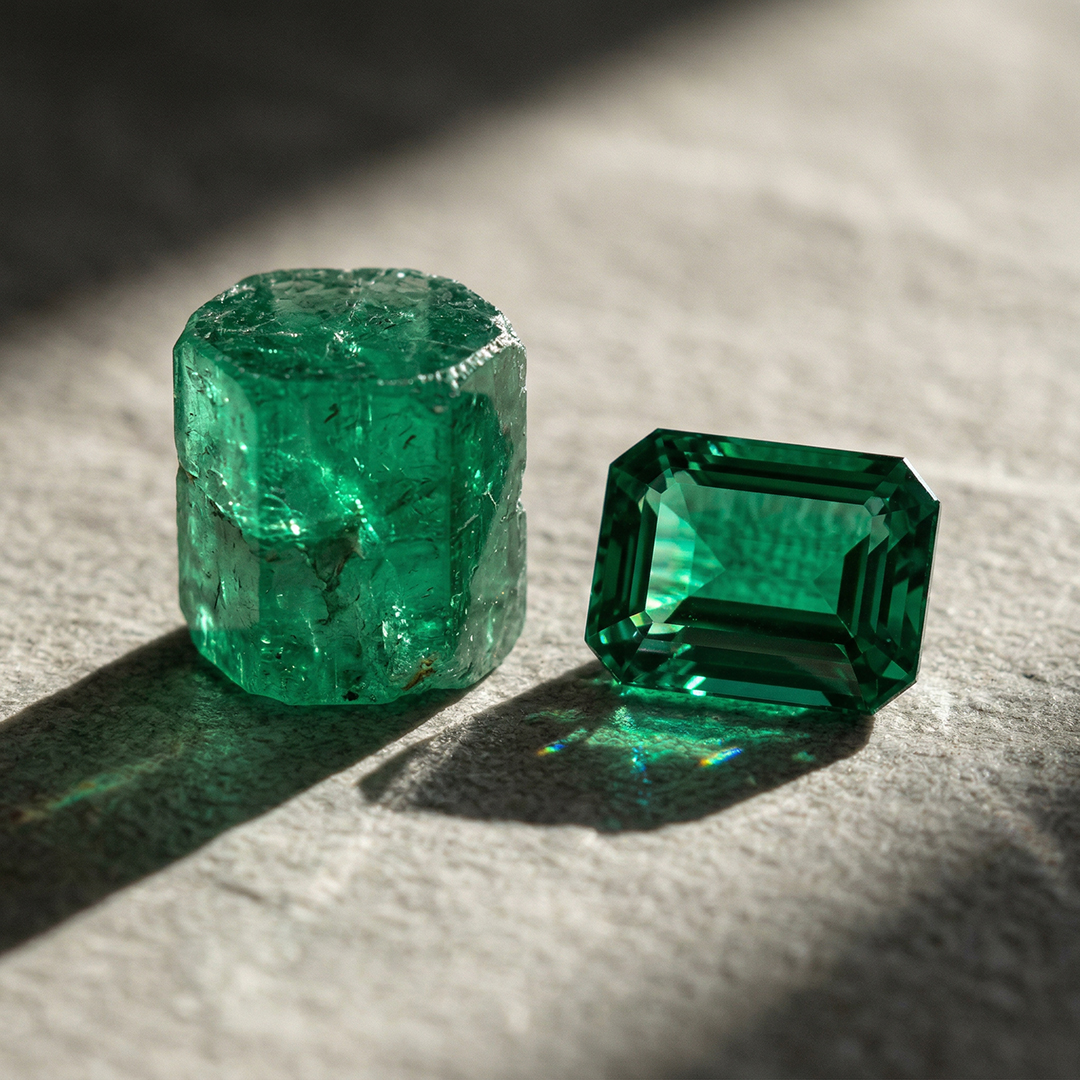
You can also play with textures. Try a hammered gold curved band paired with a diamond-heavy engagement ring for an organic, artisanal feel. Or, choose a band with colored gemstones—like sapphires or emeralds—in the curve to add a pop of personality to your set.
Conclusion
While curved wedding bands are a popular choice, they’re not the only option. You can also explore classic straight bands, eternity bands with diamonds around the entire ring, vintage-inspired styles, or fully custom designs. Each has its own look and feel, but curved bands stand out for their ability to create a polished, cohesive ring set, especially for high-set or uniquely shaped engagement rings.