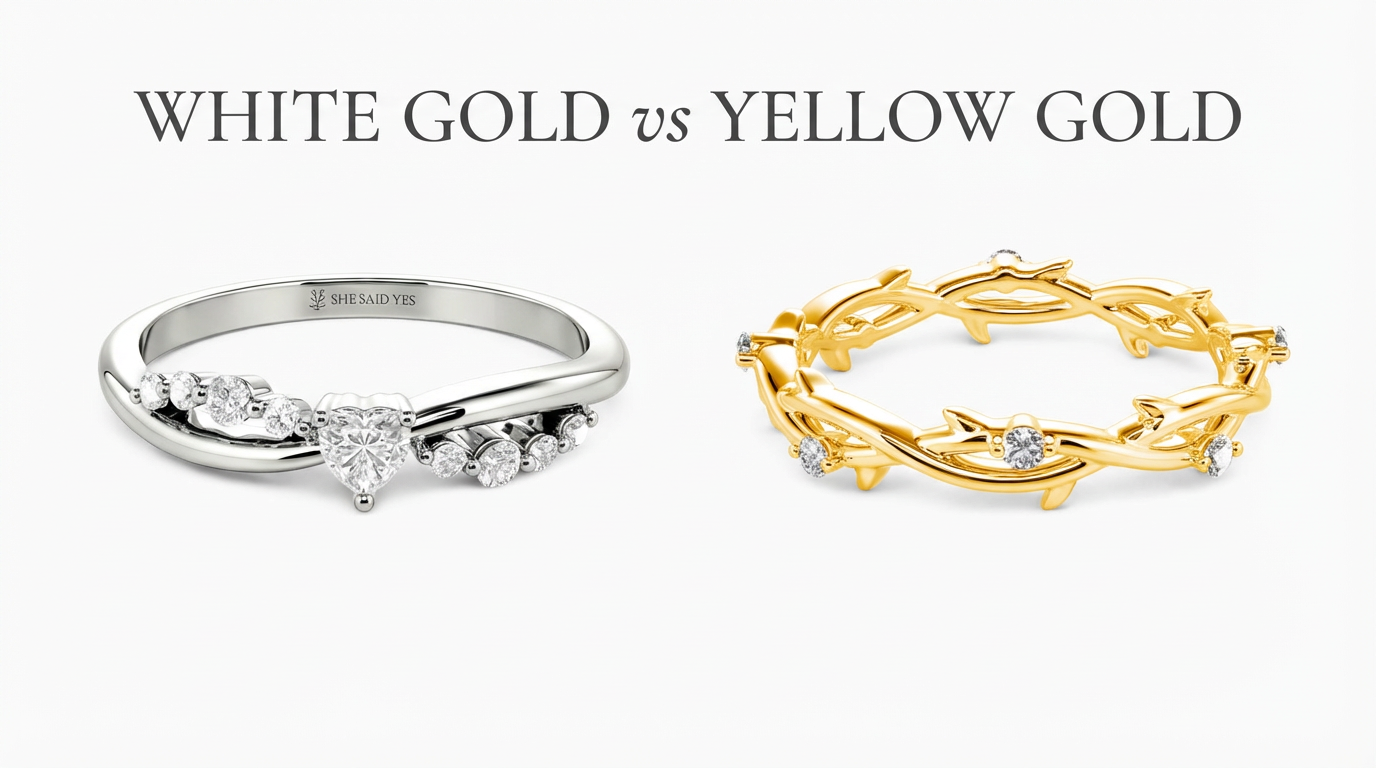
Gold has held value and symbolism for thousands of years. Its allure isn’t just in the shine—it’s in the metal’s durability, versatility, and cultural significance. Yellow gold represents the traditional, natural color of gold, warm and classic. White gold, though newer in popularity, has become a staple for modern jewelry, offering a sleek alternative to yellow gold. If you’re deciding between the two for engagement rings, wedding bands, or fine jewelry, understanding their differences and characteristics is essential.
Gold Composition
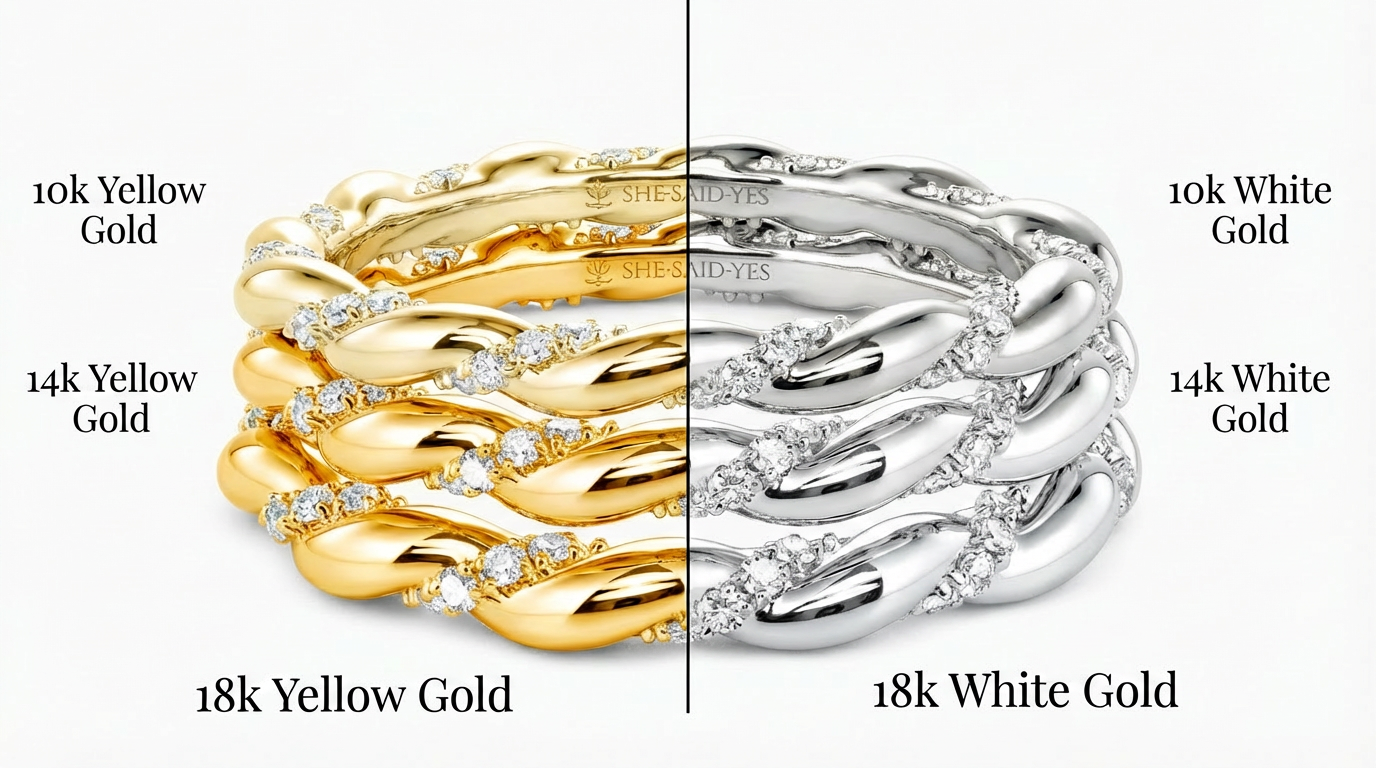
When you hold a piece of yellow gold jewelry, you’re holding history. Yellow gold is the metal’s natural state—pure gold mixed with alloys like zinc and copper. The higher the karat (10K, 14K, 18K, 24K), the more pure gold you’re wearing, which explains that rich, buttery warmth you see in vintage heirlooms.
White gold, however, is essentially yellow gold’s modern makeover. To create that silvery sheen you love, jewelers mix pure gold with white metals like nickel, palladium, or silver. But here’s what surprises most first-time buyers: white gold isn’t naturally that bright, mirror-like silver. It’s actually slightly yellowish-gray. To give you that brilliant, platinum-like finish, every white gold piece receives a rhodium plating—a thin, protective coating that transforms its color.
Style & Appearance
You already know that jewelry is deeply personal. What looks stunning on your best friend might feel completely wrong on your hand, and that’s where the visual distinction between these metals becomes crucial.
Yellow gold offers you an undeniably classic, romantic aesthetic. If you gravitate toward vintage fashion, bohemian styles, or warm autumn palettes, yellow gold becomes an extension of your personal brand. It catches the light with a soft, glowing warmth that feels organic and timeless. When you wear yellow gold, you’re making a statement that honors tradition.
White gold, conversely, offers you contemporary sophistication. If your wardrobe consists of minimalist neutrals, crisp whites, and cool grays, white gold feels like a natural extension of your aesthetic. It complements diamonds brilliantly—literally—because the white setting creates an illusion of a whiter, brighter stone. When you choose white gold, you’re signaling modern elegance and understated luxury.
Durability and Daily Wear
You lead a busy life. Your jewelry needs to keep up with your gym sessions, your typing marathons, So which metal has your back?
Yellow gold is naturally more malleable. While this makes it excellent for intricate designs and resizing later, it also means you’ll notice scratches and dents more readily. Over years of daily wear, your yellow gold ring will develop a patina—a soft surface texture that many find charming, but others perceive as “worn.”
White gold offers you slightly more durability due to its harder alloy mixture and rhodium plating. That coating acts like armor against scratches. However—and this is crucial—you must understand that rhodium plating doesn’t last forever. Depending on your body chemistry and activity level, you’ll notice the plating wearing thin within 12 to 24 months, revealing the warmer tone beneath. When this happens, you’ll need to budget for re-plating, typically costing between $50 and $100 per session.
So ask yourself: Are you someone who maintains regular appointments, or do you prefer a “set it and forget it” approach? Your answer here determines which metal truly suits your lifestyle.
Maintenance
Let’s talk about the commitment you’re making. Yellow gold asks remarkably little of you. An occasional polish and cleaning will keep it looking vibrant for generations. If you ever damage it, repairs are straightforward because the metal is consistent throughout.
White gold demands more from you. That rhodium plating requires reapplication every year or two if you want to maintain that crisp, white appearance. You’ll also need to be mindful of certain chemicals—chlorine and harsh cleaning agents can accelerate plating deterioration.
Additionally, if you have sensitive skin, you need to pay attention to the specific alloy mix. White gold often contains nickel, which triggers allergic reactions in roughly 10-15% of the population. If you’ve ever experienced itching or rashes from costume jewelry, you might want to request palladium-based white gold (nickel-free) or stick with yellow gold entirely.
Price
Gold price is largely dictated by purity rather than color. Higher karat gold contains more pure gold and costs more. That means 18k gold is pricier than 14k, regardless of whether it’s white or yellow.
White gold can be slightly more expensive than yellow gold at the same karat due to the rhodium plating process, though it remains more affordable than platinum. Overall, both metals are comparable in price, so your decision should focus more on appearance, durability, and style rather than cost alone.
Skin Tone Guide
Stand in front of a mirror with both hands visible. Do you notice whether your veins appear more blue or green? Are you someone who looks radiant in pure white shirts, or do ivory and cream flatter you more?
If you have cooler undertones (blue veins, silver jewelry looks striking against your skin), white gold will likely enhance your natural complexion. It creates a harmonious, seamless look that makes your skin appear brighter.
If you have warmer undertones (green veins, gold jewelry makes you glow), yellow gold will illuminate your features in ways that white metals simply cannot. It creates contrast that draws the eye upward, highlighting your face rather than competing with it.
But rules are meant to be broken. If you love the look of white gold against your warm skin, wear it with confidence. The best jewelry is the kind that makes you feel like yourself.
Choosing the Right Metal
As you stand at that jewelry counter—or scroll through endless online galleries—ask yourself these three questions:
- What’s my maintenance personality? If you’re diligent about upkeep and love that bright, modern sparkle, white gold rewards your attention. If you want heirloom-quality pieces that age gracefully with zero intervention, yellow gold is your faithful companion.
- What’s my style era? Look at your Pinterest boards and your favorite outfits. Are you channeling 1920s glamour or 2020s minimalism? Your aesthetic preference often subconsciously guides you toward the appropriate metal.
- What’s the center stone? If you’re setting a diamond with slight color (J-K grade or lower), yellow gold masks the yellow tint better than white gold, which can make the stone appear more discolored by comparison. For colorless diamonds (D-F), white gold maximizes that icy brilliance.
Conclusion
You can’t make a wrong choice here. Both metals carry the prestige and value of gold; they simply offer different expressions of luxury. Whether you’re choosing for engagement rings or wedding rings, yellow gold brings warmth, tradition, and low-maintenance longevity, while white gold offers a contemporary edge, diamond-enhancing brilliance, and a sleek aesthetic.
Whatever you choose, ensure it reflects not just current trends, but your personal story. After all, you’re not just buying metal—you’re selecting the backdrop for your memories, milestones, and the life you’ll wear it through. If you’re still exploring your options, you can also learn more about different types of engagement rings or discover how engagement ring settings can influence the overall look and feel of your jewelry.