Silver necklaces for men are one of the most versatile accessory choices you can make. They work with a T-shirt, a suit, and everything in between, but only if you choose one based on the details, not just the look. Chain style, length, width, metal grade, and whether a pendant is part of the plan. Get those five right, and the necklace stops being an occasion piece and becomes part of how you dress. Here’s how each of those decisions actually works.
What Kind of Silver Should a Men’s Necklace Be?
Everything starts with the metal, because not every necklace described as “silver” is made from solid silver.
Sterling silver is the standard. Real sterling — stamped 925 — is 92.5% pure silver with 7.5% alloy, usually copper. The alloy isn’t a shortcut; it’s the point. Pure silver is too soft to survive daily wear as a chain, so the copper is what lets links flex, clasps hold, and pendants take a knock without bending out of shape. For a men’s sterling silver necklace, 925 is the standard to look for. It offers the look and feel of genuine silver while being durable enough for regular wear.
Plated silver is a finish, not a metal. A silver-plated chain is a base metal with a micron-thin silver layer on top. It looks right for a month or two, then the plating wears through at the clasp and the links that rub your collar. It cannot be polished back, because there’s nothing silver left to polish. Fine for a costume piece; wrong for anything you plan to keep.
The Best Men’s Silver Chain Styles to Know
There are dozens of chain names on some jewelry websites, but you only need to understand a handful when choosing a men’s silver chain.
| Chain style | What it looks like | Best at |
| Cuban link | Thick, flat, rounded interlocking links | Bold, standalone statement |
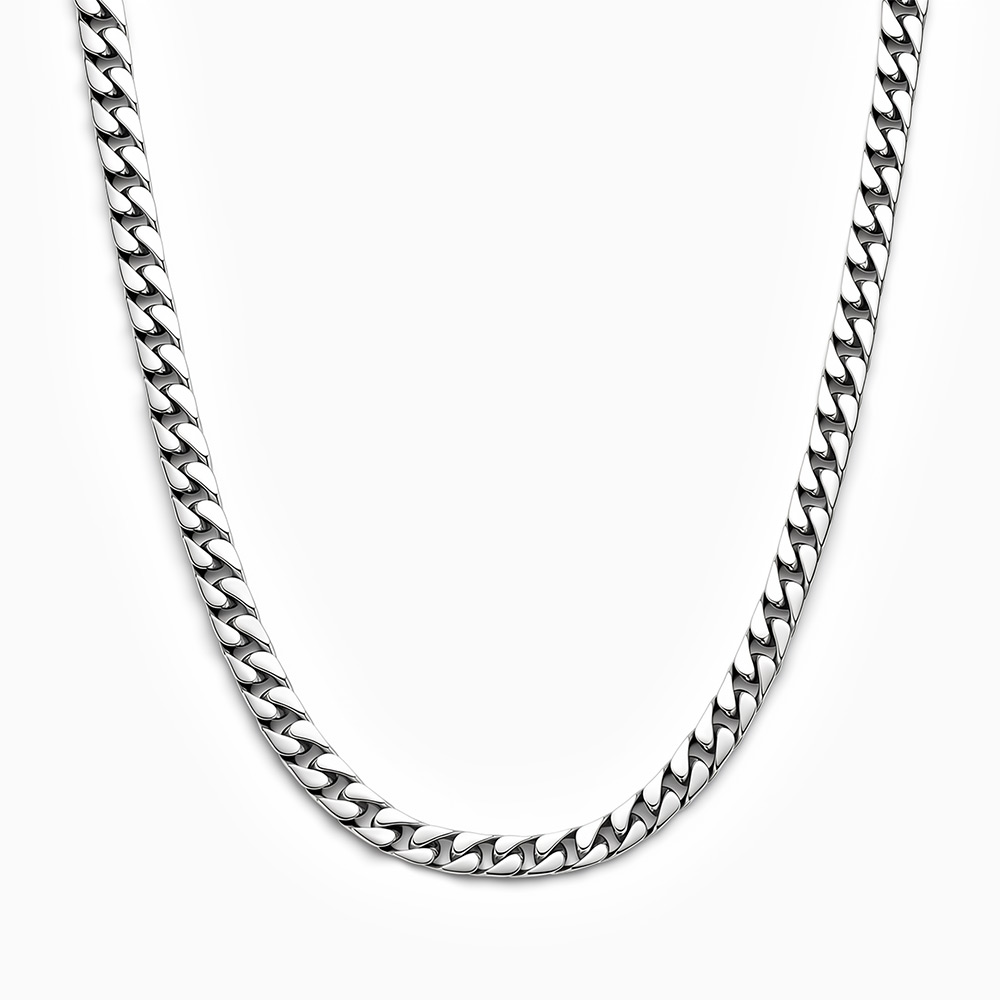
| Curb chain | Flat uniform links lying flush | Everyday default, works everywhere |
| Rope | Twisted links that catch light | Texture and shine, holds pendants well |
| Figaro | Alternating short and long links | Classic, Italian, worn solo |
| Box | Clean square links | Minimal, modern, pendant-friendly |
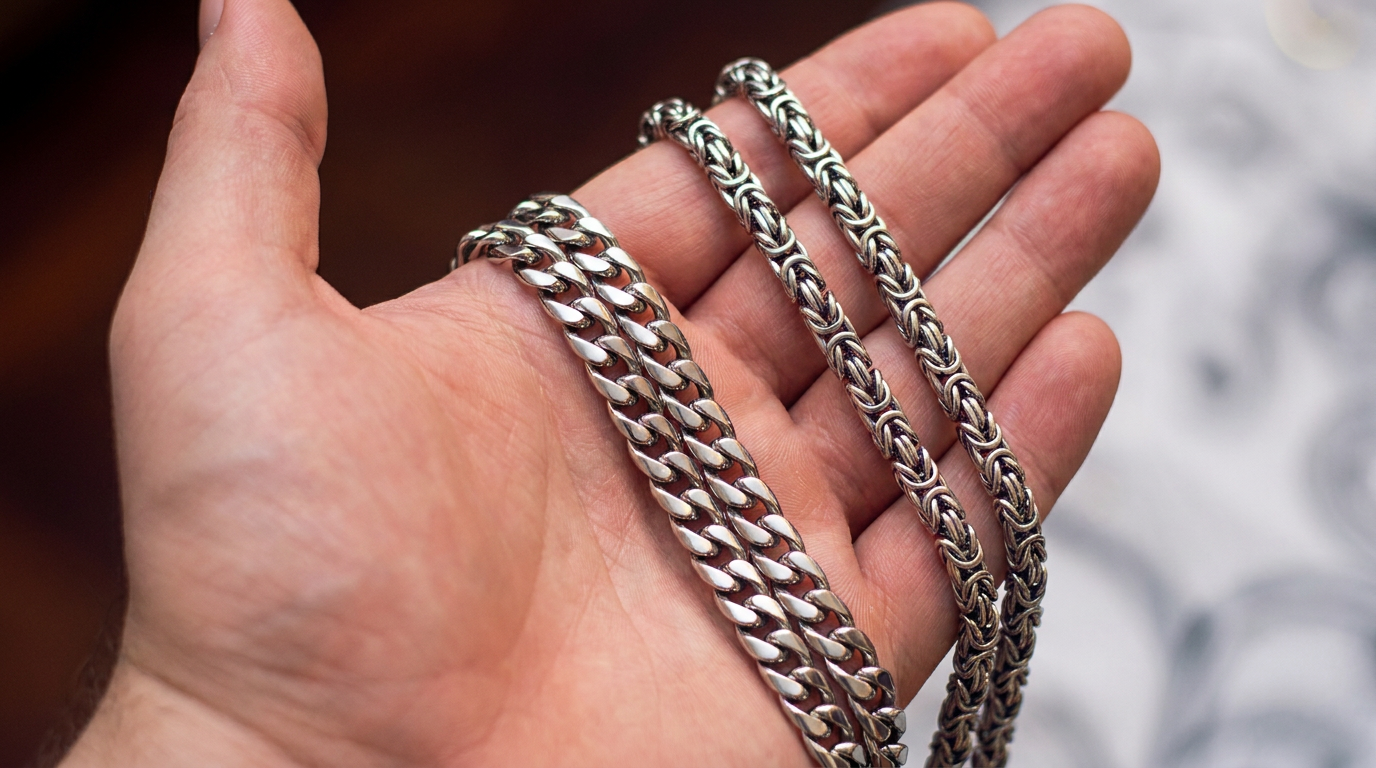
| Byzantine | Intricate woven, rope-like pattern | Detail-rich, historic character |
Curb chains are a popular choice for a reason: their flat links are less likely to snag on clothing or tangle, and if a link breaks, they’re relatively easy for a jeweler to repair. Second, woven styles earn their place for a reason. A Byzantine chain has more visual complexity per millimeter than a simple single-link style at the same width. It reads as craftsmanship, not just metal.
Read the comparison: Curb chains vs. Cuban link chains
If you plan to hang a pendant on the chain, structure matters more than looks. Rope and curb distribute pendant weight evenly and keep it sitting front-facing; thin box chains (under about 2.5mm) can stress and kink under a heavy pendant. Match the chain’s width to the pendant’s weight — a solid 30mm+ sterling pendant needs at least 4mm of chain under it.
Choosing the Right Necklace Length and Width
Style gets the attention, but length and width decide whether the necklace gets worn. Here’s the honest version.
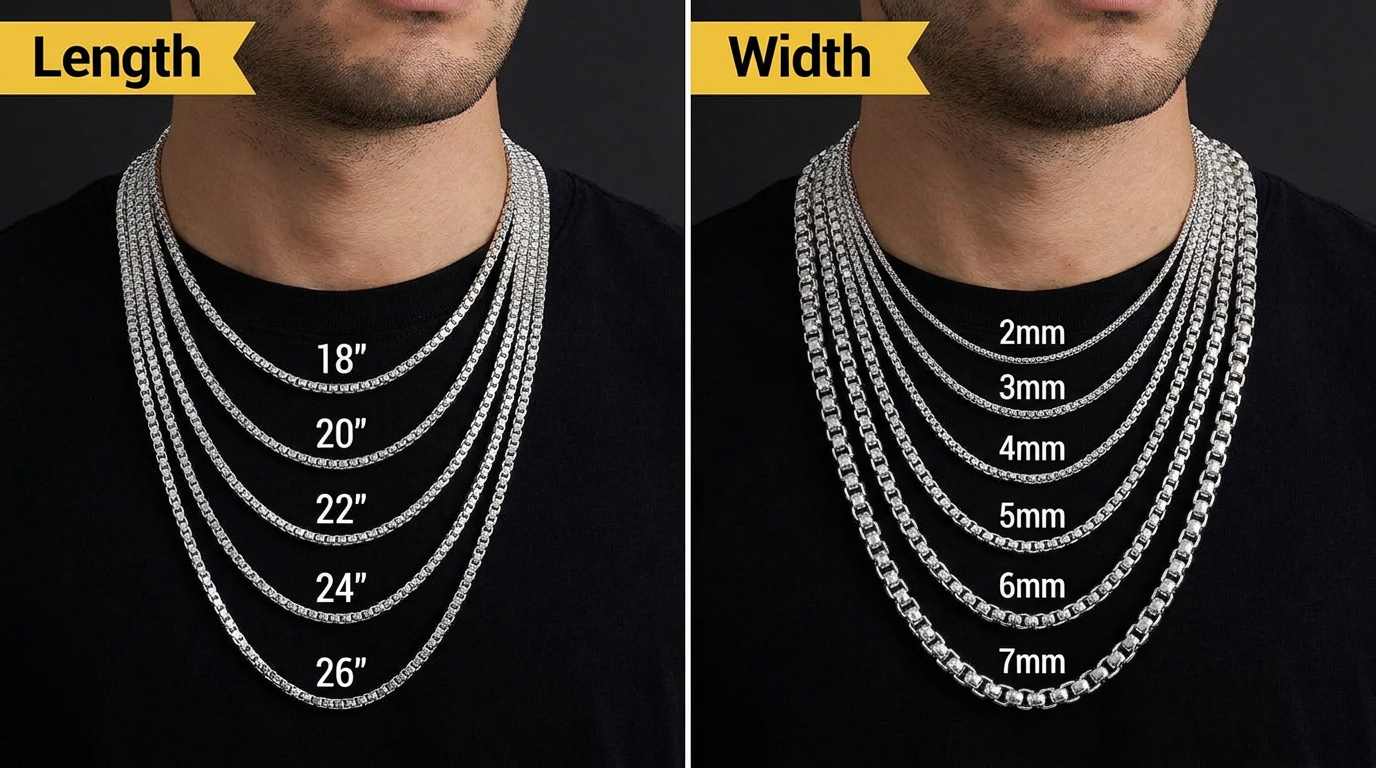
Length:
- 18 inches — sits at the base of the neck. Tight on most men; only works with slimmer builds and open collars.
- 20 inches — hits the collarbone. The most popular men’s length for a reason: it clears a crew neck, works under an open collar, and suits most builds.
- 22–24 inches — falls below the collarbone. The layering length, and the right zone for pendant necklaces, since the pendant lands mid-chest where it’s visible.
- 26 inches and up — over the sternum. Statement territory, usually worn with a pendant on a plain chain.
If you’re buying blind — for yourself or as a gift — 20 inches is the safe call and 22 is the step up for broader frames or pendant plans.
Width:
- 2–3mm — minimal. Reads as a clean accent, sits under a shirt, ideal if the necklace is meant to be subtle.
- 4–6mm — the sweet spot. Visible at conversation distance without shouting; carries a pendant; still comfortable every day. If you want one number: 4mm.
- 7mm+ — the chain is the outfit. Statement Cuban and rope territory; worn solo, usually over a plain tee.
The most common mistake in men’s jewelry is a mismatch between the two: a heavy pendant on a 2mm chain (undersized, and it drags at the back of the neck within a week), or a 9mm Cuban at 30 inches (overwhelming on almost everyone). Proportion beats size, every time.
Pendant Styles to Consider
A plain silver chain for men is infrastructure. Add a pendant and it becomes personal — which is why pendant necklaces are the category’s gift favorite. The styles that hold up:
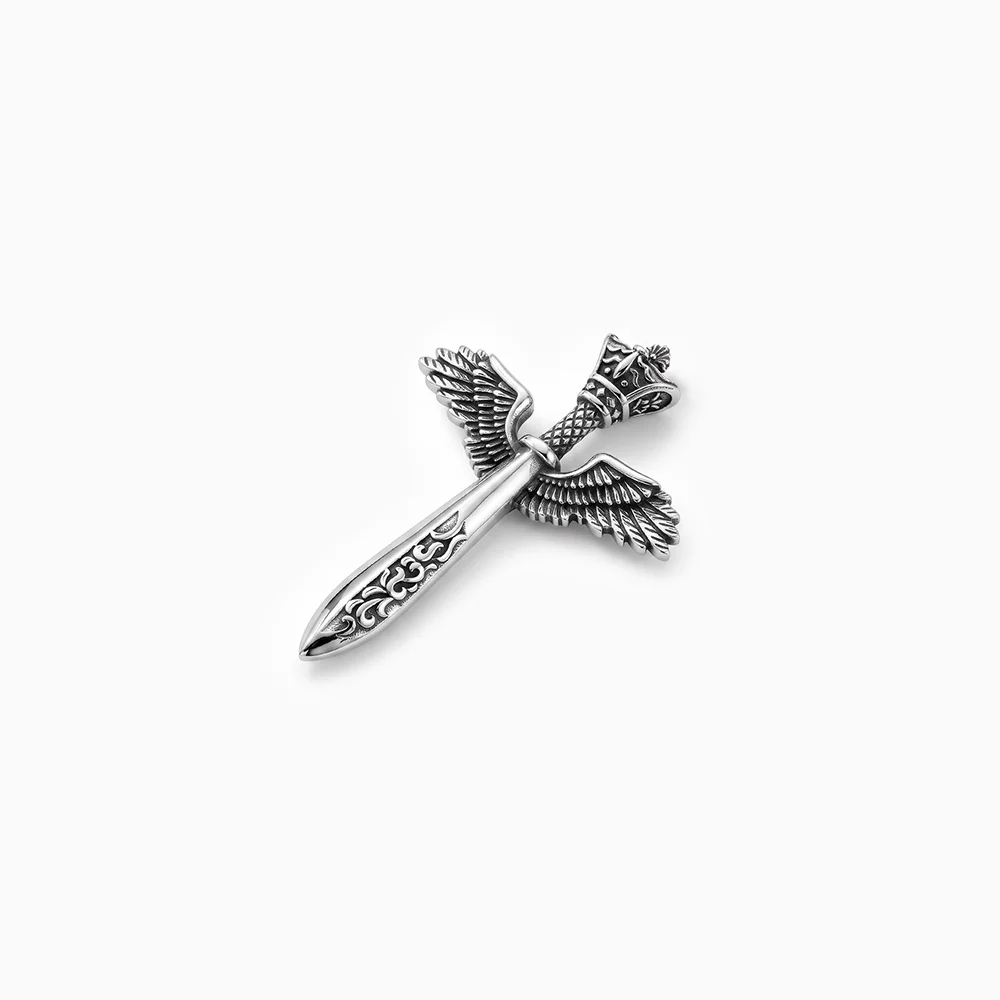
Cross and gothic pendants. The enduring category. A sculpted, oxidized cross — or something with more narrative, like She Said Yes’s “The Valiant,” a sterling sword pendant with a winged crown hilt — carries weight without needing sparkle. Oxidized finishes suit these best: the darkened recesses give the sculpting depth.
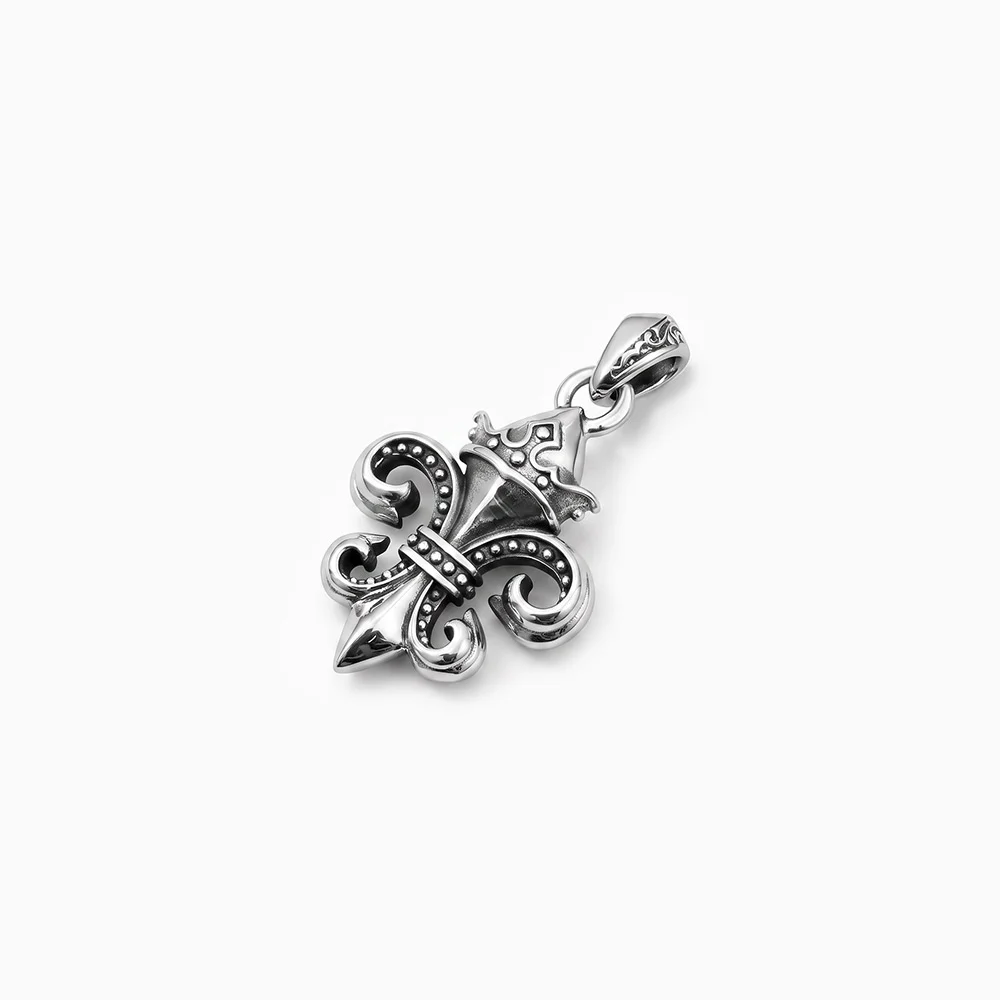
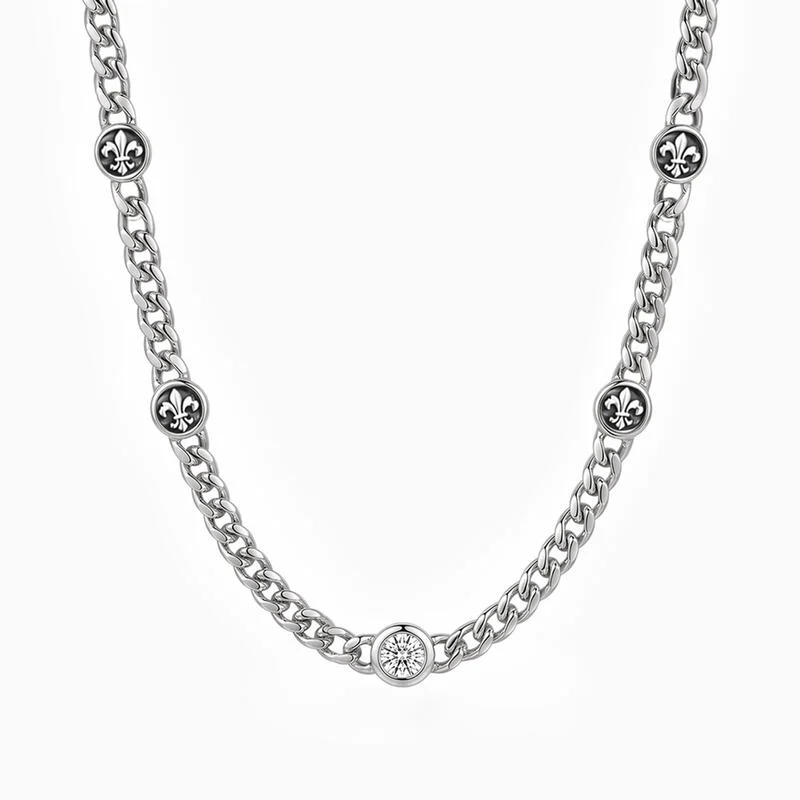
Crests and symbols. Fleur-de-lis, lions, anchors, signet shapes. The “Thorn & Crest” fleur-de-lis from the same collection shows the pattern: a recognizable silhouette, reworked with a studded border and dark finish so it reads modern instead of heraldic costume. One rule — keep it under about 35mm unless you’re deliberately going big.
Initials and personal pieces. The safest gift when you’re unsure of taste. A single letter or a small engraved tag survives every trend cycle because it isn’t trying to be on-trend.
Whatever you choose, hang it on enough chain. The sword-and-wing pendants above sit right at 24 inches; anything shorter crowds them against the throat.
Ways to Wear Your Silver Necklace
There’s no need for complicated styling rules when it comes to a silver necklace. Keep the proportions right, and these three looks will cover most everyday situations.
• Solo, over a plain tee. One chain, 4–6mm, 20 inches. This is the white-t-shirt of necklace styling — it works everywhere and never looks like effort.
• Under an open collar. A curb or box chain at 20–22 inches, sitting inside the shirt line. Sharp with a blazer; the necklace reads as intentional, not displayed.
• Two-chain layer. A shorter plain chain (18–20 inches, 2–3mm) with a longer pendant necklace (22–24 inches, 4mm+). Different lengths, different widths — that’s the whole rule. Two similar chains tangle and read as one mistake.
Match your metals across pieces. A silver necklace pairs with silver rings, a steel watch, a silver bracelet. Mixed metals can work, but it’s an advanced move — start monochrome and let the chain do the talking.
How to Keep Your Silver Necklace Shining
Tarnish is chemistry, not neglect. Silver reacts with sulfur in the air and darkens. The fix:
1. Wipe it after wearing — a dry cloth, ten seconds, removes the skin oils and product residue that accelerate tarnish.
2. Polish monthly — a silver polishing cloth restores shine and removes light tarnish in under a minute.
3. Store it dry — a pouch or box, away from humidity. If you own multiple chains, store them separately so they don’t scratch and tangle.
4. Keep it away from chemicals — perfume, chlorine, and hairspray discolor silver fastest. Take it off before the pool, not the shower.
And the counterintuitive one: wear it. Silver that’s worn regularly stays brighter than silver that sits in a drawer. The best-maintained necklace is the used one.
Buying for Someone Else
A silver necklace is one of the safest fine-jewelry gifts for men because the category is opinionated but narrow. The formula: sterling silver (925, always), 20 inches, 4–5mm, curb or Byzantine if he’s classic, a gothic or symbol pendant if he has a defined style. Match the finish to how he dresses — high polish for the minimal dresser, oxidized Thai silver for someone who wears black and boots.
If you’re browsing rather than deciding, the full men’s necklace collection is here: men’s silver necklaces at She Said Yes.
FAQ
Yes — sterling silver is durable enough for daily wear. Wipe it down, store it dry, and it will outlast the trend that made you buy it.
20 inches for most men; 22–24 if layering or wearing a pendant.
Stainless is tougher and never tarnishes; sterling is the finer metal — brighter, hypoallergenic, hallmarked, and repairable. For a piece you’ll keep, sterling wins.
Not solid sterling. Green marks come from plating and nickel alloys wearing off. If a chain stains your skin, it isn’t 925.
Solid sterling chains price by weight — unusually cheap “silver” chains are plated or hollow. Buy from a seller who states the metal, the width, the length, and the finish outright.