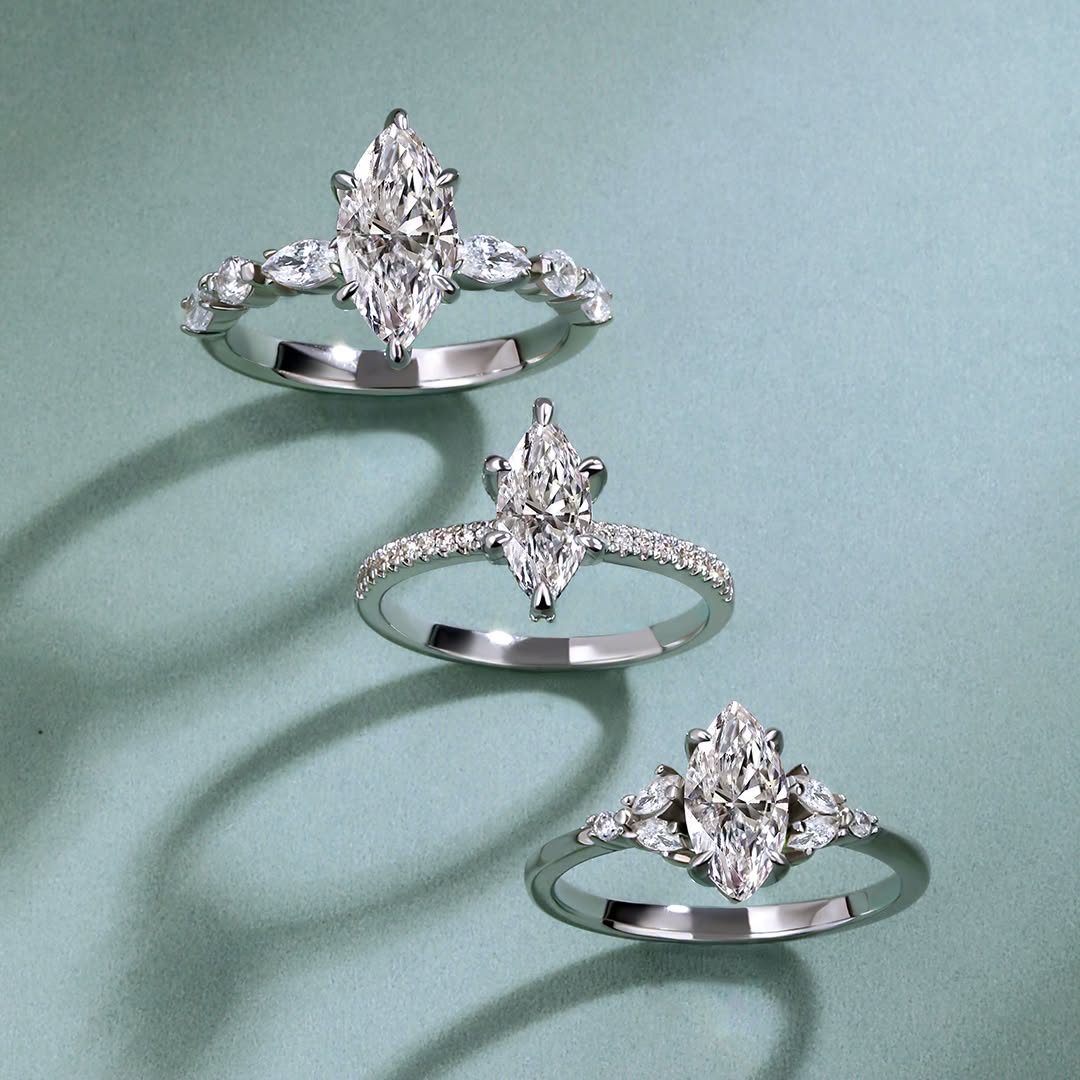
Marquise engagement rings are known for their elongated silhouette and generous face-up appearance. Their shape can make a diamond look larger for its carat weight, but the result depends on the stone’s proportions and cut quality. Before choosing one, there are three details worth examining closely: the center’s light performance, the outline, and the protection around its pointed ends.
Check One: Look at the Center
Understand the Bow-Tie Effect
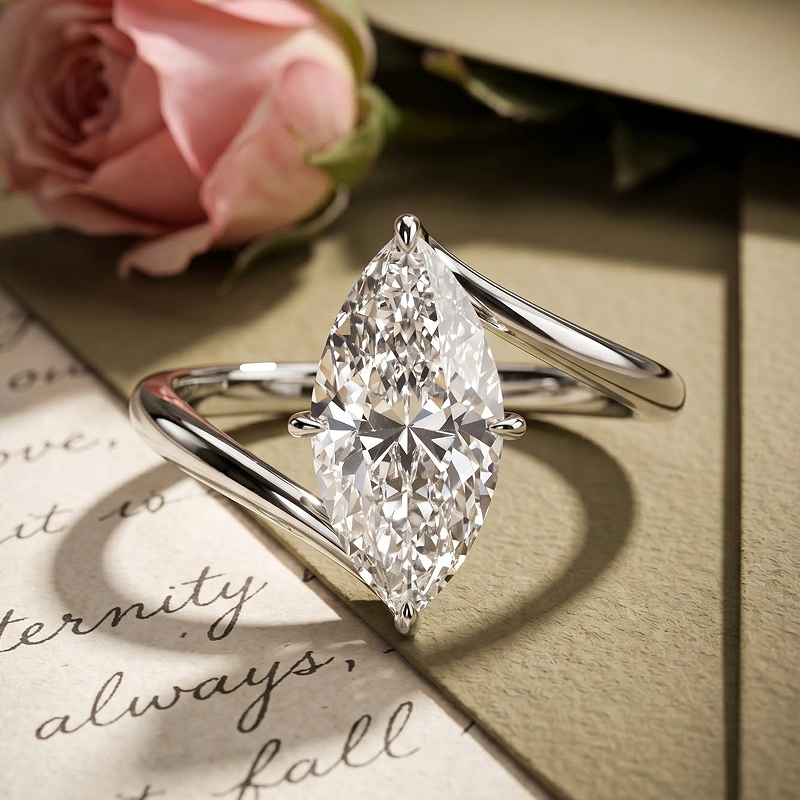
A bow-tie is a dark area that can appear across the center of an elongated diamond. Some contrast is normal, but a broad, persistent dark band can make the stone look less lively. Rather than looking for a diamond with no bow-tie at all, focus on how noticeable the effect is and how the center looks as the stone moves.
If you’re shopping online, look for a 360-degree video that shows the diamond from different angles. Spotlighting can make a stone appear exceptionally bright, so check additional footage under diffuse lighting when available. No single image or lighting setup tells the whole story.
When comparing diamonds with similar grading details, consider their proportions, symmetry, and light performance alongside price. A lower price alone does not establish better value.
Compare Color and Clarity
Color and clarity can influence a diamond’s appearance, but the best choice depends on the individual stone, the metal, and your preferences.
- Color: G–H can be a useful starting point for platinum or white gold. In yellow or rose gold, compare I–J stones if you’re comfortable with a warmer appearance. Check the pointed ends for visible color, as this can vary from one diamond to another.
- Clarity: Compare VS2 and eye-clean SI1 diamonds rather than relying on the grade alone. Inclusions vary in size, position, and visibility, so inspect each stone individually.
If you’re comparing diamonds online, use the grading report to understand the stone’s characteristics, then examine the available photos and videos to see how those characteristics appear in practice. You may find that a lower clarity grade offers the appearance you want, provided the inclusions are not distracting to you.
Check Two: Read the Outline, Not Just the Carat
Carat weight measures a diamond’s weight, not its visible length or width. With marquise diamonds, proportions play a particularly noticeable role because the elongated shape can look quite different depending on the relationship between its length and width.
Compare Millimeter Dimensions
Check the diamond’s length and width in millimeters rather than relying on carat weight alone. A longer, narrower stone creates a different look from a shorter, fuller one, even when both have the same carat weight.
The length-to-width ratio can help you compare these shapes. Divide the diamond’s length by its width to calculate the ratio. A higher ratio indicates a more elongated outline, while a lower ratio indicates a fuller shape.
There is no single ideal ratio for every marquise diamond. The right proportions depend on whether you prefer a slender silhouette or a broader outline. Compare the actual dimensions and images of several stones to see which shape appeals to you.
Check the Shape and Symmetry
A well-balanced marquise diamond usually has two pointed ends that align with its central axis, with curves that look consistent on both sides. If one end appears noticeably different from the other, the stone may look unbalanced when viewed from above.
Symmetry and polish are also worth checking in the grading details. These grades provide useful information, but they do not replace a visual inspection of the diamond’s outline and appearance.
When possible, compare the stone from a straight-on view rather than judging it only from an angled product photo. A head-on view makes it easier to assess the overall shape and whether both sides appear balanced.
Check Three: Protect the Points
The pointed ends are one of the defining features of a marquise diamond, but they also deserve special attention when choosing a setting. The points can be more exposed than the edges of a round diamond, so the way the stone is secured matters.
Choose a Setting That Secures Both Ends
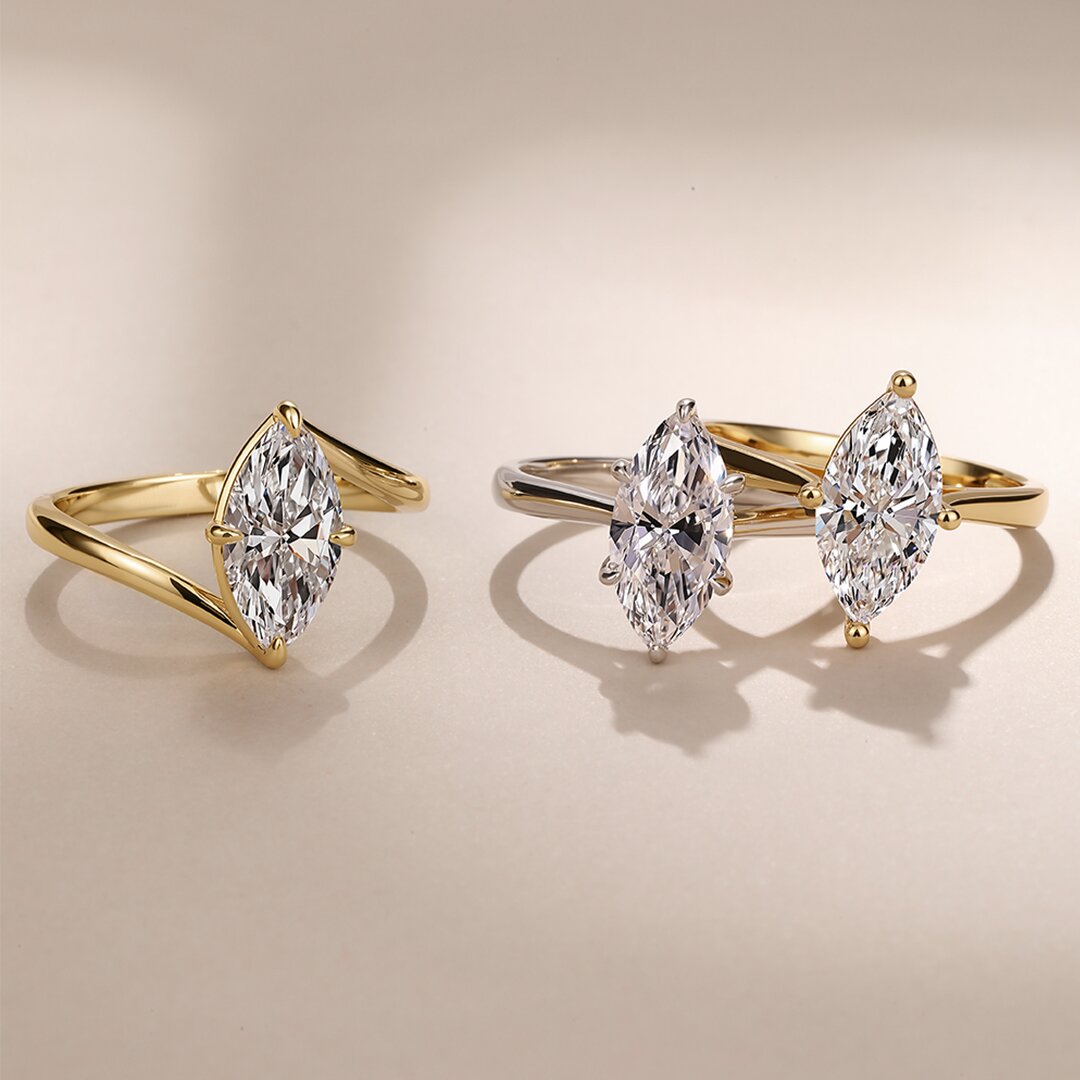
Prongs are commonly used to hold marquise diamonds in place. A setting with prongs at both tips helps secure the pointed ends, while additional prongs can hold the sides of the stone in place.
The right arrangement depends on the design and the diamond itself. Check how the setting secures both tips and whether any part of the stone remains exposed. Consider how the design balances protection, appearance, and ease of cleaning.
Consider Your Everyday Routine
Think about how you use your hands throughout the day. Typing, reaching into pockets, putting on gloves, and carrying bags can bring a raised setting into contact with nearby surfaces.
Setting height, prong placement, and band design all affect how a ring works with your daily activities. A lower-profile setting may be a practical choice if you prefer a ring that sits closer to your finger, while a higher setting can allow more room for certain design details.
If possible, try on a similar style before making a decision. Check the care instructions and recommended inspection schedule to understand how to maintain the setting over time.
The Marquise Engagement Ring Checklist
Before choosing your ring, use this checklist to compare your options:
- Light performance: Check how the center looks as the diamond moves, including the visibility of any bow-tie effect.
- Color and clarity: Compare the grading report with the stone’s actual appearance.
- Dimensions: Compare length and width in millimeters, not just carat weight.
- Shape and symmetry: Inspect the outline from a straight-on view and check that both tips appear balanced.
- Point protection: Look for a setting that securely protects both pointed ends.
- Everyday comfort: Consider setting height, band width, and how the ring feels on your hand.
- Total cost: Compare the diamond and setting together rather than judging value by the center stone’s price alone.
What Affects the Price of a Marquise Diamond?
The price of a marquise engagement ring depends on more than carat weight. Diamond quality, color, clarity, cut proportions, and the choice between a natural and lab-grown diamond all influence the final cost. The setting also matters, particularly if it includes side stones, intricate details, or custom features.
When comparing options, look beyond the listed price. Review each diamond’s grading report, dimensions, and appearance, then consider how the setting affects the total cost. This helps you compare rings on similar terms and decide which features matter most to you.
Lab-Grown Diamonds and Moissanite
If you’re exploring alternatives to natural diamonds, lab-grown diamonds and moissanite offer two different options.
Lab-grown diamonds have essentially the same chemical composition and crystal structure as natural diamonds. They also share the same fundamental optical and physical properties. Their origin is different: lab-grown diamonds are created in a controlled environment rather than formed naturally underground.
Moissanite is a different gemstone with its own optical properties. It often produces more noticeable rainbow flashes, while diamond tends to show a different balance of white light and fire. Neither appearance is inherently better. Your preference depends on the kind of sparkle you enjoy.
Both options can work in a marquise engagement ring. Compare their appearance, durability, price, and available settings before deciding which suits your priorities.
FAQ
1. Are marquise engagement rings still in style?
Yes, marquise engagement rings remain a distinctive choice for couples who want an elongated shape with a vintage-inspired feel. Modern settings and slim bands offer fresh ways to wear this classic cut.
2. Which looks better, a marquise or oval engagement ring?
Marquise diamonds have pointed ends that create a more dramatic silhouette, while oval diamonds have softer, rounded edges. The better choice depends on whether you prefer a bold, elongated shape or a softer outline.
3.What wedding band goes best with a marquise engagement ring?
Curved or contoured wedding bands can follow the outline of a marquise engagement ring, while straight bands create a clean contrast. Try the rings together to see how they fit and whether you prefer a gap-free stack.
4. What carat size is best for a marquise engagement ring?
The right carat size depends on your budget, finger size, and preferred appearance. Compare the diamond’s actual measurements and how it looks on the hand rather than choosing by carat weight alone.
Choose a Marquise Engagement Ring That Suits You
The right marquise engagement ring comes down to the details that matter to you, from the shape of the center stone to the setting and how the ring feels on your hand. Comparing proportions, light performance, and point protection can help you make a more confident choice.
At She Said Yes, you can customize a marquise engagement ring with a lab-grown diamond or moissanite set in 100% recycled gold. Whether you prefer a slender silhouette or a fuller outline, you can plan a ring around your personal style and the look you want to achieve.