Wedding rings and engagement rings are traditionally worn on the fourth finger of the left hand. However, customs vary across cultures and regions, and there is more than one way to wear these meaningful pieces. This guide explains which hand each ring goes on, how to wear them together, and what to know about different wedding ring traditions.
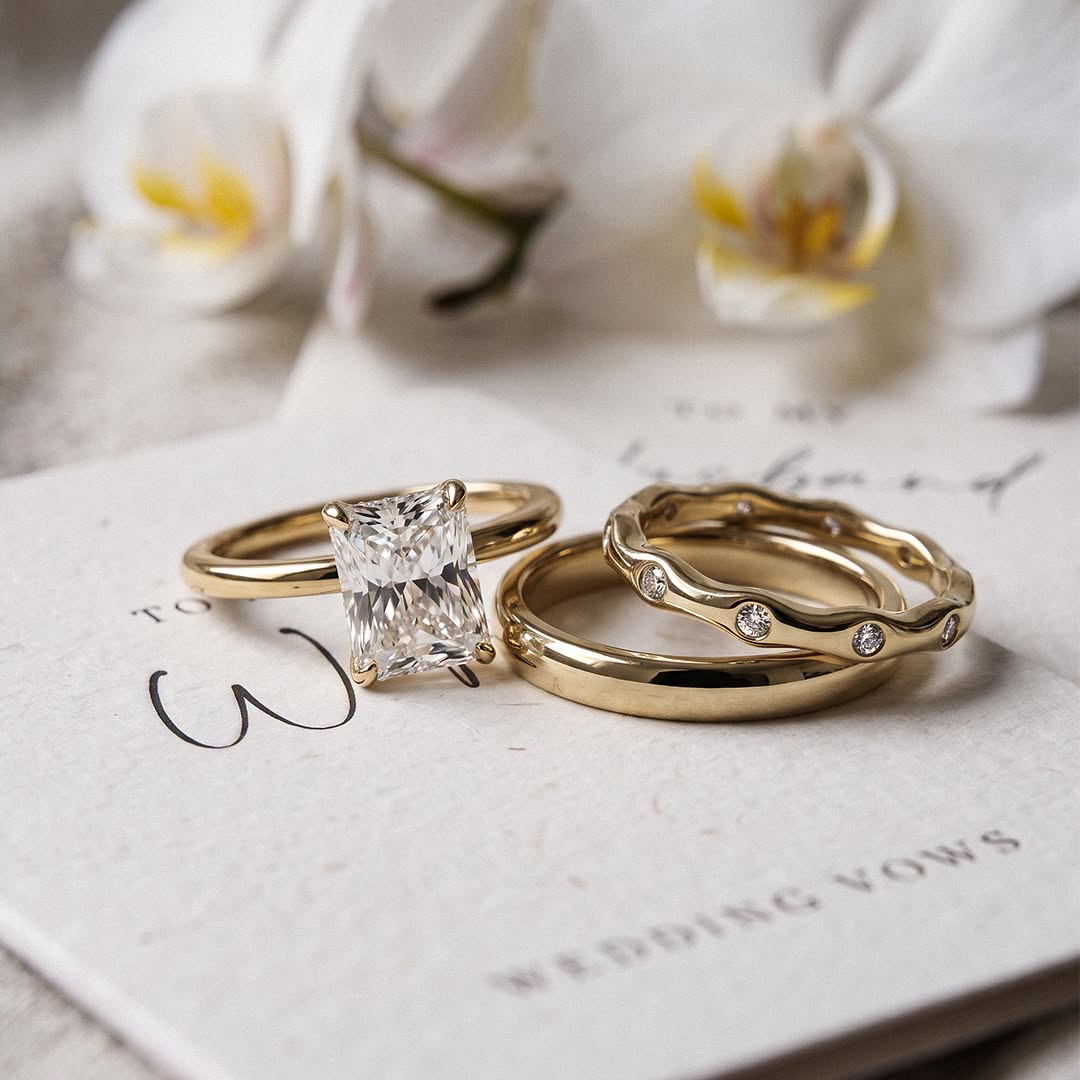
What Hand Does a Wedding Ring Go On?
Wedding ring traditions vary around the world. While many countries favor the left hand, others commonly use the right, with customs shaped by cultural beliefs, religious practices, and family traditions.
Left hand: This is the common choice in the United States, the United Kingdom, Canada, France, Italy, and Australia. The tradition is often linked to the ancient Roman belief in the vena amoris, or “vein of love,” which was thought to connect the ring finger directly to the heart. Modern anatomy does not support this belief, but the story remains part of wedding ring history.
Right hand: In countries such as Germany, Poland, Austria, Norway, Russia, Greece, Spain, and India, wearing a wedding ring on the right hand is common in certain cultural or religious traditions. The reasons vary, from family customs to religious practices and the symbolism associated with the right hand.
What Hand Does an Engagement Ring Go On?
Engagement ring traditions vary by country, with the left hand being common in many Western cultures and the right hand preferred in others.
Scandinavian countries: In some traditions, both partners wear engagement rings, often on the left hand, before adding or changing rings after marriage.
United States and many Western countries: Engagement rings are commonly worn on the left hand, following the same tradition as wedding rings.
Germany and the Netherlands: Engagement rings are often worn on the left hand before marriage, while wedding rings may be moved to the right hand after the ceremony.
Brazil and Colombia: Engagement rings are often worn on the right hand before marriage and moved to the left hand for or after the wedding.
How to Wear Your Wedding Ring and Engagement Ring Together
Once you’re married, you have several ways to wear your wedding band and engagement ring. The traditional arrangement is a good starting point, but the shape of your rings and your everyday routine can influence what works best.
1. Wear the Wedding Band Closest to Your Palm
The traditional order places the wedding band on the finger first, closest to the base of the finger and palm. The engagement ring sits above it, closer to the fingertip.
Some people associate this arrangement with keeping the wedding band closest to the heart. It also creates a familiar way to stack the two rings on the left ring finger.
2. Place the Engagement Ring First
You can reverse the order if you prefer how the rings look or feel that way. Some engagement rings have settings that sit more comfortably above a wedding band, while others work better in the opposite order.
If the rings have raised settings or prominent stones, try wearing them both ways before settling on an arrangement. Check whether the bands sit securely and whether the stones rub against each other.
3. Wear the Rings on Separate Hands
Some people prefer to wear their wedding band on the left hand and their engagement ring on the right. This gives each ring more space and lets its design stand out.
It can be especially useful when the engagement ring has a large center stone, an unusual shape, or a setting that doesn’t sit flush against a wedding band.
4. Choose a Wedding Band That Fits the Engagement Ring
A straight wedding band doesn’t sit perfectly against every engagement ring. A center stone or setting may leave a visible gap between the two rings.
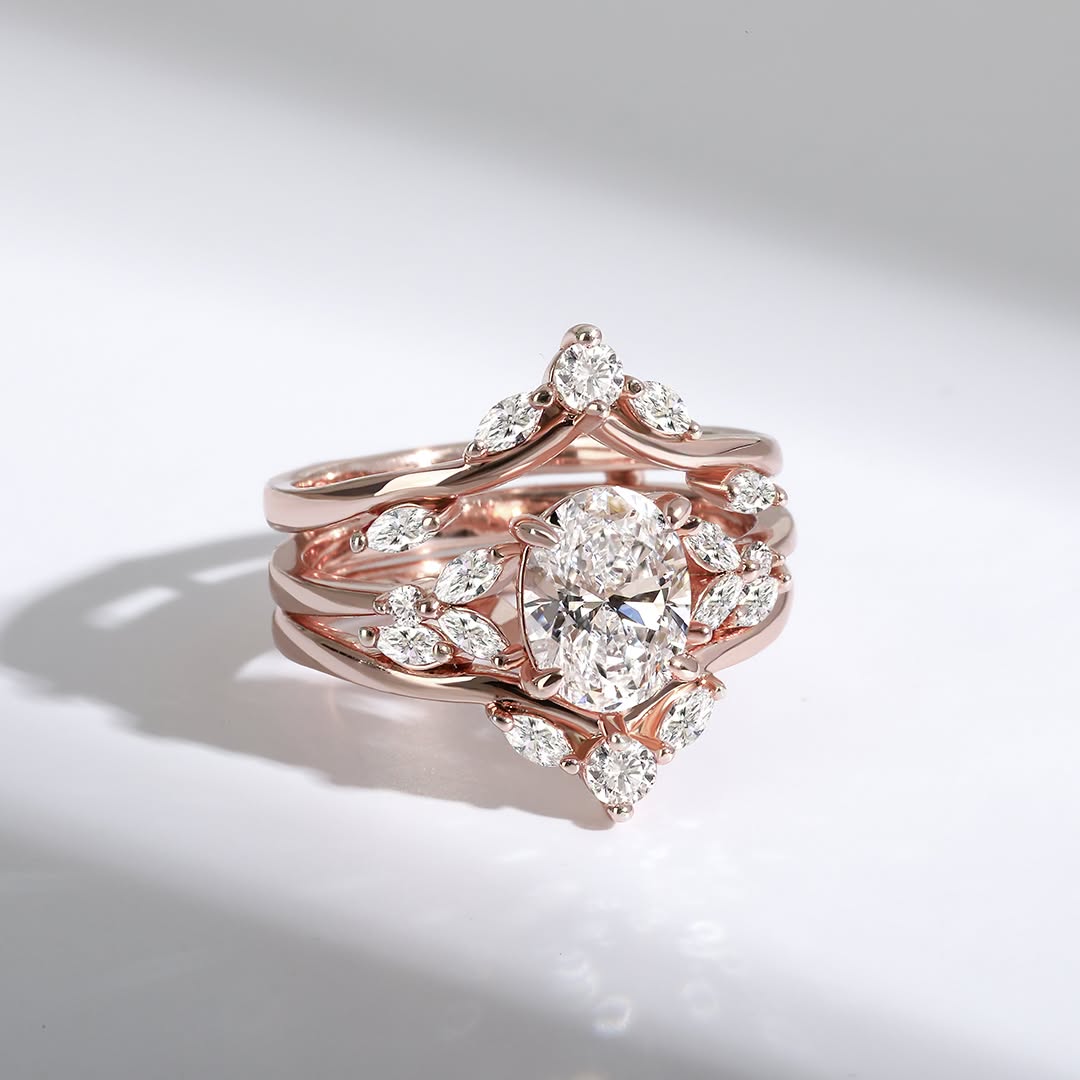
A curved or contoured wedding band can follow the outline of the engagement ring more closely. A straight band can also work well if you like a small gap or prefer a simpler profile.
If you’re choosing both rings together, consider their height, width, metal color, and overall fit. Trying the two designs together can help you decide whether you prefer a close-fitting stack or a little space between them.
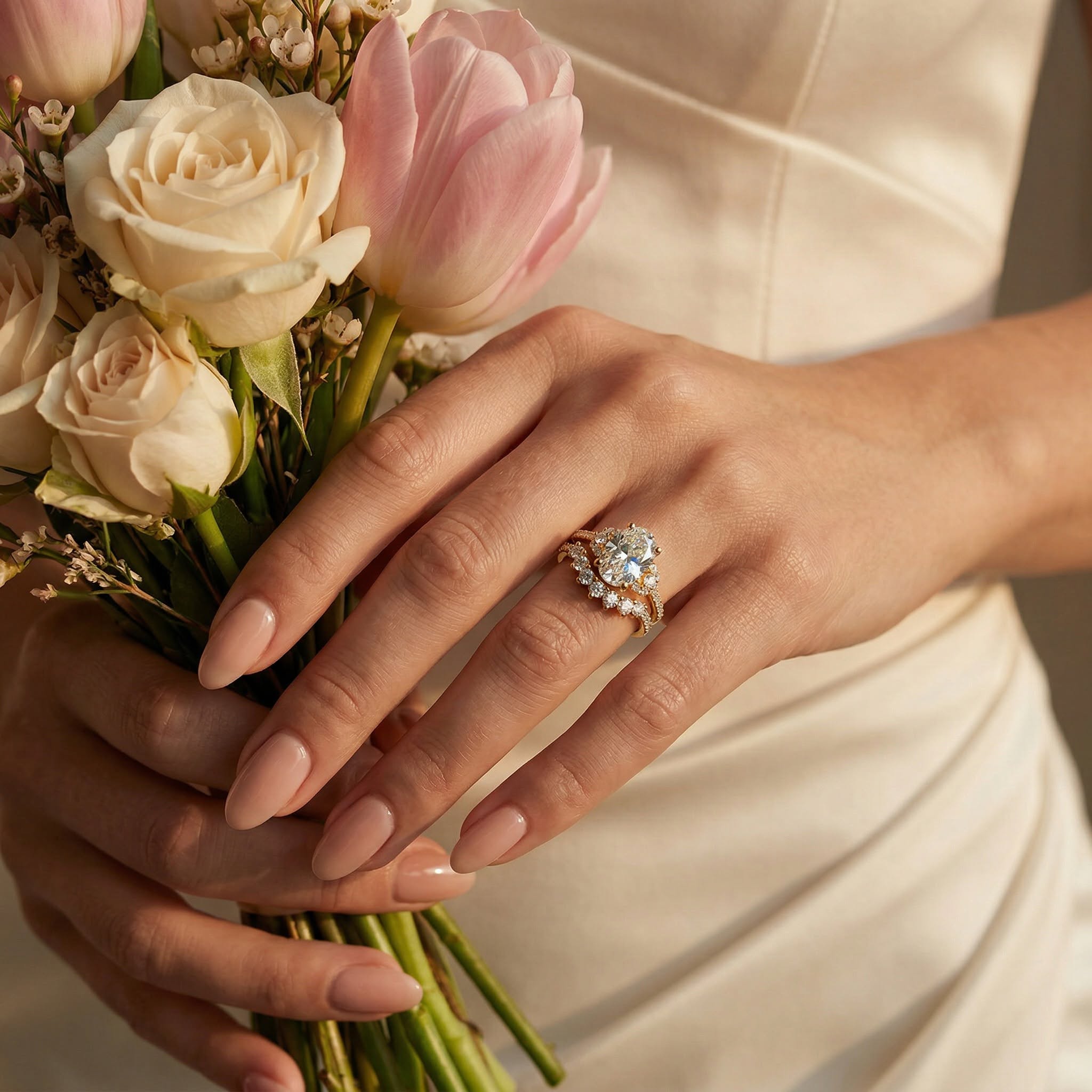
What Should You Do With Your Engagement Ring on Your Wedding Day?
You don’t have to stop wearing your engagement ring on your wedding day. Many people wear it throughout the day, but the timing of the ceremony can affect where it goes.
If your wedding band will be placed on your left ring finger during the ceremony, you have two common options.
Option 1: Move your engagement ring temporarily. Before the ceremony, move it to your right ring finger. Your partner can then place the wedding band on your left ring finger without moving another ring. After the ceremony, return the engagement ring to your left hand and stack it above the wedding band.
Option 2: Leave your engagement ring where it is. You can wear it on your left hand and move it briefly when the wedding band is exchanged, if needed. Your officiant or wedding coordinator can help you decide how to handle the rings during the ceremony.
Do Men and Women Wear Wedding Rings on the Same Hand?
In the United States, men and women traditionally wear wedding bands on the left hand’s ring finger. The basic convention is the same, even though the rings themselves may look different.
Men’s wedding bands often feature a simple profile, a wider band, or a brushed or textured finish. Others include diamonds, colored gemstones, or personalized details. Women’s wedding bands range from plain metal bands to diamond bands designed to sit alongside an engagement ring.
These are style choices rather than strict gender rules. Couples can choose matching bands, complementary designs, or rings that reflect each person’s preferences.
The same flexibility applies to engagement rings. Any partner can wear an engagement ring, and couples can decide whether to exchange rings before marriage or mark their engagement in another way.
How Do You Choose the Right Way to Wear Your Rings?
Tradition is one consideration, but your rings should also suit your hands and daily routine.
- Think about comfort. If you use your hands frequently at work or during hobbies, consider whether a raised setting or stacked rings might catch on clothing or equipment.
- Check the fit. Your fingers can change slightly with temperature and other everyday conditions. Both rings should feel secure without pinching or causing discomfort.
- Consider how the rings sit together. If you want to stack your wedding band and engagement ring, try them together before buying. Their profiles and settings affect how closely they fit.
- Decide whether you want to wear both every day. Some people wear their wedding band daily and save their engagement ring for certain occasions. Others wear both regularly and remove them when an activity could damage or loosen a setting.
- Choose a style that feels like you. Matching metals can create a coordinated look, while different metal colors or band styles can give each ring its own character.
If you’re still choosing your rings, these details are worth considering early. A wedding band that complements your engagement ring can make everyday wear more comfortable without requiring you to compromise on the style you love.
Bottom Line
Wedding and engagement rings carry personal meaning, but that doesn’t mean there’s only one way to wear them. You might follow the familiar tradition of stacking both rings on your left ring finger, choose a wedding band that fits closely against your engagement ring, or wear the two separately.
FAQ
Does the wedding band go on top or bottom?
Traditionally, the wedding band goes below the engagement ring, closer to the palm. The engagement ring sits above it, closer to the fingertip. You can reverse this order if you prefer the fit or appearance.
Do you have to wear your engagement ring after marriage?
No. Many people continue wearing their engagement ring after marriage, but you can wear only your wedding band, alternate between the rings, or wear them on separate hands.
Can you wear a wedding ring on your right hand?
Yes. The right hand is traditional in some cultures, and some people choose it for comfort or personal reasons. There is no universal rule requiring you to wear a wedding ring on the left hand.
Can you wear an engagement ring and wedding band on different hands?
Yes. You can wear your engagement ring on one hand and your wedding band on the other. This can be a practical choice if the rings don’t fit comfortably together or if you want each design to stand out.
Is it bad luck to wear a wedding ring on your right hand?
No universal rule says that wearing a wedding ring on the right hand brings bad luck. Beliefs vary, but the right hand is a traditional wedding ring choice in many communities.