Earrings can transform any outfit, but the perfect pair isn’t just about style. How they feel, how securely they stay in place, and whether they complement your face shape all matter. With countless options and different types of earring backs, it can feel overwhelming to make a choice. This guide will break down the main earring styles, share practical styling advice, and show which backs work best for each look.
How many types of earrings?
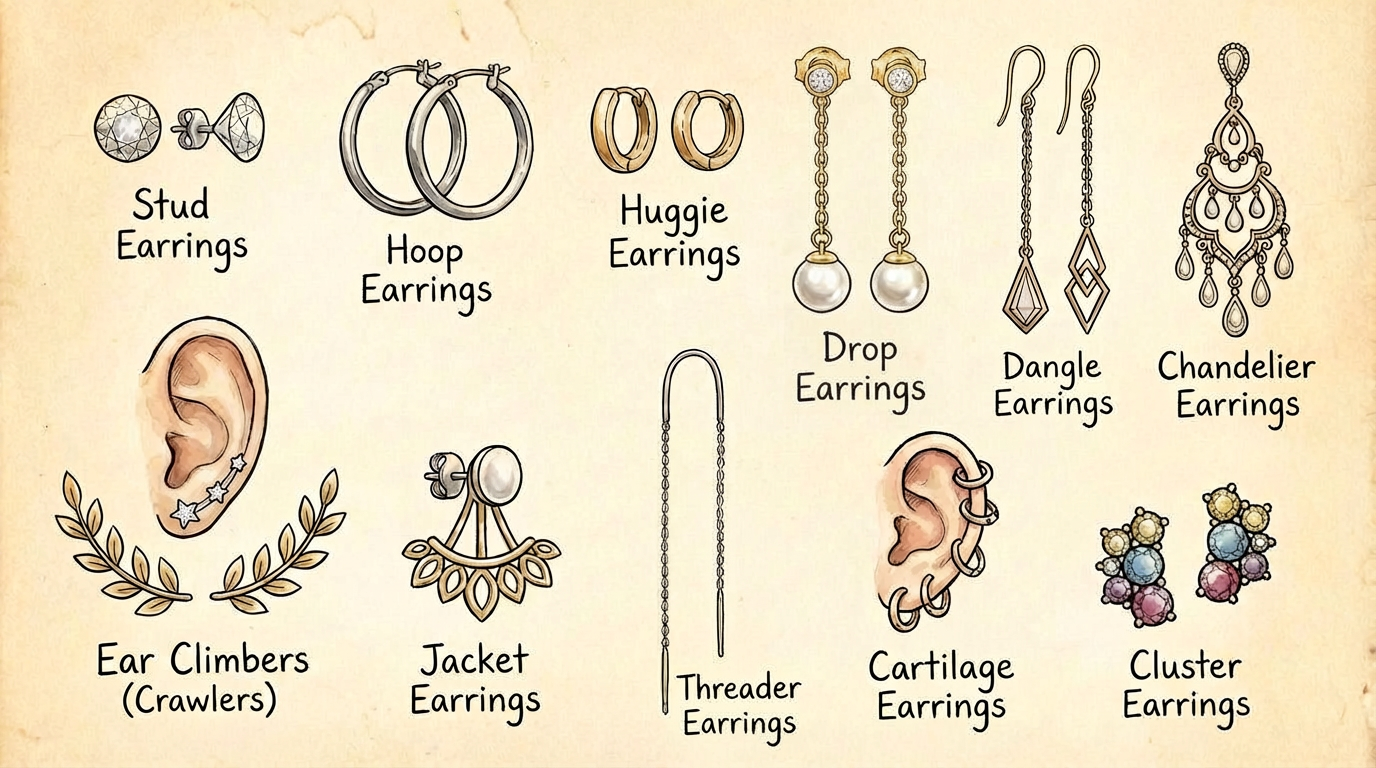
There are 11 main types of earrings, including studs, hoops, huggies, drops, dangles, chandeliers, ear climbers, jackets, threaders, cartilage, and clusters.
Stud Earrings
Stud earrings are the most fundamental jewelry staple. They consist of a single gemstone, metal ball, or ornament that sits on the earlobe and appears to float, with no visible attachment from the front.
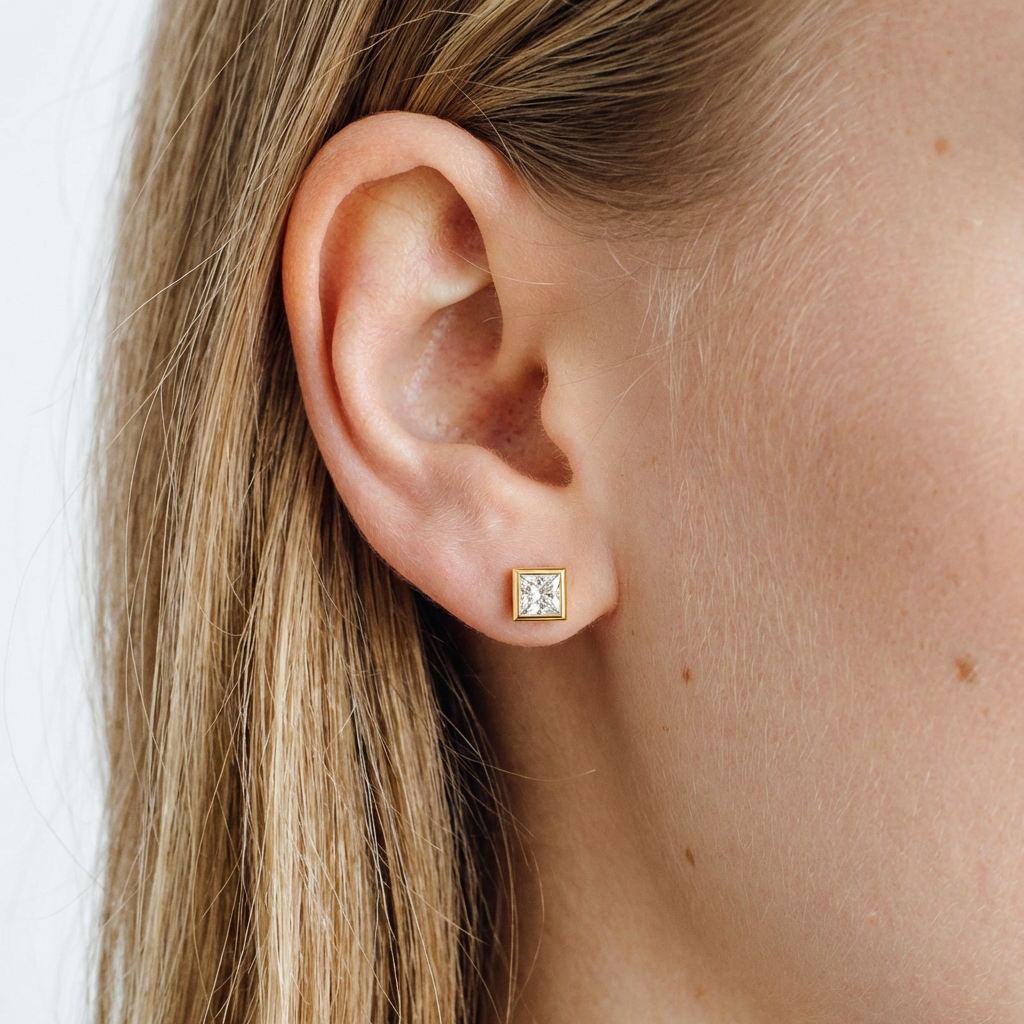
Types: Solitaire diamonds, pearls, cluster studs, and simple metal balls.
Suitable Face Shapes: Studs are truly universal, as they don’t add width or length, complementing every face shape from round to heart-shaped.
Styling Tip: Use larger studs to draw attention to your eyes, or pair tiny studs in additional piercings for a curated, stacked ear look.
Hoop Earrings
Defined by their circular or semi-circular shape, hoop earrings travel from the front of the lobe to the back. They can range from the thickness of a wire to chunky, bold designs, offering a versatile look that can feel either subtle or statement-making depending on size and style.
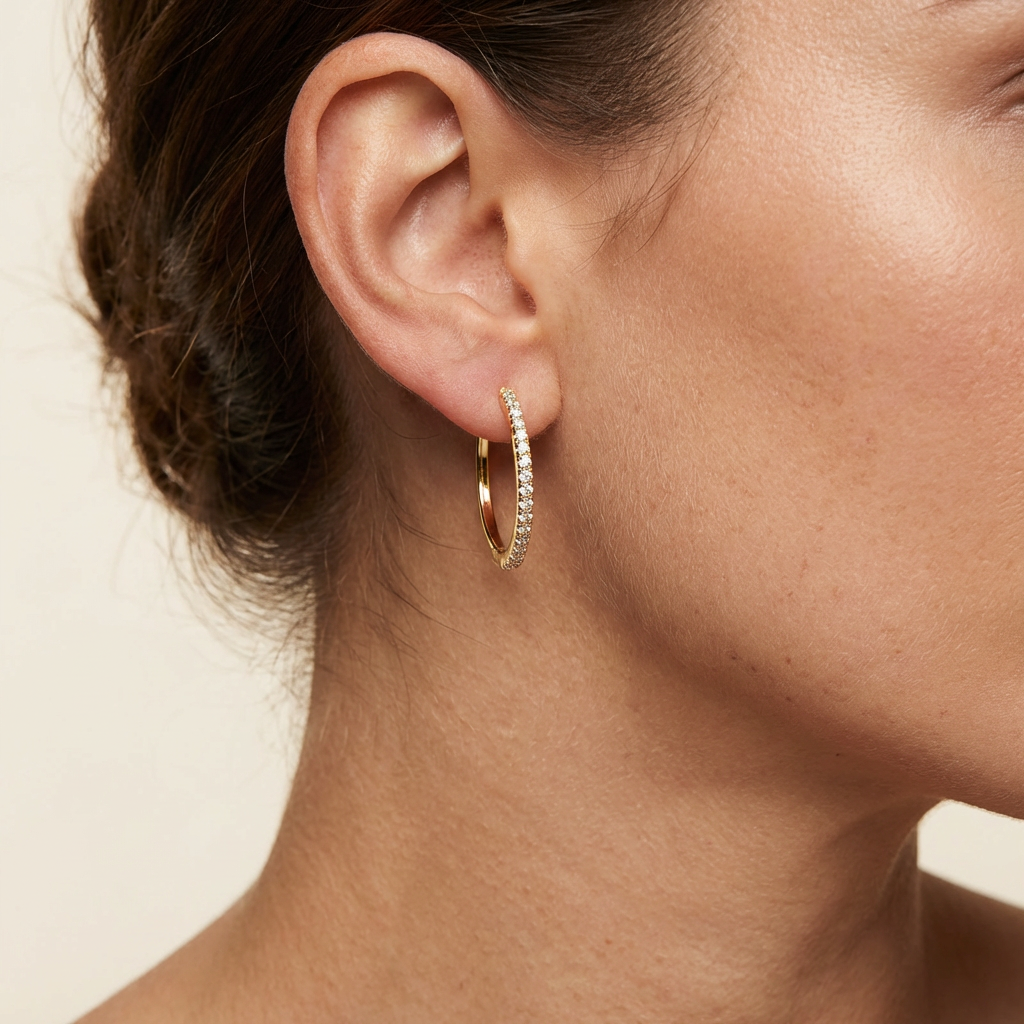
Types: Classic round, oval, textured, or diamond-encrusted hoops with stones along the outer edge.
Suitable Face Shapes: Ideal for faces with square or diamond shapes, as the soft curves help balance strong jawlines and angular features.
Styling Tip: Large, thin hoops create a boho-chic look, while thick gold hoops add sophistication to a simple outfit like a white t-shirt.
Huggie Earrings
A “mini-me” version of the hoop, huggie earrings are small and sit snugly against, or “hug,” the earlobe, creating a close-fitting look that feels both neat and effortlessly stylish.
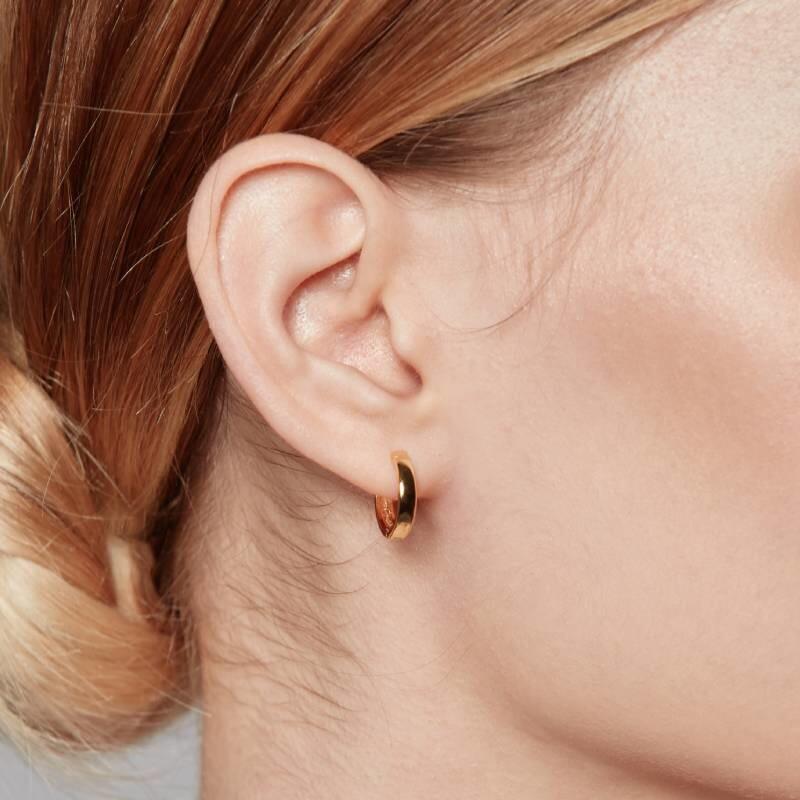
Types: Plain gold, pave-set stones, or those with tiny dangling charms (called “drops”).
Suitable Face Shapes: Oval and long faces. Their small scale doesn’t elongate the face further.
Styling Tip: Huggies are the ultimate choice for everyday comfort. They are comfortable enough to sleep in and won’t get caught in your hair or mask.
Drop Earrings
As the name suggests, these “drop” just below the earlobe. Drop earrings are usually stationary, meaning the ornament is fixed to the base and doesn’t swing wildly.
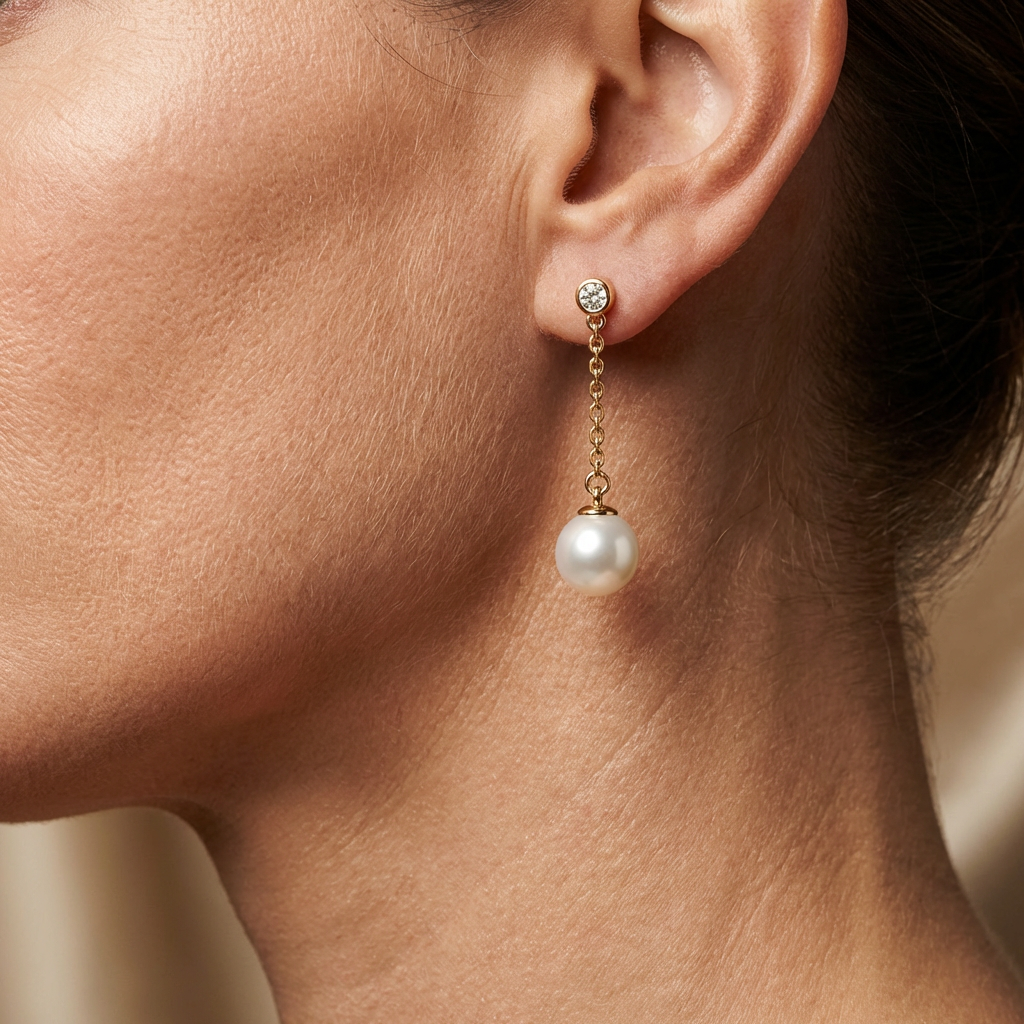
Types: Teardrop gems, pearls, or geometric shapes.
Suitable Face Shapes: Round and heart-shaped. The vertical line helps elongate a round face and creates balance for a wider forehead.
Styling Tip: A pearl drop earring is a timeless choice for professional settings where you want to look polished but not overly flashy.
Dangle Earrings
Often confused with drop earrings, dangles are characterized by movement. They hang lower and are designed to swing back and forth or side to side.
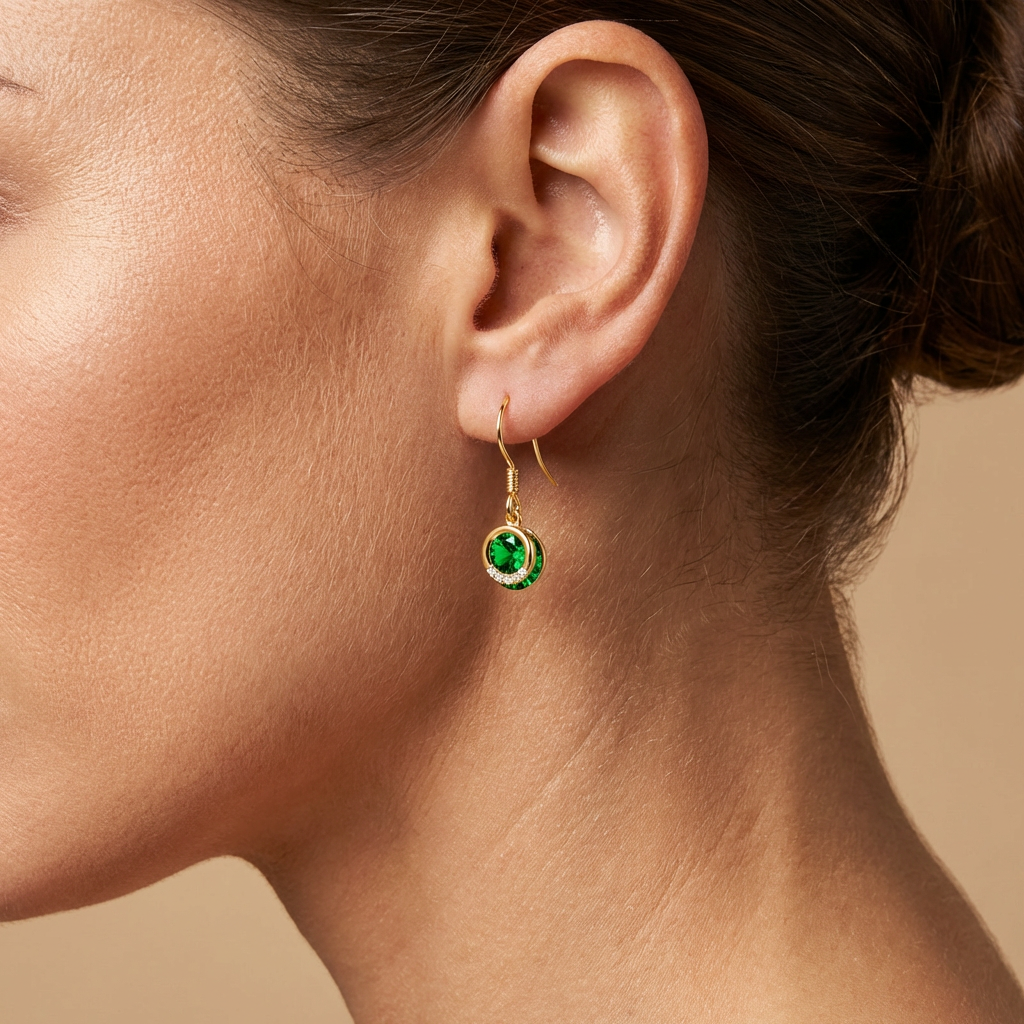
Types: Tassels, long chains, or beaded strings.
Suitable Face Shapes: Heart and square faces. Look for dangles that are wider at the bottom to fill out the space near a narrow chin.
Styling Tip: Let your dangle earrings be the star. If you’re wearing long, swinging earrings, skip the necklace to avoid a cluttered look near your face.
Chandelier Earrings
These are the most ornate of the dangle family. They feature a multi-level decorative design that resembles a luxury light fixture.
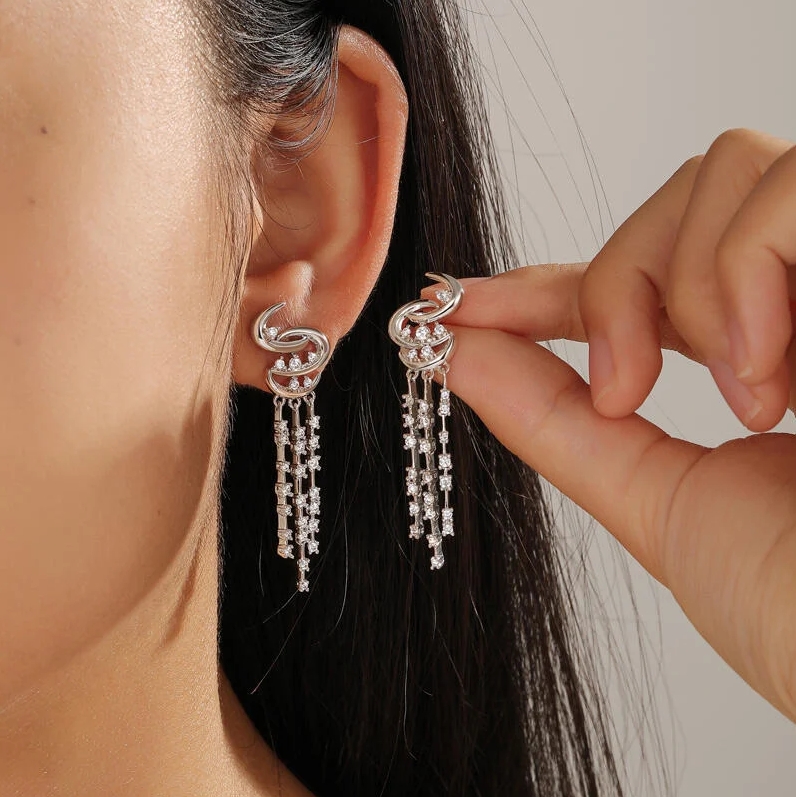
Types: Bohemian filigree, vintage Victorian, or red-carpet diamond styles.
Suitable Face Shapes: Oval and heart-shaped. The volume they provide at the jawline creates a stunning balance.
Styling Tip: Best reserved for formal events. Pair them with an updo or hair tucked behind the ears so the intricate design isn’t lost in your locks.
Climber Earrings
These modern earrings, known as climber earrings, require only one piercing but “climb” up the curve of your earlobe, creating the illusion of multiple piercings.
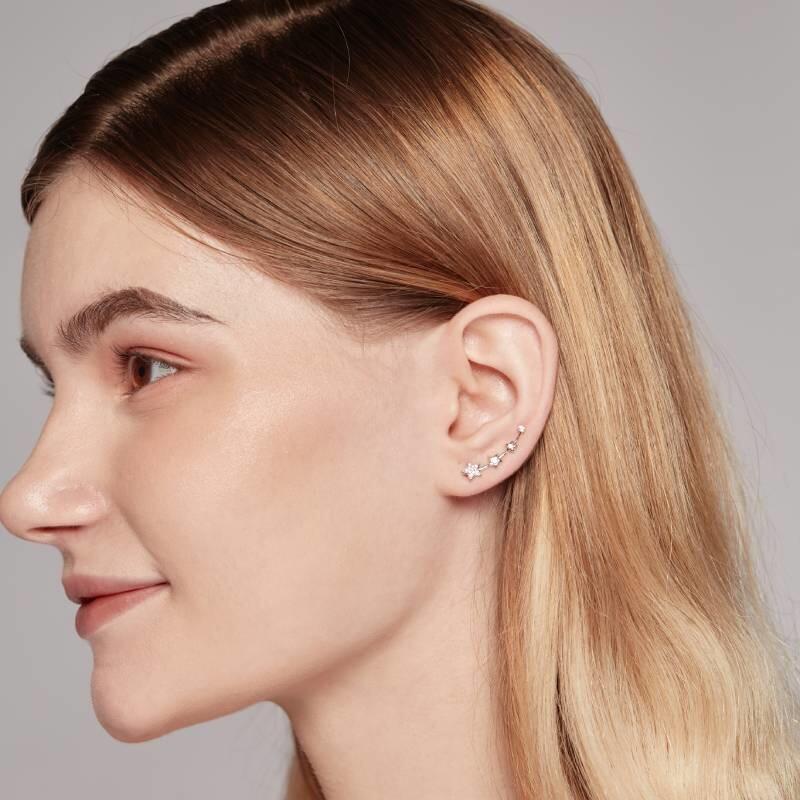
Types: Celestial stars, floral vines, or minimalist bars.
Suitable Face Shapes: All. They focus more on the anatomy of the ear than the shape of the face.
Styling Tip: Wear a climber on one ear and a simple stud on the other for an edgy, asymmetrical look.
Jacket Earrings
A two-part earring. There is a simple stud in the front and a decorative “jacket” that sits behind the earlobe, peeking out from underneath.
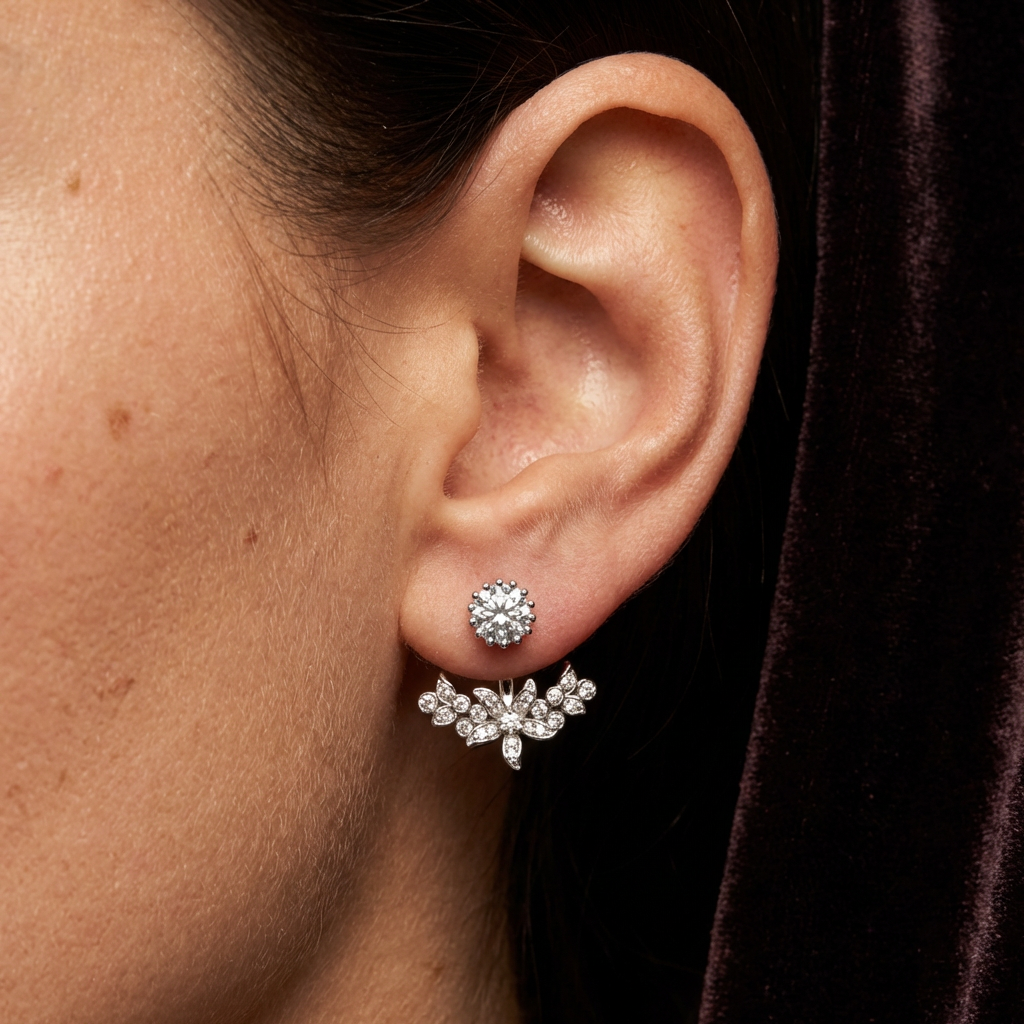
Types: Sparkly “fanned” designs or simple geometric halos.
Suitable Face Shapes: Oval and round. The width they add to the bottom of the lobe can provide a nice horizontal contrast.
Styling Tip: These are the ultimate “day-to-night” accessory. Wear the studs to work, and pop on the jackets for happy hour.
Threader Earrings
A minimalist’s dream, these threader earrings consist of a thin chain that you literally “thread” through your piercing. They hang down on both sides of the lobe.
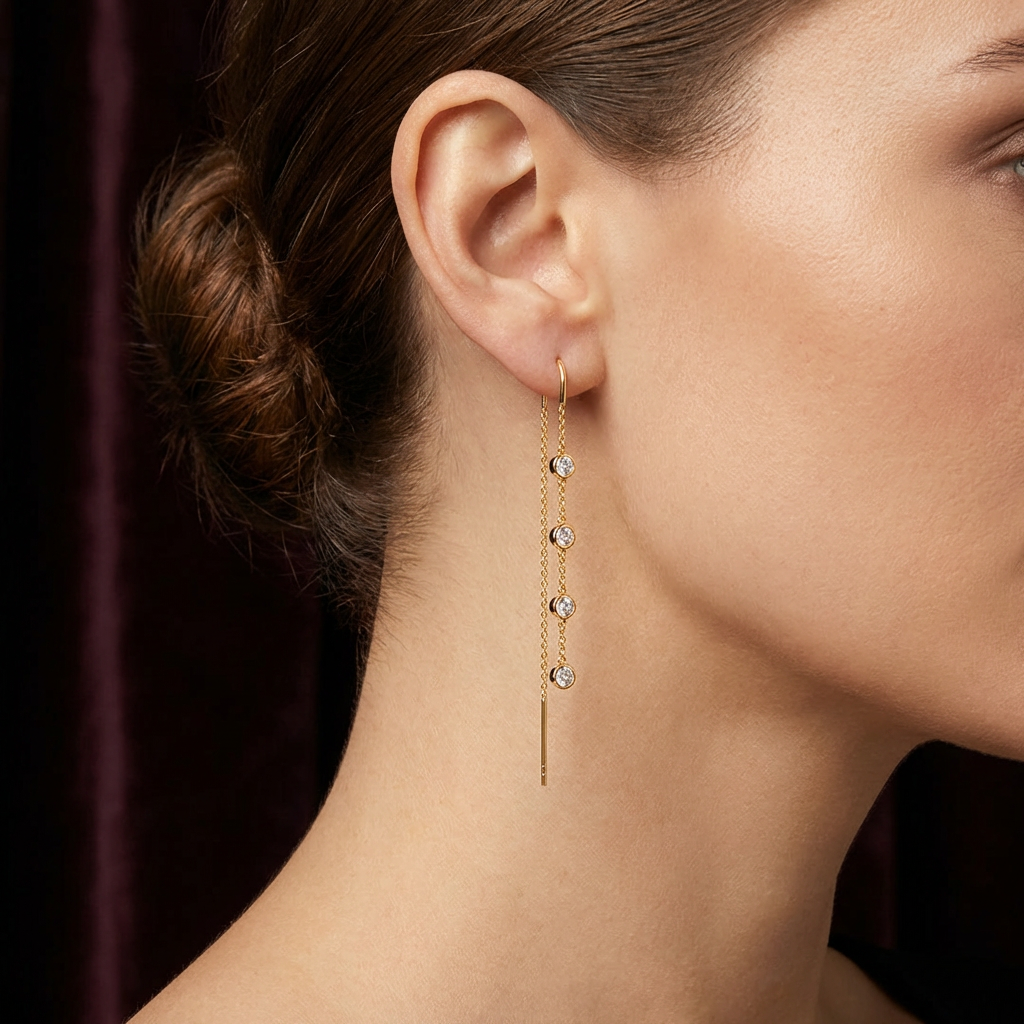
Types: Plain chains or chains ending in a bar or gemstone.
Suitable Face Shapes: Round and square. The delicate vertical lines create a slimming effect.
Styling Tip: You can thread them through multiple holes if you have them, “stitching” your earrings together for a unique, rebellious look.
Cartilage Earrings
Designed for the upper parts of the ear, these are often smaller and sturdier than lobe earrings to accommodate the tougher tissue.
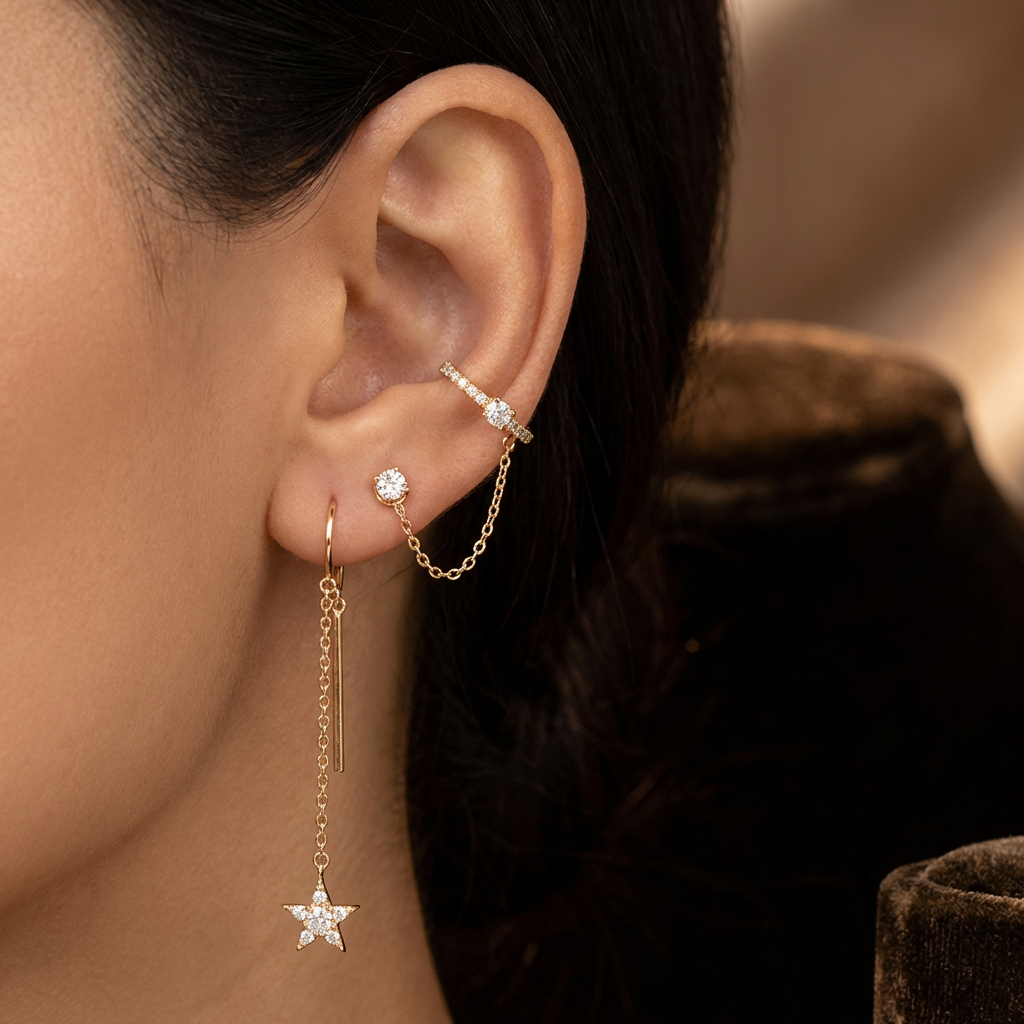
Types: Helix hoops, tragus studs, and flat-back labrets.
Suitable Face Shapes: N/A (Based on ear anatomy).
Styling Tip: When styling cartilage, stick to a cohesive metal theme (all gold or all silver) to keep the “ear party” looking intentional rather than chaotic.
Cluster Earrings
Cluster earrings feature several gemstones or decorative elements grouped tightly together to create one large, textured piece.
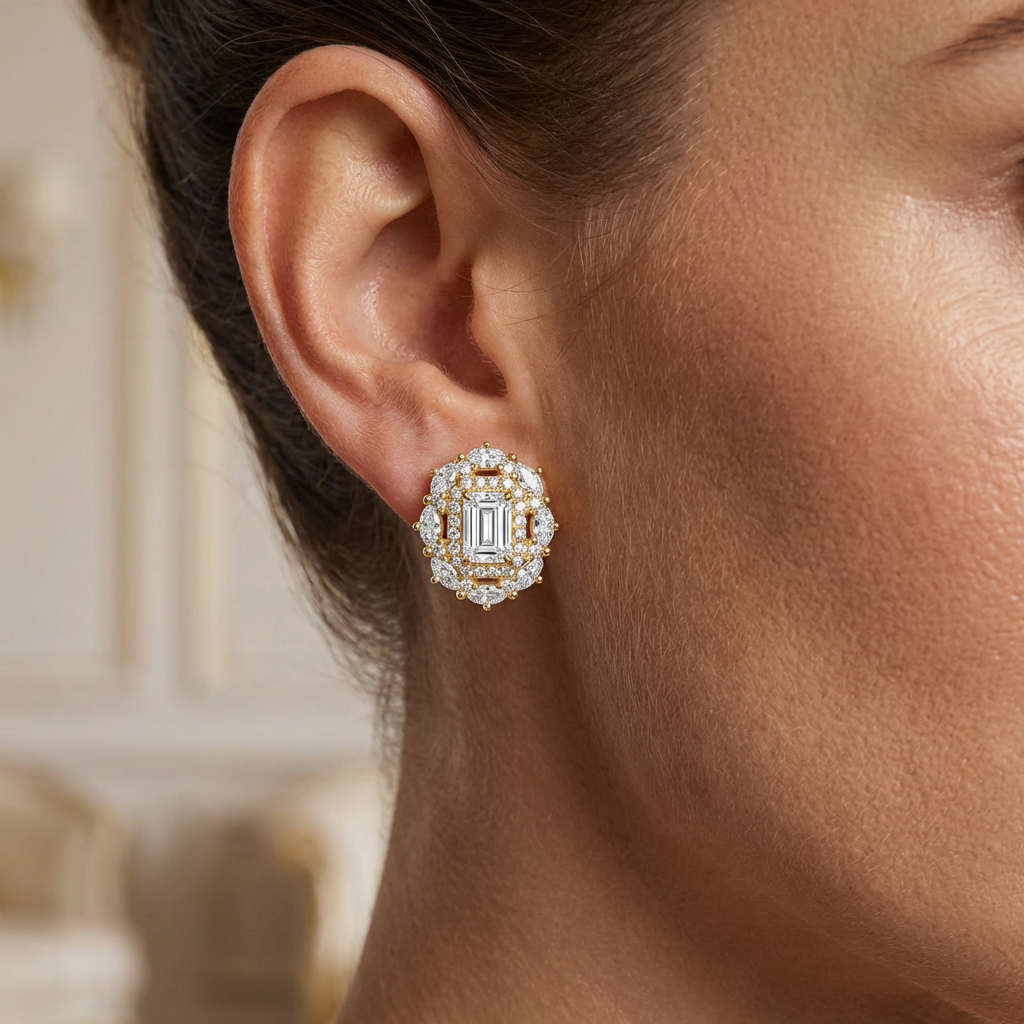
Types: Floral shapes, “starbursts,” or vintage-inspired clusters.
Suitable Face Shapes: Long or Rectorangular. The “bulk” of the cluster adds width to the middle of the face, breaking up the verticality.
Styling Tip: Clusters provide the impact of a dangle earring without the length. They are perfect for when you want high-impact sparkle but need to keep your movement unrestricted.
Earring Backs and Closures
The front of the earring gets all the glory, but the back does all the work. Choosing the right closure ensures comfort and prevents you from losing an expensive investment.
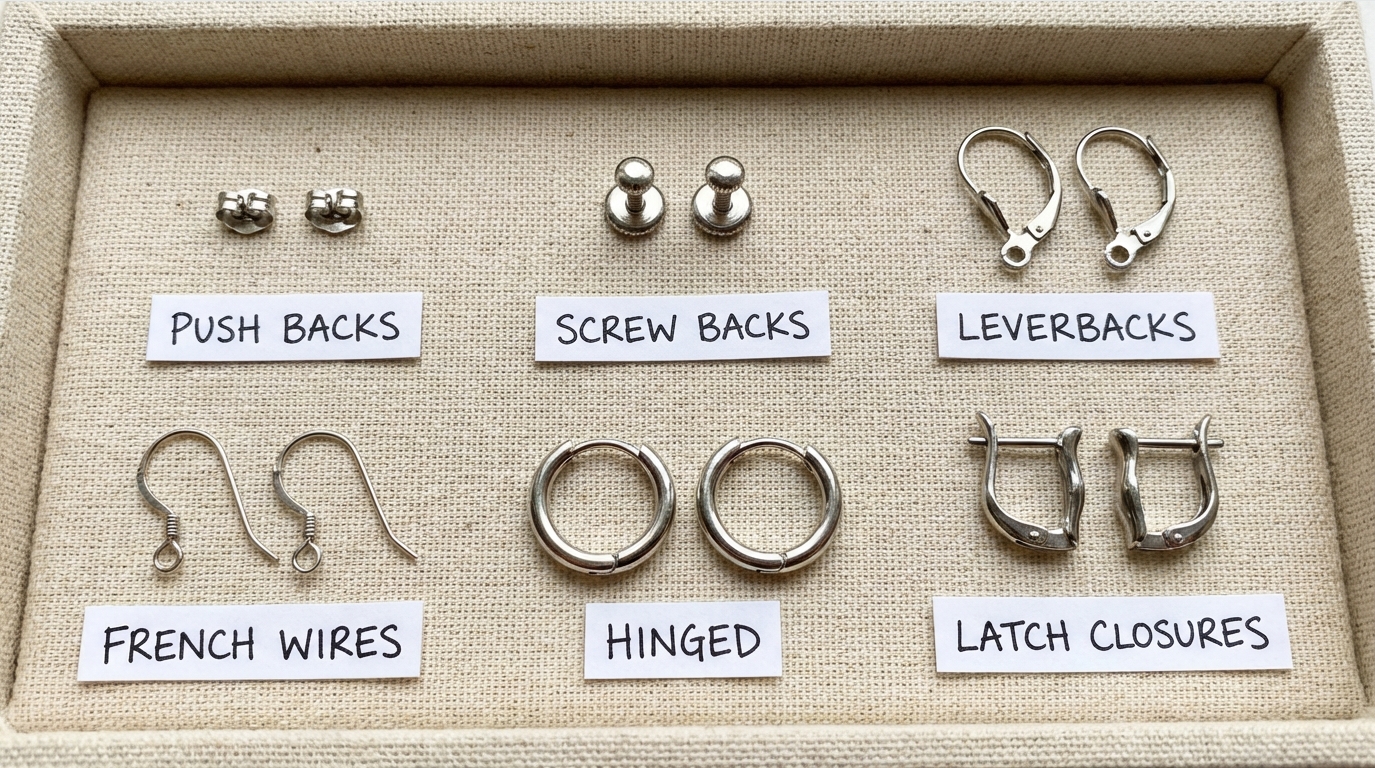
- Push Backs (Butterfly Backs): The most common type. A friction back slides onto the post and is held in place by small “wings.” They are easy to use but can loosen over time, so you should tension them occasionally.
- Screw Backs: The post is threaded like a bolt, and the back screws on. These are the most secure option, making them ideal for high-value diamond studs or children’s jewelry. However, they take a bit longer to put on.
- Leverbacks / French Wires: French wires are simple hooks that hang through the ear. Leverbacks take it a step further with a hinged closure that “locks” the hook in place. These are incredibly comfortable and prevent the earring from sliding out.
- Hinged / Latch Closures: Commonly found on hoops and huggies. The earring has a hinge at the bottom, and the wire snaps into a groove or latch at the back. These provide a seamless look and are very secure for active lifestyles.
Choosing Earrings by Occasion
Your lifestyle dictates your jewelry choices. Here is how to navigate different scenarios:
- Everyday: Look for comfort. Small hoops, huggies, or simple gold studs are your best friends. They won’t snag on your scarf or feel heavy by 5:00 PM.
- Formal / Date Night: This is your time to shine—literally. Opt for chandeliers, dangles, or statement jackets. Choose pieces that catch the light and add a sense of drama to your outfit.
- Work: Professionalism is key. Stick to “quiet luxury”—pearl drops, small-to-medium hoops, or elegant clusters. Avoid anything that makes too much noise (like “clinking” dangles) when you move your head.
A Note on Styling and Comfort
If you have sensitive ears, always prioritize materials. Look for 14k gold, sterling silver, or surgical-grade titanium. Avoid “base metals” like nickel, which can cause itching and redness. Furthermore, if you love the look of heavy chandelier earrings but hate the “pulled” look on your lobes, look for “earring support patches” that help distribute the weight across the back of the ear.
Conclusion
Earrings are perhaps the most versatile tool in your fashion arsenal. From the understated elegance of a diamond stud to the bold personality of a colorful threader, the right pair can transform your look and your mood.
When choosing your next pair, remember the formula: consider your face shape to find balance, select a back that matches your activity level, and always choose materials that treat your skin with kindness. With this knowledge, you can shop with confidence, knowing exactly which styles will make you look—and feel—your absolute best.