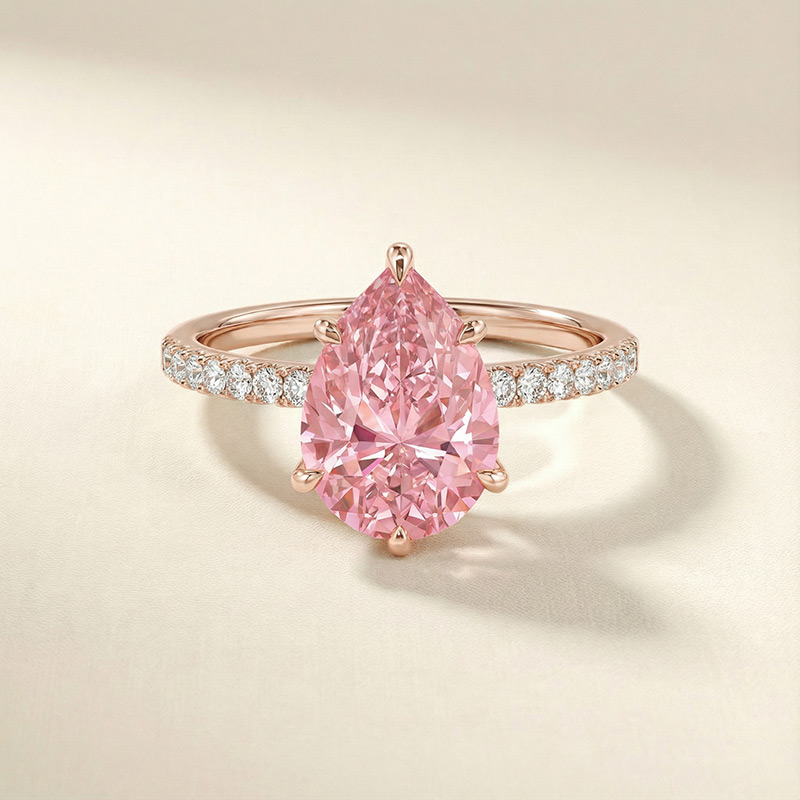
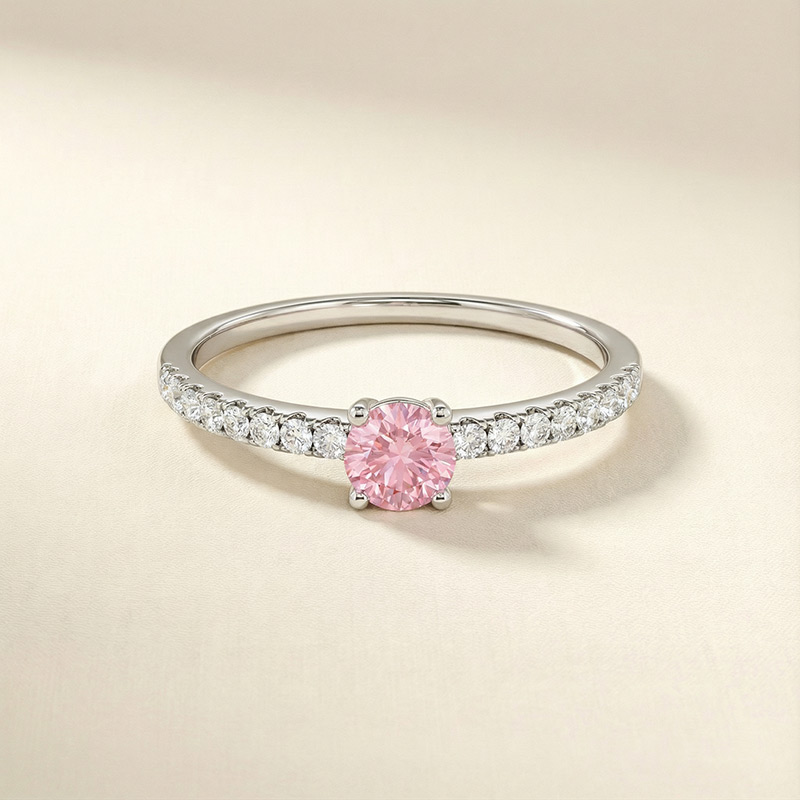
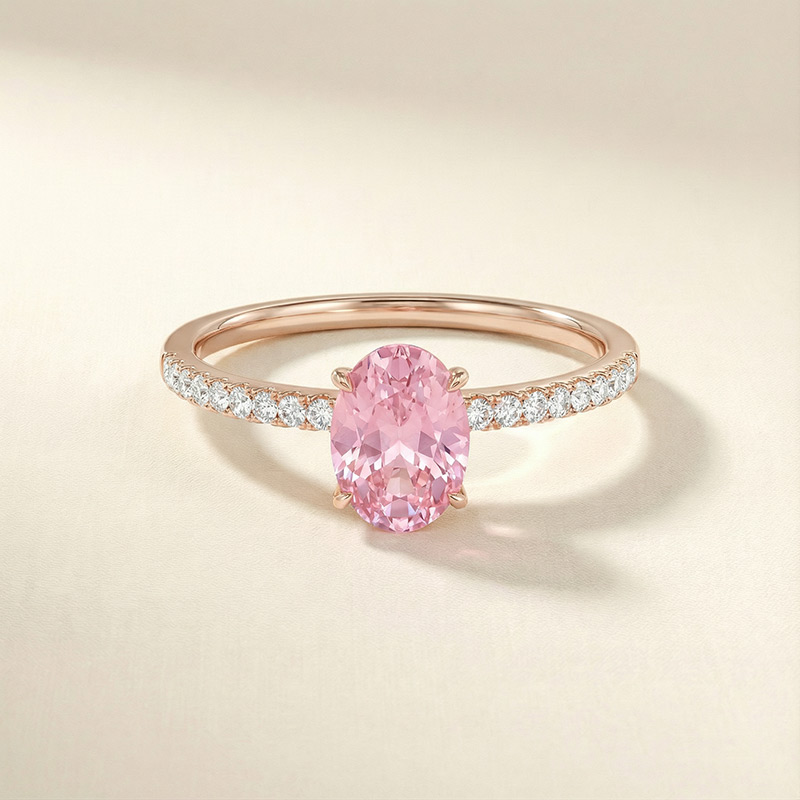
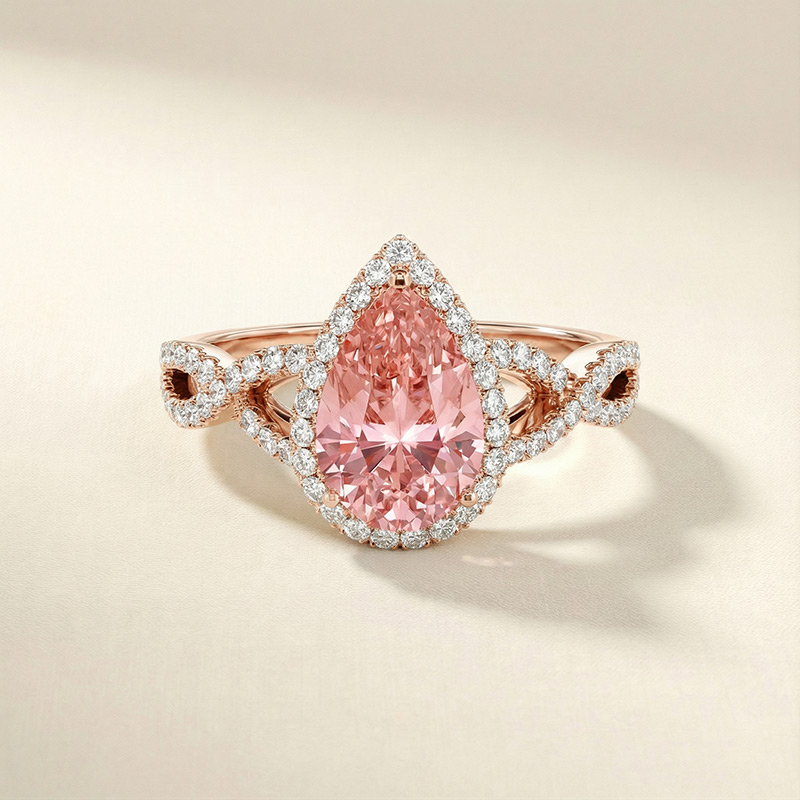
The short answer is a resounding yes. Pink sapphire is an excellent choice for an engagement ring, offering a unique blend of exceptional durability, profound romantic symbolism, and captivating, vibrant beauty. For the modern couple seeking a meaningful alternative to traditional gemstones, it presents a compelling option that stands the test of time—both physically and stylistically.
This comprehensive guide will delve into everything you need to know about this enchanting gem. We’ll explore its scientific origins, weigh its pros and cons, compare it to other popular pink stones, and provide expert guidance on selecting and caring for your perfect pink sapphire.
What is a Pink Sapphire?
Pink sapphire belongs to the corundum family, the same mineral species as ruby and all other sapphires. Its defining scientific characteristic? Corundum (Aluminum Oxide) is one of the hardest minerals on Earth. The stunning pink colour is not from the base mineral but from trace elements—primarily chromium—that become part of the crystal structure as it forms deep within the earth.
The colour can range from a delicate, soft pastel pink to an intense, vivid hot pink. Generally, the purity and saturation of the pink colour are the most significant drivers of its value, more so than the presence of minor inclusions.
Major sources of natural pink sapphire include Madagascar (now a leading producer of beautiful pinks), Sri Lanka (known for its classic, often lighter-toned stones), Myanmar (Burma), and East Africa. It’s also important to note that high-quality lab-created pink sapphires exist. These have the same chemical, physical, and optical properties as mined stones but are grown in controlled environments, often offering greater clarity and colour consistency at a different price point.
Popular Pink Sapphire Hues
The allure of pink sapphire lies in its breathtaking colour palette. Each hue carries its own personality, from gentle whispers of colour to bold, vibrant statements.
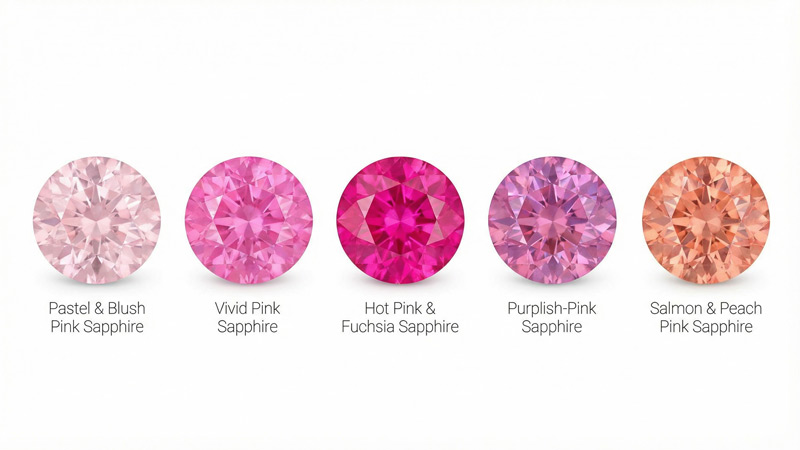
- Pastel & Blush Pink: The epitome of delicate romance. These stones exhibit a soft, often slightly milky or ethereal quality, offering a subtle and elegant look. They capture the gentle light of dawn and are perfect for those seeking an understated, feminine sophistication.
- Vivid Pink: This is the classic, quintessential pink—bright, lively, and radiant with pure, saturated colour. It’s a joyful and confident choice, representing the heart of the pink sapphire family. This hue offers maximum “pink” impact without secondary overtones.
- Hot Pink & Fuchsia: A step more intense, these gems feature subtle purple or red undertones that create electric vibrancy. They are bold, modern, and carry a dynamic energy. This shade is for the individual who desires a stone that is impossible to ignore and makes a definitive style statement.
- Purplish-Pink (Lilac or Lavender): A beautiful hybrid that masterfully blends cool violet with warm pink, creating a sophisticated and unique hue reminiscent of spring flowers like lilacs. This colour often has a magical, chameleon-like quality, appearing to shift slightly in different lights.
- Salmon & Peach Pink: These warmer, rarer tones introduce enchanting hints of orange or gold, offering a soft, sunset-like glow that is exceptionally flattering on the skin. They evoke warmth, tenderness, and a vintage-inspired charm.
Why Choose a Pink Sapphire? Pros and Cons
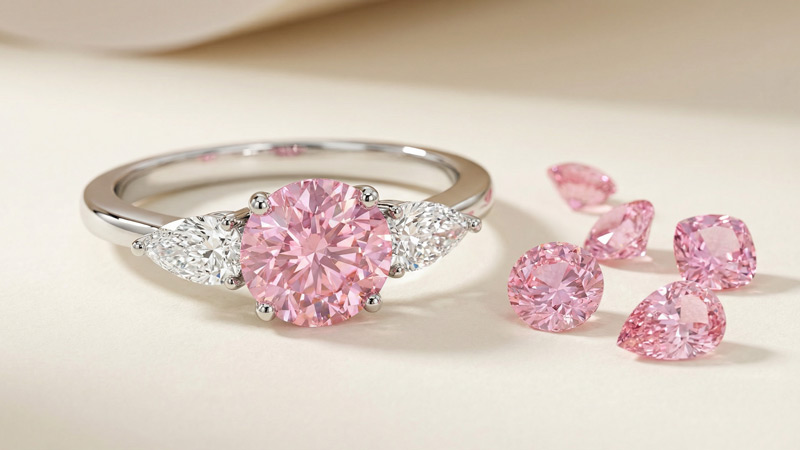
Pros:
- Durability (The #1 Factor for Engagement Rings): With a rating of 9 on the Mohs scale of hardness, sapphire is second only to diamond. This exceptional hardness makes it highly resistant to scratching, perfect for a ring worn every day. It ensures your stone will retain its flawless beauty for a lifetime.
- Symbolism & Meaning: Pink sapphires are rich with symbolism. They are historically associated with love, compassion, loyalty, and femininity. Choosing a pink sapphire can represent a tender, romantic, and committed love, making it a profoundly meaningful and personal choice for an engagement.
- Uniqueness & Variety: It offers a spectacular spectrum of pink hues, allowing for deep personalization. Your ring can reflect a specific shade that resonates with you, ensuring it is truly one-of-a-kind.
- Value: Pink sapphires offer incredible beauty and durability at a often more accessible price per carat than their pink diamond counterparts. This allows you to opt for a larger or higher-quality stone within your budget.
Cons:
- Colour Variability: Natural pink sapphires can exhibit colour zoning—areas of lighter and darker colour. A skilled cutter works to orient the stone to show the most even, beautiful face-up colour, but it’s a natural characteristic to be aware of.
- Treatment Disclosure: It is common for pink sapphires to undergo heat treatment to improve colour consistency and saturation. This is a stable and accepted practice in the gem trade, but any ethical jeweller must disclose such treatments to you openly.
Pink Sapphire vs. Other Popular Pink Gemstones
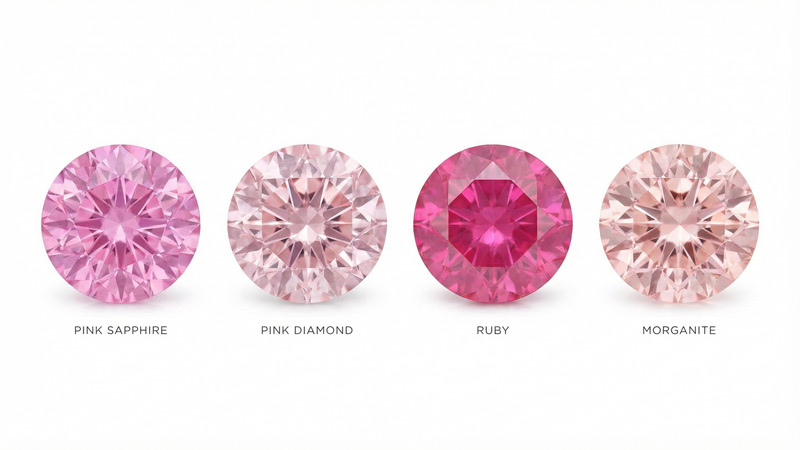
Choosing a pink gemstone involves understanding key differences in composition, durability, and appearance. Here’s how pink sapphire compares to other popular choices.
Pink Gemstone Comparison at a Glance
| Feature | Pink Sapphire | Pink Diamond | Ruby | Morganite |
|---|---|---|---|---|
| Mineral Family | Corundum | Diamond | Corundum | Beryl |
| Hardness (Mohs) | 9 (Excellent) | 10 (Exceptional) | 9 (Excellent) | 7.5-8 (Good) |
| Key Colour Range | Pastel to Hot Pink, Purplish-Pink | Faint to Vivid Pink | Deep Red to Reddish-Pink | Peach-Pink to Blush Pink |
| Primary Distinction | Durable, vibrant pink corundum | The rarest & most expensive pink gem | Deep red, saturated corundum | Softer stone with a peachy glow |
| Best For… | Durability, value, & colour variety | Ultimate rarity & prestige | Classic, passionate red hue | Vintage-inspired, soft romance |
Pink Sapphire vs. Pink Diamond:
While both are premier choices for fine jewelry, their differences are profound. Pink diamonds are pure carbon, forming under extreme pressure, and are among the rarest gems on Earth, especially in intense colours. This rarity commands astronomical prices. Pink sapphires, composed of corundum, offer a similarly vibrant visual impact and exceptional durability (9 vs. 10 on the Mohs scale) but at a fraction of the cost. For those who prioritize the colour pink and supreme hardness but seek greater value and size options, pink sapphire presents a stunning and practical alternative.
Pink Sapphire vs. Ruby:
This comparison is fascinating, as they are gemological siblings. Both are varieties of the mineral corundum. The distinction lies solely on a spectrum of colour saturation. Gemological labs draw a boundary where lighter, dominant pink tones are classified as pink sapphire, while stones with dominant, deep red tones earn the title ruby.
Pink Sapphire vs. Morganite:
This is a common comparison for romantic pink engagement rings, where durability becomes paramount. Morganite, a beryl family gem, is notably softer (7.5-8 on the Mohs scale) than sapphire, making it more susceptible to scratches over a lifetime of daily wear. Colour-wise, morganite typically displays a soft, peachy-pink, while pink sapphire achieves a wider and more vibrant range of pure pinks. Furthermore, eye-clean clarity is more consistently found in sapphires, whereas morganite often contains visible inclusions.
Key Considerations When Buying a Pink Sapphire
Selecting an exceptional pink sapphire requires an understanding of quality. Gemologists use the “Four Cs” framework—adapted for coloured stones—to assess value and beauty. Mastering these fundamentals will guide you to a choice that combines personal love with expert assurance.
- Colour: The single most important factor. Consider the hue (is it a pure pink, purplish-pink, or peach-pink?), tone (how light or dark is it?), and saturation (how intense and vivid is the colour?). Choose what speaks to you personally.
- Clarity: Pink sapphires typically have some inclusions. Look for a stone that is “eye-clean” (no visible inclusions to the naked eye). Some inclusions, like fine silk, can even enhance the gem’s soft appearance, but avoid large, distracting fractures.
- Cut: A quality cut is essential. It should maximise the stone’s brilliance (light return) and colour presentation. A well-cut sapphire will be symmetrical, with good proportions to avoid a “window” (a see-through, lifeless area in the center).
- Carat Weight: Sapphires are denser than diamonds. A one-carat round sapphire will have a slightly smaller diameter than a one-carat round diamond. Focus on the millimetre measurements and how the stone looks on the finger, not just the carat weight.
Caring for Your Pink Sapphire Jewelry
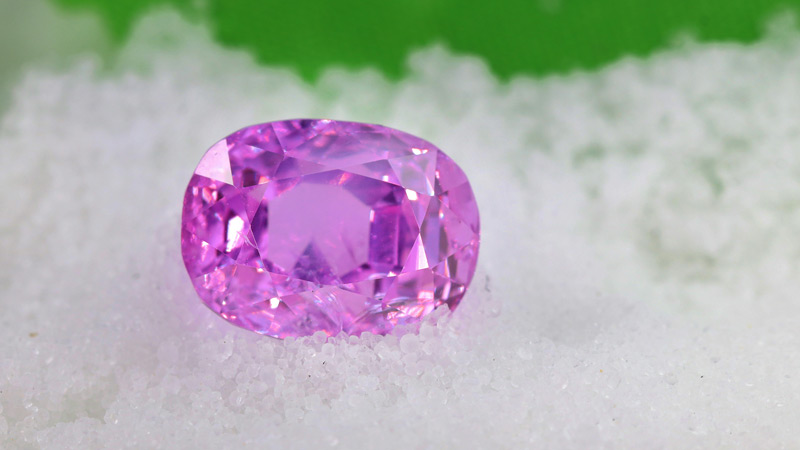
A pink sapphire is an investment in beauty meant to last generations. While its exceptional hardness protects it from scratches, proper care and maintenance are essential to preserve its fiery brilliance and secure setting for years to come. Following these simple guidelines will ensure your jewelry remains as stunning as the day you acquired it.
- Gentle Cleaning at Home: The safest method is to use a soft-bristled toothbrush, a drop of mild dish soap, and lukewarm water. Gently scrub the stone and setting, then rinse thoroughly under running water and pat dry with a soft, lint-free cloth. Avoid harsh chemicals (bleach, chlorine, acetone) and ultrasonic cleaners, especially if the stone has known fractures or significant inclusions, as vibrations can potentially worsen them.
- Smart Storage: Always store your pink sapphire ring or jewelry separately from other pieces. Even though it’s hard, it can scratch softer gems and metals. A soft cloth pouch or a dedicated compartment in a lined jewelry box is ideal to prevent contact and abrasion.
- Professional Check-ups: Treat your fine jewelry like a prized possession. Have it inspected by a professional jeweller every 6 to 12 months. They will check the security of the prongs or setting, ensuring the stone is held firmly and protecting it from accidental loss. They can also give it a professional clean to restore its maximum sparkle.
Conclusion
So, is a pink sapphire a good engagement ring stone? Absolutely. It successfully marries the resilience required for a lifetime of wear with a depth of meaning and a spectrum of beauty that is deeply personal. It stands as a testament to a love that is both strong and tender, classic yet uniquely yours.
Choosing an engagement ring is about finding a gem that reflects your unique story. A pink sapphire offers a perfect harmony of strength, symbolism, and singular beauty—making it not just a good choice, but a truly extraordinary one.
Pink Sapphire FAQs
Q1: Are pink sapphires valuable?
Yes. Fine-quality pink sapphires with intense, saturated colour and good clarity hold significant value. While more accessible than pink diamonds, stones with exceptional colour from sources like Madagascar or Sri Lanka are considered valuable investments due to their rarity and durability.
Q2: Can pink sapphires fade in sunlight?
No. The pink colour in natural sapphires comes from stable trace elements within the crystal structure. It will not fade from sun exposure, making it perfectly suited for everyday wear in engagement rings and other fine jewelry.
Q3: What does a pink sapphire engagement ring symbolize?
It symbolizes a tender, compassionate, and deeply personal love. Associated with romance, loyalty, and femininity, it represents a commitment that is both emotionally resonant and enduring—mirroring the stone’s own strength.
Q4: How can I tell if my pink sapphire is real?
For a definitive answer, consult a certified gemologist. Key indicators of a natural stone include exceptional hardness (it shouldn’t scratch easily) and the presence of natural inclusions under magnification. Always purchase from a reputable jeweller who provides a gemological lab report.
Q5: Is pink sapphire a birthstone?
While pink is not the traditional hue, sapphire is the birthstone for September. A pink sapphire offers a beautiful and personal alternative for September-born individuals. It is also a recognized gift for 5th and 45th wedding anniversaries.
Q6: What is the best setting for a pink sapphire engagement ring?
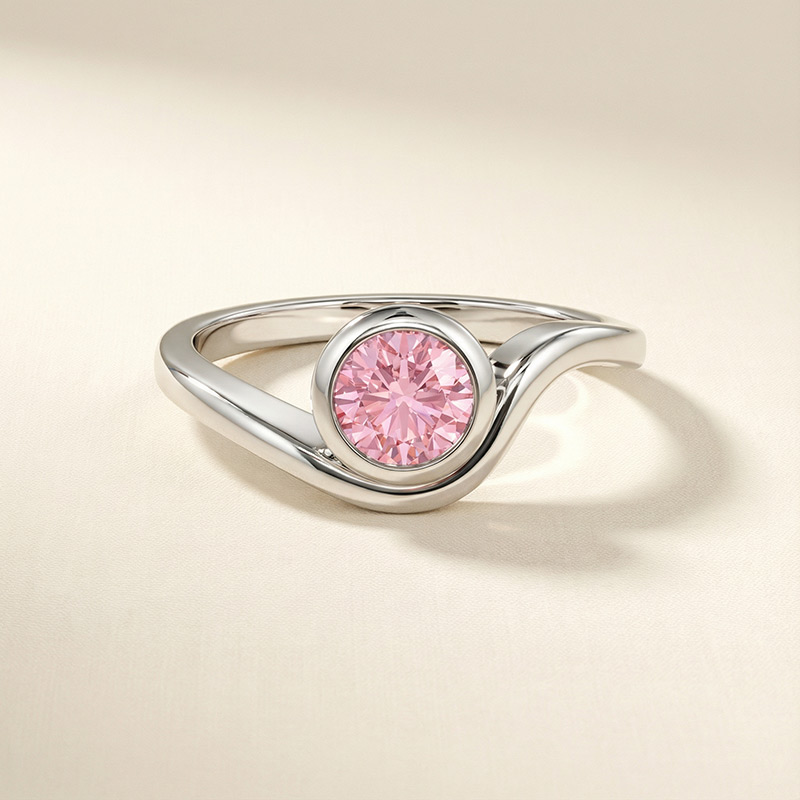
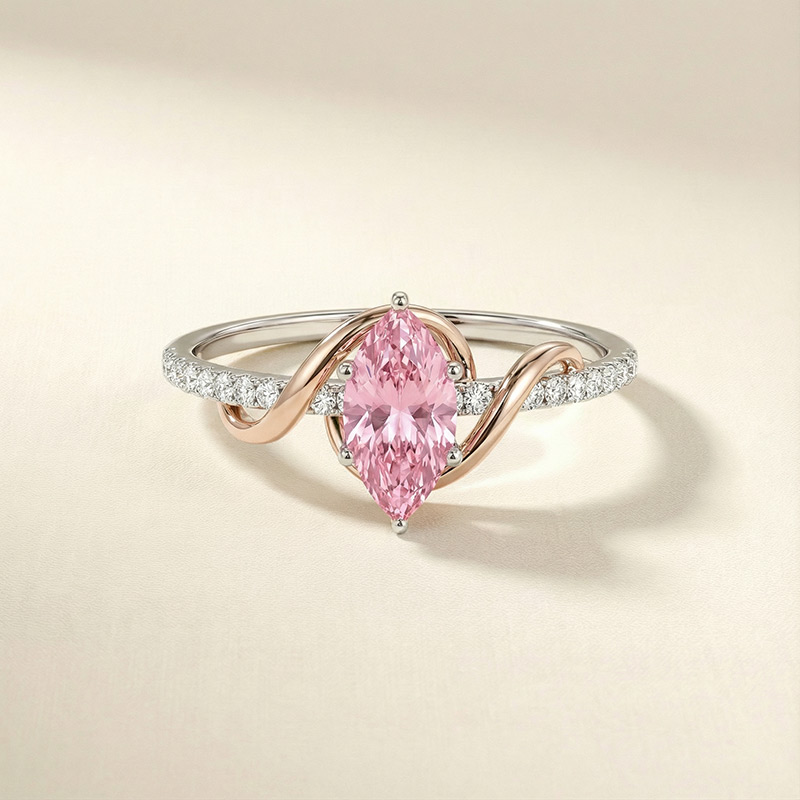
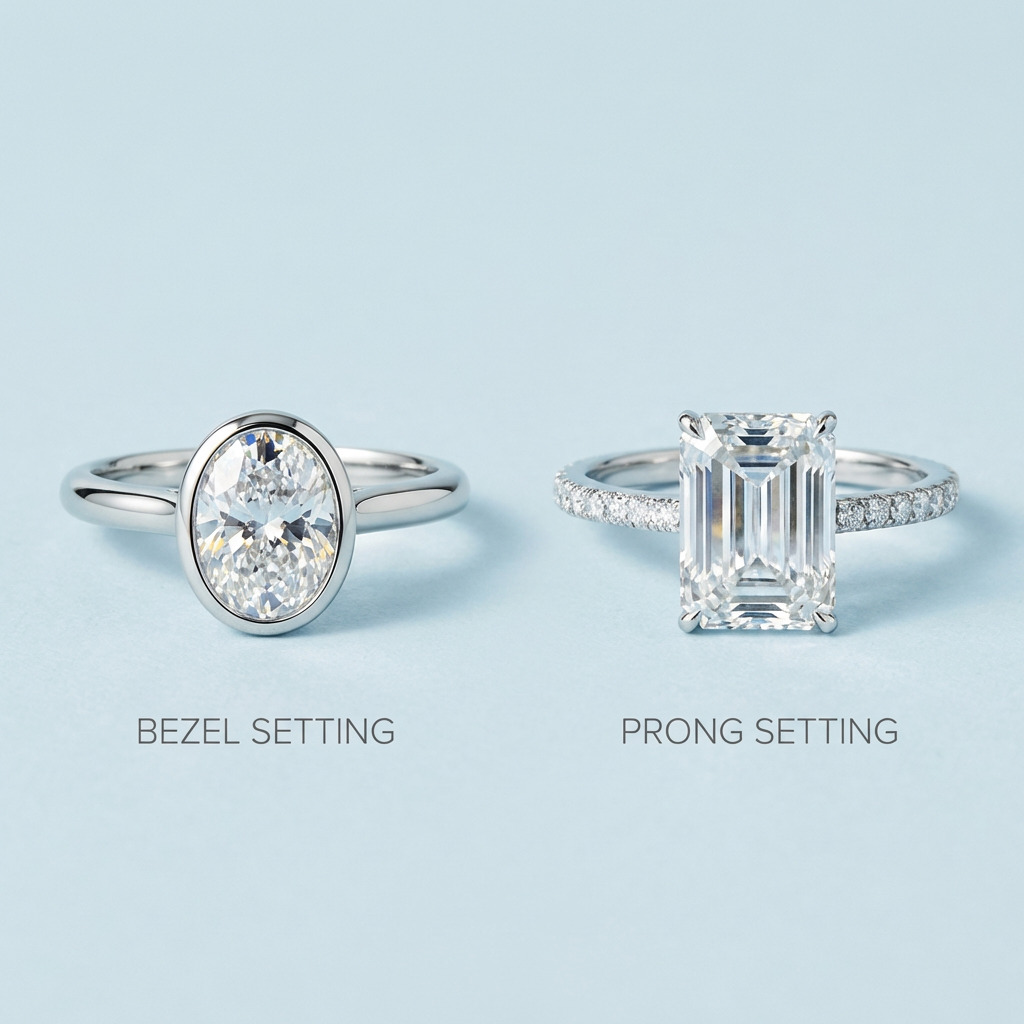
Prioritize security and style. Bezel or sturdy prong settings offer excellent protection for daily wear. A diamond halo can amplify its sparkle, while a solitaire setting lets the unique pink colour shine. The best choice balances your aesthetic preference with lifestyle needs.