Finding a piece of jewelry that resonates with your personal style is a meaningful experience. However, that satisfaction can quickly turn to concern if you discover that your ring is too big. This may happen due to a surprise proposal, a seasonal change, or a recent lifestyle shift. Realizing your ring is too large doesn’t mean you have to leave it in its box. By understanding fit nuances, resizing mechanics, and temporary options, you can maintain both the security and aesthetic of your investment.
Assessing the Fit: Is it Actually Too Large?
Before choosing a solution, it is vital to understand that finger size is not a fixed measurement. In the jewelry industry, we look for a “comfortable friction.”
A properly fitted ring should slide over the knuckle with a slight tug—often referred to as the “knuckle resistance”—and sit level at the base of the finger. If the ring spins freely around the base or, more concerningly, slides over the knuckle without any resistance at all, it is at risk of falling off.
Factors That Influence Your Daily Fit:
- The Seasonal Shift: During the summer, heat and humidity cause fingers to swell. In the winter, the cold causes blood vessels to constrict, making your fingers significantly thinner.
- Time of Day: Your fingers are typically at their smallest in the morning and swell as you move throughout the day.
- Dietary Impact: High sodium intake or alcohol consumption can lead to temporary water retention, making a loose ring suddenly feel snug.
- Weight Evolution: Even a minor change in weight can impact how a ring sits on the finger base.
- Biological and Hormonal Shifts: Natural cycles, pregnancy, or certain medications can lead to noticeable fluid retention. Because of these physiological changes, many individuals find that their ring fit varies periodically or during specific life milestones.
- The “Knuckle vs. Base” Dilemma: Many people have prominent knuckles but very slim finger bases. If the ring is sized for the knuckle, it will inevitably be too loose once it reaches the wearing position.
Professional and Semi-Permanent Solutions
For high-end jewelry, particularly engagement rings or heirloom pieces, a professional intervention is often the most sophisticated choice to preserve the ring’s integrity.
1. Sizing Beads
A favorite among those with slender fingers but larger knuckles, sizing beads are two small spheres of precious metal (matching the ring’s shank) added to the inner back of the band. These act as “pressure points” to keep the ring upright and secure without a full resizing. They are minimally invasive and easily removed if your size changes again.
2. Spring Inserts and Fold-Over Guards
If your knuckle is significantly wider than the base of your finger, a spring insert or a horseshoe-shaped guard can be installed inside the shank. These mechanisms “open” to pass over the knuckle and “close” once the ring is in place, providing a custom, snug fit.
3. Professional Resizing
Traditional resizing involves a master jeweler cutting the band, removing a small portion of the metal, and soldering the ends back together. When performed by an expert, the seam is invisible, and the structural integrity of the metal is maintained. Note that certain styles, such as full eternity bands or tension-set rings, may require specialized sleeves or bridges rather than traditional cutting.
Temporary Fixes and Immediate Security
If you aren’t ready for a permanent change—perhaps you are in the middle of a weight loss journey or you’re experiencing a particularly cold winter—temporary adjusters can provide immediate safety.
- Silicone Spiral Adjusters: These are transparent, medical-grade silicone coils that wrap around the back of the band. They are virtually invisible and offer a soft, cushioned grip.
- Metal or Plastic Ring Guards: These are small bars that “clip” onto the inside of the band. While effective, use caution with metal guards on high-polish gold, as they can cause minor surface scratches over time.
- The Ring Sizer “Sleeve”: A small, clear insert that sits inside the band. This is a favorite for high-end clients who want to maintain the ring’s aesthetic while traveling.
When Resizing Is Not Possible
Not every ring can be traditionally resized. It is important to know the limitations of your specific setting to avoid damaging the piece.
- Eternity Bands: Because the diamonds or gemstones encircle the entire band, there is no “blank” metal to cut. For eternity rings, sizing beads or internal sleeves are usually the only options.
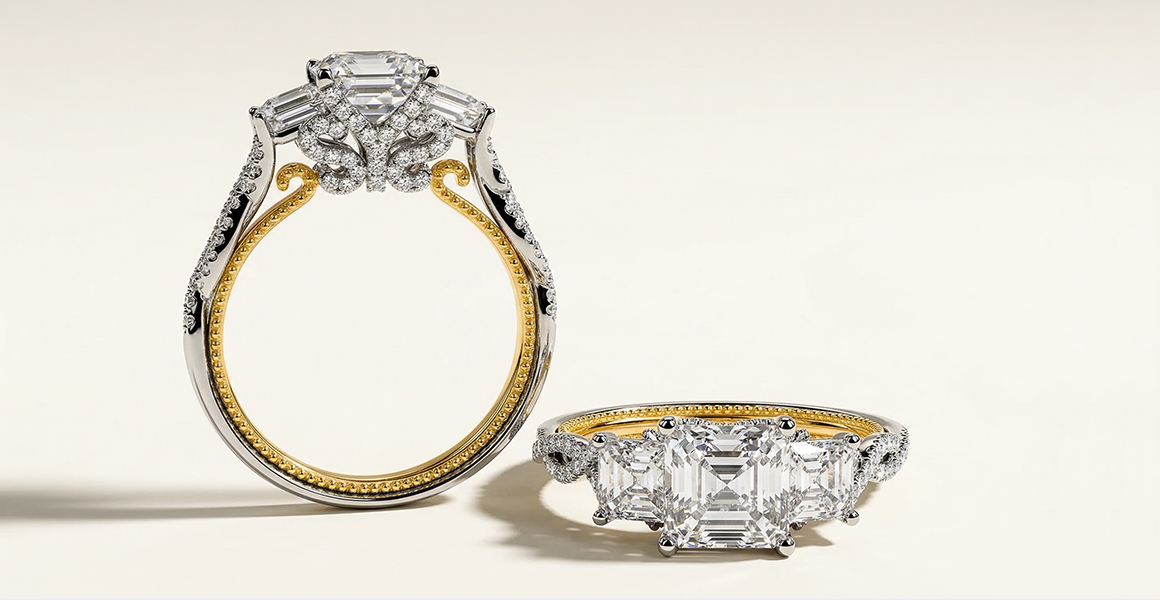
- Patterned or Milgrain Bands: If the band has a continuous engraved pattern, resizing will create a “dead spot” where the pattern is interrupted.
- Alternative Metals: Metals like Tungsten, Cobalt, and Titanium are too hard to be cut and soldered using traditional jewelry tools.
- Tension Settings: These rings use the pressure of the metal to hold the stone. Changing the size can cause the center stone to fall out.
Finding Your Perfect Fit
We recommend wearing your ring for at least two full weeks through different temperatures and activities before deciding on a permanent change. Your jewelry should be a source of joy, not a source of worry. Taking the time to understand the best options for when a ring is too big ensures that your most cherished piece remains a permanent, secure, and beautiful fixture on your hand for a lifetime.