Lab-grown diamonds are evaluated using the exact same 4C standards as natural diamonds—Carat Weight, Color, Clarity, and Cut. These four criteria, developed to create a uniform and objective system for assessing diamond quality and value, apply identically to lab-grown stones because they share nearly identical chemical, optical, and physical properties with their natural counterparts.
Each “C” plays a critical role in determining a lab-grown diamond’s appearance, brilliance, and overall value, making it essential to understand how each standard is measured and what it means for the stone’s quality. Breaking down each 4C standard in detail will clarify what to look for when evaluating a lab-grown diamond.
1. Carat
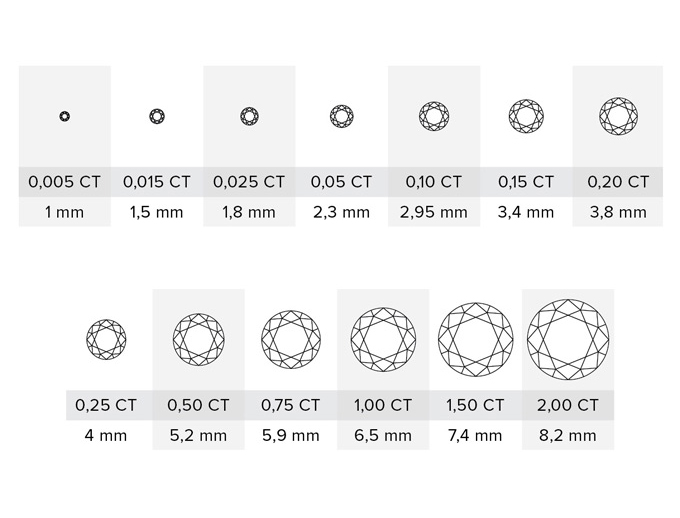
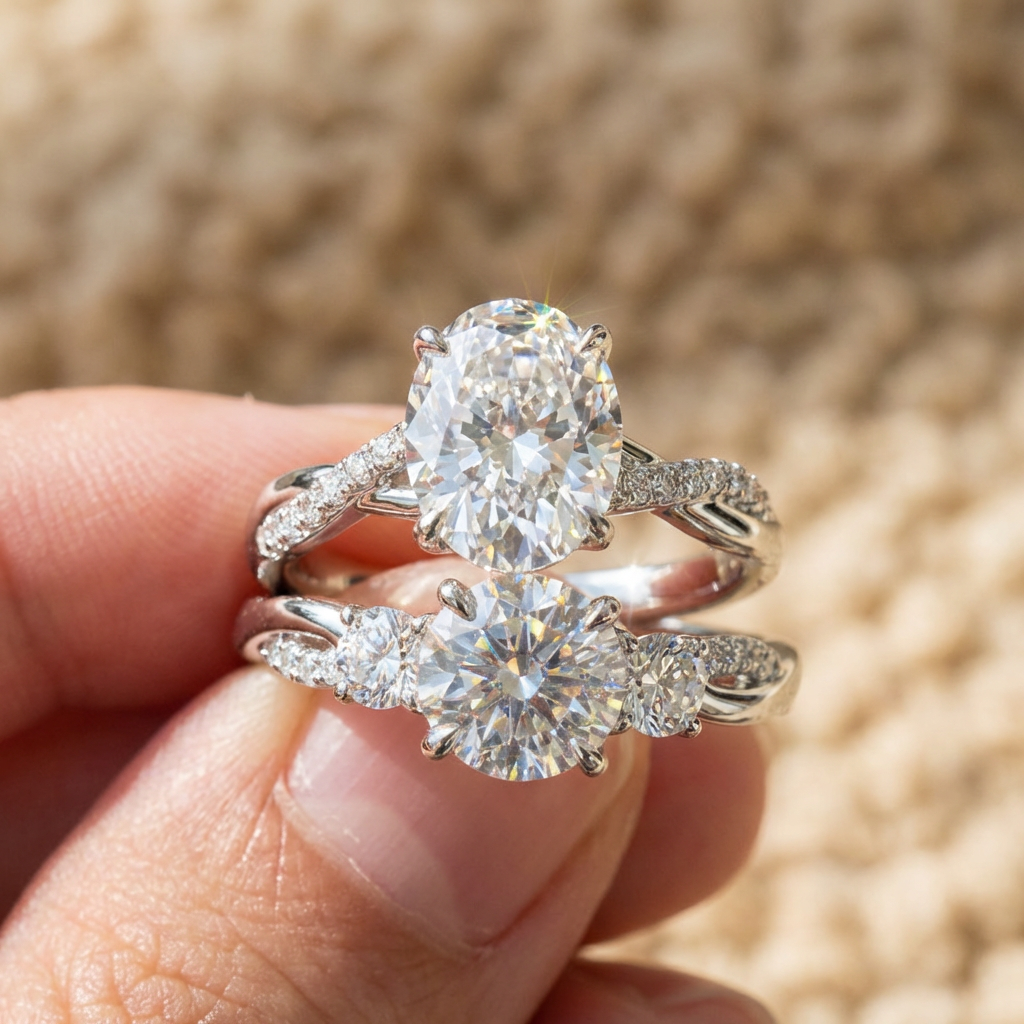
Carat Weight measures a lab-grown diamond’s weight (1 carat = 200mg). A common misconception: carat weight does not equal size—two diamonds of the same carat can look different based on cut and proportions (e.g., a well-cut diamond with a larger table may appear bigger).
Carat is a key value factor; larger diamonds are rarer and cost more, even lab-grown ones. Lab-grown diamonds offer an advantage here, as they can be grown to larger carats more consistently, making high-carat stones more accessible. Balance carat with the other 3Cs—size matters less than overall quality.
2. Color
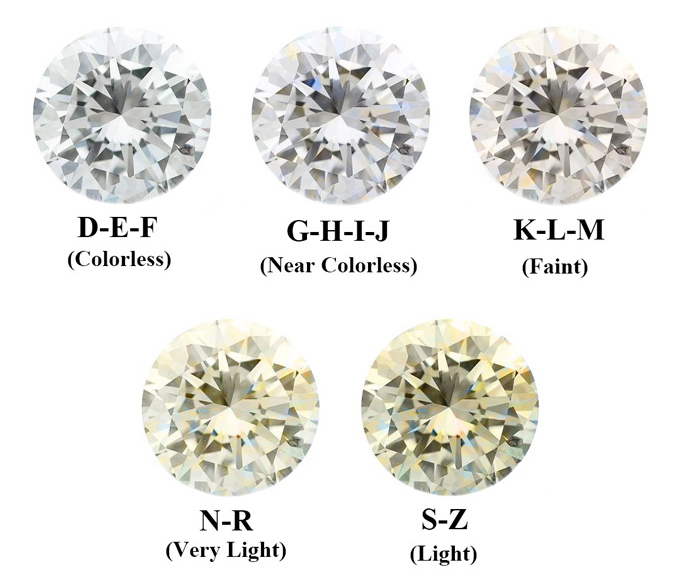
Color is graded using the same D-to-Z scale as natural diamonds, measuring subtle tints. D-F grades are colorless (pristine, icy-white), G-J are near-colorless (white to the naked eye), and K-Z show noticeable yellow/brown tints. Fancy colored lab-grown diamonds (pink, blue, etc.) fall outside this scale.
Thanks to controlled growth environments, lab-grown diamonds typically have fewer color variations, with most falling in the near-colorless to colorless range. Top color grade differences (e.g., D vs. F) are rarely visible to the untrained eye, only distinguishable under standardized gemological lighting.
3. Clarity
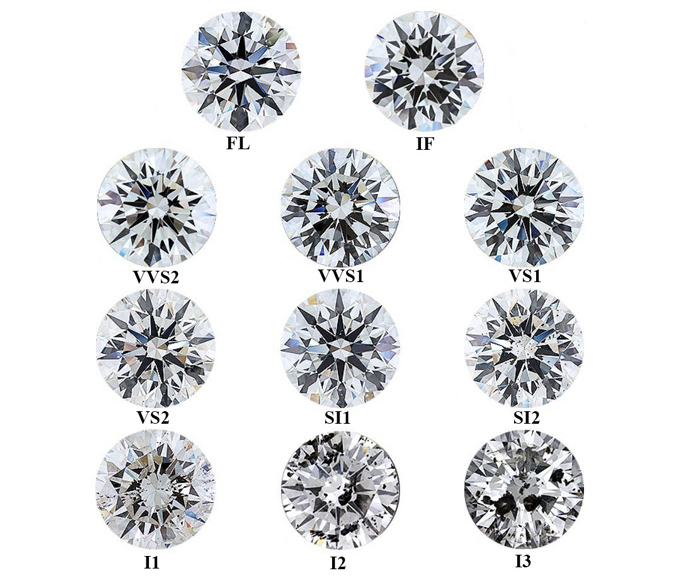
Clarity measures the absence of internal inclusions and external blemishes, graded under 10x magnification (industry standard). The scale ranges from Internally Flawless (IF, extremely rare) to Included (I1-I3, noticeable flaws that may affect brilliance).
Key grades to note: VVS1-VVS2 (tiny, hard-to-spot inclusions), VS1-VS2 (small inclusions visible only on close inspection), and SI1-SI2 (inclusions visible at 10x but not to the naked eye). Lab-grown diamonds may have unique metallic inclusions from their growth process, which help identify them but rarely impact clarity grades unless prominent.
4. Cut
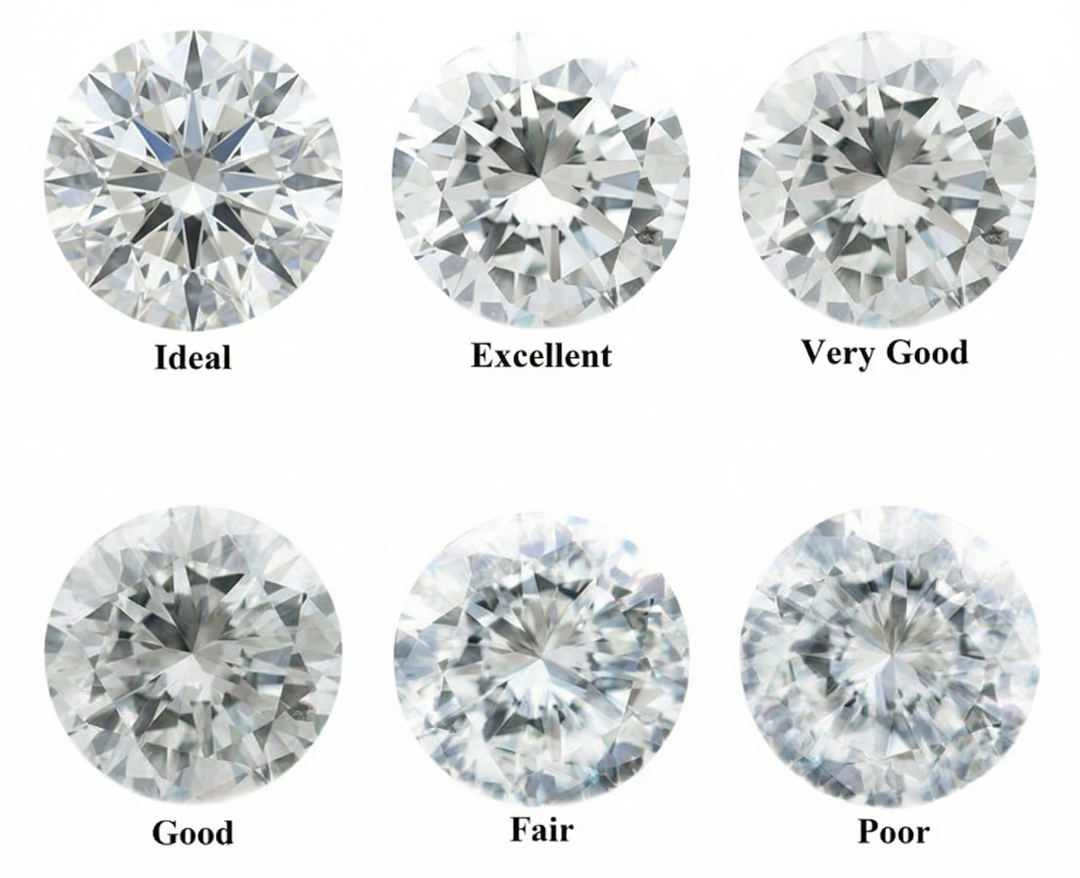
Cut refers to a lab-grown diamond’s proportions, symmetry, and polish—not its shape—and it directly impacts the stone’s brilliance, fire, and scintillation. As the only 4C influenced entirely by craftsmanship, a well-cut diamond maximizes light reflection and refraction. Importantly, IGI and GIA differ significantly in their lab-grown diamond cut grading.
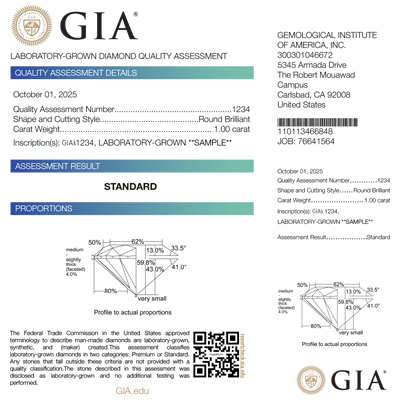
IGI uses a traditional cut scale (ranging from Ideal to Poor) for lab-grown diamonds, though “Ideal” is exclusive to round brilliant cuts—it represents the highest light performance, exceeding Excellent by meeting stricter proportion and light reflection criteria. For all other shapes (fancy cuts), IGI uses the Excellent-to-Poor scale, with no Ideal grade. In contrast, GIA eliminated detailed 4C cut grading for lab-grown diamonds in late 2025, switching to broad “Premium” or “Standard” descriptors.
Notably, all lab-grown diamond shapes (round and fancy) have cut grades, but their evaluation standards differ. IGI evaluates round brilliant-cut lab-grown diamonds based on polish, symmetry, proportions, and light performance—with Ideal as the top tier for exceptional light return. Fancy cuts (e.g., princess, emerald, cushion) follow a four-step IGI evaluation process: polish/symmetry grading, proportion qualification, shape-specific craftsmanship checks (e.g., bow-tie assessment), and light return grading. Both shapes have cut grades, but criteria are shape-specific, and only round cuts qualify for IGI’s Ideal grade. Lab-grown diamonds also tend to have consistent cutting quality due to controlled growth conditions.
5. Lab-Grown Diamond Certifications
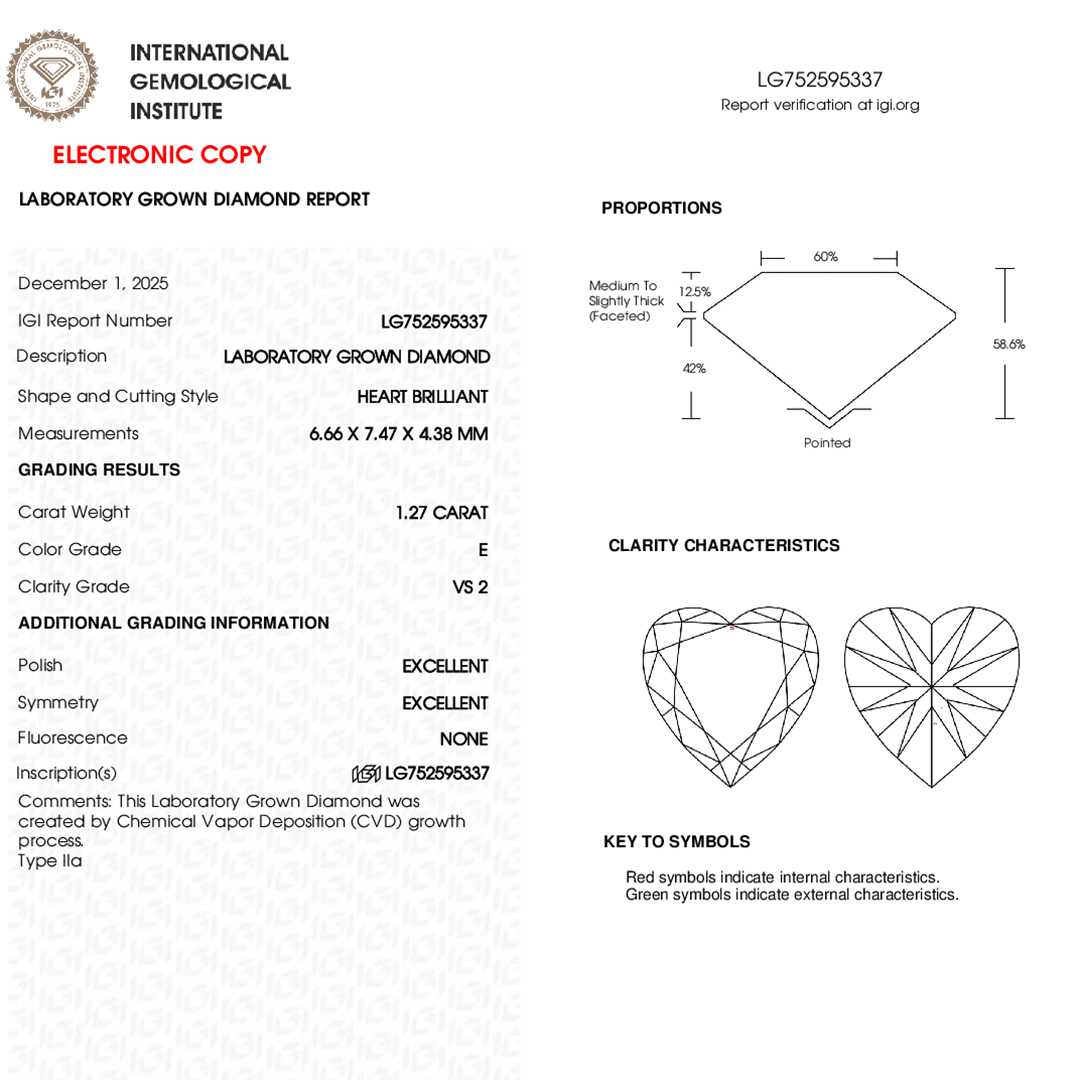
To verify the 4C grades of a lab-grown diamond and ensure its authenticity, a trusted certification from a reputable gemological laboratory is essential. Leading authorities in this space include the International Gemological Institute (IGI) and the Gemological Institute of America (GIA), both widely recognized for their accuracy and reliability. IGI is a pioneer in lab-grown diamond grading, having started evaluating these stones in 2005, while GIA also offers rigorous certification standards for lab-grown diamonds. Below, we’ll focus on IGI certification as a detailed example to help you interpret lab-grown diamond reports and understand the quality of the stone you’re considering.
6. Key Sections of an IGI Lab-Grown Diamond Report
Every IGI lab-grown diamond report includes several critical sections that break down the stone’s quality and authenticity, organized in a clear, easy-to-read format. Familiarizing yourself with these sections will help you quickly interpret the report and confirm that the diamond matches the 4C grades advertised.
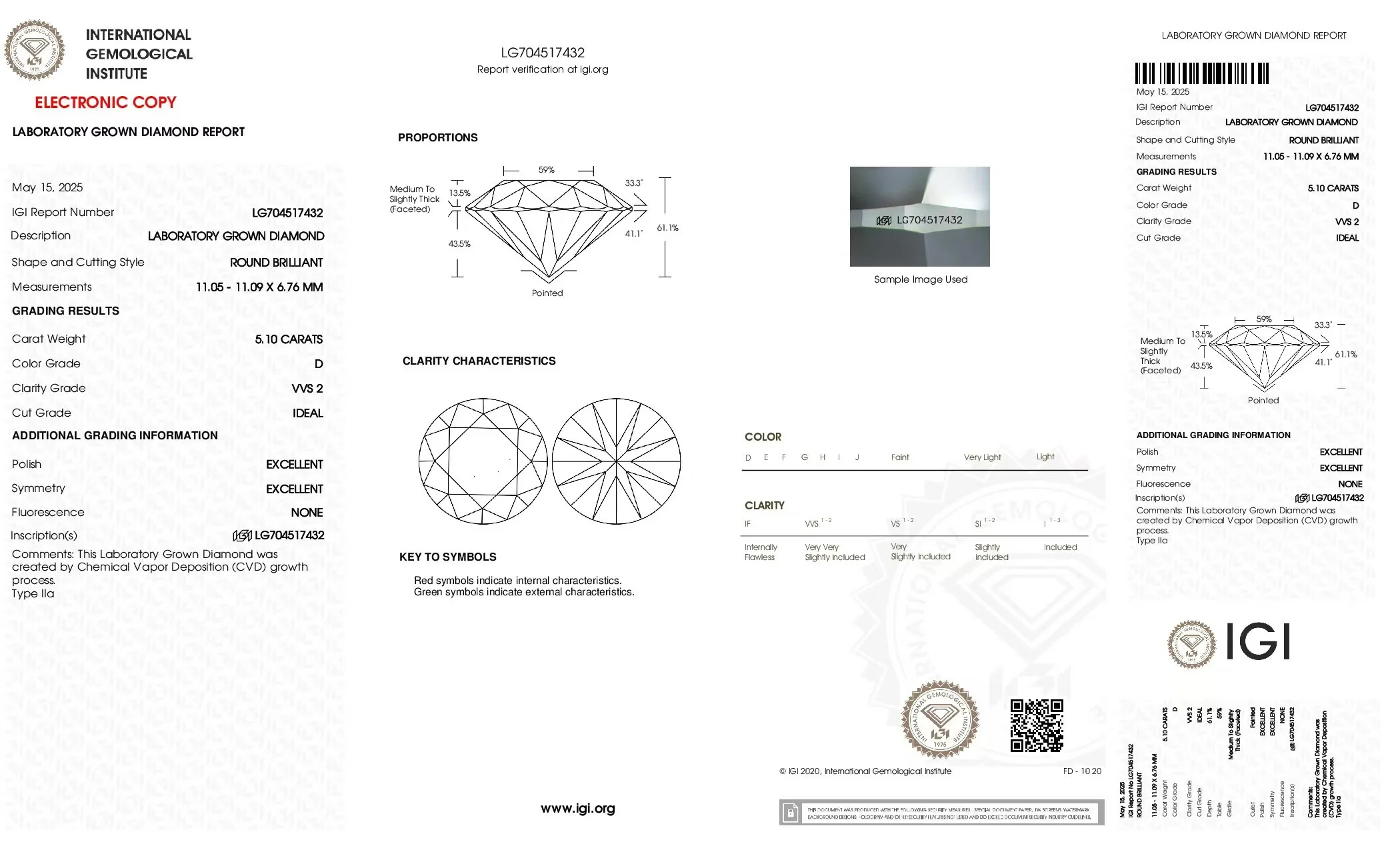
Report Cover and Identification
The cover of an IGI lab-grown diamond report features the IGI logo, the report number (a unique identifier for the diamond), and a clear indication that the stone is lab-grown. For finished jewelry containing lab-grown diamonds, the report cover is yellow, while reports for loose lab-grown diamonds have a standard design. The report number can be used on the IGI website to verify the report’s authenticity and access a digital copy of the report, ensuring that the certification is not counterfeit.
Diamond Identification and Origin
This section confirms that the stone is a lab-grown diamond, distinguishing it from natural diamonds and diamond simulants (such as moissanite or cubic zirconia). IGI uses state-of-the-art technology to screen each stone and confirm its origin, and the report will clearly state “Laboratory-Grown” or “Lab-Created” in this section. Additionally, the report may note the growth process used to create the diamond—either Chemical Vapor Deposition (CVD) or High-Pressure High-Temperature (HPHT)—if requested, as this information can be useful for those interested in the stone’s production method.
4C Grading Details
The core of the IGI report is the 4C grading section, which provides detailed information on the diamond’s Cut, Color, Clarity, and Carat Weight—matching the standards outlined earlier. For each C, the report includes the exact grade, as well as additional details where relevant:
- Cut: For round brilliant-cut lab-grown diamonds, the report includes the overall cut grade (Ideal to Poor), as well as separate grades for polish and symmetry. For fancy-shaped diamonds, the report details the shape, cutting style, and assessments of finish, proportions, and light return. Please note that while all fancy-shaped diamonds have cut grades, not all have a clearly labeled overall cut grade on the report, with some only providing relevant assessments without a specific grade designation.
- Color: The report lists the color grade on the D-to-Z scale for colorless to lightly tinted lab-grown diamonds.
- Clarity: The clarity grade is listed, along with a plotted diagram that shows the location and type of any inclusions or blemishes—this diagram is a visual representation of the stone’s clarity and helps verify the grade.
- Carat: The exact carat weight is listed, along with the diamond’s measurements (diameter, depth) to provide context for its size.
Laser Inscription
Most lab-grown diamonds certified by IGI have a laser inscription on their girdle (the thin edge of the diamond) that includes the term “Laboratory-Grown” (“LG”) and the IGI report number. This inscription is visible under 10x magnification and serves as an additional layer of authentication, allowing you to match the diamond to its report quickly. IGI’s laser inscriptions are precise and non-intrusive, ensuring they do not affect the diamond’s appearance or durability.
7. Final Thoughts
Lab-grown diamonds adhere to the same 4C standards as natural diamonds, with Carat Weight, Color, Clarity, and Cut determining their quality, appearance, and value. Understanding these standards is key to making an informed decision when choosing a lab-grown diamond. A trusted certification from an authoritative laboratory—such as IGI—provides independent verification of these 4C grades, as well as the stone’s authenticity and origin, giving you confidence in your purchase. By focusing on the 4Cs and verifying with a reputable certification, you can select a lab-grown diamond that balances quality, beauty, and value to suit your needs.