Once you have an anniversary ring in hand, a practical question arises: how exactly should you wear it? Unlike engagement rings and wedding bands, there are no strict rules for anniversary rings. This also means you have choices to make about which finger, which hand, and how the ring pairs with the jewelry you already wear every day. This guide covers everything you need to know.
What Is an Anniversary Ring?
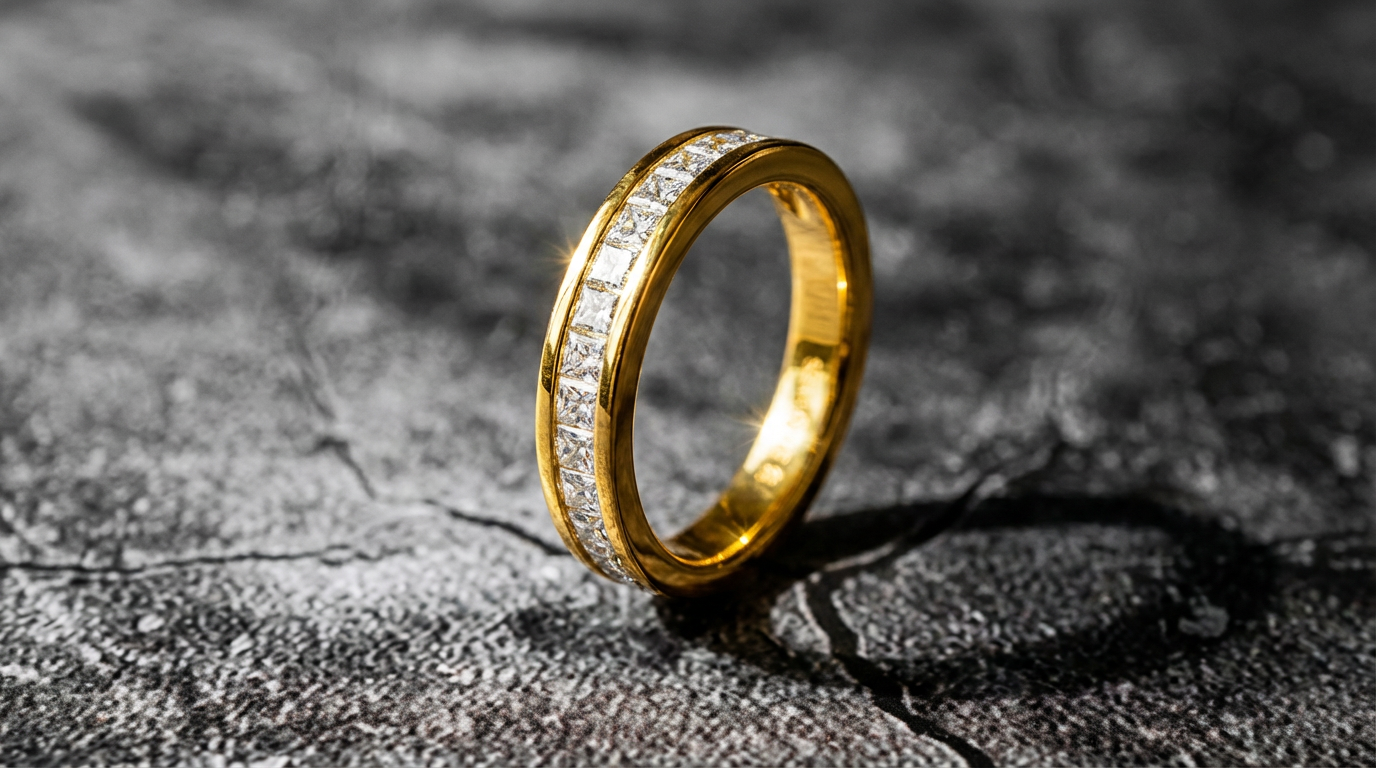
An anniversary ring is a band given to mark a milestone in a marriage. It is not a replacement for your wedding band, though some couples do choose to use it that way. Most often, it is an addition, a new chapter added to the story your hands already tell.
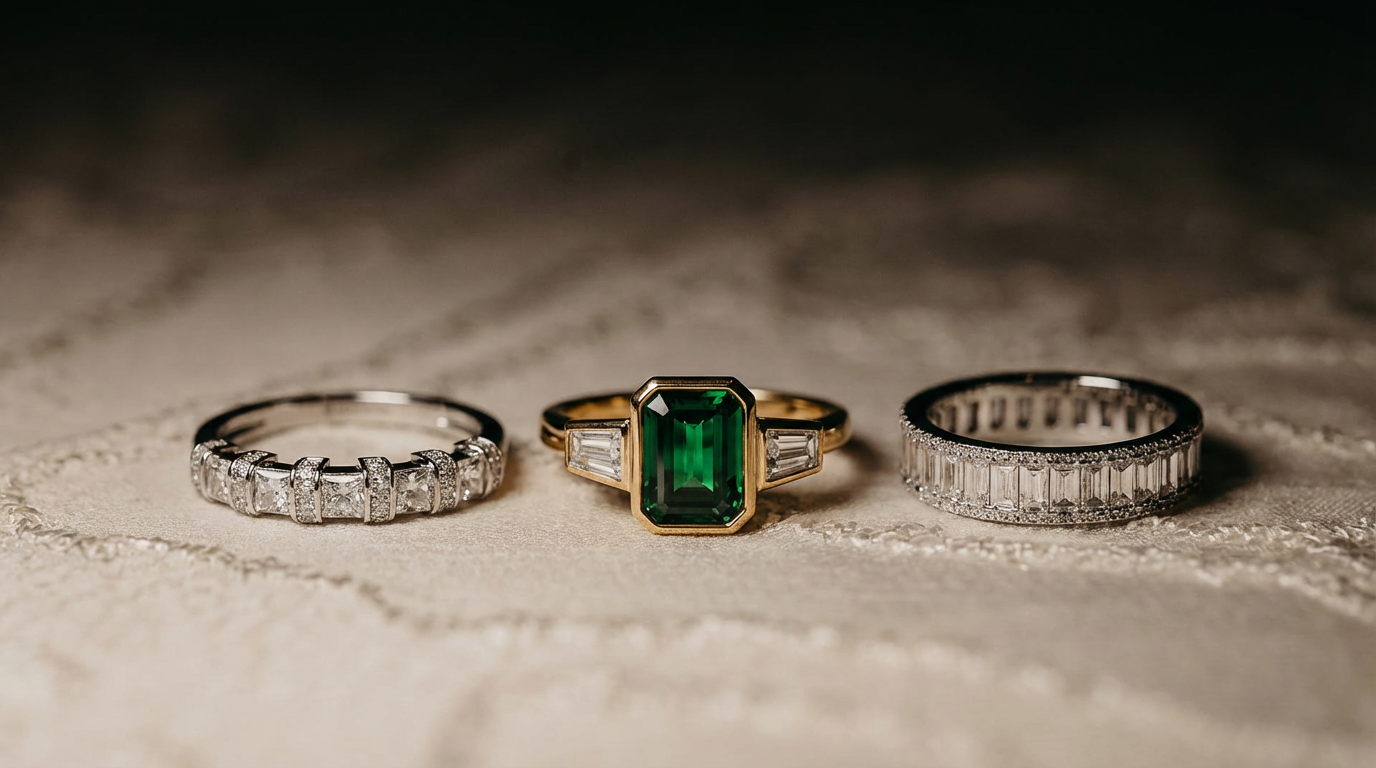
Popular styles include:
- Eternity bands with diamonds or gemstones circling the entire band
- Five-stone rings representing significant moments in your journey
- Three-stone rings symbolizing your past, present, and future
- Gemstone bands featuring sapphires, rubies, emeralds, or birthstones
- Custom designs that incorporate elements unique to your relationship
The style you choose often influences how and where you wear it. A slim diamond eternity band stacks beautifully. A bold gemstone ring might prefer the spotlight on its own finger.
Which Finger Should You Wear an Anniversary Ring On?
The Traditional Choice: Left Ring Finger
The most common placement is the ring finger of the left hand, stacked alongside your engagement ring and wedding band. This follows the centuries-old belief in the “vena amoris,” the vein of love that was thought to run directly from this finger to the heart.
Wearing your anniversary ring here symbolizes continuity. It says that the love marked by your engagement ring and wedding band has only grown deeper with time.
The traditional stacking order, from bottom to top:
- Wedding band (closest to your heart)
- Engagement ring (in the middle)
- Anniversary ring (on top, the newest addition)
This order is not a requirement, but it is the most widely followed. It creates a visual timeline of your commitment, with each ring marking a distinct promise.
The Right Hand: A Standalone Statement
Many people choose to wear their anniversary ring on the ring finger of the right hand. This option works well when:
- Your left hand already feels full with an engagement ring and wedding band
- The anniversary ring has a design that does not stack flush with your bridal set
- You want each ring to stand on its own merits
- You simply prefer the balance of wearing meaningful jewelry on both hands
Wearing the anniversary ring on the right hand does not make it any less significant. It gives the ring its own space to be noticed.
Other Finger Options
There are no rules, only preferences. Some people enjoy wearing an anniversary ring on:
- The middle finger for a bold, fashion-forward look, especially with wider bands or larger stones
- The index finger when the ring is a statement piece they want to highlight
- The pinky for a vintage or unconventional aesthetic
The best finger is the one that feels natural and comfortable to you.
How to Stack an Anniversary Ring With Your Bridal Set
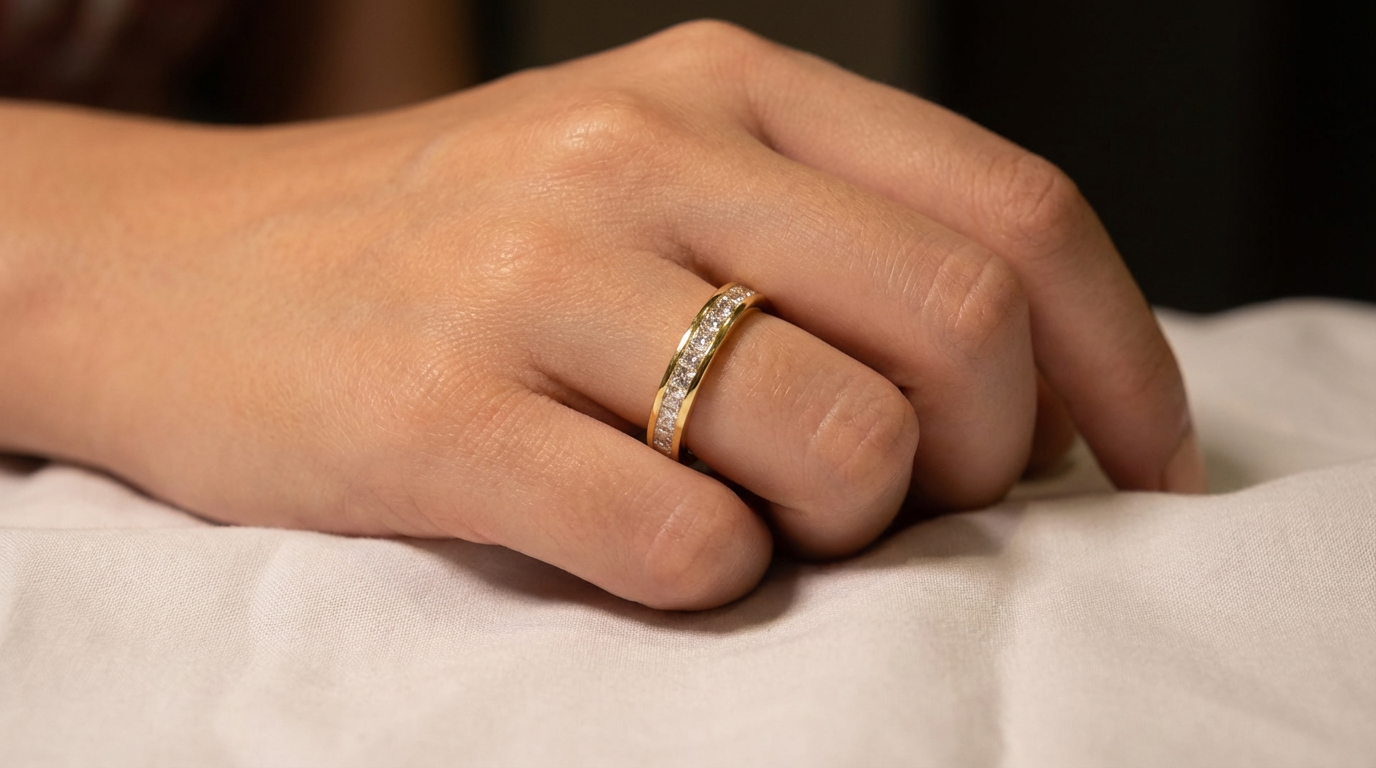
Stacking is the most popular way to wear an anniversary ring, but getting it right takes a little thought. Here is how to build a stack that looks intentional, not crowded.
Start With Proportion
The key to a beautiful stack is balance. If your engagement ring has a large center stone, choose a thin anniversary band that complements rather than competes. A delicate pavé or channel-set band sits neatly beside a solitaire without overwhelming it.
If your engagement ring is already dainty, you have more room to play. A five-stone ring or a slightly wider diamond band can add presence without looking heavy.
Match or Complement the Metal
Wearing the same metal across all rings creates a seamless, polished look. If your engagement ring is platinum, a platinum anniversary band will blend in naturally.
Mixing metals can also work beautifully, but it takes more intention. Rose gold paired with white gold, or yellow gold paired with platinum, creates contrast that feels deliberate when the rest of the stack is cohesive. The trick is to commit to the mix rather than doing it accidentally.
Consider Band Width and Height
When rings sit side by side every day, their profiles matter. Rings of similar width create a tidy, uniform stack. Rings with different widths can work too, but pay attention to how they sit against each other. A very thick anniversary band next to a very thin wedding ring can cause discomfort and uneven wear over time.
If you plan to stack three rings on one finger, keep in mind that the total width will affect how the rings feel and fit. You may need to size up slightly for comfort.
Think About the Setting
Some settings are made for stacking. Flush-set, channel-set, and low-profile pavé bands sit neatly beside other rings. Bezel-set or raised-prong designs may create gaps or catch on adjacent rings.
If your anniversary ring has high-set stones and you want to stack it with your bridal set, try placing it on top of the engagement ring. The engagement ring acts as a natural spacer, preventing the stones from rubbing against each other.
Add Meaning With Gemstones
An anniversary ring is a natural place to add color and personal significance. Popular options include:
- Birthstones for you, your spouse, or your children
- Traditional anniversary gemstones like sapphire for year five, diamond for year ten, or ruby for year fifteen
- Favorite colors that simply make you happy when you look down at your hand
A single colored gemstone band in a stack of diamond rings draws the eye and tells a story that is yours alone.
Common Stacking Mistakes to Avoid
Even with the best intentions, a few missteps can make a stack feel off. Here are the ones to watch for:
Stacking too many rings. Two to four rings on one finger is the sweet spot for most hands. Beyond that, the stack can feel heavy, look cluttered, and become uncomfortable for daily wear.
Ignoring fit. Rings in a stack will feel tighter than individual rings. If your stack feels snug, consider going up a quarter or half size on the anniversary band.
Clashing styles. An ornate vintage anniversary band next to a sleek modern engagement ring can work if done intentionally, but it often looks disconnected. When in doubt, choose a band that echoes at least one design element from your existing rings.
Wearing loose and tight rings together. A ring that spins freely next to one that fits snugly will shift and create an uneven look. Make sure each ring in your stack fits well on its own.
Overloading color. Too many gemstone colors in one stack can feel chaotic. If you want to include colored stones, choose one or two that complement each other and let the rest of the stack stay neutral.
How to Build a Stack Over Time
One of the best things about anniversary rings is that you do not have to get it all right at once. Many couples add a new ring at each major milestone, building a collection that grows with their story.
Year one: Start with a slim diamond or gold band. Simple, wearable, easy to stack later.
Year five: Add contrast. A textured band, a five-stone ring, or a gemstone ring in your anniversary stone adds visual interest without overwhelming what is already there.
Year ten: Go for impact. An eternity band, a seven-stone ring, or a custom design with meaningful stones makes this milestone ring the centerpiece of your stack.
Beyond: Keep adding. Each ring does not need to match perfectly, but it should feel like it belongs in the same family. Repeat a metal, echo a shape, or continue a color theme to keep the stack cohesive as it grows.
Stacking for Different Lifestyles
Your daily routine should influence how you stack. If you work with your hands, type all day, or lead an active lifestyle, consider these tips:
- Choose low-profile settings that will not catch on clothing or equipment
- Opt for harder stones like diamonds, sapphires, or rubies that can withstand daily wear
- Keep the stack to two or three rings maximum for comfort
- Consider wearing the anniversary ring on your right hand if your left hand takes more impact
If your lifestyle is less hands-on, you have more freedom to experiment with larger stones, higher settings, and fuller stacks.
Final Thoughts
An anniversary ring is not just about where you wear it, but what it represents. Whether stacked with your bridal set or worn on its own, it should feel natural to your style and meaningful to your story. There are no rules to follow—only choices that reflect how your relationship has grown and what it means to you today.
Frequently Asked Questions
Does an anniversary ring replace a wedding band?
No. An anniversary ring is typically an addition to your bridal set, not a replacement. That said, there are no rules. If you prefer to swap out your wedding band for an anniversary ring, that is entirely your choice.
Can I wear my anniversary ring on a different hand than my wedding ring?
Absolutely. Many people wear their anniversary ring on the right hand so it stands on its own. This is especially popular when the ring has a bold design that does not stack easily.
What if my anniversary ring does not fit with my other rings?
Not every ring needs to share a finger. If the stack feels awkward, try wearing the anniversary ring on a different finger or the other hand. The most important thing is that you enjoy wearing it.
How much should I spend on an anniversary ring?
There is no set amount. Choose a budget that feels comfortable for you. Many couples spend less on an anniversary ring than they did on an engagement ring, but some choose to invest more at major milestones. What matters is the meaning behind the ring.
Should the anniversary ring match the engagement ring?
It does not have to. Some people prefer a cohesive look with matching metals and complementary styles. Others enjoy the contrast of a different design. Either approach works as long as the stack feels balanced.