Few rings have remained as recognizable as the signet ring. Its flat face and distinctive design have been used for centuries to represent identity, family, and status. While its original purpose may have changed, the appeal of the signet ring hasn’t gone away. Today, it’s a simple way to add something personal to your everyday style. Here’s what to know about signet rings, from their history and meaning to engravings, styles, and how to wear them.
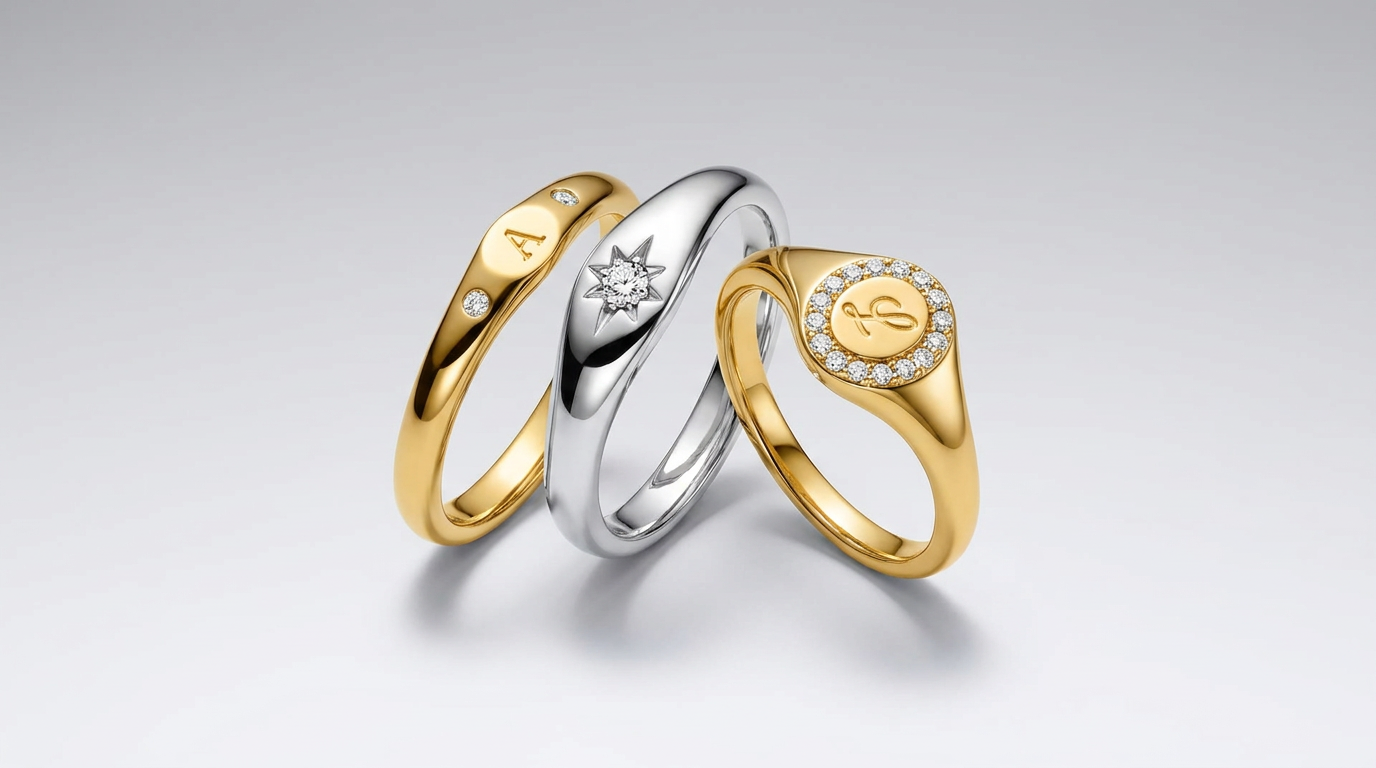
What Is a Signet Ring, Exactly?
A signet ring built around a flat top — called the bezel — designed to carry an engraving. For most of recorded history, that engraving worked as a personal signature, pressed into hot wax to seal letters, contracts, and decrees. The name comes from the Latin signum, meaning “sign” or “mark” (it shares a root with the word signify), and the little suffix -et makes it, quite literally, a “little seal.”
Today, a signet ring doesn’t stamp much wax. What remains is one of the most personal pieces of jewelry you can wear — a form that’s instantly recognizable, endlessly customizable, and increasingly chosen by anyone and everyone, not just the people history first gave them to.
A Short History of the Signet Ring
The signet ring shows up almost everywhere written records do, and in a few places before them.
Mesopotamia, around 3500 BCE. The earliest known seals were pressed into clay to authenticate trade goods and legal records. Seals in general predate writing — the personal mark came before the word.
Ancient Egypt. Pharaohs wore scarab rings engraved on the underside, swiveled outward when it was time to stamp a document. A seal you could wear, spin, and show off.
Rome. The signet became visible class architecture. Gold rings were reserved by law for senators and ambassadors; ordinary citizens wore iron. Roman merchants used signets to close deals across an empire too large for face-to-face trust.
Medieval and Renaissance Europe. Kings, nobles, and the Church sealed official correspondence with signet rings. A wax impression from the right ring carried legal weight, which is also why some signets were deliberately destroyed when their owner died — a seal that still “worked” was a forgery risk. The pope’s own Ring of the Fisherman was historically struck and broken on his death for exactly this reason.
The Victorian era. As wax seals gave way to ink and envelopes, the signet shifted from legal tool to gentleman’s dress code — ornate, crested, and proudly inherited.
America. Across the Atlantic, most families never had a coat of arms, so the monogram took over. That’s still the style American shoppers tend to choose most often today.
What a Signet Ring Means Today
Modern signets no longer stamp wax, and the meaning has loosened in the best possible way: it’s now whatever the wearer brings to it. A few themes tend to come up again and again:
- Heritage and family. A signet is one of the most commonly inherited pieces of jewelry, and many people still wear a grandparent’s or parent’s ring — or commission a new one that echoes the family mark.
- Milestones. Graduations, milestone birthdays, new ventures. A date engraved on the reverse of the shank keeps the front clean while quietly marking the moment.
- Self-expression. Increasingly, signets are chosen purely for style — a zodiac symbol, a botanical motif, a plain polished face that catches the light with nothing on it at all. No crest required.
- Belonging, for two. A quietly growing use: couples choosing matching or paired signets as promise rings, commitment rings, or understated wedding bands — a route that suits people who want something more personal than a plain band, and anyone for whom a signet simply feels more them than a traditional ring.
One more shift worth naming: for most of history, the signet was a ring of power, reserved by law and custom for men of a certain rank. Today those rules are gone, and the piece has settled into something more interesting — a ring for anyone who wants their jewelry to say something specific without saying it loudly.
How to Choose a Signet Ring
Choosing a signet tends to come down to three decisions, and the order matters less than you’d think. Here’s each one.
What Goes on the Face
The engraving is usually the most personal call you’ll make. The common routes:
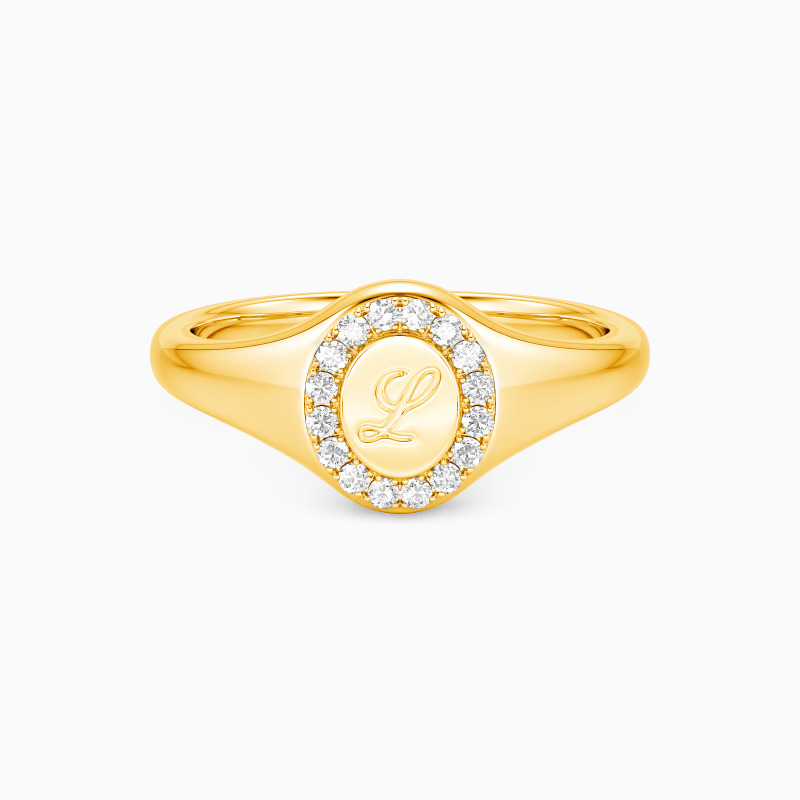
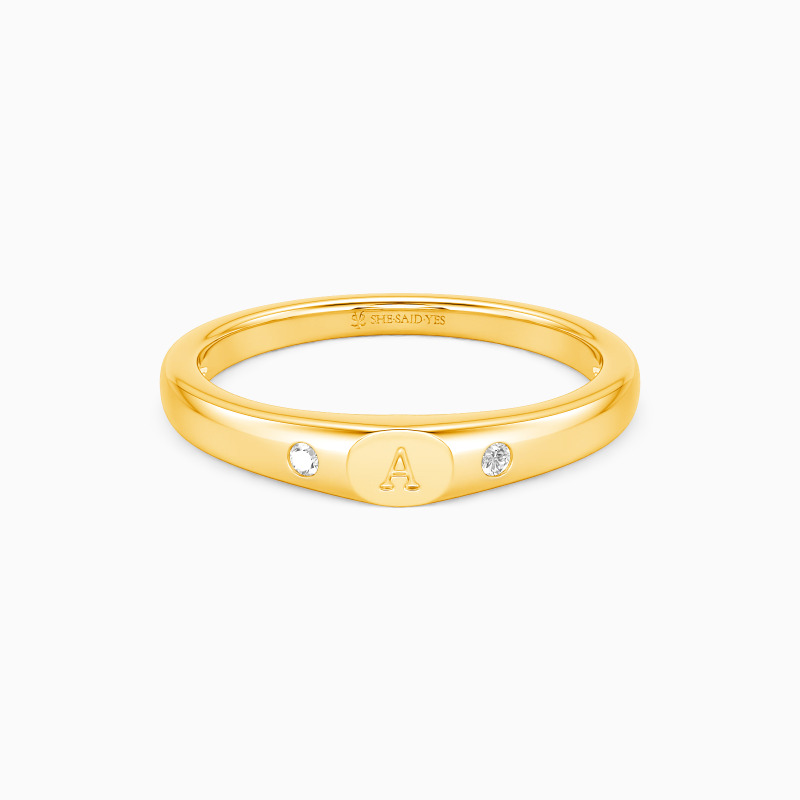
- Initials or a monogram — the most popular choice, especially in the US. A single initial reads bold; a traditional three-letter monogram feels more formal.
- A family crest or coat of arms — the classic route if your family has one. If it doesn’t, a designer can create a personal crest from scratch, and that happens more often than you might expect.
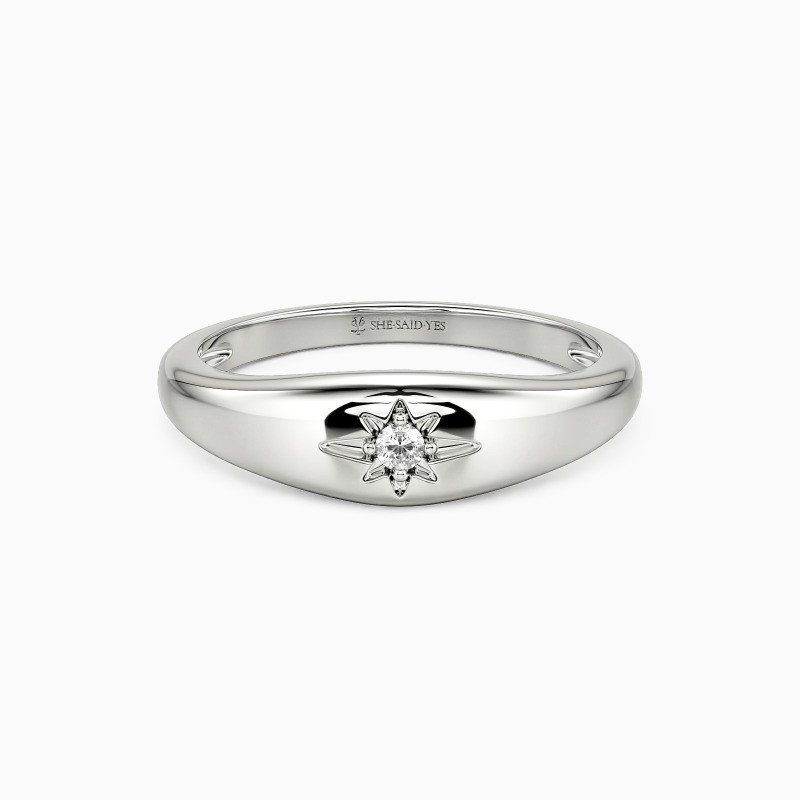
- A personal symbol — a star, an anchor, a zodiac sign, a favorite flower. Modern engraving handles clean, graphic motifs beautifully.
- A date — usually placed on the reverse of the band, so the face stays uncluttered.
- Nothing at all — a plain polished bezel is a fully legitimate choice, and increasingly popular for a minimal, architectural look.
Shape and Size
The face shape tends to follow your hand. Oval is the most traditional and flatters most hands. Cushion (a softened square) reads a touch bolder and often suits wider fingers. Round feels understated; rectangular faces look sharper and more graphic.
On size: men’s signets commonly run 10–14 mm across the face, women’s around 7–10 mm — though these are conventions rather than rules, and plenty of people happily cross them. A useful in-person test: the face should sit within the natural width of your finger, not hang over it.
Metal
Gold is the traditional choice, and for a piece that’s meant to be worn hard and passed on, it tends to be worth it. A quick orientation:
- 14K gold is the common US sweet spot — a good balance of rich color, hardness, and price.
- 18K gold has a deeper color and a softer feel; it can pick up scratches a little more readily under daily wear.
- 10K gold is the hardest and most budget-friendly of the three, with a slightly paler tone.
- Sterling silver engraves nicely and costs much less, though it tarnishes and scratches faster, so it usually asks for more upkeep.
Which Finger Does a Signet Ring Go On?
The honest answer: tradition says the pinky of your non-dominant hand. Everything else is preference.
The pinky placement is the classic convention — it keeps the face visible, out of the way of other rings, and free to do its historical job of stamping wax. It’s also a look plenty of people simply love.
But the modern reality is that signets show up on every finger:
- Ring finger — sits naturally alongside or instead of a wedding band; reads grounded and a touch more formal
- Middle finger — a statement placement that balances a wider face well
- Index finger — bold and graphic; historically common when signets ran larger
- Thumb — playful and fashion-forward, less traditional
And on the “who” question, our answer is simple: anyone. Signet history skews male, but the contemporary look belongs to no gender in particular — women have been a fast-growing share of signet shoppers for years, and the piece reads equally sharp on every hand. If you enjoy weighing tradition against personal style, our modern vs. vintage engagement ring guide covers a similar tension for rings with a past.
Can a Signet Ring Be an Engagement or Wedding Ring?
It can — and this is one of the more interesting corners of the category.
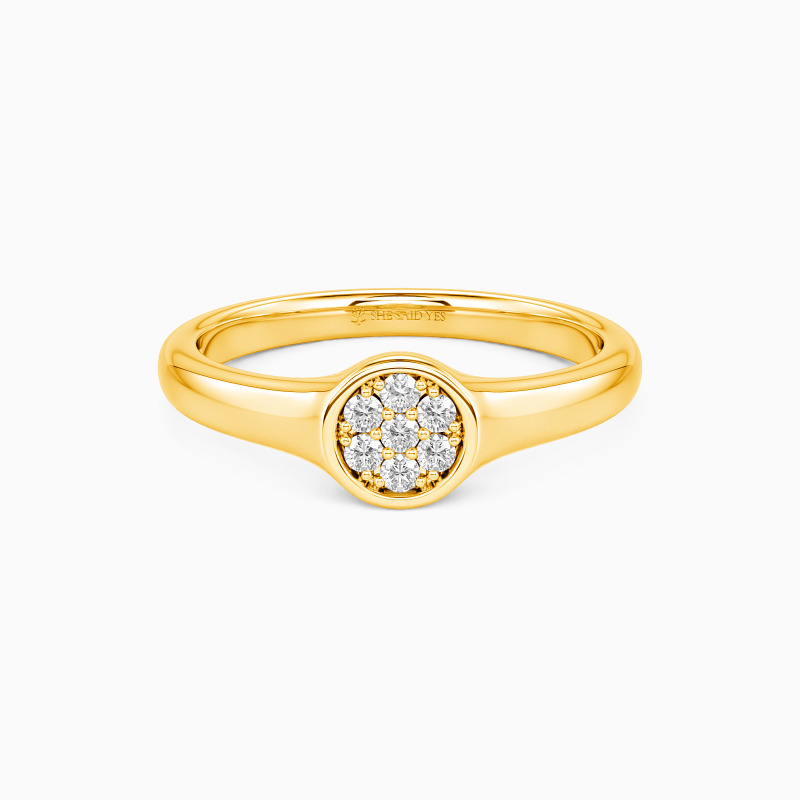
A signet won’t replace a diamond solitaire if that’s the look you’re after , though our signets set with a small stone across the bezel do exist. Where a signet tends to shine is the space around the classic engagement ring:
- As a wedding band — flat, clean, and personal; two paired signets with interlocking or mirrored engravings make a quietly striking set
- As a promise or commitment ring — engraved with a date, initials, or a symbol only the two of you can read
- As an anniversary piece — the year, the coordinates, the initials; the face holds whatever story fits
- As a non-traditional engagement choice — for couples who prefer understated over center stone, this route has real momentum
For stones on the face: a small lab-grown diamond or moissanite set flush into the bezel keeps the profile low and wearable.
Popular Signet Rings for Men and Women
Frequently Asked Questions
1.What is the purpose of a signet ring?
Historically, a signet ring was a personal seal — pressed into hot wax to sign and authenticate letters, contracts, and decrees. Today it’s worn as a personal emblem: for heritage, milestones, style, or commitment. The function is gone; the meaning is whatever you make it.
2.Which finger do you wear a signet ring on?
Tradition points to the pinky of the non-dominant hand, and that’s still the classic look. In practice, signets are worn on every finger — the ring finger next to a wedding band is common, and index or middle finger placements read bolder.
3.Can a woman wear a signet ring?
Absolutely — and increasingly, they do. Signet history skews male, but the contemporary category belongs to anyone.
4.What should you engrave on a signet ring?
The most common choice in the US is a monogram or initials. Family crests, personal symbols (stars, anchors, zodiac signs), and dates on the reverse are all popular.
5.Are signet rings still used to seal documents?
Almost never functionally — ink and digital signatures took over that job long ago, and a signet can still make a beautiful wax impression on letters or wedding stationery if you’re so inclined.
A signet ring is one of the few pieces of jewelry that comes with a built-in story — four thousand years of them — and then asks what yours will be. Explore our signet rings to discover different styles, or talk with our jewelry experts about your ideas. For more timeless designs with a sense of history, explore our vintage ring buying guide.