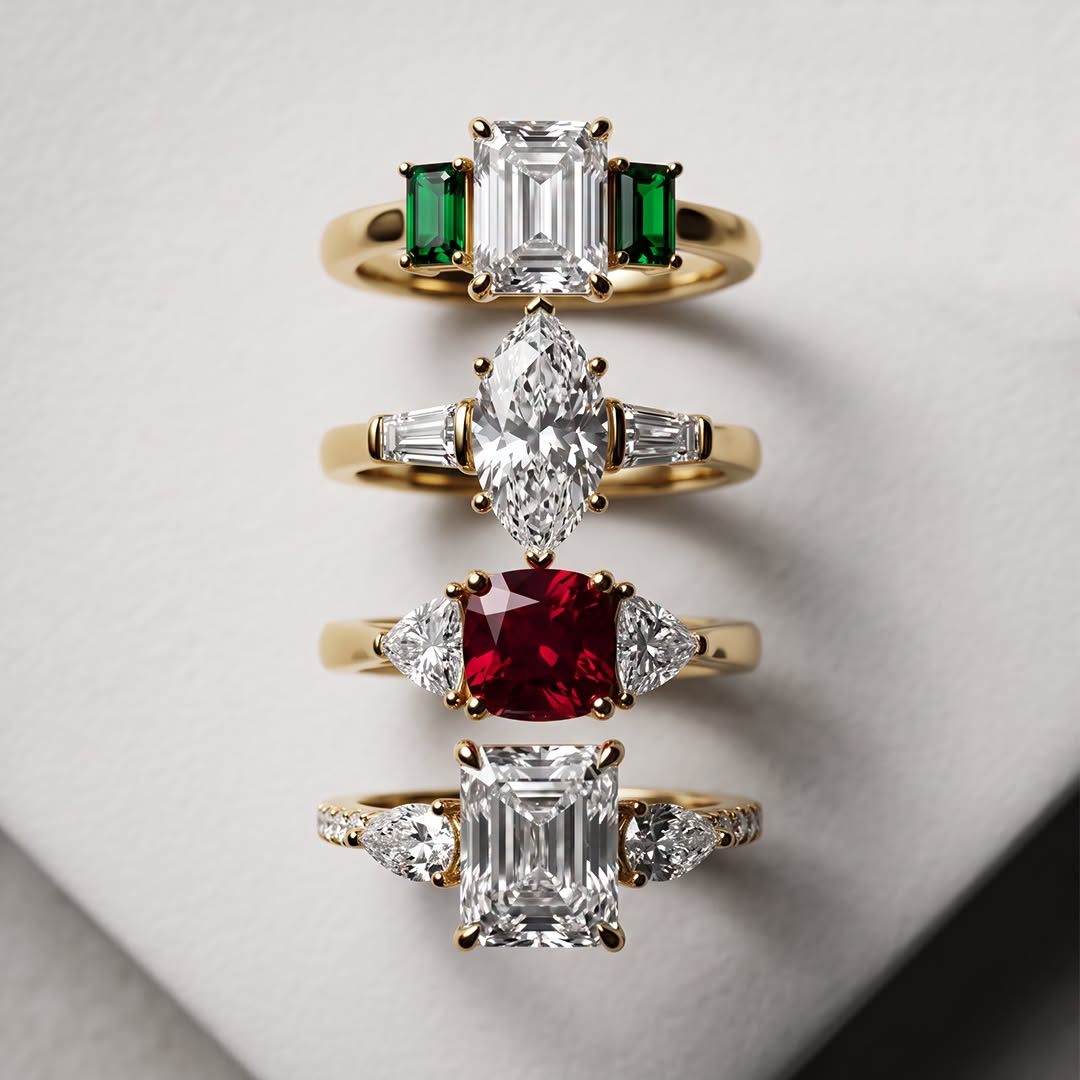
Not every engagement ring has to feature a diamond. If you’re drawn to rich color, vintage charm, and jewelry with character, an emerald could be the perfect alternative. Loved for centuries and admired for its unmistakable green hue, this gemstone offers a timeless look that never feels ordinary. Let’s explore what makes emerald engagement rings so special.
What Is an Emerald Engagement Ring?
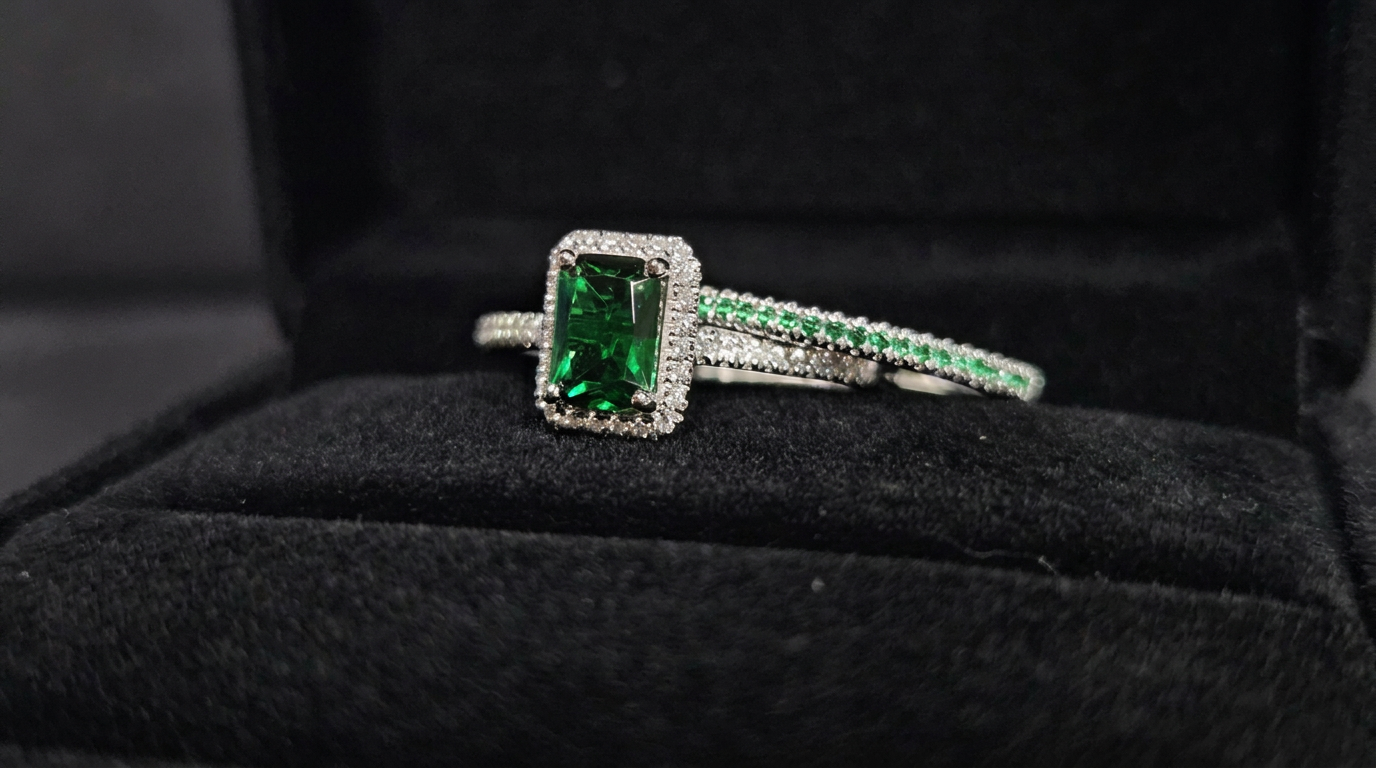
An emerald engagement ring uses a natural or lab-grown emerald as its center stone instead of a diamond. Emerald is the green variety of the mineral beryl, colored by trace amounts of chromium and vanadium. The result is a saturated green that ranges from bright spring grass to deep, bluish forest — a look prized since Cleopatra mined it in Egypt over 2,000 years ago.
For an engagement ring, emerald brings two things a diamond can’t: an unmistakable color and a sense of individuality. You see far fewer emerald rings than diamond ones, and that’s part of the appeal. The trade-off is that emerald asks a little more of you in care and setting choice — we’ll get into exactly how much below.
Why Choose Emerald for Engagement Ring?
As a symbol, emerald has meant rebirth, growth, and faithful love for centuries — which is why it lands naturally on a ring that’s about a future together. Some couples pick it for a May birthday, since emerald is May’s birthstone. Most, though, choose it for the simpler reason that they love green and want a ring that doesn’t look like the one in every ad.
There’s also a texture argument. A fine emerald has a soft, slightly velvety look — gem dealers call it “sleepiness” — that feels warmer and more personal than the hard brilliance of a diamond. If you’ve ever felt a diamond ring looked a touch cold, emerald is the usual answer.
Emerald-cut vs. Emerald Gemstone Rings
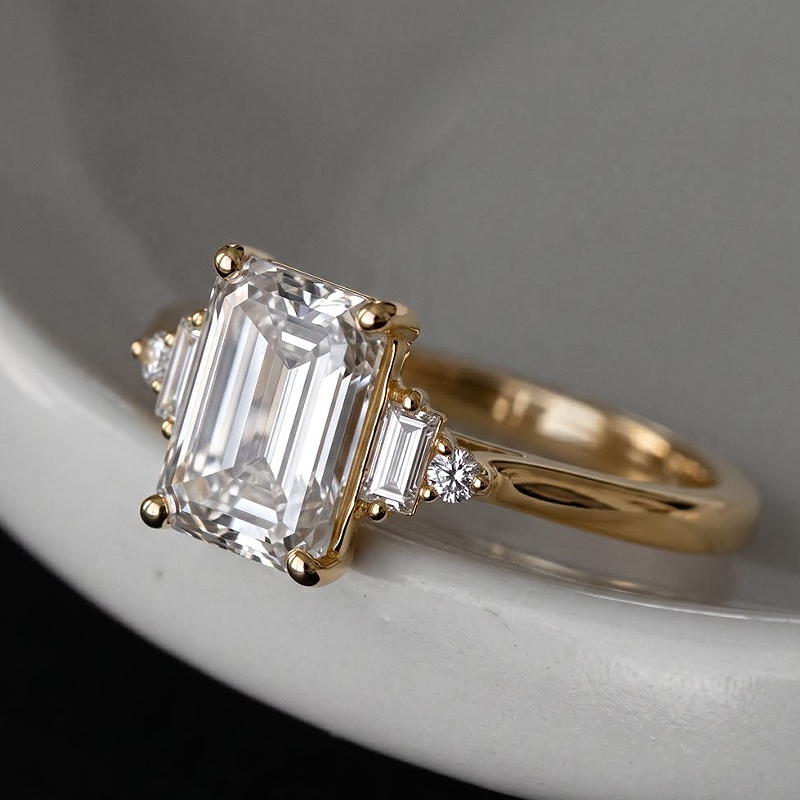
It’s easy to confuse an emerald cut with an emerald gemstone, but they refer to different things. An emerald cut is a rectangular gemstone shape with step-cut facets and cropped corners. Originally developed for emeralds, it’s now commonly used for diamonds, sapphires, moissanite, and other gemstones.
An emerald gemstone, by contrast, is the green variety of the mineral beryl. Emeralds can be cut into many shapes, including emerald, oval, cushion, pear, and round. If you’re shopping for an emerald engagement ring, remember that the term may refer to the green gemstone, the emerald cut, or both—an emerald-cut emerald ring combines the iconic shape with the gemstone’s signature green color.
Understanding Emerald Quality: The 4Cs (and a Fifth)
Just like diamonds, emeralds are evaluated using a set of criteria, though the emphasis shifts slightly because of the stone’s natural inclusions.
Color: The most important factor. Look for a vivid, saturated green with a slight bluish undertone—often described as “grass green” or “forest green.” Stones that appear too yellow or too blue are generally less valuable.
Clarity: Emeralds almost always contain inclusions, known affectionately as “jardin” (French for garden). These internal characteristics are expected and can even add to the stone’s personality. However, you’ll want to avoid inclusions that reach the surface or compromise durability.
Cut: A well‑cut emerald maximizes color and minimizes the visibility of inclusions. Popular cuts include the classic emerald cut (step‑cut with truncated corners), oval, cushion, and pear shapes. The emerald cut, in particular, showcases the stone’s depth and gives it a hall‑of‑mirrors effect.
Carat: WeightLarger emeralds are rarer and thus more expensive, but because emeralds are less dense than diamonds, a one‑carat emerald will appear slightly bigger than a one‑carat diamond of the same weight.
Treatments (the Fifth C): Most emeralds on the market are treated with oils or resins to fill surface‑reaching fractures and enhance clarity. This is an accepted practice, but you should ask your jeweler about the type and extent of any treatment, as it affects long‑term care and value.
When you evaluate an emerald, ask for a grading report from a reputable lab (such as GIA or IGI) that details these factors.
Choosing the Right Setting and Metal
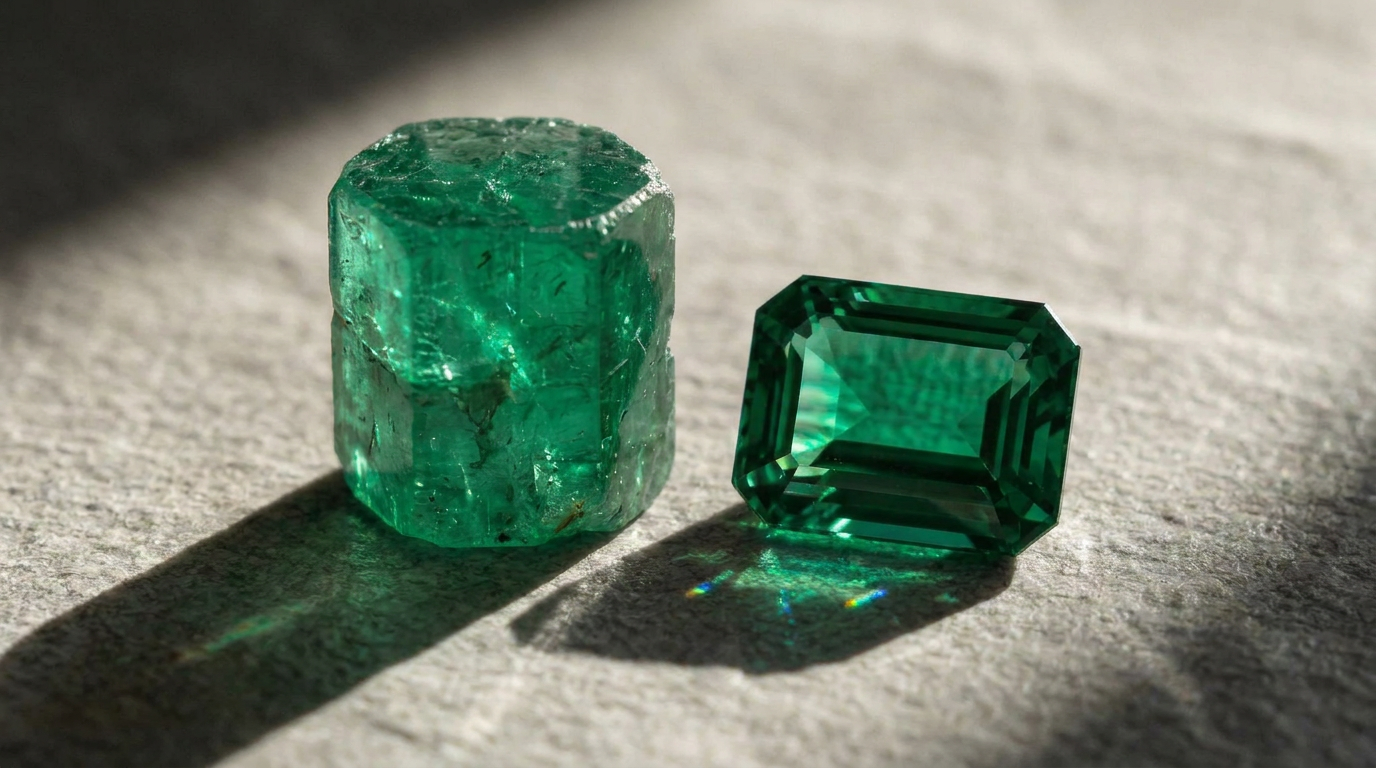
Because emerald chips more easily than diamond, the setting isn’t just decorative — it’s protection. A bezel setting, which wraps a continuous metal rim around the stone’s edge, offers the most defense against knocks and is the safest choice for a ring worn every day. It also reads modern and clean.
A halo of diamonds or harder stones adds sparkle and visual size while cushioning the center. Classic four-prong settings look elegant but leave the girdle and corners exposed — fine for occasional wear, riskier for daily. If you love prongs, look for a design with protective corners on an emerald-cut stone.
On metal, yellow gold is the traditional pairing — its warmth deepens the green and has anchored emerald jewelry since antiquity. White gold and platinum create a crisper, more contemporary contrast and give you the strongest setting for the price. Rose gold softens the look and suits vintage-inspired designs. Choose by skin tone and style, not by rules.
Caring for Your Emerald Engagement Ring
Caring for emerald comes down to one hard rule and a few soft ones. Never put an oiled emerald in an ultrasonic or steam cleaner — the vibration and heat can flush out the filler and change the stone’s look within minutes. That single habit prevents most emerald damage.
For routine cleaning, use warm water, a drop of mild dish soap, and a soft baby toothbrush. Gently work the underside, where lotion and soap collect — that buildup, not the stone itself, is the usual reason an emerald starts to look dull. Rinse and pat dry with a lint-free cloth.
Take the ring off for high-impact and chemical tasks: the gym, gardening, dishes, and swimming (chlorine attacks both stone and metal). Every one to five years, depending on wear, have a jeweler clean and re-oil it. Stored this way, an emerald engagement ring stays beautiful for a lifetime and beyond.
Budgeting for an Emerald Engagement Ring
Emeralds span a wide price range, influenced by color, clarity, carat, and treatment. Here’s a rough framework to help you plan:
| Quality Tier | Approx. Price per Carat (USD) | What to Expect |
|---|---|---|
| Commercial | $200 – $500 | Light green, noticeable inclusions, often heavily treated. Suitable for fashion jewelry. |
| Good | $500 – $1,500 | Rich green, moderate inclusions, standard oil treatment. Ideal for everyday wear. |
| Fine | $1,500 – $4,000 | Vivid, saturated green, minimal eye‑visible inclusions, high‑quality cut. |
| Exceptional | $4,000+ | Top‑color, near‑eye‑clean, expertly cut, often untreated or minimally treated. Collector’s grade. |
Because emeralds are less dense than diamonds, a one‑carat emerald will look larger, letting you get more visual impact for your budget. If you’re working with a specific price point, consider prioritizing color over carat weight—a slightly smaller stone with a richer hue often looks more impressive than a larger, paler gem.
Don’t forget to factor in the setting and metal. A simple solitaire in 14k white gold can keep costs down, while a platinum halo with diamonds will raise the price. Discuss your priorities with your jeweler; they can suggest alternatives (like a lab‑created emerald or a sapphire accent) that still deliver the look you want without breaking the bank.
Ethical & Sustainable Sourcing
More couples today want to know where their gemstones come from. When shopping for an emerald engagement ring, ask your jeweler about:
- Mine Transparency: Reputable suppliers can trace the stone back to a specific mine and provide details on labor practices and environmental stewardship.
- Certifications: Look for stones certified by organizations like the Responsible Jewellery Council (RJC) or those that follow the Kimberley Process‑style guidelines for colored gemstones.
- Lab‑Created Options: Synthetic emeralds share the same chemical and optical properties as natural ones but are grown in controlled environments, eliminating mining impact. They’re often more affordable and can be a great choice if sustainability is a top priority.
- Recycled Metals: Choosing recycled gold or platinum reduces the demand for newly mined metal and lowers your ring’s ecological footprint.
Frequently Asked Questions
Are emerald engagement rings suitable for everyday wear?
Yes. Emeralds are durable enough for daily wear, but because they naturally contain inclusions, they should be worn with reasonable care to avoid chips or cracks.
Which cut looks best for an emerald engagement ring?
he Emerald Cut is the most iconic choice, but oval, cushion, pear, and round cuts are also popular for highlighting the gemstone’s rich green color.
Is emerald ok for an engagement ring?
Yes, emerald is suitable for an engagement ring. With a hardness of 7.5–8 on the Mohs scale, it’s durable enough for everyday wear.
Do emeralds fade over time?
With proper care, the color remains stable. Avoid prolonged exposure to harsh chemicals and extreme heat, which can affect any oil treatments.
How much does an emerald engagement ring cost?
There’s no single price for an emerald engagement ring. You can find beautiful options starting around $1,000, while high-quality natural emerald rings can easily exceed $10,000, depending on the stone and design.
Choosing an emerald engagement ring is more than picking a beautiful gem—it’s about embracing a stone that carries centuries of symbolism, a vibrant color that mirrors the growth of your love, and a design that feels uniquely yours. By understanding the qualities that make an emerald special, considering how it will sit on your hand, and caring for it with simple, mindful habits, you’ll ensure that this green treasure remains a radiant reminder of your commitment for years to come.
So go ahead—let the verdant glow of an emerald capture the sparkle of your “yes.” Your perfect ring is waiting, and the journey to find it is just as exciting as the moment you slip it onto your finger.