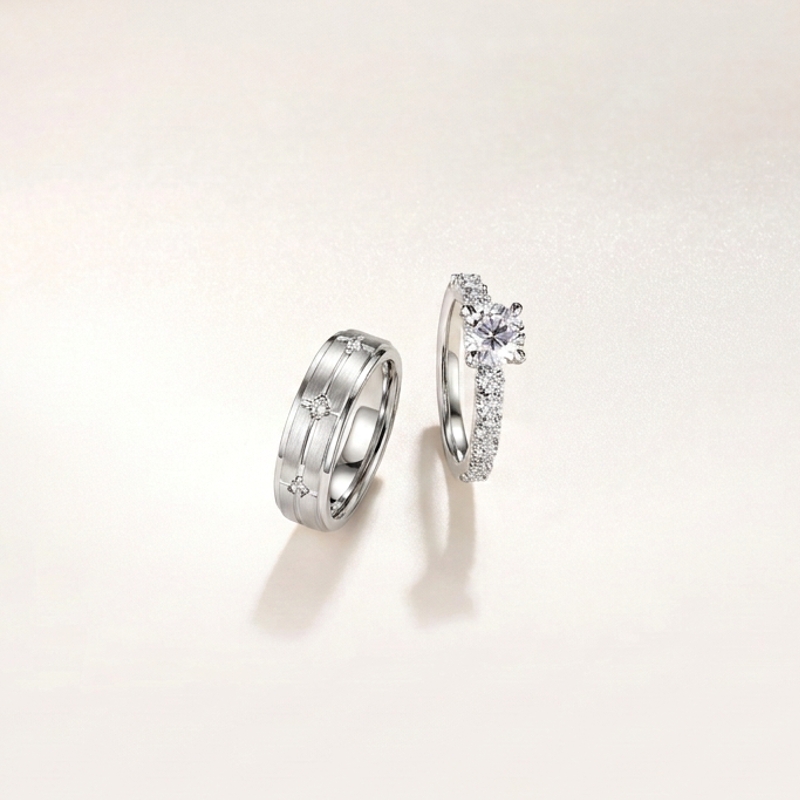
The short answer is yes, bigger diamonds generally cost more. However, a larger carat weight is just one piece of the puzzle. The more complete truth is that a diamond’s price is determined by a complex formula where Carat, Cut, Color, Clarity, Certification, and market forces all intersect. In essence, diamond pricing is about rarity, and while size contributes to rarity, it is not the sole factor. A smaller diamond with exceptional cut, color, and clarity can be worth far more than a larger diamond of mediocre quality. This guide will demystify exactly how diamonds are valued, empowering you to make an informed and confident purchase.
The 4Cs: The Foundation of Diamond Value
Understanding diamond pricing starts with the Four Cs, the universal standard for assessing diamond quality and value.
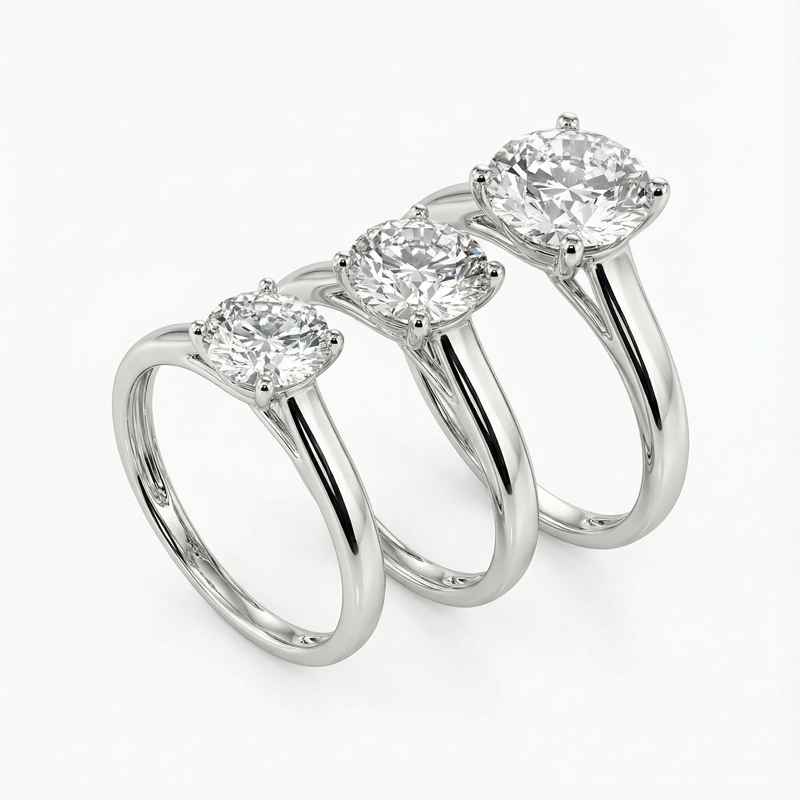
- Carat Weight: This is the diamond’s weight, measured in metric carats (1 carat = 0.2 grams). It’s crucial to distinguish between weight and physical size (measured in millimeters). Due to the natural distribution of diamond rough, larger stones are exponentially rarer. This scarcity drives up the price per carat as weight increases. However, carat weight alone tells you little about a diamond’s beauty or overall value.
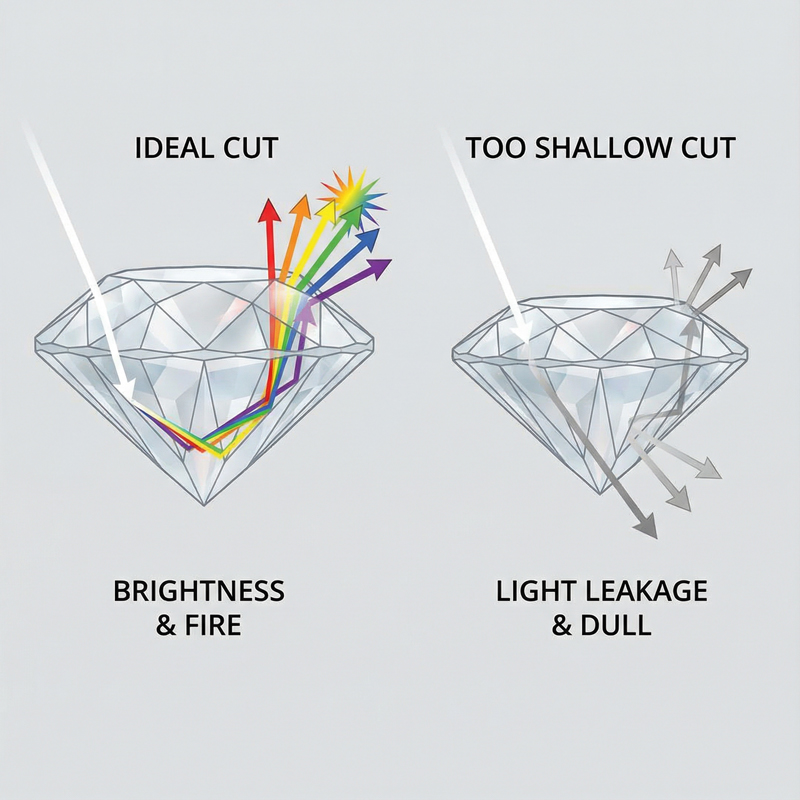
- Cut Quality: Arguably the most important “C,” cut refers to how well a diamond’s facets interact with light. It is graded from Excellent/Ideal to Poor. An Excellent cut diamond will exhibit superior brilliance (white light reflection), fire (flashes of color), and scintillation (sparkle). A poorly cut diamond, even with high carat weight, can appear dull and lifeless. Never sacrifice cut for size. A smaller, brilliantly cut diamond will always be more beautiful and often appear larger than a poorly cut, heavier stone.
- Color Grade: Graded on a scale from D (colorless) to Z (light yellow/brown). The subtle differences between near-colorless grades (G-H-I) are often invisible to the untrained eye, especially once set in jewelry. Choosing a stone in the G-H range can offer significant savings over a D-F stone, allowing you to allocate more budget toward cut or carat weight.
- Clarity Grade: This measures the presence of internal inclusions and surface blemishes, graded from Flawless (FL) to Included (I3). Most inclusions are microscopic. The key is to select a diamond that is “eye-clean” — meaning no flaws are visible to the naked eye. Stones graded VS1-VS2 or SI1 (with careful selection) often offer the best value, as they are eye-clean yet priced lower than higher-clarity grades.
Beyond the Basics: Critical Factors That Dictate Price
Several other elements significantly influence a diamond’s cost:
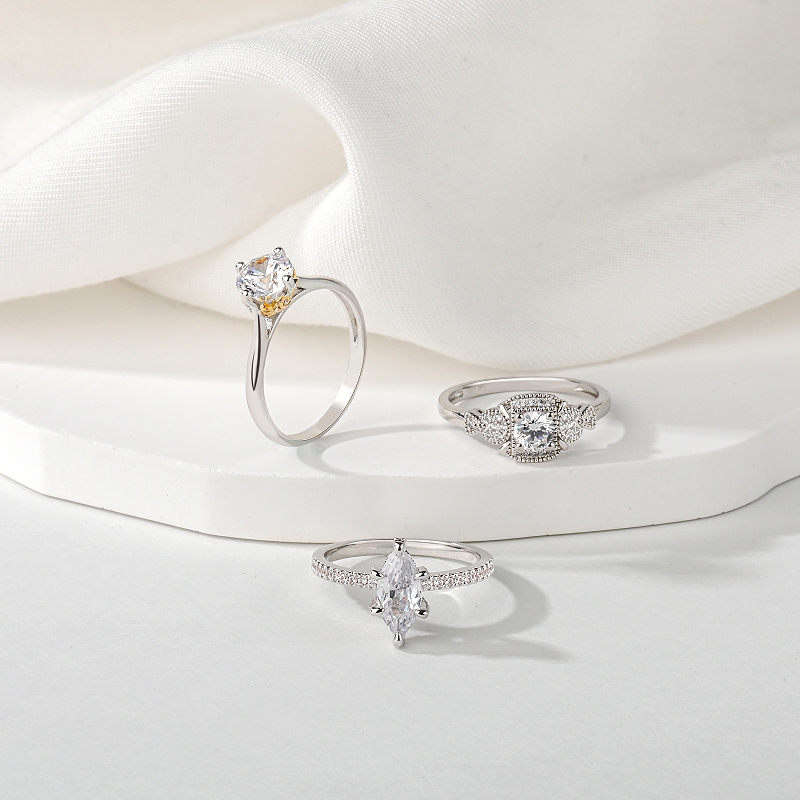
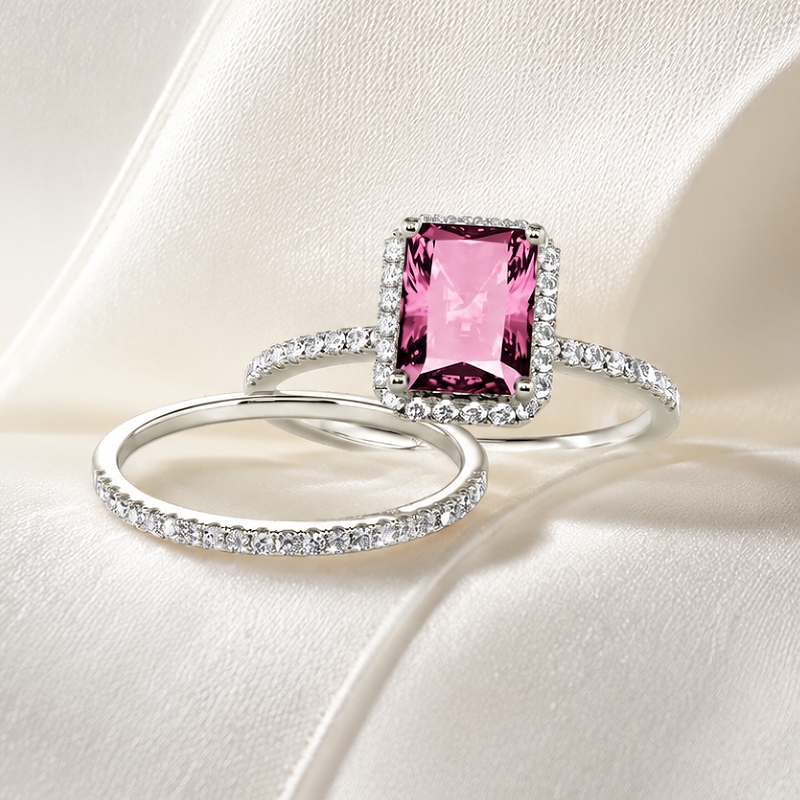
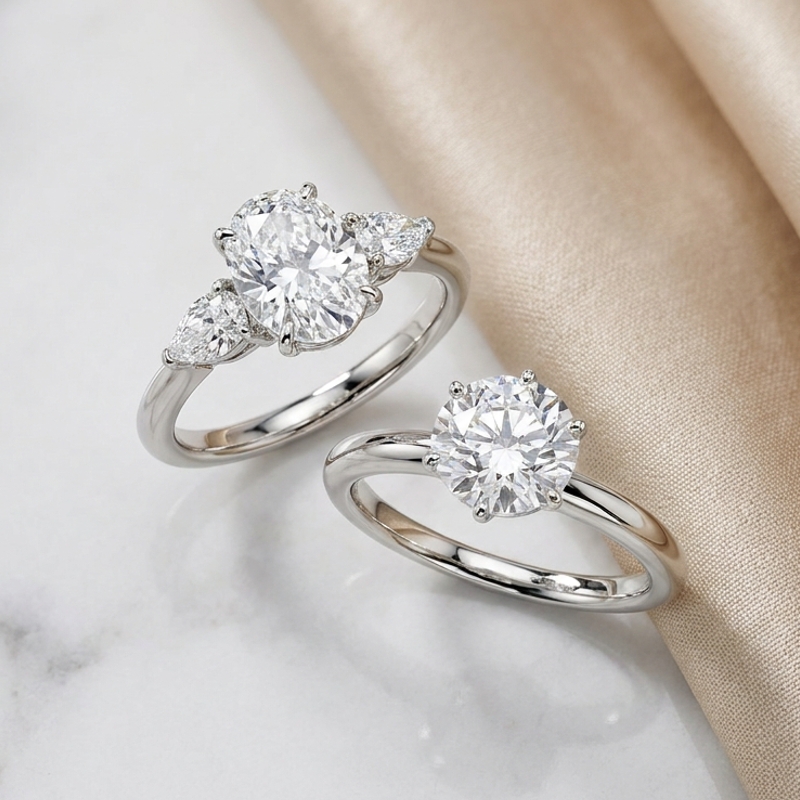
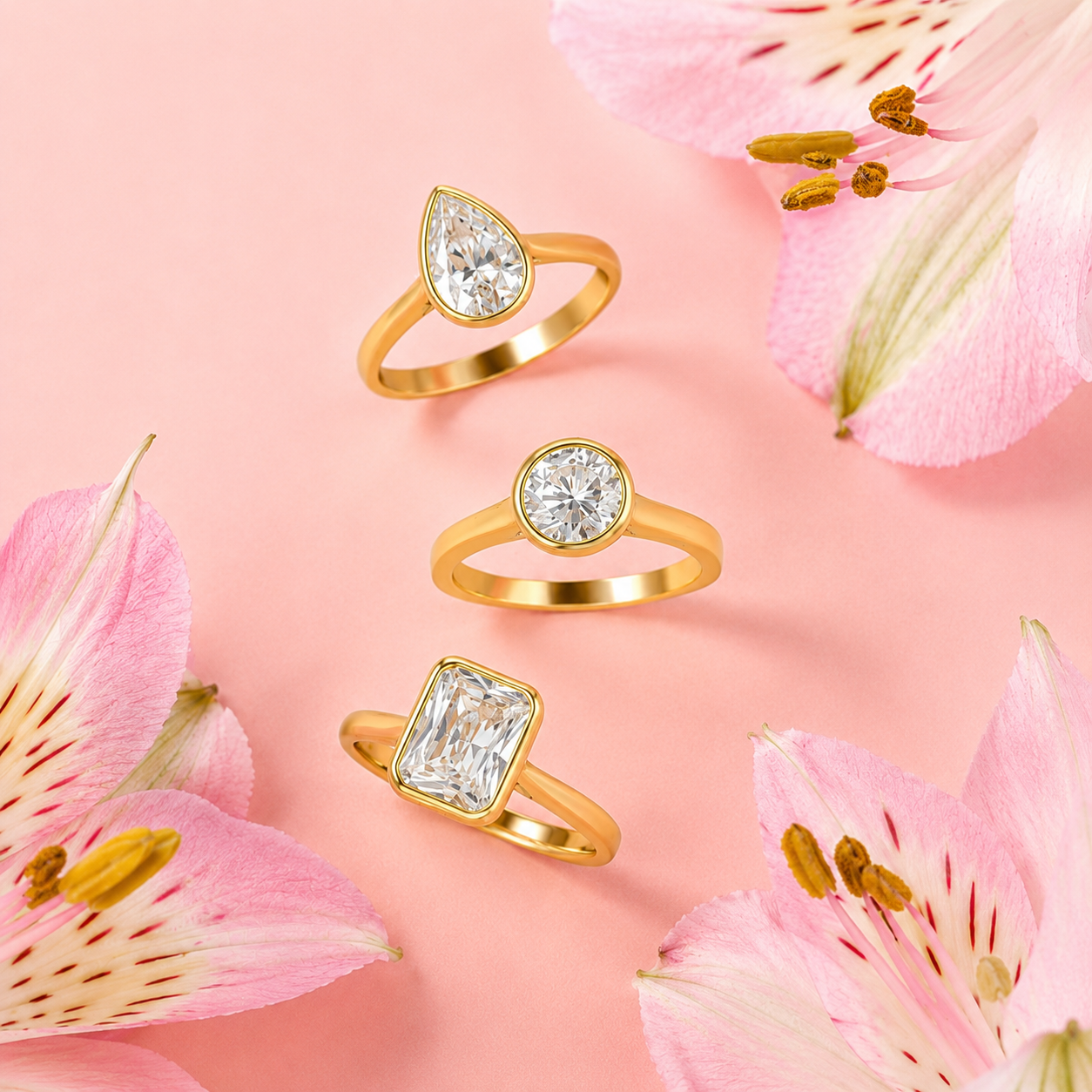
- Shape: Round Brilliant cuts are the most popular, demanding the highest price per carat due to both consumer demand and the higher amount of rough diamond lost during cutting. Fancy shapes like Oval, Cushion, Pear, and Emerald often provide more carat weight for your budget, as they are cut to retain more of the original crystal.
- Certification: Always insist on a diamond grading report from a reputable, independent laboratory like the Gemological Institute of America (GIA) or the American Gem Society (AGS). These reports are your guarantee of the diamond’s stated quality. A GIA-certified 1-carat diamond will command a higher, more justifiable price than an uncertified stone of the same weight.
- Fluorescence: This is a diamond’s reaction to ultraviolet light. While strong blue fluorescence can sometimes cause a diamond to appear slightly hazy in daylight, faint to medium fluorescence often has no visible effect and can make a diamond of lower color grade appear whiter, sometimes at a 10-15% discount.
- Market Dynamics & Source: Global supply, demand trends (like the popularity of oval cuts or 2-carat stones), and ethical sourcing (e.g., natural vs. lab-grown) all impact price.
Understanding the “Price Per Carat” Curve and Magic Sizes
Diamond pricing does not increase linearly. The price per carat jumps at certain “magic sizes” or “psychological weight barriers”—typically at 0.50 ct, 1.00 ct, 1.50 ct, 2.00 ct, etc. This is due to both intense consumer demand for these milestone sizes and their relative rarity.
- Example: A 1.00-carat diamond can cost 20-30% more than a 0.90-carat diamond with identical Cut, Color, and Clarity.
- Pro Tip: To maximize value, consider a diamond just below a magic size (e.g., 0.80 ct or 1.80 ct). The visual difference is negligible, but the savings can be substantial, allowing you to invest in a higher cut grade.
The Lab-Grown Advantage: Redefining Value and Size
A significant development in the jewelry industry is the rise of high-quality lab-grown diamonds. They are physically, chemically, and optically identical to mined diamonds but are created using advanced technological processes. The most significant impact is on value: lab-grown diamonds typically offer 70-80% more carat weight and/or superior quality for the same budget as a mined diamond.
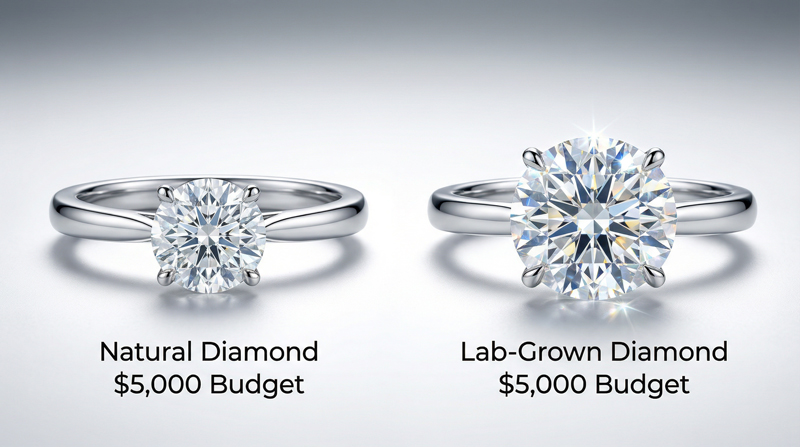
This revolutionary diamond pricing model shatters traditional barriers:
- Access to “Magic Sizes”: The premium for milestone weights (1-carat, 2-carat) becomes far more manageable.
- Size Without Compromise: You can prioritize a larger carat weight and an excellent cut, top-tier color (D-F), and high clarity (VS+) simultaneously.
- Ethical & Sustainable Choice: Lab-grown diamonds provide a guaranteed conflict-free and environmentally conscious origin, aligning with modern values.
How to Strategically Maximize Your Budget
Your goal is to find the best combination of the 4Cs for your priorities and budget.
- Prioritize Cut: This is non-negotiable for brilliance. Choose the best cut grade you can afford (Excellent/Ideal).
- Define Your Color Preference: For a classic white appearance in platinum or white gold, aim for D-G color. In yellow or rose gold, H-J colors can appear beautifully warm and offer excellent value.
- Target Eye-Clean Clarity: Focus on VS2-SI1 grades and ensure the stone is eye-clean via high-resolution imagery or video.
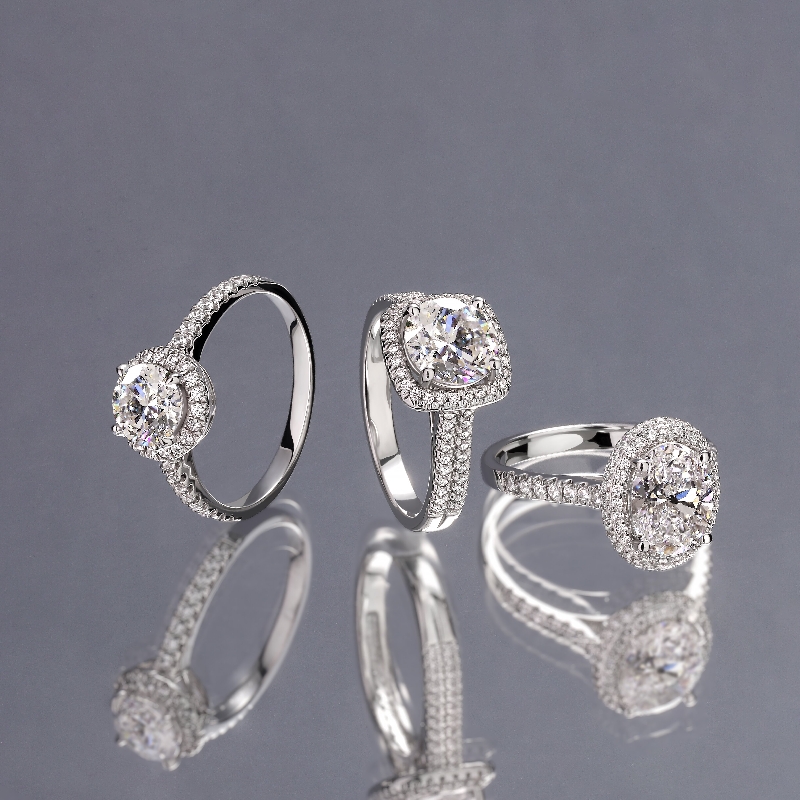
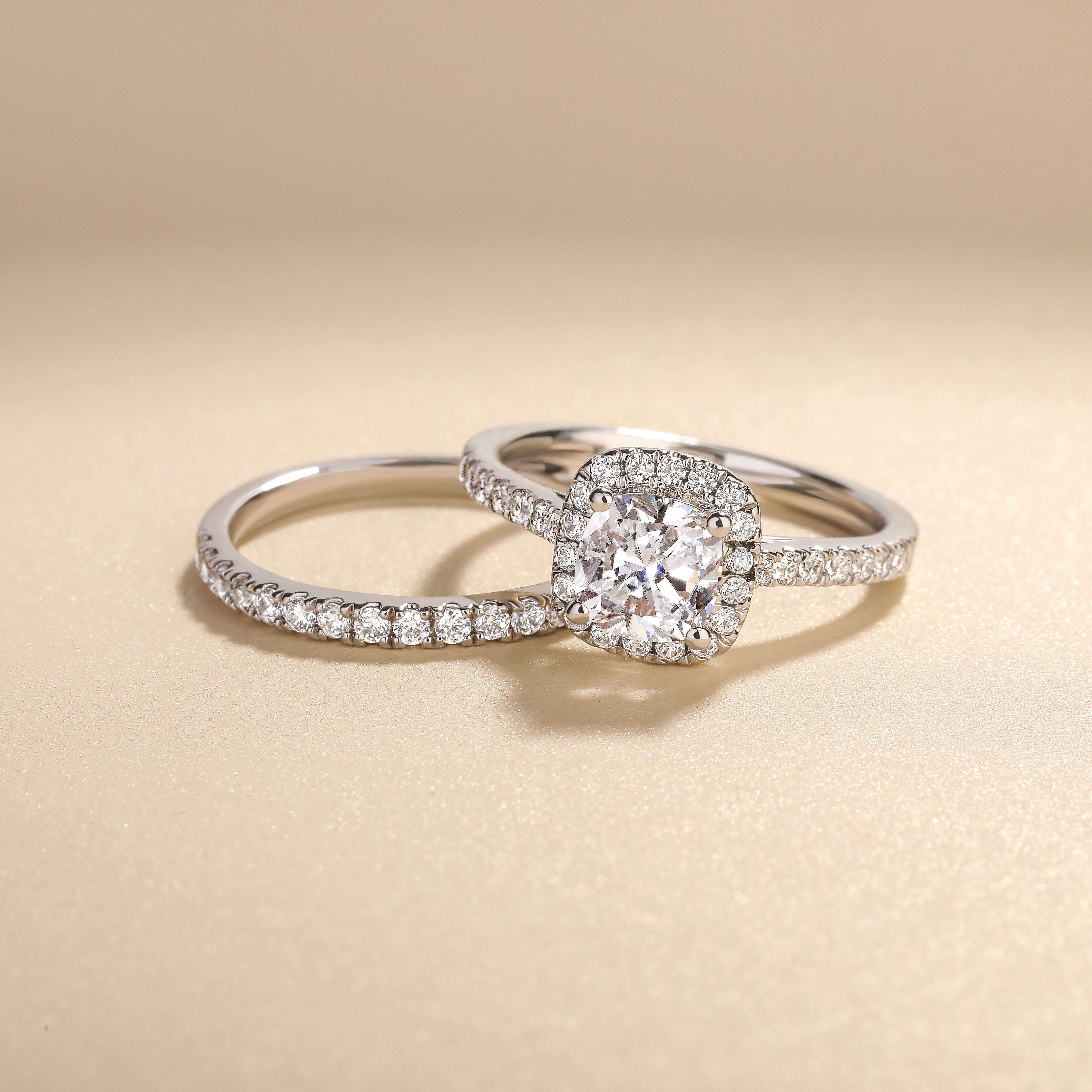
- Consider the Setting: A halo setting (small diamonds encircling the center stone) or a pavé band can create the dazzling illusion of a much larger center diamond.
- Leverage the Lab-Grown Advantage: Use the significant value proposition to upgrade carat size or color/clarity grades beyond what would be possible with a mined diamond.
Final Verdict: Size, Quality, and Value
So, do bigger diamonds cost more? Yes, but a diamond’s true cost and value are a multidimensional equation. A large diamond with poor cut and noticeable inclusions is not a better value than a smaller, exceptionally crafted stone. Informed diamond pricing is about balancing all the factors that contribute to a diamond’s beauty and rarity.
Ultimately, the “best” diamond is the one that captures the most light and emotion within your budget. Whether you choose a natural stone with timeless geological heritage or a stunning, value-oriented lab-grown diamond, understanding these principles ensures your investment is both financially sound and emotionally resonant.