Choosing an engagement ring is a major milestone. It requires a perfect balance of personal style and technical knowledge. To shop with confidence, you should understand the anatomy of an engagement ring and how each part affects the ring’s beauty. Every small component plays a role in the durability and overall look of the piece. When you master the anatomy of an engagement ring, you can communicate better with experts to find a high-quality heirloom that reflects your unique partnership.
The Focal Point: The Center Stone and Head
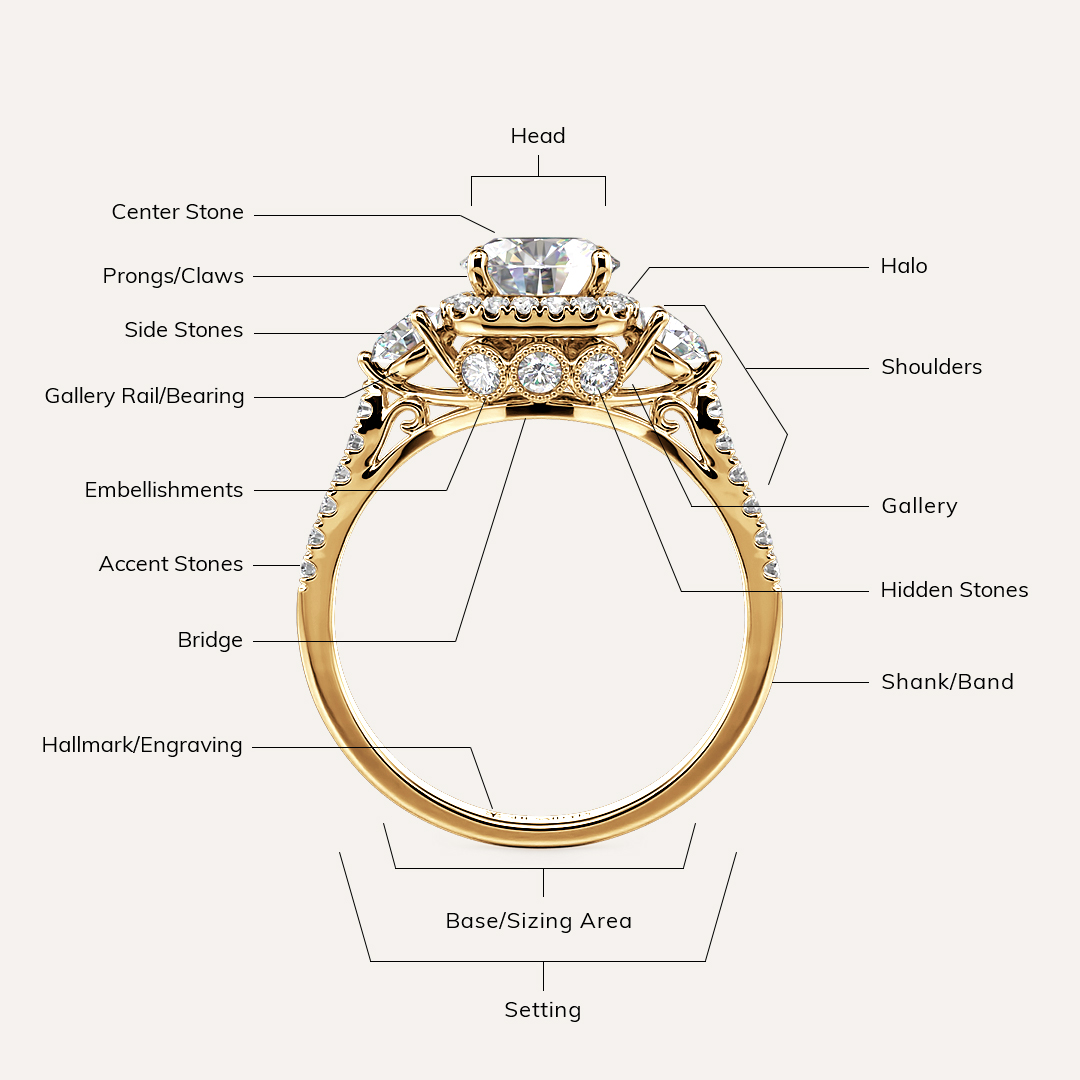
The “Head” is the primary structural component that holds the center stone in place. While the center stone—be it a classic diamond or a vibrant gemstone—is the star of the show, the way it is mounted determines how much light enters the stone and how secure it remains over time.
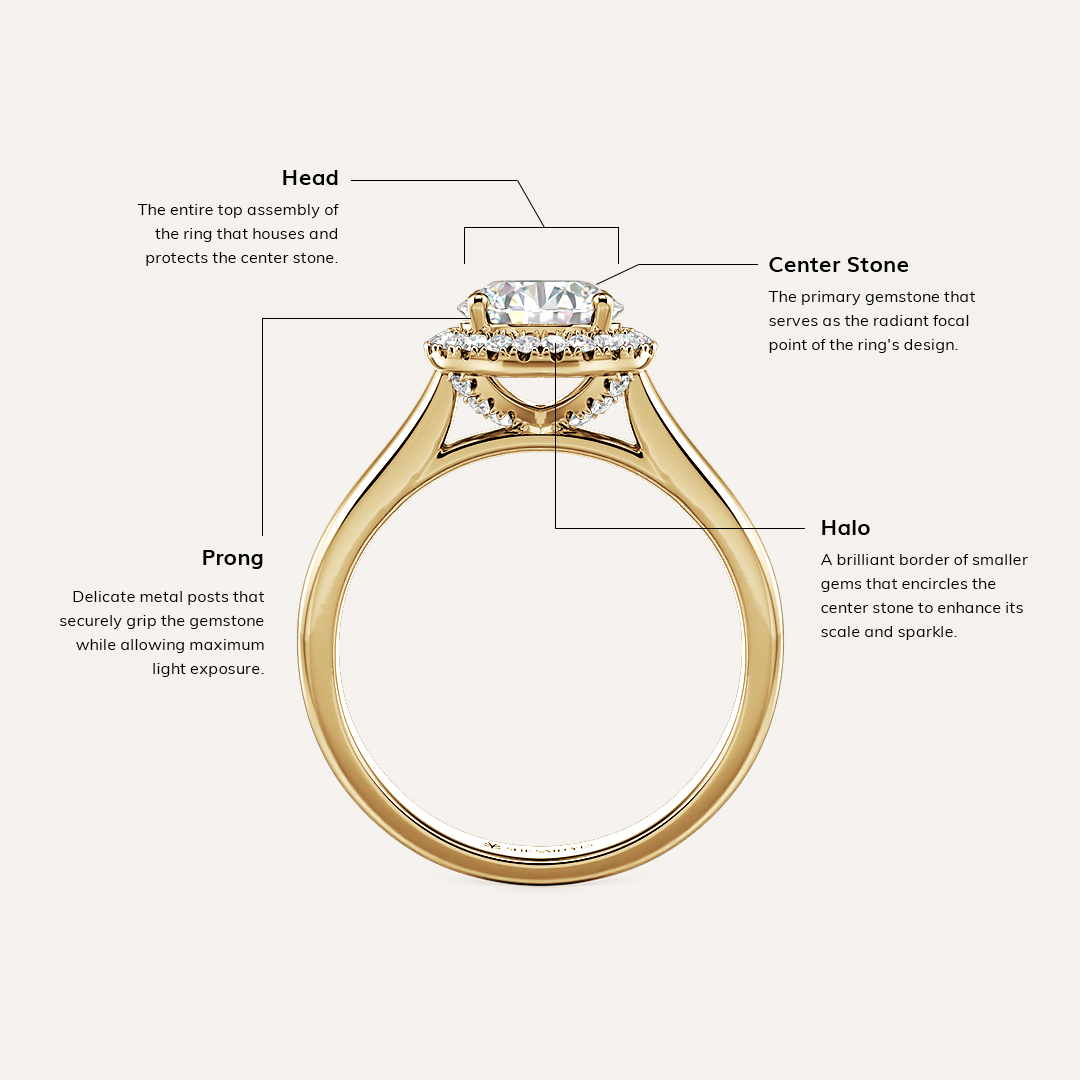
- Center Stone: The primary gem of the ring. Its cut, color, and clarity define the overall character of the piece.
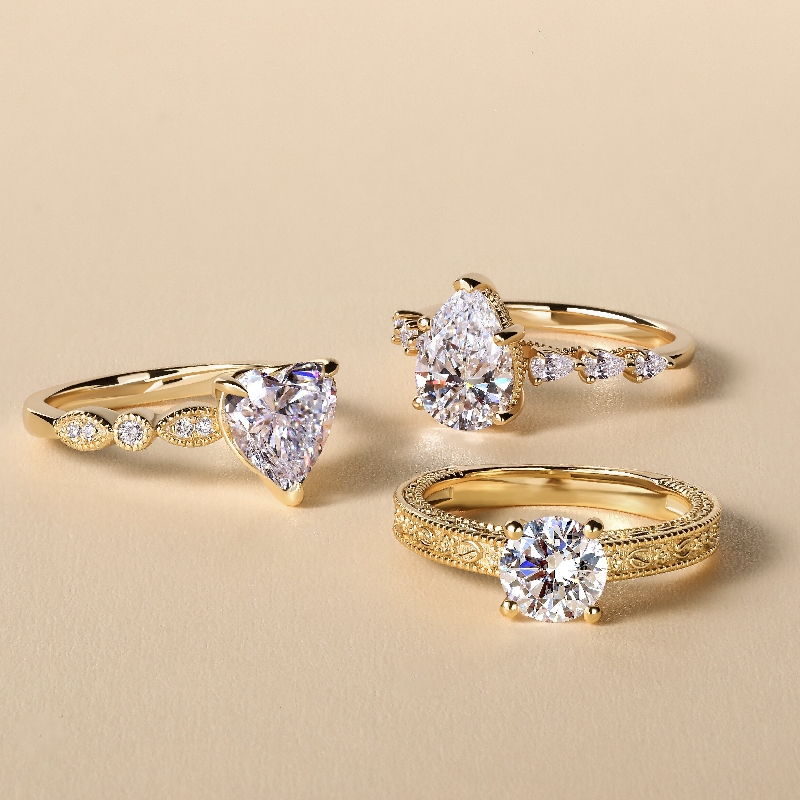
- Prongs or Claws: These are the small metal posts that act as the security system for the center stone. Common configurations include four prongs for a modern, airy look, or six prongs for maximum security and a more rounded silhouette.
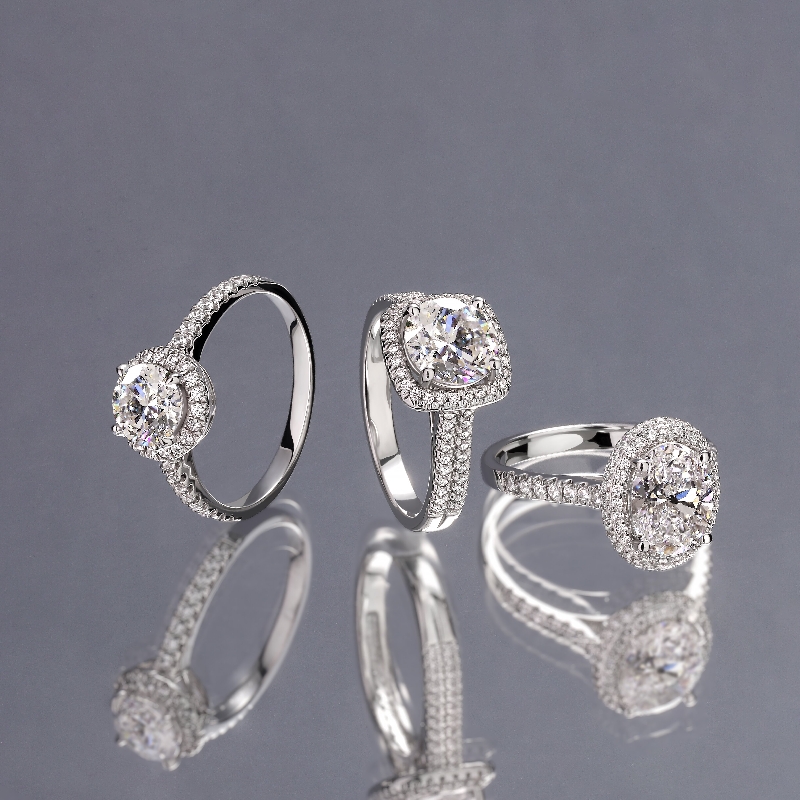
- Halo: A halo consists of a border of smaller gemstones that encircle the center stone. This architectural choice serves two purposes: it adds a layer of protection to the edges of the center stone and creates the visual illusion of a larger, more brilliant centerpiece.
The Profile View: Gallery and Bridge
When viewing a ring from the side, you begin to see the “architecture” of the setting. This profile view is where high-end craftsmanship truly shines, as it often contains hidden details that are not visible from the top.
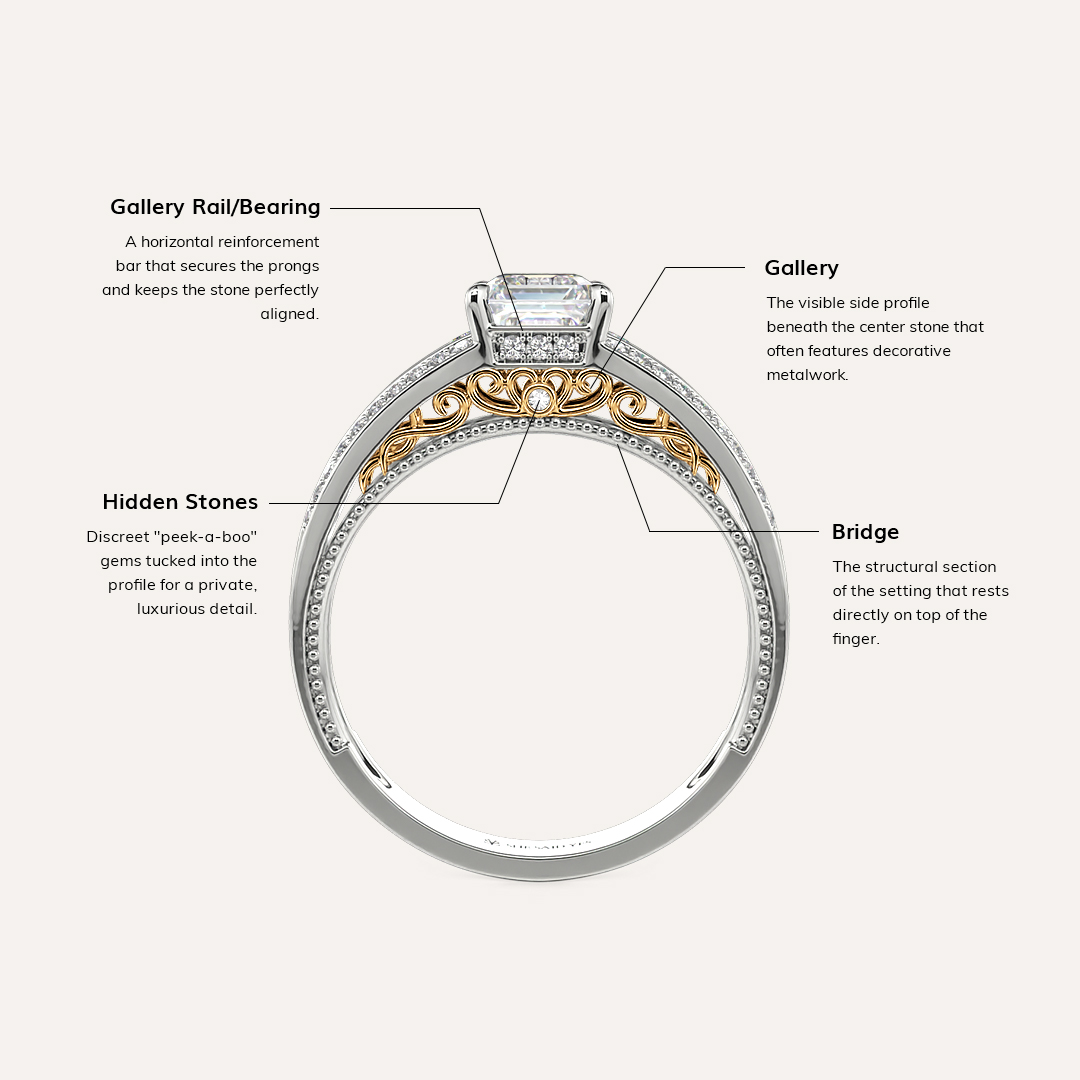
- Gallery: The area located directly beneath the center stone. A decorative gallery can feature intricate metalwork or open space to allow for easy cleaning and maximum light exposure.
- Gallery Rail (Bearing): This is a horizontal metal bar that connects the prongs. It provides essential structural reinforcement, preventing the prongs from bending and ensuring the stone stays perfectly seated.
- Hidden Stones: Often referred to as “peek-a-boo” stones, these are small diamonds or gems tucked into the gallery or bridge. They offer a private, sparkling detail that is only visible from the side, adding an element of surprise to the design.
- Bridge: The part of the setting that rests directly on top of the finger. A well-designed bridge ensures the ring sits comfortably and flush against the skin.
The Artistry: Shoulders and Accents
The transition from the center setting to the band is where a ring finds its unique silhouette. This area is often used to add extra brilliance through various stone settings.
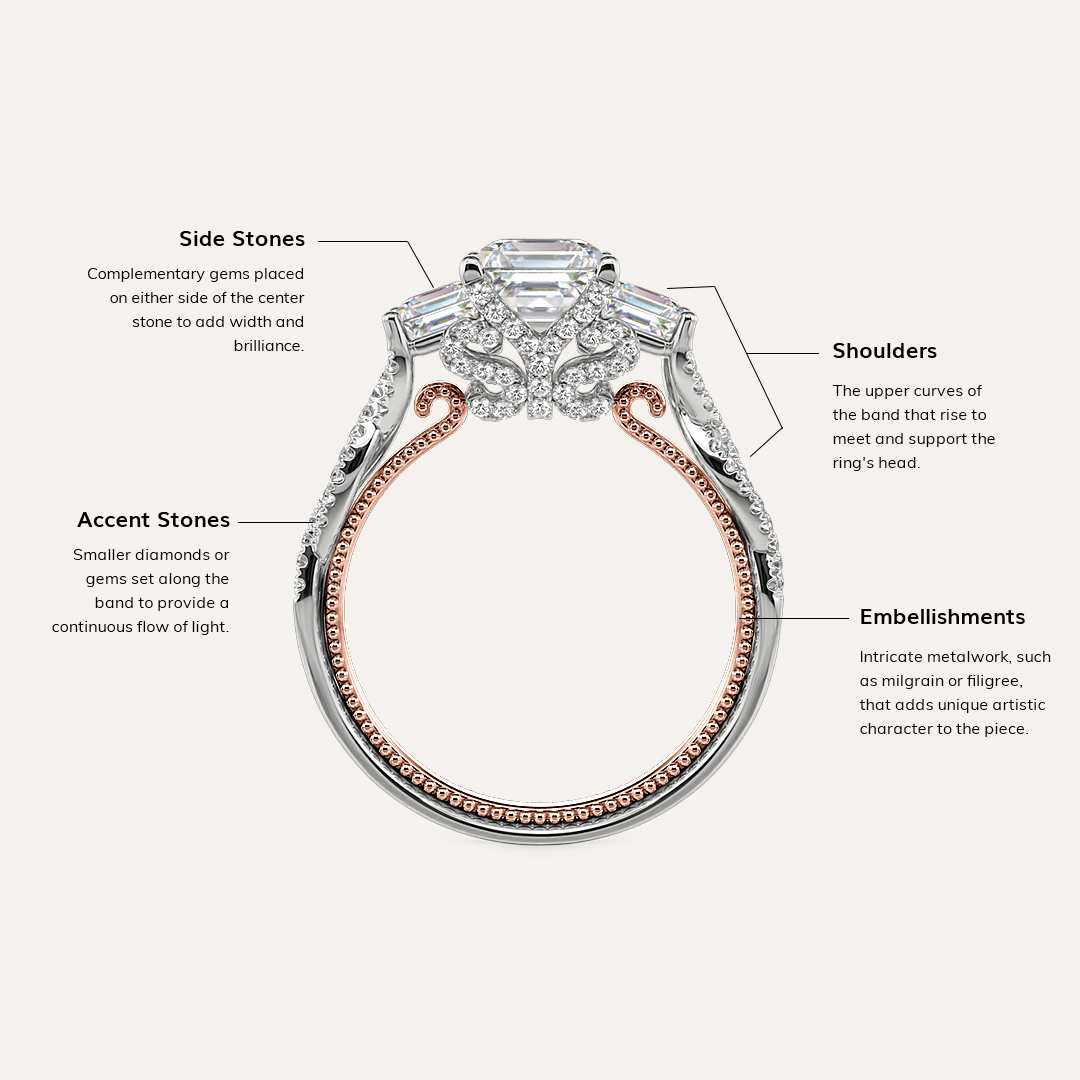
- Shoulders: These are the two sides of the band that curve upward to meet the head. They can be straight, tapered, or split, depending on whether you prefer a traditional or contemporary look.
- Side Stones: These are larger gems that flank the center stone. They are often used to complement the shape of the center diamond, such as using tapered baguettes to flank an emerald cut.
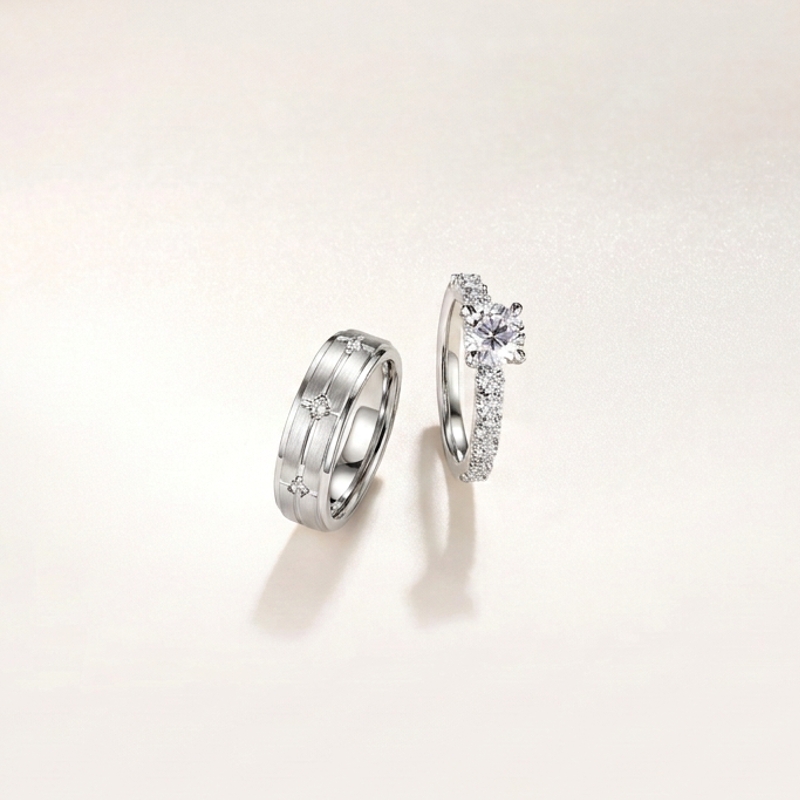
- Accent Stones: These are smaller gems set along the shoulders or the shank. Whether they are set in a pavé, channel, or bezel style, they provide a continuous flow of light across the finger.
- Embellishments:Jewelers incorporate fine details like milgrain or hand-carved silhouettes to achieve specific textures, offering styles that range from vintage-inspired to sleek and modern.
The Foundation: Shank and Base
The “Shank” is the technical term for the band of the ring. While it may seem like a simple metal circle, its construction is vital for long-term wear and authenticity.
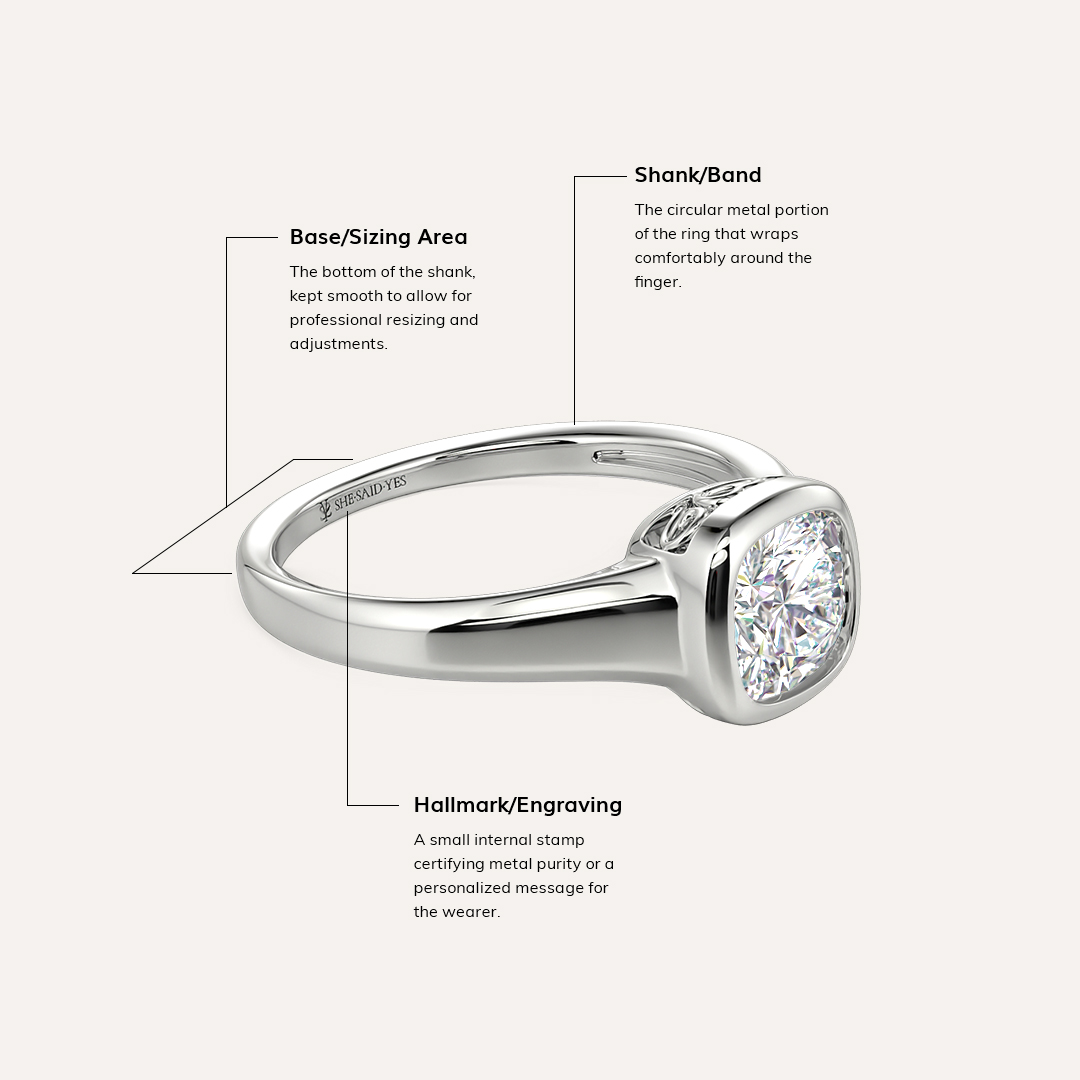
- Shank/Band: The circular part of the ring that wraps around the finger. It can be uniform in width or tapered for a more delicate appearance.
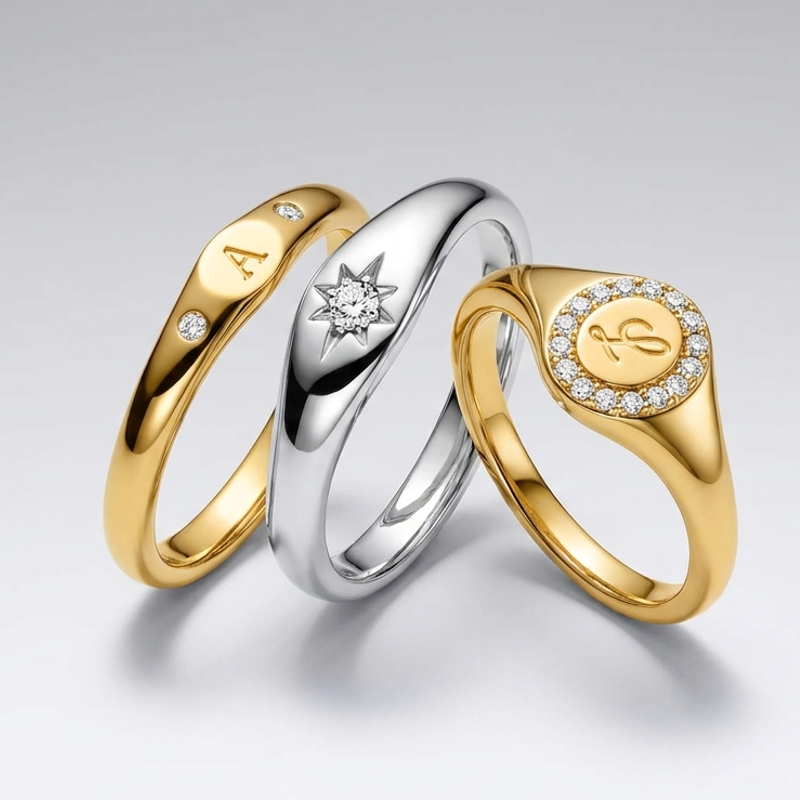
- Hallmark/Engraving: The interior of the shank holds the ring’s “identity.” A hallmark is a small, essential stamp that certifies the purity of the metal—such as 14K, 18K, or Platinum—serving as a guarantee of quality and authenticity. Additionally, this is the area where personalized engravings are placed, allowing couples to add a private, sentimental message that stays close to the wearer at all times.
- Base/Sizing Area: The very bottom of the shank. This area is typically left smooth and slightly thicker than the rest of the band. This design choice is intentional, as it provides a dedicated space for a jeweler to resize the ring in the future without disrupting any intricate patterns or stone settings on the rest of the band.
The Setting: The Structural Foundation
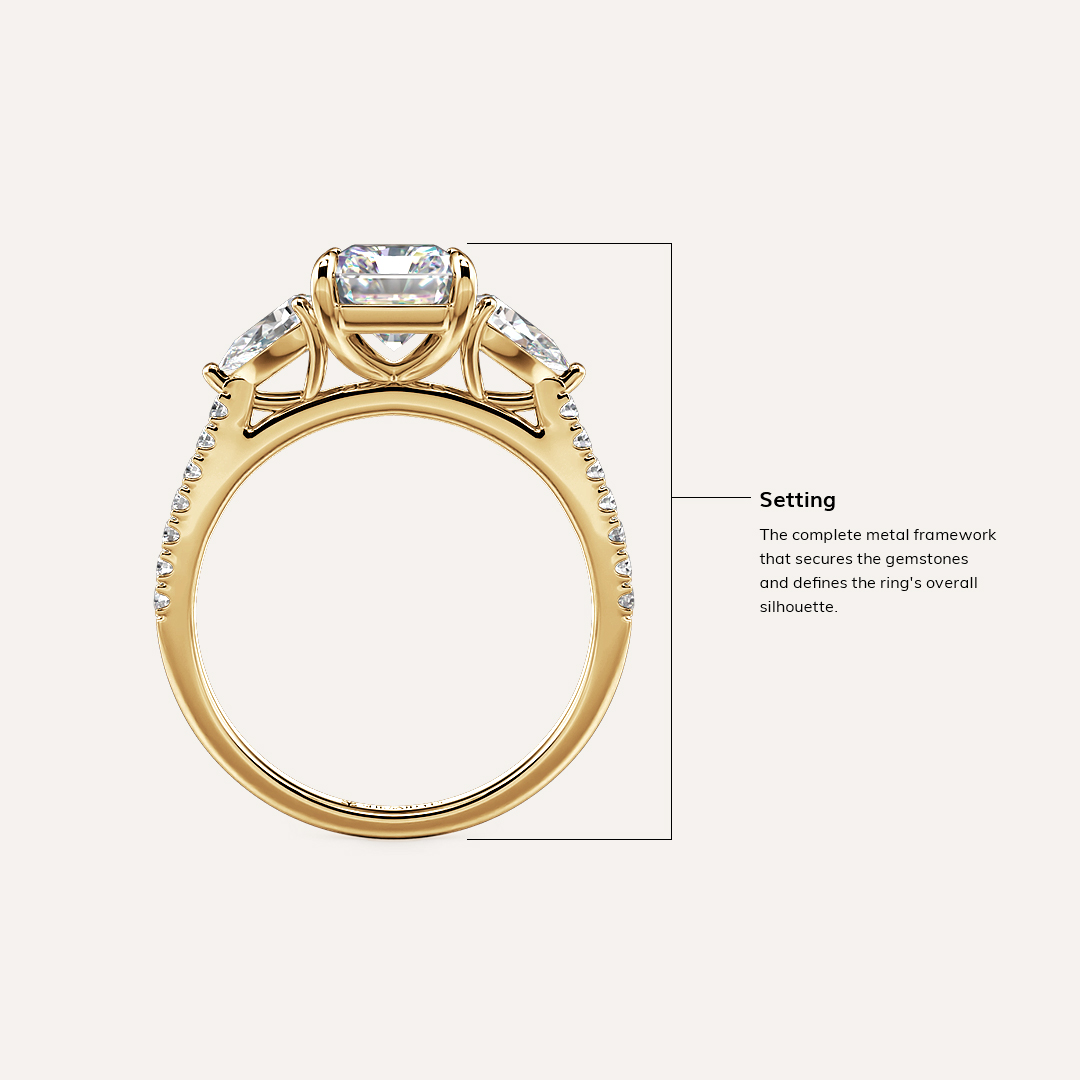
While many people use the term “setting” to describe the entire ring, in professional jewelry design, it technically refers to the complete metal framework—or “mounting”—that holds your gemstones in place. This encompasses the union of the head and the shank, serving as the physical foundation of the design. The setting is what truly defines the “personality” of the piece, transforming a loose gemstone into a specific style, whether it is a minimalist solitaire, a vintage-inspired cathedral, or a modern bezel. Beyond aesthetics, the setting is a feat of engineering; a high-end setting is designed to balance the weight of the stones perfectly while ensuring they remain secure and protected from the rigors of daily wear for a lifetime.
Conclusion
Learning these technical details will change the way you look at fine jewelry. You can now see the purpose behind every feature, from the head to the base. This knowledge helps you see the impressive engineering behind every beautiful design. Now that you understand the anatomy of an engagement ring, you are more than just a shopper. You are an informed collector ready to choose a piece that is both structurally sound and stunning.