Some engagement ring shapes come and go with trends. The princess cut isn’t one of them. Since the 1980s, this square-shaped diamond has held steady as the second most popular cut in the world — and for good reason. It sparkles almost as much as a round brilliant but costs 20 to 40 percent less per carat.
That combination of brilliance and value makes the princess cut a practical choice that doesn’t sacrifice visual impact. But there’s more to picking the right one than picking a shape. The four pointed corners are fragile. The cut quality doesn’t have a standardized GIA grade. And some settings protect the stone far better than others.
This guide walks through what actually matters when you’re shopping for a princess cut diamond ring — from proportions and pricing to which setting works best for daily wear.
What Is a Princess Cut Diamond?
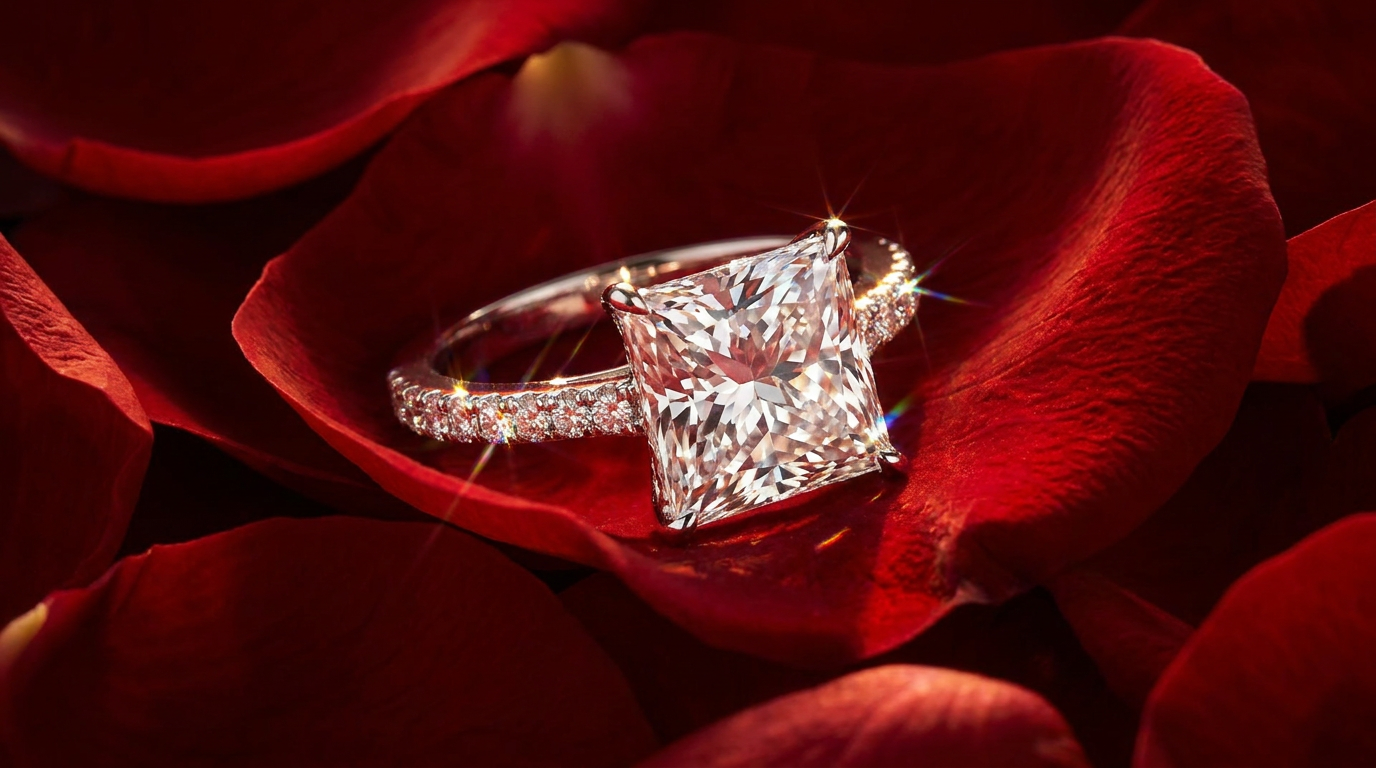
A princess cut is a square or slightly rectangular diamond cut using a modified brilliant facet pattern — typically 50 to 58 facets arranged to maximize light return. Unlike the emerald cut’s step-cut facets (which create a ‘hall of mirrors’ flash), the princess cut uses the same general faceting approach as a round brilliant. That’s why it sparkles so much.
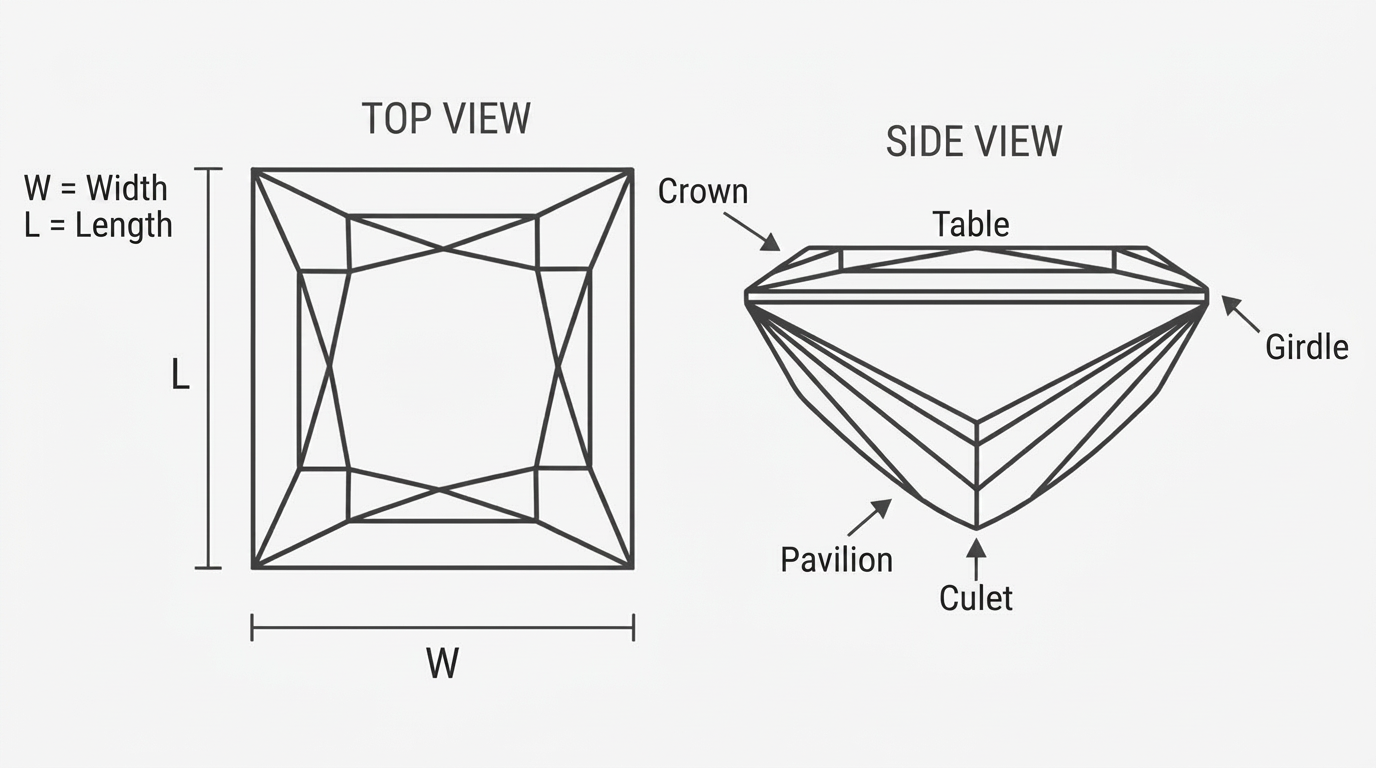
From the top, a princess cut looks like a clean square with four sharp corners. From the side, you’ll see a tapered pavilion that comes to a point underneath. The shape was developed in the late 1970s and formally named ‘princess cut’ in the early 1980s, though earlier versions existed under names like the profile cut and quadrillion cut.
One thing that catches people off guard: a princess cut diamond faces up smaller than a round of the same carat weight. More of the diamond’s weight is hidden in the depth of the pavilion. A 1-carat princess cut measures roughly 5.5mm across, while a 1-carat round is about 6.5mm. If you want the same visual footprint as a 1-carat round, look for a princess cut around 1.2 to 1.5 carats.
Princess Cut vs. Round Brilliant: Which Should You Pick?
This is the comparison most buyers end up making. Here’s how they stack up side by side:
| Princess Cut | Round Brilliant | |
| Shape | Square / slightly rectangular | Round |
| Facets | 50–58 (modified brilliant) | 57–58 (standard brilliant) |
| Sparkle | High — slightly below round | Maximum possible |
| Price per carat | 20–40% less than round | Most expensive shape |
| Face-up size | Smaller at same carat weight | Larger at same carat weight |
| Corner durability | Four pointed corners — vulnerable | No corners — very durable |
| Best for | Modern, geometric taste; budget flexibility | Classic taste; maximum sparkle |
The princess cut appeals to people who like clean lines and a contemporary feel. The round brilliant is for those who want the most sparkle possible and don’t mind paying a premium for it. Neither is objectively better — they serve different tastes.
Go with princess if you prefer a modern look, want to save 20–40% on the center stone, or like the idea of a diamond that stands out from the round-brilliant crowd.
Go with round if maximum sparkle is your top priority, you love the classic look, or you want the most universally recognized shape.
How to Evaluate a Princess Cut Diamond
Princess cuts don’t receive a standardized cut grade from GIA the way round brilliants do. That means you need to look at the actual measurements rather than relying on a single grade.
The numbers that matter
Table percentage: 60–75% is a solid range. Too small and the diamond looks dark. Too large and you lose the faceted sparkle that makes princess cuts attractive.
Depth percentage: 68–78%. A shallow princess cut leaks light through the bottom. A deep one hides weight where you can’t see it, making the diamond look smaller than its carat weight suggests.
Crown angle: Around 30–40 degrees. This affects how light enters and exits the top of the stone.
Where to save (and where not to)
Color — save here. Princess cuts are surprisingly good at masking body color. An H or I color princess cut in a white gold or platinum setting will look completely white to most people. You don’t need to pay for D–F color grades.
Clarity — save here too. The complex facet pattern hides small inclusions well. SI1 clarity is often eye-clean in a princess cut, saving you a significant amount over VS grades.
Cut — don’t save here. Since there’s no official cut grade, ask to see the diamond (or a high-quality video) under different lighting. A well-cut princess cut radiates light evenly across the entire stone. A poorly cut one shows dark patches, especially near the corners.
Best Settings for Princess Cut Rings
The setting matters more for a princess cut than for most other shapes because those four pointed corners are the weakest points. A good setting protects them; a bad one leaves them exposed to chips.
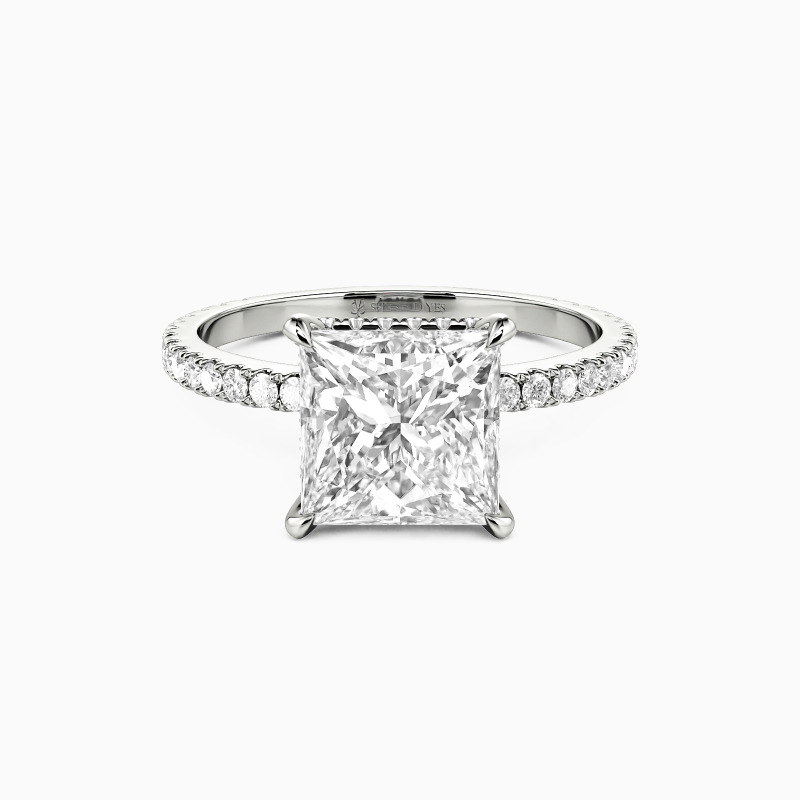
- Four-prong with V-tips — The go-to choice. Each corner gets its own prong, and V-shaped prong tips wrap around the pointed ends for protection. This is the most secure open setting.
- Six-prong — Same corner coverage as four-prong, plus two additional prongs along the sides. Extra security with minimal visual impact.
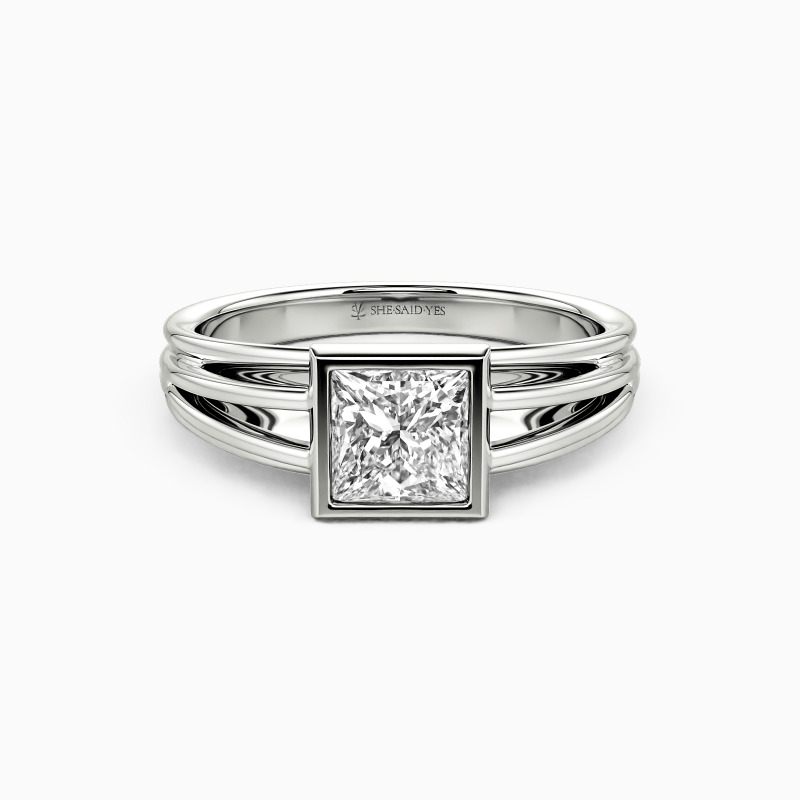
- Bezel — A thin rim of metal completely surrounds the diamond. Maximum corner protection, a sleek modern look, and zero snag risk. The trade-off is that less of the diamond is visible from the side.
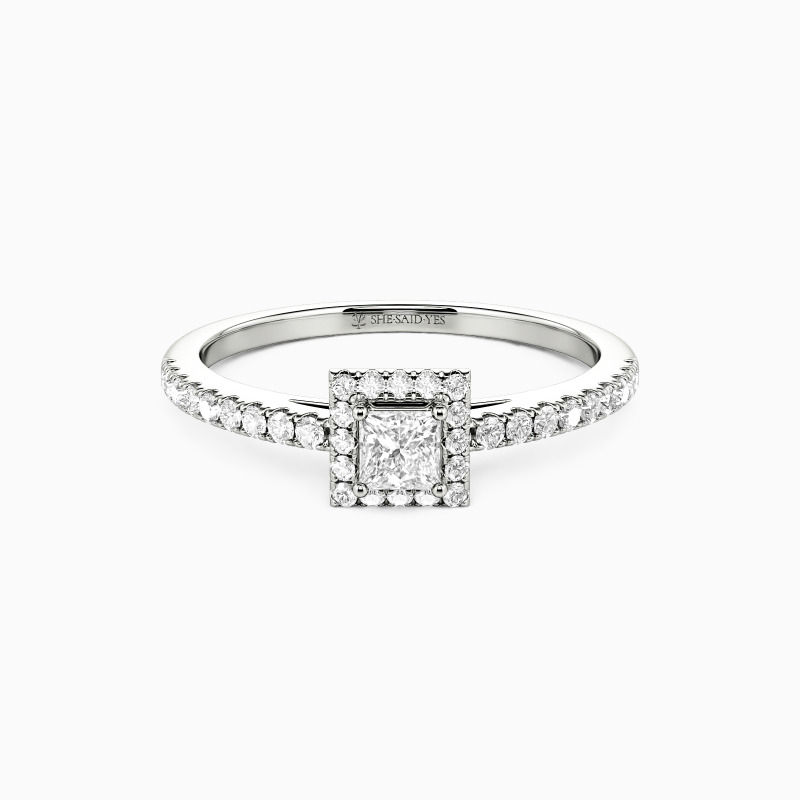
- Halo — A ring of small diamonds around the princess cut adds sparkle and makes the center stone appear larger. The halo also creates a natural buffer around the corners.
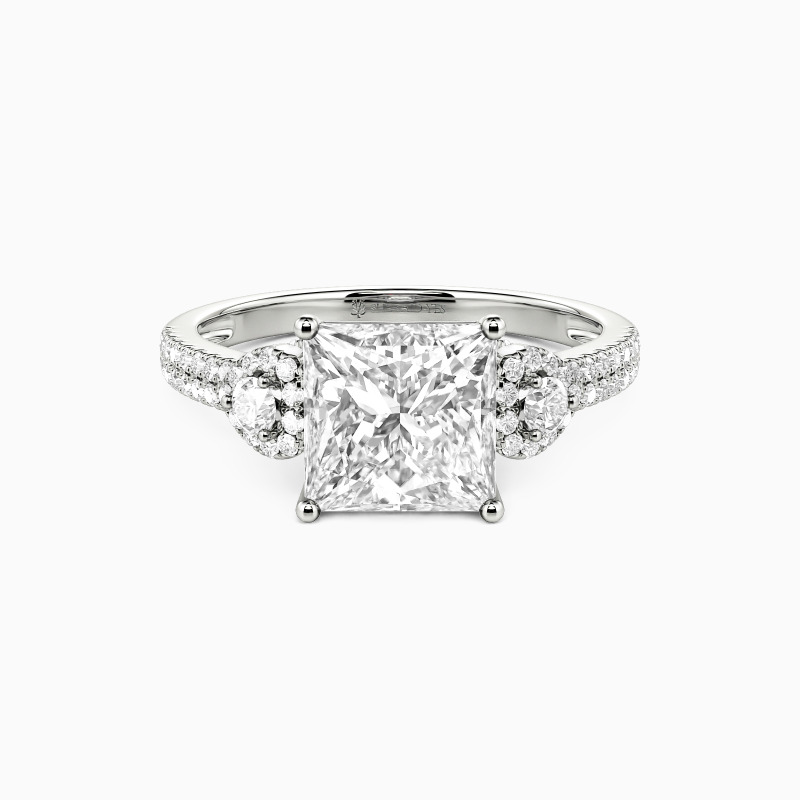
- Three-stone — Flanking the princess cut with trapezoid or triangle side stones emphasizes the geometric theme. It’s a substantial look that works especially well on wider fingers.
- East-west — A newer trend where the princess cut is rotated 45 degrees so it sits like a diamond shape rather than a square. It’s unexpected and gives the ring an entirely different personality.
Which metal?
White gold or platinum amplifies the modern, geometric feel. Rose gold softens the square edges and adds warmth. Yellow gold gives a vintage warmth that pairs well with Art Deco-inspired settings. All three work — pick based on personal style.
Princess Cut Diamond Ring Prices
Princess cuts are one of the best values in diamond shapes. Here’s how the pricing breaks down across natural diamonds, lab-grown diamonds, and moissanite:
| Carat | Natural Diamond | Lab-Grown Diamond | Moissanite |
| 0.5 ct | $800–$1,500 | $200–$400 | $80–$200 |
| 1.0 ct | $2,500–$5,000 | $600–$1,200 | $150–$400 |
| 1.5 ct | $4,500–$9,000 | $1,000–$2,200 | $250–$600 |
| 2.0 ct | $7,000–$15,000 | $1,600–$3,500 | $350–$800 |
The gap between natural and lab-grown is enormous. A 1.5-carat princess cut lab diamond at H color, SI1 clarity, and excellent cut typically runs $1,000 to $2,200. The same spec in a natural diamond? $4,500 to $9,000. The visual difference between the two is nonexistent to the naked eye.
Moissanite pushes the value even further. A 2-carat princess cut moissanite can cost as little as $350 to $800 while delivering more fire and rainbow light dispersion than diamond. For buyers who prioritize size and sparkle over the ‘diamond’ label, it’s worth serious consideration.
The smart budget formula: H color + SI1 clarity + lab-grown diamond = top visual quality at 60–80% savings over the natural equivalent.
Is a Princess Cut Right for You?
Princess cut rings look particularly good on wider hands and shorter fingers. The square shape creates a balanced, substantial appearance that elongates the finger visually. On very slender fingers, a large princess cut can look a bit heavy — though a smaller carat weight or a delicate setting solves this easily.
Style-wise, the princess cut skews modern. If your taste runs toward clean geometry, contemporary design, or minimalist aesthetics, it’s a natural fit. If you gravitate toward vintage romance or ornate detail, a cushion or emerald cut might suit you better.
Quick match guide:
Minimalist → Princess solitaire on a thin band.
Glamorous → Princess cut with double halo in white gold.
Romantic → Princess cut in rose gold with pave side stones.
Active lifestyle → Bezel-set princess cut for full corner protection.
Popular Princess Cut Engagement Rings
Frequently Asked Questions
Is a princess cut cheaper than a round cut?
Yes. Princess cuts cost 20–40% less per carat than round brilliants. The cutting process wastes less rough diamond, and demand is lower. You’re getting brilliant-cut sparkle at a significant discount.
Does a princess cut sparkle as much as a round?
Almost. Both use brilliant-style faceting, so the princess cut produces excellent sparkle. Round brilliants still edge ahead due to their perfectly symmetrical facet arrangement, but the difference is small enough that most people don’t notice in everyday wear.
What’s the best setting to protect a princess cut?
A bezel setting offers the most protection by encasing the entire diamond edge in metal. For a more open look, V-tip prongs placed at each corner are the next best thing. Avoid settings where the corners hang exposed without prong coverage.
Is princess cut going out of style?
No. It has been the second most popular diamond shape for over two decades. The clean geometric lines actually align well with current trends toward modern and minimalist engagement ring design.
Can you wear a princess cut ring every day?
Yes, with the right setting. The corners are the main concern — they can chip if hit hard enough. A bezel, halo, or V-tip prong setting handles daily wear without issues. Remove the ring before heavy manual work, just as you would with any engagement ring.