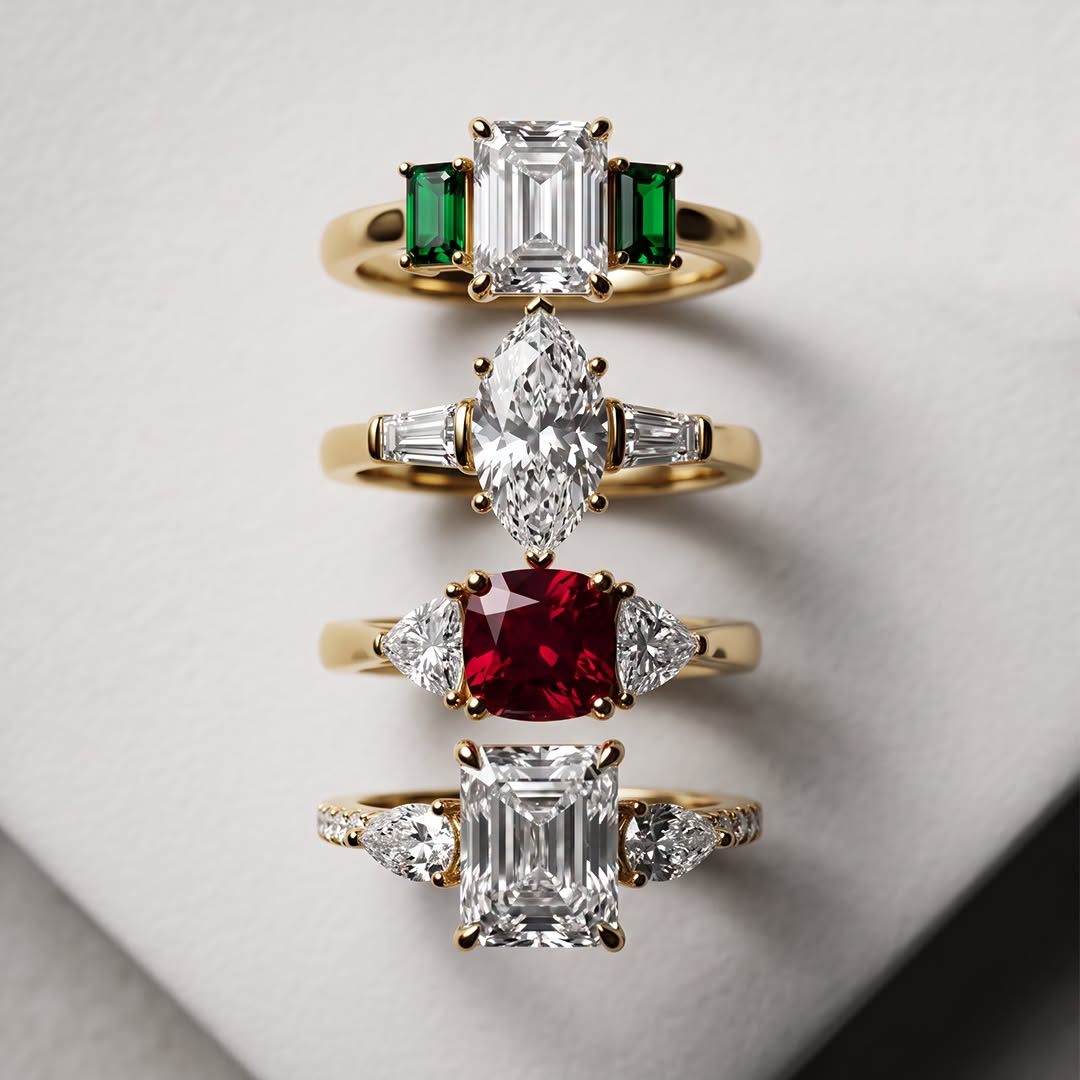
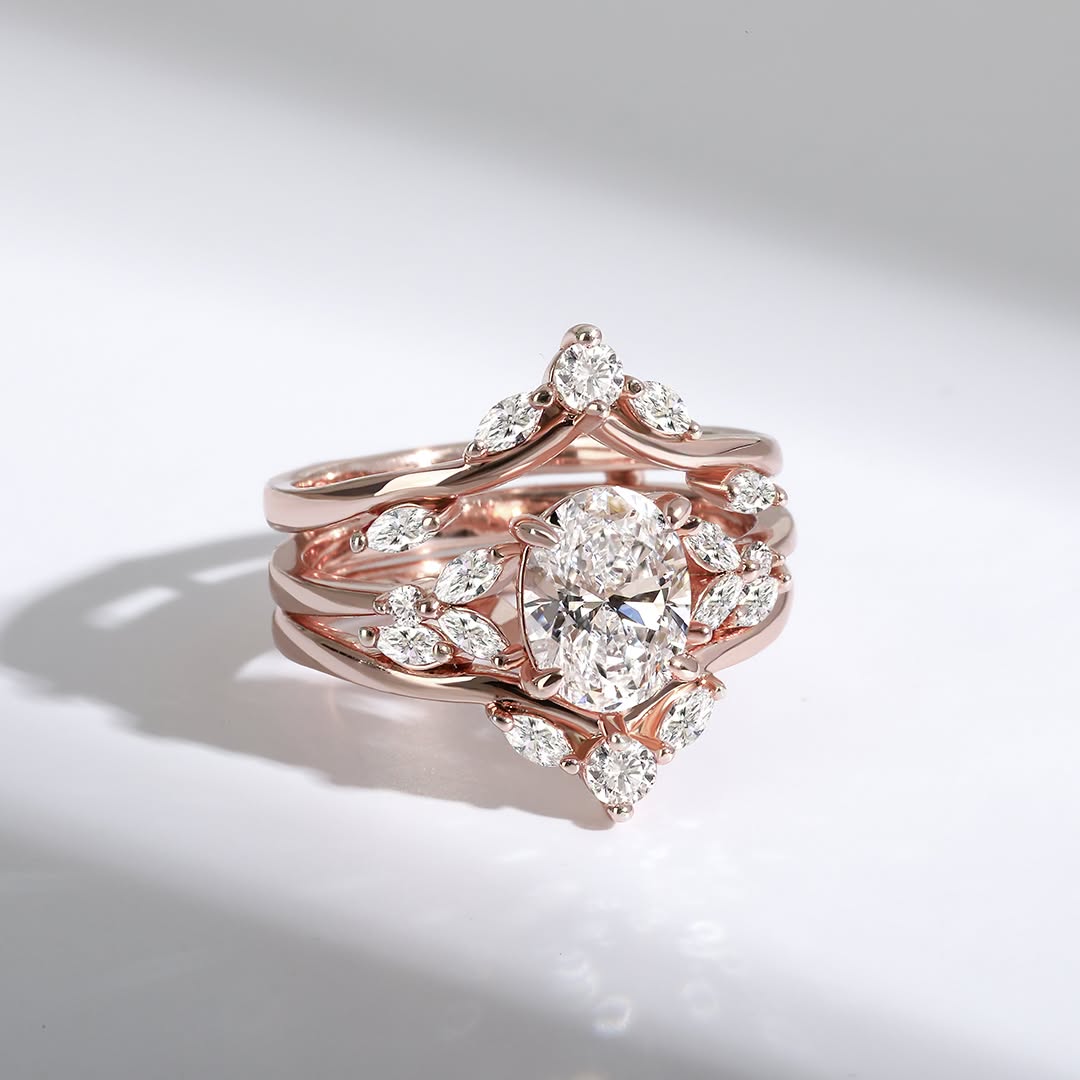
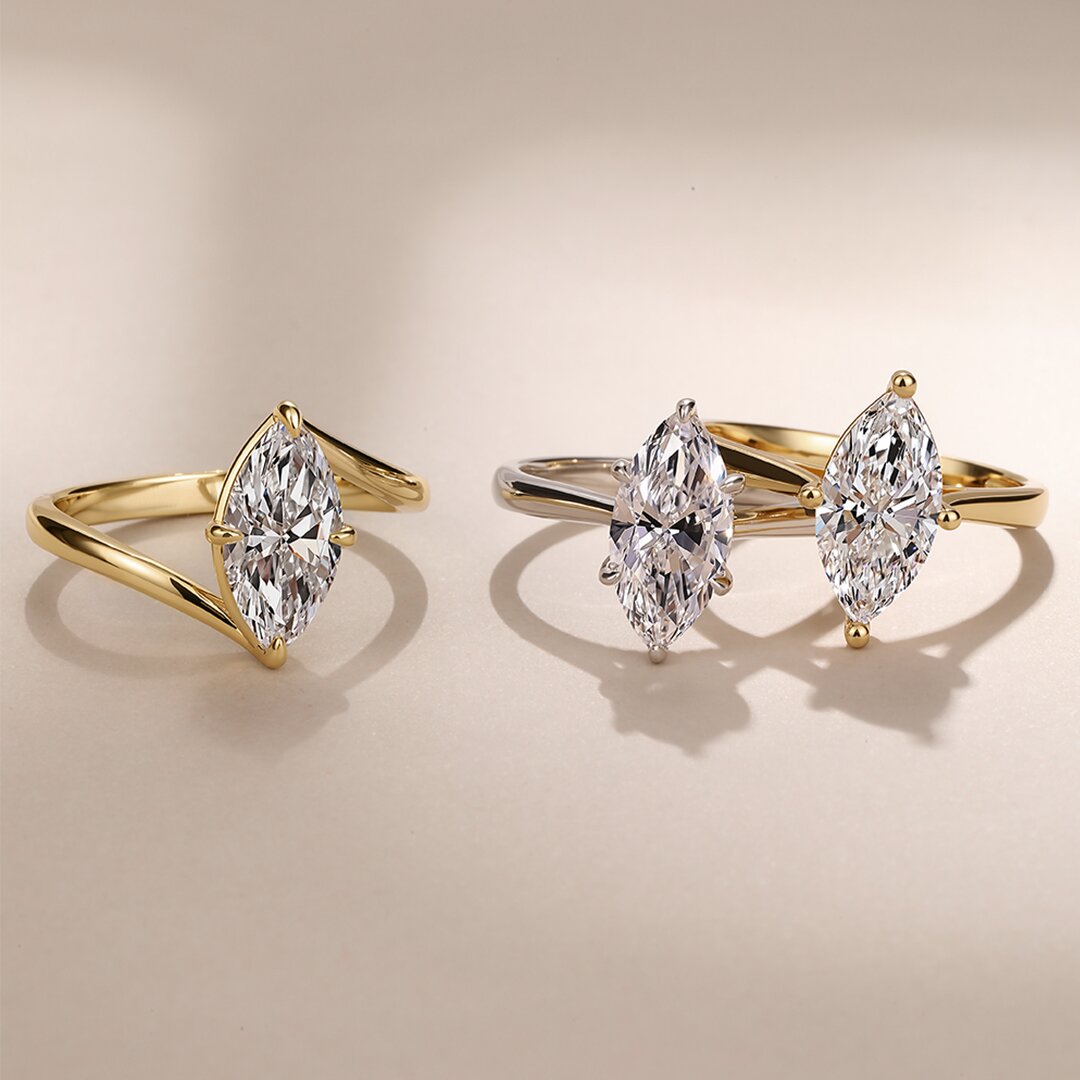
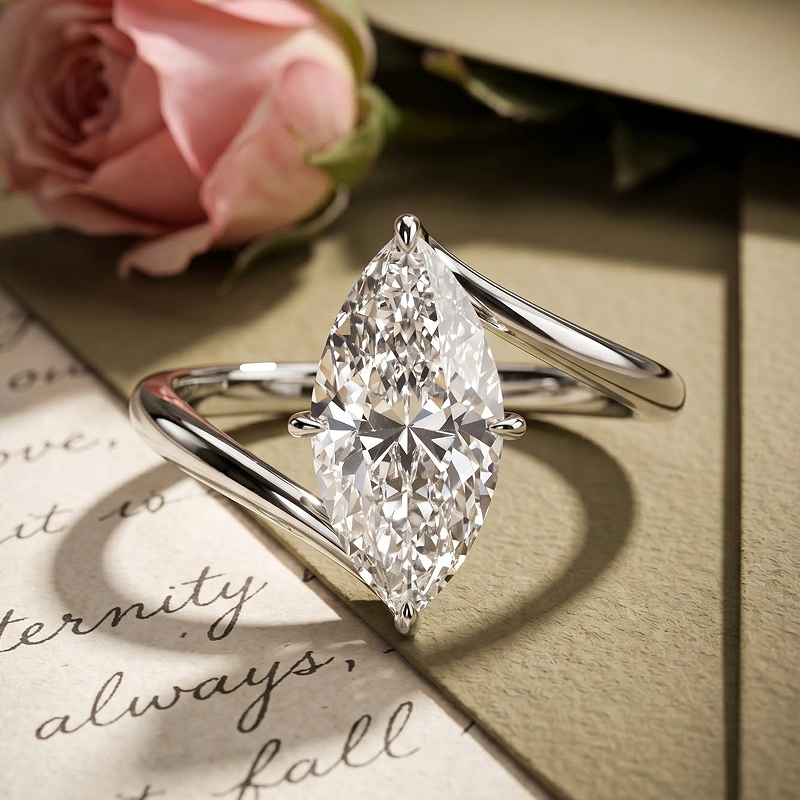
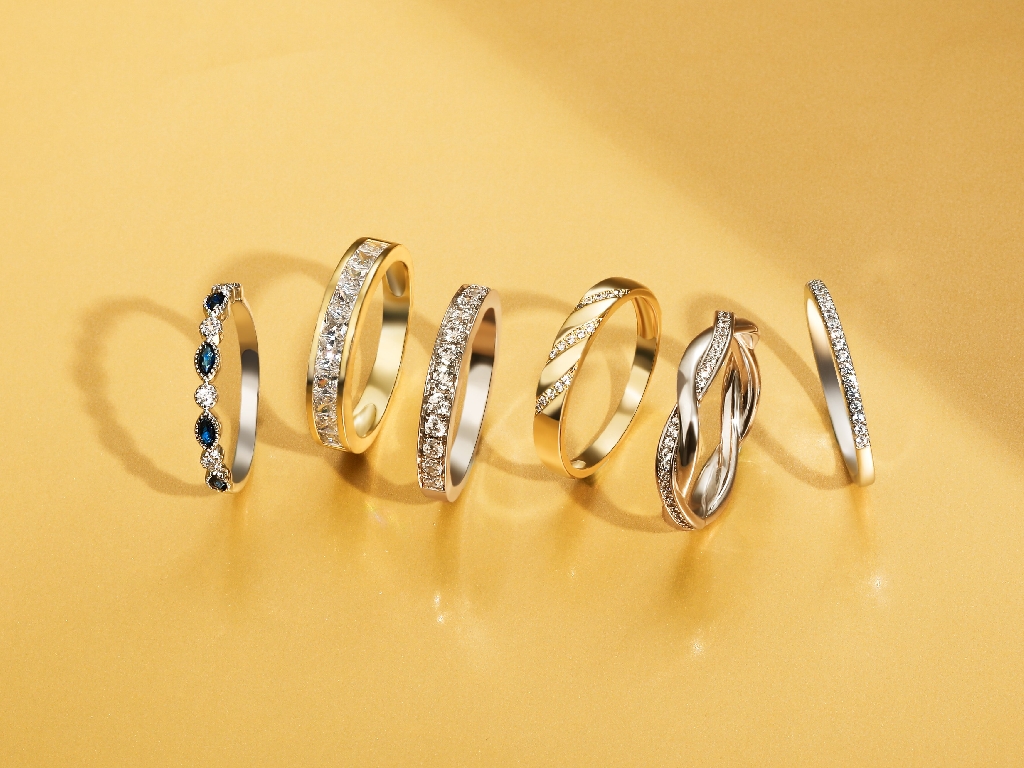
According to latest wedding survey, most women’s wedding bands in the US cost between $600 and $1,500. The final price usually depends on the metal, whether the ring includes diamonds, and how detailed the design is. A simple 14K gold band may cost under $300, while a platinum eternity band with diamonds can easily exceed $5,000.
At a Glance
1. Most women's wedding rings cost between $300 and $1,500 — the $300 end buys a plain gold band, the $1,500 end gets you diamond accents in a precious metal.

2. Three things drive the price: the metal (platinum costs double what 14K gold costs), whether the band has stones, and how intricate the design is.

3. Lab-grown diamonds in a wedding band save 60–80% on stone costs with zero visible difference — the single smartest place to cut spending.

4. Forget the "three months' salary" rule.  A more useful benchmark: most couples put 3–5% of their total wedding budget toward both rings combined.
Wedding ring price differences can be significant, so it’s important to understand what you actually get at each price level. In the sections below, you’ll see exactly what your money buys across the main price ranges, and where it makes sense to spend more or save depending on durability, style, and long-term value.
What Drives the Price of a Woman’s Wedding Ring?
Before we talk numbers, it helps to know what you are actually paying for. Three factors matter more than everything else combined.
Metal: the biggest price variable
Platinum generally costs about twice as much as 14K gold for a comparable ring. The price difference comes from both rarity and density. Because platinum is heavier, a ring of the same size actually uses more metal by weight than a gold band.
14K gold is where most buyers land. It is 58% pure gold, hard enough for daily wear, and available in yellow, white, and rose. 18K gold (75% pure) runs 20–30% more and gives you a richer, warmer color — but it is also softer, which matters in a ring you never take off. Alternative metals like tungsten and titanium come in under $200 but cannot be resized, so if your fingers change over the years, you are buying a new ring.
Stones: the biggest budget jump
A plain metal band is one price. Add a row of small diamonds and you jump $300 to $800 instantly. A full eternity band — stones running all the way around — starts around $1,500 and climbs from there.
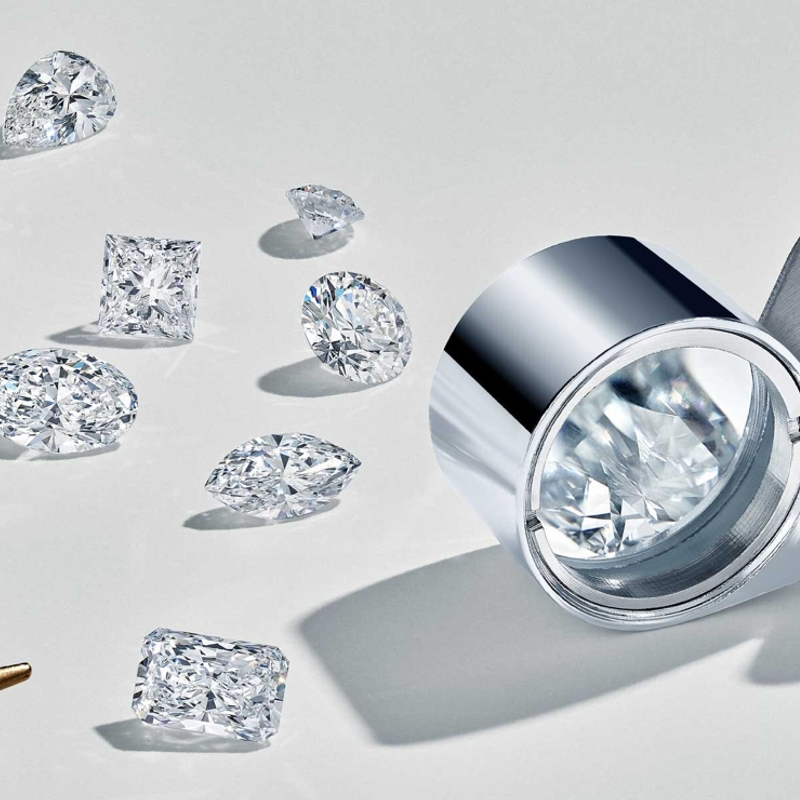
Here is where lab-grown diamonds change the math. They are chemically and optically identical to mined stones, but cost less. In a wedding band full of small accent diamonds, that difference is enormous. You could get a full pavé band with lab-grown stones for roughly what a half-pavé band with mined stones would cost. Same sparkle, half the budget impact.
Over 60% of She Said Yes custom wedding band orders in 2025 chose lab-grown diamonds — up from 35% just two years ago. Brides want the look without the markup, and the accent stones in a band are where lab-grown makes the most financial sense. — She Said Yes Design Team
Design: labor adds up fast
A comfort-fit band with a polished finish is the baseline — efficient to make, priced accordingly. Hand-engraved patterns, filigree work, two-tone metal combinations, and curved bands that hug an engagement ring all require more skilled labor. Custom work typically adds 10–20% to the base price and extends production by two to four weeks.
So those are the three levers. Now let’s look at what happens when you pull them in different combinations.
What You Get at Each Price Level?
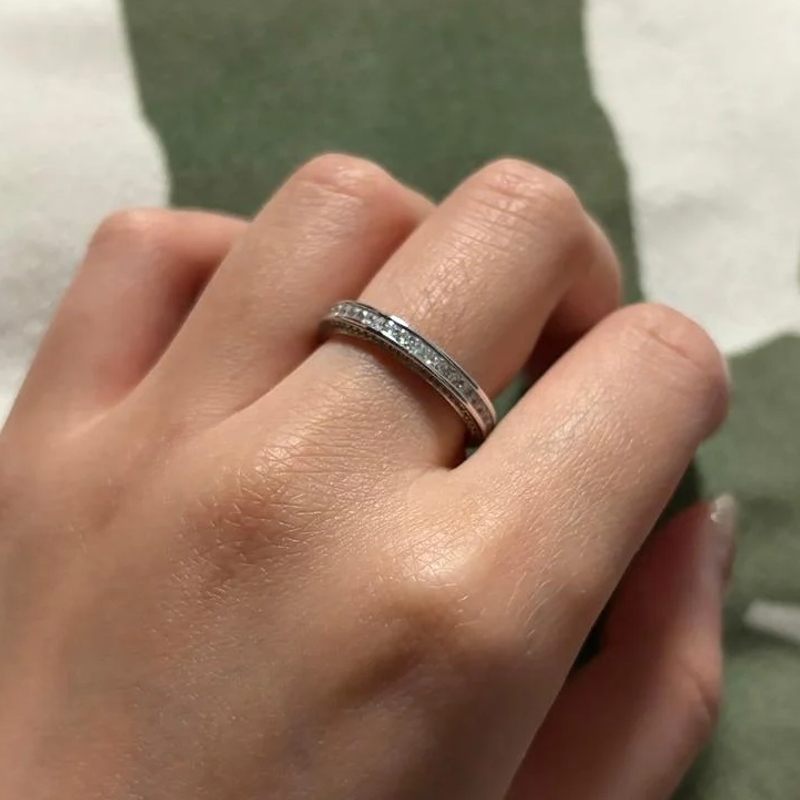
These are the real price ranges you will see shopping in 2026 — not theoretical, not inflated. What each tier actually delivers.
Under $300 — Tungsten, titanium, or sterling silver. Clean and modern. Comfortable. But not resizable, and silver tarnishes. Good for a backup ring or a couple prioritizing other wedding expenses. Not ideal as a forever ring.
$300–$800 — The practical sweet spot. Solid 14K gold bands, plain or with light texture. Durable, resizable, and available in every gold color. This is where most couples find the best balance of quality and price. A well-made 14K band at $400 will look as good in twenty years as it does on day one.
$800–$1,500 — Adding sparkle. 14K or 18K gold with diamond accents — half-pavé, channel-set, or scattered stones. Plain platinum bands also land here. You are paying for visual impact, and you get it. Most buyers in this range choose lab-grown diamonds to keep the total under $1,200.
$1,500–$3,000 — Standout pieces. Full diamond eternity bands. Heavier platinum designs. Custom contour bands made to fit a specific engagement ring. Rings at this level are designed to compete with the engagement ring for attention — and they do.
$3,000+ — Designer and bespoke. Luxury brand names, large accent stones, fully custom work from scratch. Beautiful, but you are paying for exclusivity more than materials. A $3,000 designer band and an $800 online jeweler band can be made from identical gold and diamonds.
Most women’s wedding rings land in that $300 to $1,500 range. That window covers the majority of well-crafted, beautiful options in both plain and diamond-accented styles — which is why it is called the sweet spot.
How Much Should You Actually Spend?
So you know the price ranges. The harder question: where should you land?
Forget the “three months’ salary” rule. A more useful benchmark: most couples put 3–5% of their total wedding budget toward both rings combined. On a $30,000 wedding, that is $900 to $1,500 for the pair — roughly $600 to $1,000 for hers, $300 to $500 for his. Your split might look different, and that is fine. The point is having a number before you start shopping so you do not fall in love with something that strains your finances.
Three questions worth asking yourself:
1. Will she wear it every day for decades? If yes, durability is not optional — it is the whole point. A metal that holds up matters more than saving $200 upfront.
2. Does it need to sit flush with an engagement ring? Curved and contoured bands cost more but look intentional. A mismatched pairing is the kind of thing that bothers you more over time, not less.
3. Does she want diamonds in the band? If the answer is yes, lab-grown gives you the same visual impact at a fraction of the cost. In a band that takes daily wear, it is the smartest place to save.
Now that you have a budget in mind, let’s talk about where that money goes — and where it does not need to.
Where to Spend and Where to Save
Some upgrades genuinely improve the ring you will wear for decades. Others sound impressive but do not change how the ring looks or performs on your hand.
Worth paying more for
14K gold over 10K. The color holds better over time, and 14K is the standard in fine jewelry — which means any jeweler can resize or repair it without hassle. 10K works, but it is harder to find matching pieces later.
Platinum if you have sensitive skin. It is naturally hypoallergenic and will not wear thin over decades the way gold can. That durability is real, not theoretical. If your skin reacts to metal alloys, the premium is worth it.
Lab-grown diamonds in a pavé band. You get the sparkle at 60–80% less than mined stones. In a band full of small diamonds, nobody will know the difference — and you will not lose sleep if a stone falls out years from now.
A comfort-fit interior. Slightly domed inside the band, making it easier to slide over the knuckle and more comfortable for all-day wear. The upgrade is usually $30–$50. Noticeable every single day.
Easy to skip
18K gold if you are hard on your hands. It is softer than 14K and picks up scratches faster. The richer color is real, but so is the durability trade-off — especially on a ring you never take off.
Designer markup. A $2,500 band from a luxury name and an $800 band from a reputable online jeweler can be made from the same gold and stones. You are paying for the name stamped inside, not the ring on your finger.
Saving Money Without Settling
Tight budget does not mean settling. It means being deliberate about where your dollars go. Here are five moves that actually reduce the price without reducing quality.
Shop online. Online jewelers have lower overhead — no retail rent, no sales commissions — and those savings show up in the price tag. The same 14K gold band that costs $600 at a mall store might be $380 online. Read return policies, check reviews, and you will come out ahead.
Pick 10K, 14K over 18K. You save 20–30% on metal and get a harder, more scratch-resistant alloy. On a ring worn every day, that is a practical advantage, not just a cost cut.
Go lab-grown for band diamonds. This is the single biggest saving available. A full pavé wedding band with lab-grown diamonds can cost less than a half-pavé band with mined ones. Same brilliance, same hardness, same everything except the invoice.
Time your purchase. Jewelers run their deepest discounts around Black Friday, Valentine’s Day, and spring wedding season. If you are not in a rush, waiting a few weeks can knock 15–25% off the price.
Planning Your Purchase: A Simple Timeline
Buying a wedding band is not complicated, but it does take longer than most people expect. Here is a realistic timeline so you do not end up paying rush fees.
3–6 months out: Research. Browse styles online. Visit a jeweler or two to try things on in person — rings look different on your hand than they do on a screen. Figure out her ring size if you do not already know it. Set your budget.
8–10 weeks out: Decide and order. Once you know what you want, place the order. Standard rings ship in 1–2 weeks. Rings that need sizing, engraving, or customization take 3–6 weeks. If you are ordering from overseas, add another week for shipping.
4–6 weeks out: Custom work. If the ring needs to be contoured to fit an engagement ring, or if you are doing a fully custom design, the production time alone can run 4–6 weeks. Start this process early.
1–2 weeks out: Final check. Try the finished ring on. Confirm the fit. If anything needs adjusting, a week gives you time for a quick resize without panic.
FAQ
What is the average cost of a woman’s wedding ring?
According to latest survey data, the average woman’s wedding band costs around $1,200 to $1,400. That covers a range from simple gold bands to diamond-accented styles. Most buyers land between $600 and $1,500.
How much should I budget for a wedding band?
A practical approach is to allocate 3–5% of your total wedding budget to both rings. For a $30,000 wedding, that works out to roughly $900 to $1,500 for the pair. But your budget should reflect what you can comfortably afford — not a rule someone made up.
Is a $500 wedding ring too cheap?
Not at all. Five hundred dollars buys a solid 14K gold band from a reputable jeweler — a ring that will last a lifetime with basic care. You only need to spend more if you want platinum, diamonds, or a custom design.
Is platinum worth the extra cost for a wedding band?
It depends on your priorities. Platinum is denser, naturally hypoallergenic, and does not wear thin over time the way gold can. If you have metal sensitivities or want a truly permanent ring, it is worth the premium. If you prefer the look of gold and have no allergy concerns, 14K gold delivers 90% of the practical benefits at half the price.
Can I use lab-grown diamonds in a wedding band?
Absolutely. Lab-grown diamonds are chemically and optically identical to mined ones, and they cost 60–80% less. In a wedding band — where diamonds are typically small accent stones — lab-grown makes even more financial sense than in an engagement ring.
There is no single right amount to spend on a woman’s wedding ring. A $300 gold band and a $3,000 diamond eternity band serve the same purpose. What matters is that the ring fits her style, your budget, and the life you are building together. Spend where it makes a difference — a metal that will last, stones she genuinely wants — and save everywhere else.
If you want the look of diamonds without the markup, She Said Yes offers wedding bands set with lab-grown diamonds in recycled gold, available in 10K, 14K and 18K yellow, white, and rose gold. Browse the wedding band collection at shesaidyes.com to compare styles and prices side by side.