When you start browsing birthstone jewelry, you may realize that the “right” stone isn’t necessarily the one you actually like. Maybe the color doesn’t suit your style, maybe it feels too dressy, or maybe you’re buying a gift and aren’t sure whether a ring, necklace, bracelet, or pair of earrings would feel most meaningful.
That’s completely normal. The birthstone chart is a great starting point, but it doesn’t have to be a rulebook. This guide will help you find a piece you’ll genuinely enjoy wearing.
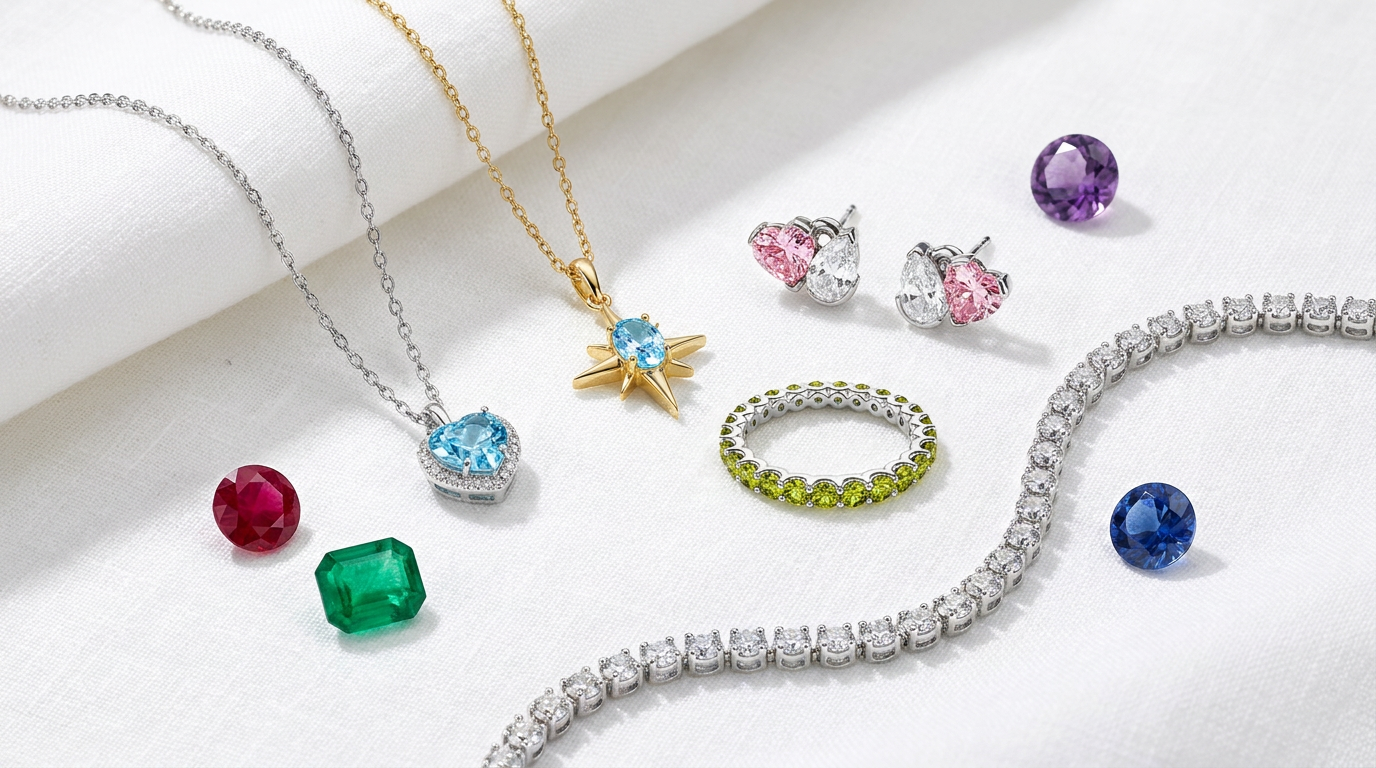
Is It Bad Luck to Wear a Birthstone That Isn’t Yours?
Many people believe that wearing a birthstone that doesn’t match their birth month brings bad luck. In fact, that’s simply a myth. There’s no modern jewelry rule that says you have to wear the gemstone assigned to your birth month. While you may come across old folklore suggesting certain gemstones should only be worn by people born in specific months, these beliefs vary across cultures and aren’t supported by modern gemology or contemporary jewelry traditions. Most jewelers view birthstones as a form of personal expression rather than a set of rules.
Birthstone traditions were created to give gemstones personal meaning, not to limit your choices. Today, many people wear the birthstone of a child, partner, or parent, while others choose a gemstone simply because they love its color, symbolism, or sentimental value.
How to Pick a Stone You Actually Like
Once you give yourself permission to branch out, three good paths usually lead to a stone you’ll love.
Pick a Color You’ll Actually Wear
A birthstone is much more likely to become part of your everyday jewelry collection if you genuinely enjoy wearing its color. Take a look at the jewelry and clothing you already own. If your style leans toward cool tones, gemstones like aquamarine, sapphire, or diamond may feel more natural. If you prefer warm colors, garnet, ruby, citrine, or topaz may suit you better. Choosing a gemstone that complements your personal style means you’ll reach for it far more often.
Choose the Meaning That Matters to You
Many people choose a gemstone because of what it represents rather than the month it belongs to. Ruby is often associated with love and passion, sapphire symbolizes loyalty and wisdom, and amethyst is linked to calm and clarity. If a particular meaning reflects your personality, celebrates an important milestone, or reminds you of someone special, it can make your jewelry feel even more meaningful than simply following the birthstone chart.
Explore an Alternate Birthstone
One of the easiest ways to personalize your jewelry is by choosing an alternate birthstone. Several months already have more than one officially recognized gemstone, giving you different colors and styles to choose from. June includes pearl, moonstone, and alexandrite, while October offers both opal and tourmaline. November and December also have multiple options. If your first birthstone doesn’t feel like you, another stone from the same month may be a much better fit.
| Month | Official Stone | If You’re Not Loving It | Try Instead |
| January | Garnet (deep red) | Red feels too heavy | Rhodolite garnet — lighter and pinker |
| February | Amethyst (purple) | Purple isn’t your tone | Lavender amethyst, or cool blue topaz |
| March | Aquamarine (pale blue) | Looks washed-out | Deeper blue topaz or blue zircon |
| April | Diamond (clear) | You want color, not clear | Any colored gem, or a lab-grown diamond for value |
| May | Emerald (green) | You don’t wear green | Sapphire (any color) or green tourmaline |
| June | Pearl | Feels too traditional | Moonstone, or color-changing alexandrite |
| July | Ruby (deep red) | Red feels too bold | Pink sapphire or rhodolite garnet |
| August | Peridot (lime green) | Lime clashes with everything | Spinel — it comes in many colors |
| September | Sapphire (blue) | You want non-blue | Fancy sapphire: pink, yellow, or teal |
| October | Opal | Too delicate or shifting | Tourmaline, in nearly any color |
| November | Citrine / Topaz (yellow-orange) | Warm yellow isn’t you | Cool blue topaz or white sapphire |
| December | Turquoise / Tanzanite / Zircon | You want a cleaner blue | Blue topaz or icy blue zircon |
Consider Lab-Grown or Alternative Gemstones
Sometimes the deciding factor isn’t the gemstone itself but its price, durability, or environmental impact. Lab-grown diamonds offer the same beauty and hardness as mined diamonds, while making April’s birthstone more accessible. Lab-created colored gemstones and moissanite are also excellent options for shoppers looking for vibrant color, impressive durability, or exceptional sparkle. Choosing an alternative stone doesn’t make your birthstone jewelry any less personal—it simply gives you more flexibility to find a piece that fits your lifestyle.
The bottom line? Your birthstone should feel like something you want to wear, not something you feel obligated to wear. Once you’ve found a gemstone that truly suits your style, the next step is choosing the type of birthstone jewelry you’ll enjoy wearing every day.
What to Buy Once You’ve Picked a Stone
You’ve found the gemstone you love. Now comes the fun part—choosing how you’ll wear it. The best option depends on your lifestyle, how often you plan to wear it, and how much protection the stone needs.
Birthstone Rings
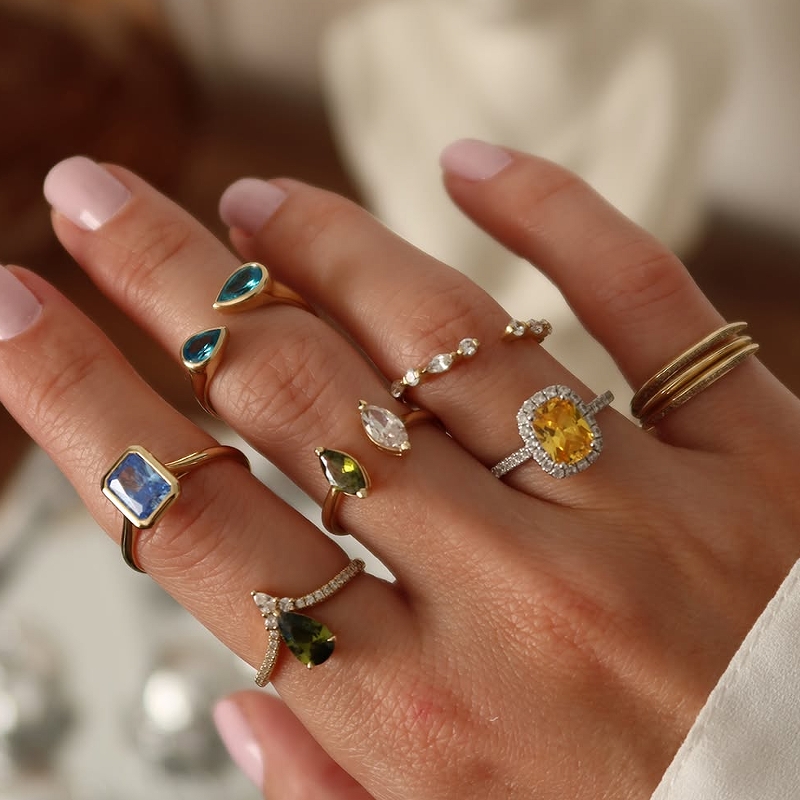
If you want your gemstone front and center every day, a birthstone ring is hard to beat. Just remember that rings take more bumps and scratches than any other piece of jewelry. Harder gemstones like diamond, sapphire, ruby, and moissanite are excellent choices for everyday rings because they stand up well to daily wear.
Birthstone Necklaces
A birthstone necklace or pendant is one of the easiest pieces to wear every day. Sitting safely at the collarbone, it stays away from most knocks, making it an ideal home for softer gemstones like pearl, opal, or turquoise. It’s also a great choice if you’re buying a gift and aren’t sure about ring size.
Birthstone Earrings
Birthstone earrings add a subtle pop of color without feeling too bold. Classic studs work for almost every occasion, while hoops or drop earrings offer a little more personality. Since earrings rarely experience heavy wear, they’re a practical option for both hard and softer gemstones.
Birthstone Bracelets
A birthstone bracelet brings color to your everyday stack without competing with rings or necklaces. Slim chain bracelets are easy to layer, while tennis-style designs create a more polished look. Because bracelets naturally bump against desks and countertops, choosing a protective setting is especially important for softer gemstones.
Not sure which style is right for everyday wear? The answer often comes down to two things: how durable your gemstone is and how securely it’s set.
Choosing for Everyday Wear: Durability & Setting
If you’re planning to wear your birthstone jewelry every day, don’t just think about how it looks. The gemstone’s durability and the way it’s set will have a big impact on how well it holds up over time.
Durability
Not all gemstones are equally suited to everyday wear. Jewelers measure scratch resistance using the Mohs hardness scale, which ranges from 1 to 10. Diamond (10), sapphire and ruby (9), and moissanite (9.25) are excellent choices for rings you’ll wear every day because they resist scratches and maintain their shine with minimal care. Softer gemstones, including opal (around 6), pearl (2.5–4.5), turquoise, and tanzanite, are more vulnerable to everyday bumps and abrasion. They tend to last longer when worn as necklaces, earrings, or jewelry reserved for special occasions.
Setting
The setting protects your gemstone just as much as the stone itself. A bezel setting surrounds the edges of the gem with metal, offering extra protection against knocks and making it an excellent choice for softer birthstones. Prong settings allow more light to enter the stone, creating maximum sparkle, but they also leave the edges more exposed. If you plan to wear a softer gemstone every day, choosing a protective setting can make a noticeable difference in how well it ages.
What If It’s a Gift?
Birthstone jewelry has long been a favorite for birthdays, Mother’s Day, anniversaries, and celebrating a new baby because it feels thoughtful without being overly complicated.
If you’re unsure about ring sizing, a birthstone necklace, bracelet, or pair of earrings is usually the safest choice. You can celebrate the recipient’s birth month, commemorate the month you met or got married, or choose the birthstone of a child or grandchild for a more personal touch. Family birthstone jewelry is especially meaningful because it tells a story that’s unique to the person wearing it.
Ethical Sourcing Matters
Many shoppers today care just as much about where a gemstone comes from as how it looks. If you’re choosing a birthstone that features a diamond or other precious gemstone, it’s worth considering how it was sourced.
At She Said Yes, every diamond is conflict-free and lab-grown, offering the same beauty and durability as mined diamonds while significantly reducing environmental impact. Our jewelry is also crafted using 100% recycled precious metals, so you can choose a piece that’s not only meaningful to you, but also more thoughtful for the planet.
Frequently Asked Questions
Do I have to wear my own birthstone?
No. There’s no rule tying you to your birth month’s stone. You can wear an alternate, a stone you love for its color or meaning, or the birthstone of someone close to you.
What if I hate my birthstone’s color?
Most months have a recognized alternate stone — start there. You can also pick by color, by meaning, or choose a lab-grown or moissanite version of a shade you actually like.
Can I wear someone else’s birthstone?
Absolutely. Many people wear the stone of a child, partner, or parent. It’s one of the most meaningful ways to wear birthstone jewelry.
What exactly is an “alternate” birthstone?
A second (or third) stone officially associated with a month alongside the main one. June, for example, includes pearl, alexandrite, and moonstone — so you have real choices within your own month.
Which birthstones are okay for an everyday ring?
The hard ones — diamond (Mohs 10), sapphire and ruby (9), and moissanite (9.25). Softer stones like opal, pearl, and turquoise are better suited to necklaces or occasional wear.
What’s the difference between modern and traditional birthstones?
The modern list is the standard used across the US today; the traditional list is older and carries earlier symbolism. Pick whichever means more to you.
Conclusion
The whole point of birthstone jewelry is meaning — and meaning comes from how a piece fits your life, not from the month printed on your birth certificate. Choose a color you love, a stone whose story resonates, and a setting that survives your everyday.
In other words, pick a piece you’ll actually wear — not one you wear only because it’s “yours.”
Find birthstone jewelry you’ll love at She Said Yes—shop by month, or design a custom piece that celebrates your story, whether it’s your own birthstone or one that simply feels right for you.