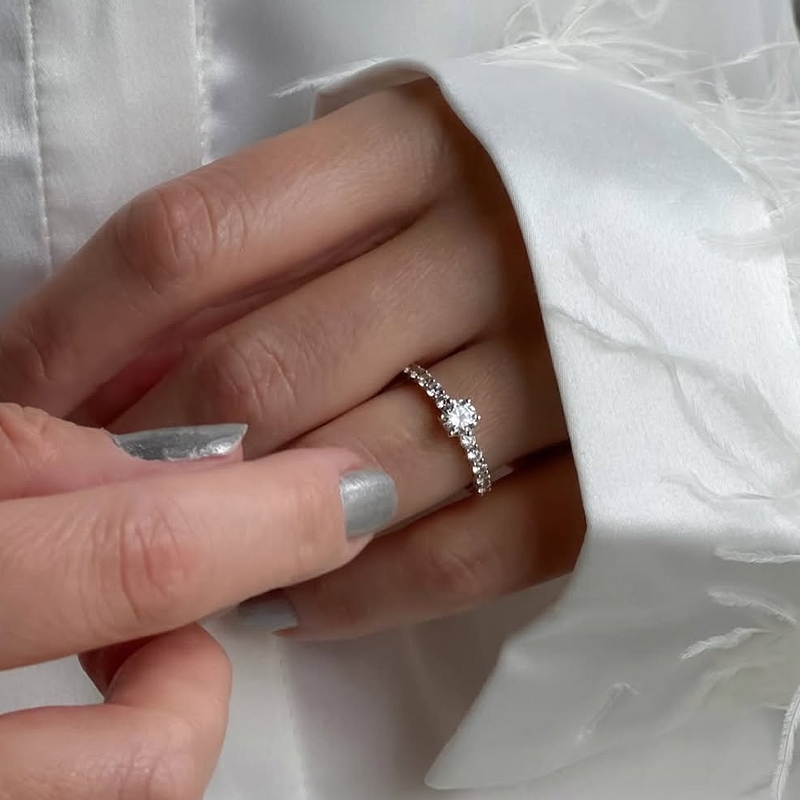
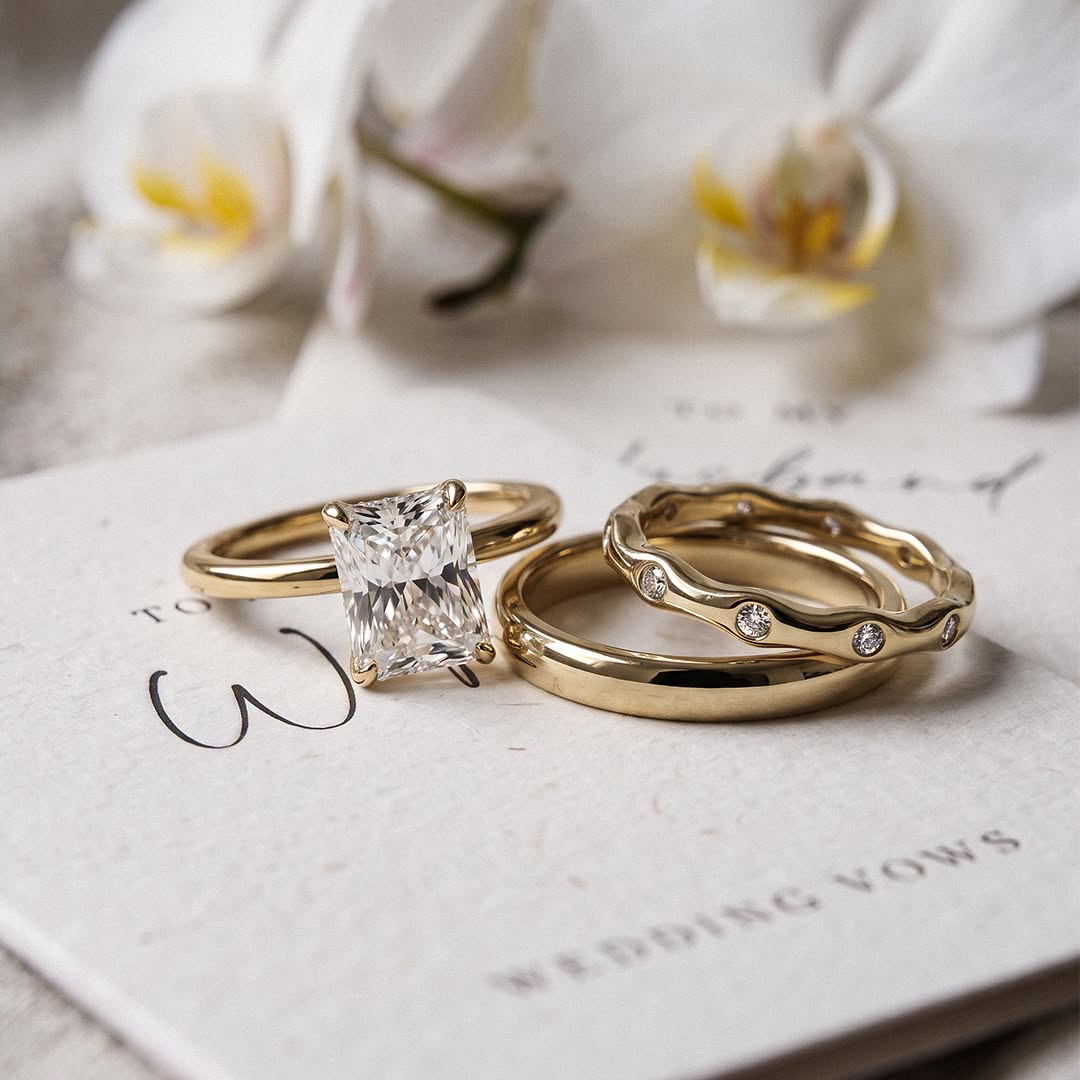
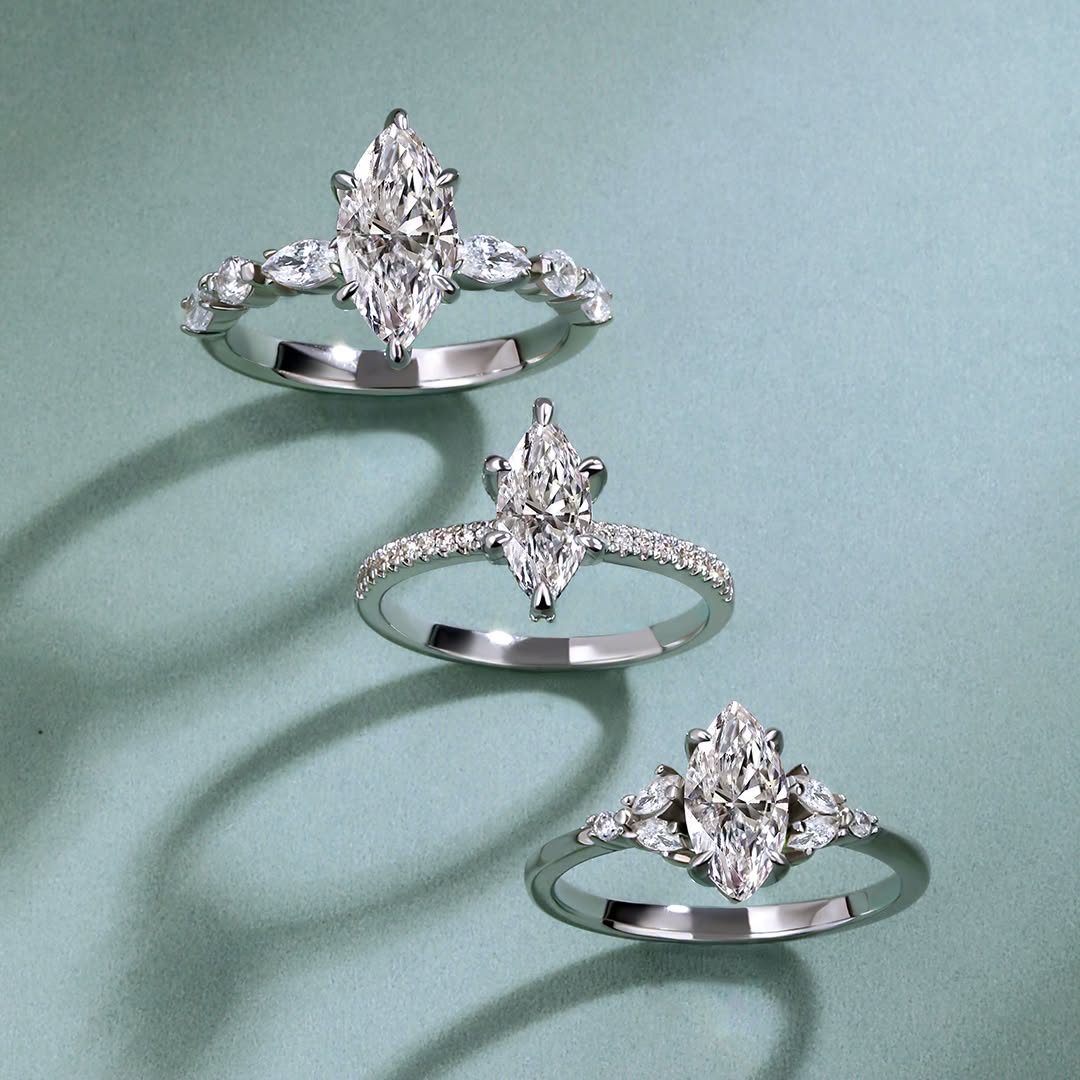
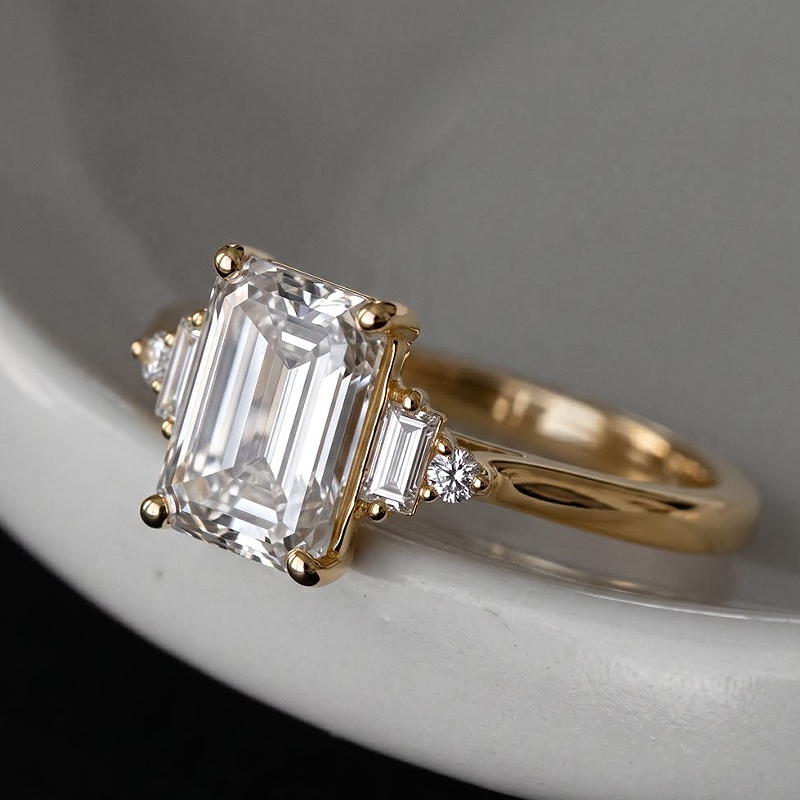
Something like nine in ten engagement rings carry a white stone, which is exactly why a pink one reads as deliberate. A pink engagement ring is a choice against the default. The problem isn’t that pink is risky. It’s that most people who regret a pink ring got the stone wrong, the shade wrong, or the metal wrong, not the color.
This is a decision guide. Work through it in order — stone, shade, metal, shape, setting, size — and you’ll end up with a pink engagement ring that still looks right a decade from now. Skip to the section you’re stuck on.
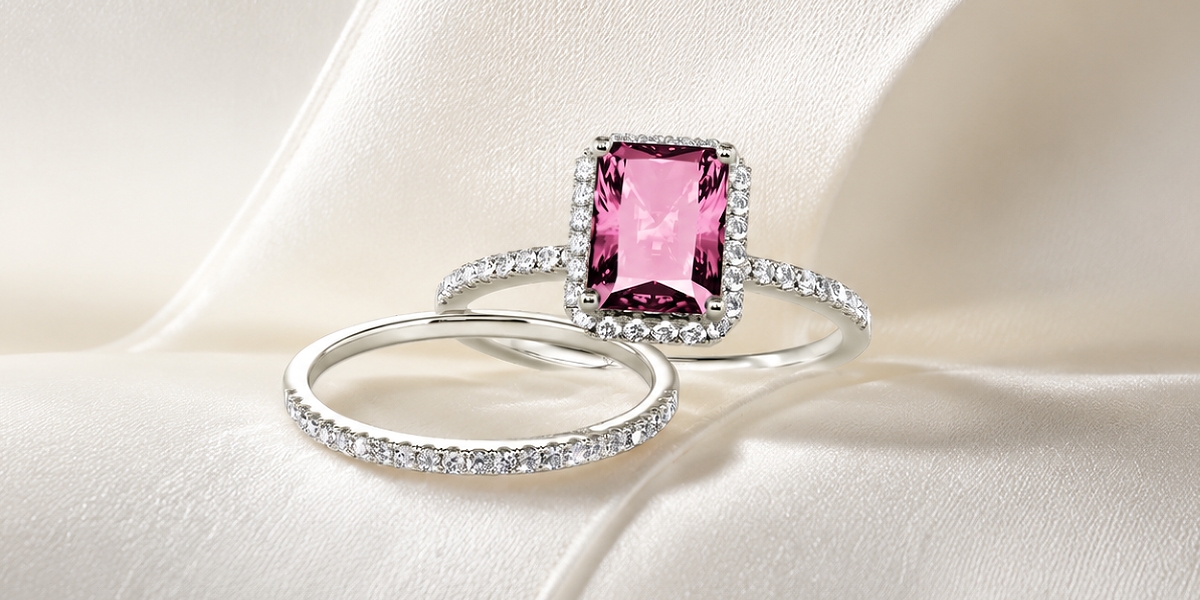
Find the Right Pink Engagement Ring Stone First
Pink is a color, not a material. The stone underneath changes the durability, the look, and the price more than any other choice you’ll make. Get this wrong and the rest of the ring can’t save it.
| Stone | Mineral / what it is | Hardness (Mohs) | How the pink reads | Price tier | Best for |
|---|---|---|---|---|---|
| Lab-grown pink sapphire | Corundum | 9 | Crisp, clear pink; well suited to daily wear | Low–mid | A durable pink engagement ring without the price of a diamond |
| Natural pink diamond | Diamond | 10 | Rare, often intensely saturated | Very high | Maximum rarity and prestige, especially at five- or six-figure budgets |
| Morganite | Beryl | 7.5–8 | Soft peach, blush, or pastel pink | Low | A romantic blush look at a lower price point |
| Pink moissanite | Silicon carbide | 9.25 | Sparkly, from soft pink to more vivid shades; some colors may be treated | Low–mid | Maximum sparkle and strong durability at a lower price |
The takeaway most people miss: pink sapphire is the workhorse of this category. It’s corundum — a 9 on the Mohs scale, hard enough for a ring worn every day — and lab-grown versions deliver the same stone at a fraction of mined cost. That single fact is why a well-built pink engagement ring can start around $700 instead of climbing into five figures. Natural pink diamonds are real, but they’re among the rarest colored stones on earth; production from the Argyle mine (historically the main source) ended in 2020, and what’s left trades at a premium most buyers never touch.
One honest note on sparkle: sapphire has a lower refractive index than diamond (about 1.77 versus 2.42), so it throws less “fire.” A pink sapphire ring sells you color and durability, not diamond-style brilliance. If you want a pink that also blazes like a diamond, that’s where halo settings and crystal side stones earn their keep — more on that below.
Decide The Shade Before The Shape
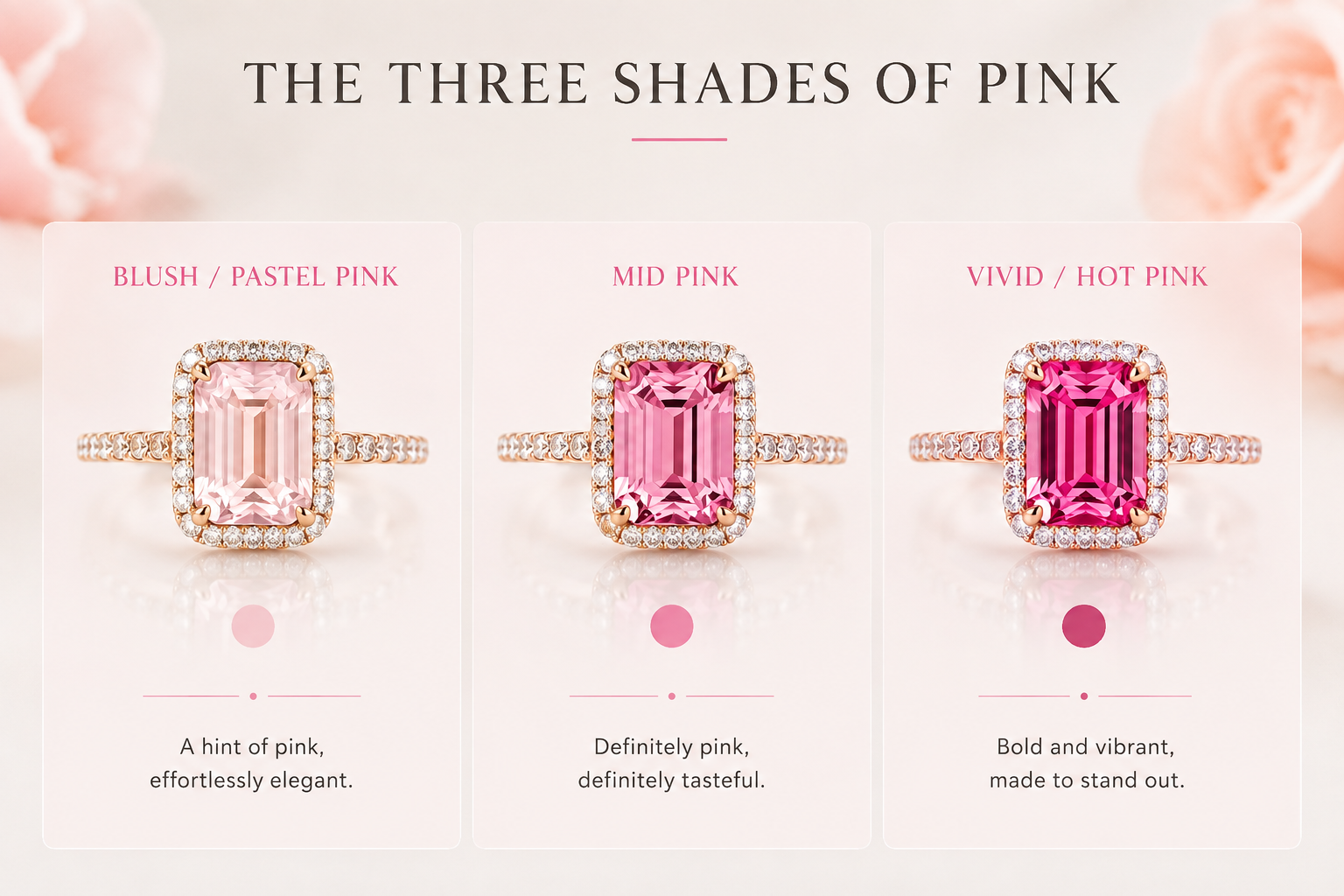
Two pink rings can sit next to each other and feel like completely different jewelry, because pink runs from barely-there blush to saturated near-magenta. Pick the shade for the person, not the trend.
• Blush / pastel pink — soft, romantic, reads almost neutral. Morganite lives here; so does pale pink sapphire. Best on someone who wants “a hint of pink,” not a statement.
• Mid pink — the classic engagement-ring pink. Most lab-grown pink sapphires in the SheSaidYes collection land here: clearly pink, still elegant, easy to live with.
• Vivid / hot pink — bold and modern; reads as a true fashion choice. Rare and striking, and it polarizes. If she doesn’t already wear strong color, this is a gamble.
If you’re unsure, mid pink in sapphire is the safest “definitely pink, definitely tasteful” territory — and it’s where most of the collection’s best-reviewed rings sit.
Match the Metal to the Pink
This is the choice that makes a pink stone look expensive or washed-out, and it comes down to one question: do you want the pink to blend in, or to pop?
Rose gold = blend. Copper in the alloy gives rose gold its own warm pink, so a pink stone sits inside it almost seamlessly. The look is soft, warm, and unified — perfect for blush and mid pinks where you want a gentle, romantic read. The trade-off is lower contrast; a pale pink can almost disappear into the band.
White gold or platinum = contrast. The cool white setting acts like a frame and makes the pink read crisper and more saturated. This is the move for vivid pinks, and for anyone who wants the color to be unmistakable. It also matches the white-gold or platinum wedding band most people already own.
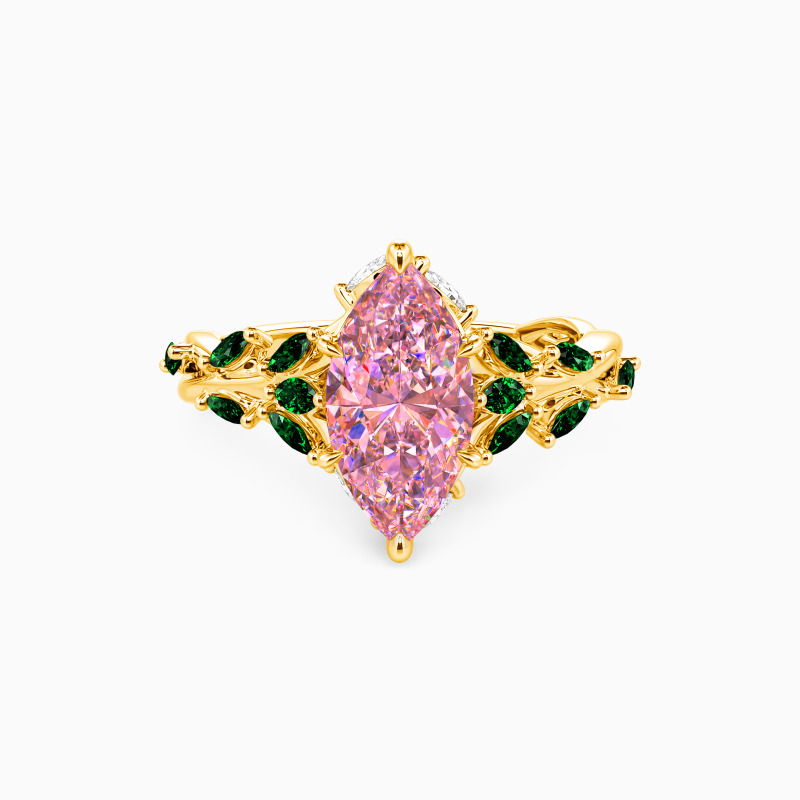
Yellow gold = warmth and a vintage feel. Less common with pink, but it works for richer mid pinks and leans old-world. Pair it with a vintage-inspired setting and the ring reads heirloom rather than trendy.
If you’re torn: white gold is the default that flatters almost every pink and matches the most existing jewelry. Rose gold is the choice that makes the ring feel intentional and soft. Pick one based on which she already wears.
Choose a Shape That Brings Out the Pink
Cut affects color as much as sparkle, which matters more with pink than with white stones.
- Round — the safe classic; even sparkle, color reads balanced. The most flexible choice.
- Marquise & Pear — elongate the finger and concentrate color toward the points; both dominate this collection for a reason.
- Oval — finger-flattering with a large face-up area per carat, so the pink reads bigger than the carat weight suggests.
- Emerald & Asscher — step cuts with broad flat planes. Less sparkle, but the color shows in clean sheets, which flatters a saturated pink and flatters a pale one less.
- Heart — on-theme for an engagement ring and unmistakably romantic; a polarizing shape, so know the wearer first.
Match the Setting to Your Lifestyle
The setting isn’t decoration — it’s the tool that controls size perception, sparkle, and how much the center stone has to carry on its own.
- Solitaire — the center stone does all the work. Choose this only when the pink has strong, even color; a pale stone in a solitaire can look lonely.
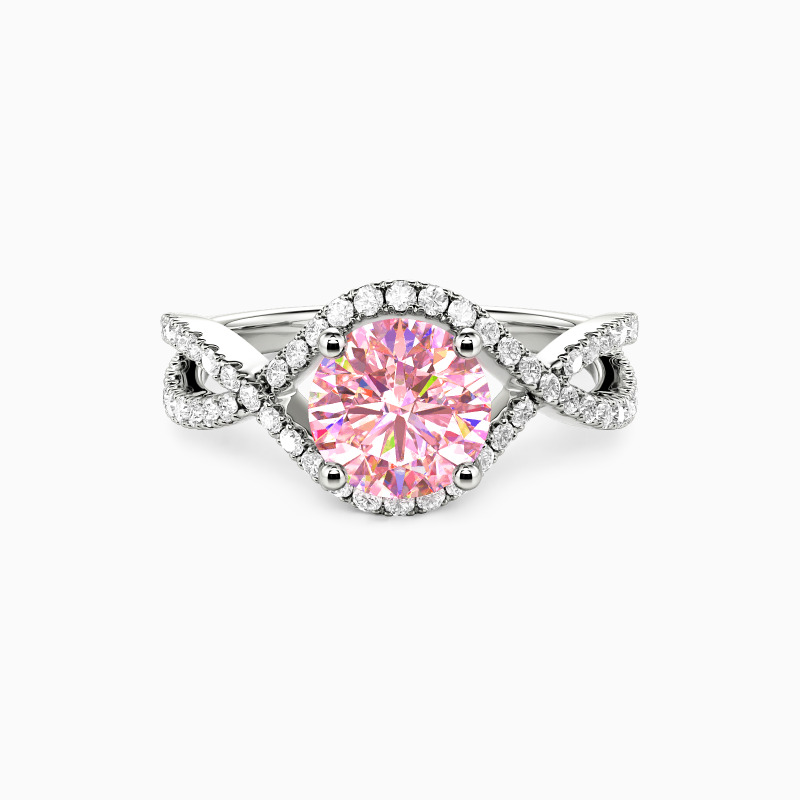
- Halo / hidden halo — a ring of crystal side stones around the center makes a smaller pink look larger and adds the diamond-style fire the sapphire itself lacks. The single best setting for buyers who want “bigger and sparklier” without paying for more carat. Vow of Two (round halo, from $1,080) is the textbook example.
- Cluster — several small stones grouped to read as one large face. Maximum perceived size per dollar; A Gleam of Fondness (marquise cluster, from $1,475) and The Fearless Love show why cluster designs are everywhere in pink.
- Three-stone — past, present, future; adds presence and balances a smaller center with side accents.
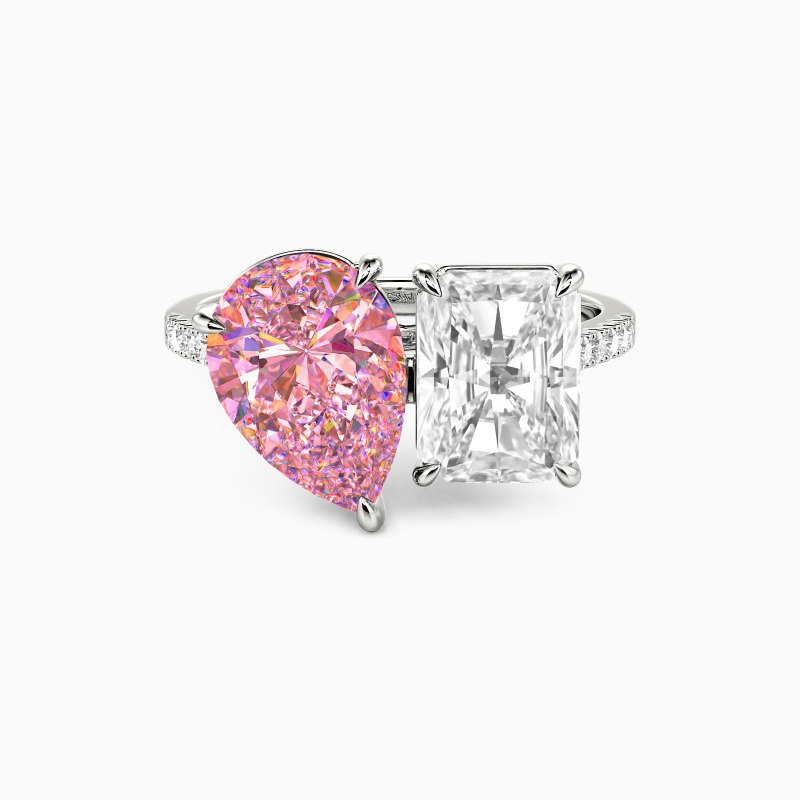
- Toi et moi — two stones set together; the trend silhouette of the moment. Pair&Share (pear toi et moi, from $1,255) is built for buyers who want something current.
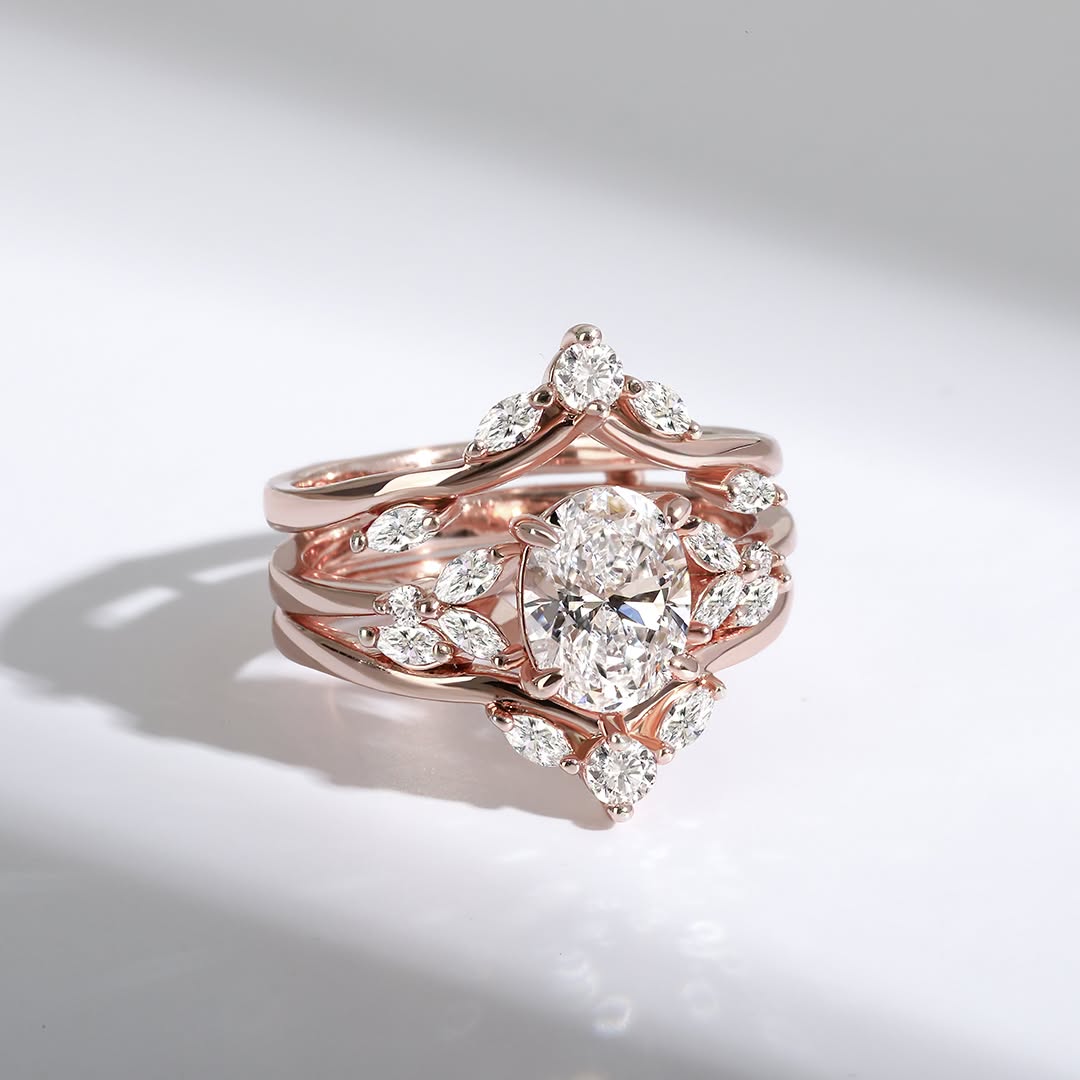
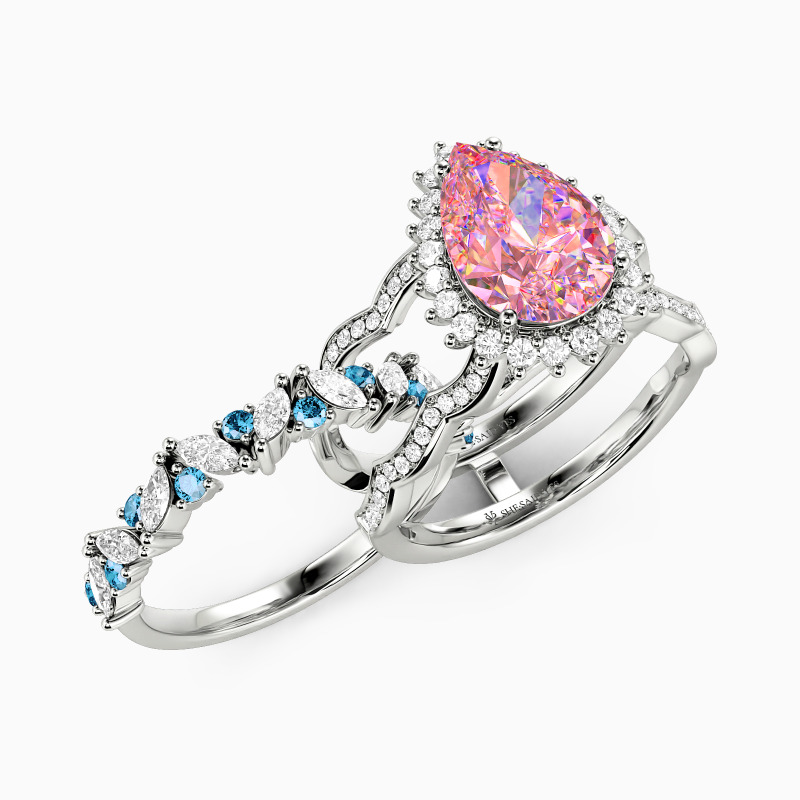
- Bridal set — engagement ring and wedding band designed as one piece. Skip the “will the band match?” problem entirely. Call of the Ocean (pear bridal set, from $2,025) is the high end of the collection.
Choose the Right Size for Your Budget
In lab-grown pink sapphire, carat weight does not cost what it costs in diamond. A 2ct pink sapphire ring sits in the $1,100–$1,300 range while a 2ct diamond of any color would be multiples of that. That changes the buying math: in pink sapphire, you can usually afford the size you actually want.
Two things that matter more than raw carat:
1. Color over carat. A smaller vivid-pink stone almost always looks richer than a larger pale one. If budget forces a trade, keep the saturation and drop half a carat.
2. Face-up size over weight. Marquise, pear, and oval spread their carat across more surface area than round, so they read larger at the same weight. That’s why elongated cuts dominate this collection.
Most buyers land in the 1–2ct range, and that’s where the collection’s value is densest.
Are Pink Engagement Rings Timeless?
The honest answer: pink is trendier than white, but pink sapphire engagement rings predate the current wave by a century — they show up in Art Deco and vintage jewelry, which is why vintage-inspired pink settings still look right. What dates a pink ring is rarely the color; it’s an over-designed setting chasing a specific micro-trend. A clean halo, a solitaire, or a three-stone in pink sapphire will still look like a sensible ring in 2035. An overly sculptural, hyper-trendy silhouette may not.
If “will this still feel like me?” is the worry, anchor to classic settings in mid-pink sapphire and let the color do the talking.
Find Her Pink Ring
A pink engagement ring stops being risky the moment the stone, shade, and metal agree. Browse the pink engagement rings at SheSaidYes — lab-grown pink sapphire, set in recycled gold, across solitaire, halo, cluster, toi et moi, and bridal-set styles from about $700.
FAQ
Popular enough that nearly every major jeweler now carries one. They’re a clear minority of engagements — which is the point for most people who pick pink.
Depends on the look. Rose gold blends — warm, soft, unified, great for blush pinks. White gold contrasts — it frames the pink and makes it read crisper and more saturated, and it matches most existing wedding bands. Can’t decide? White gold flatters nearly every pink.
With lab-grown pink sapphire, realistically $700–$2,500. Most of the SheSaidYes collection sits between $700 and $1,300. Natural pink diamond rings are a different conversation entirely — often tens of thousands per carat.
Yes. At Mohs 9, sapphire is the second-hardest common gemstone after diamond (10). It scratches only from diamond or another sapphire, which is why it’s been a staple engagement stone for generations.
Yes. Pink engagement rings are romantic, distinctive, and available in many shades from soft blush to vivid pink. They are a great choice if you want something less traditional than a classic white diamond while still keeping an elegant engagement ring look.