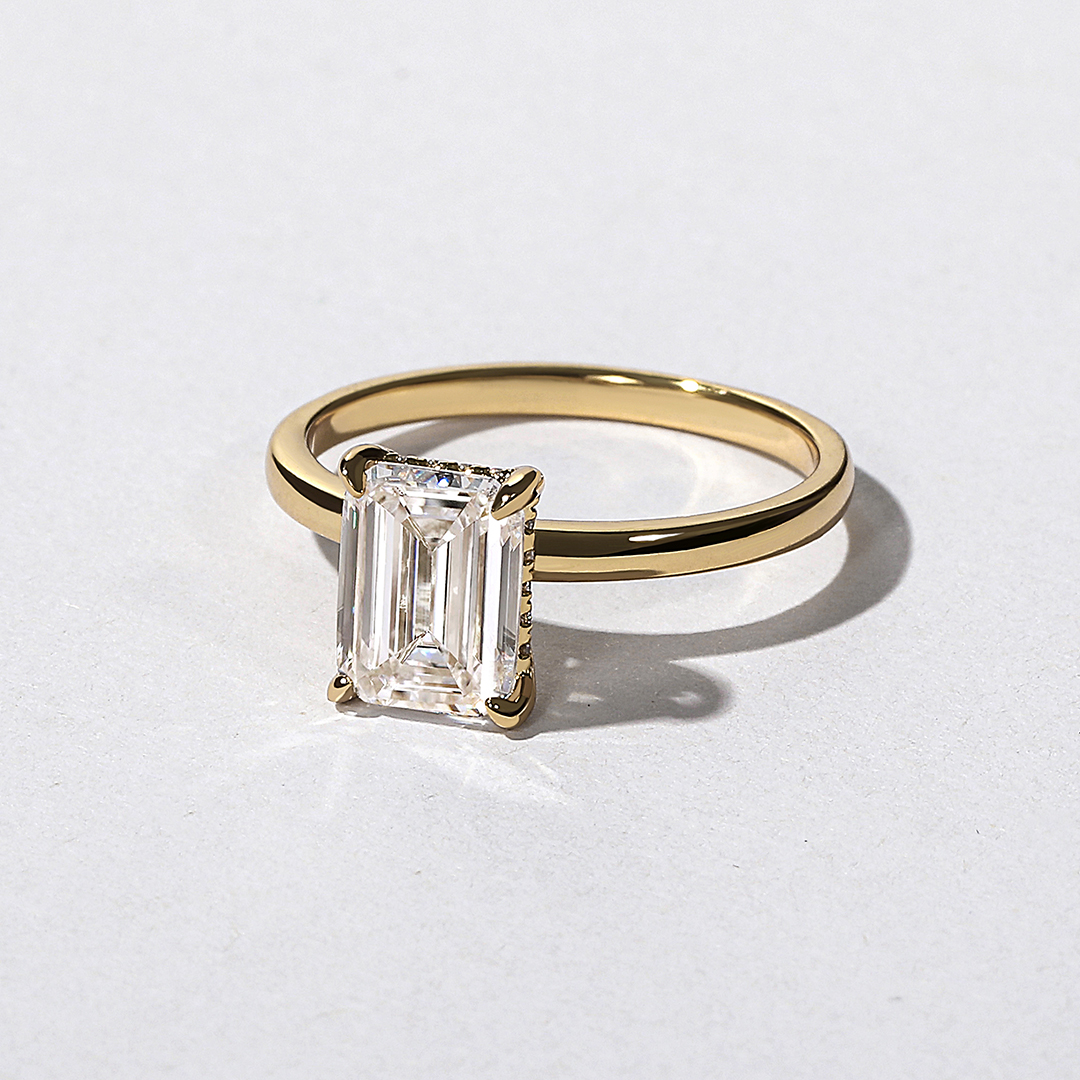
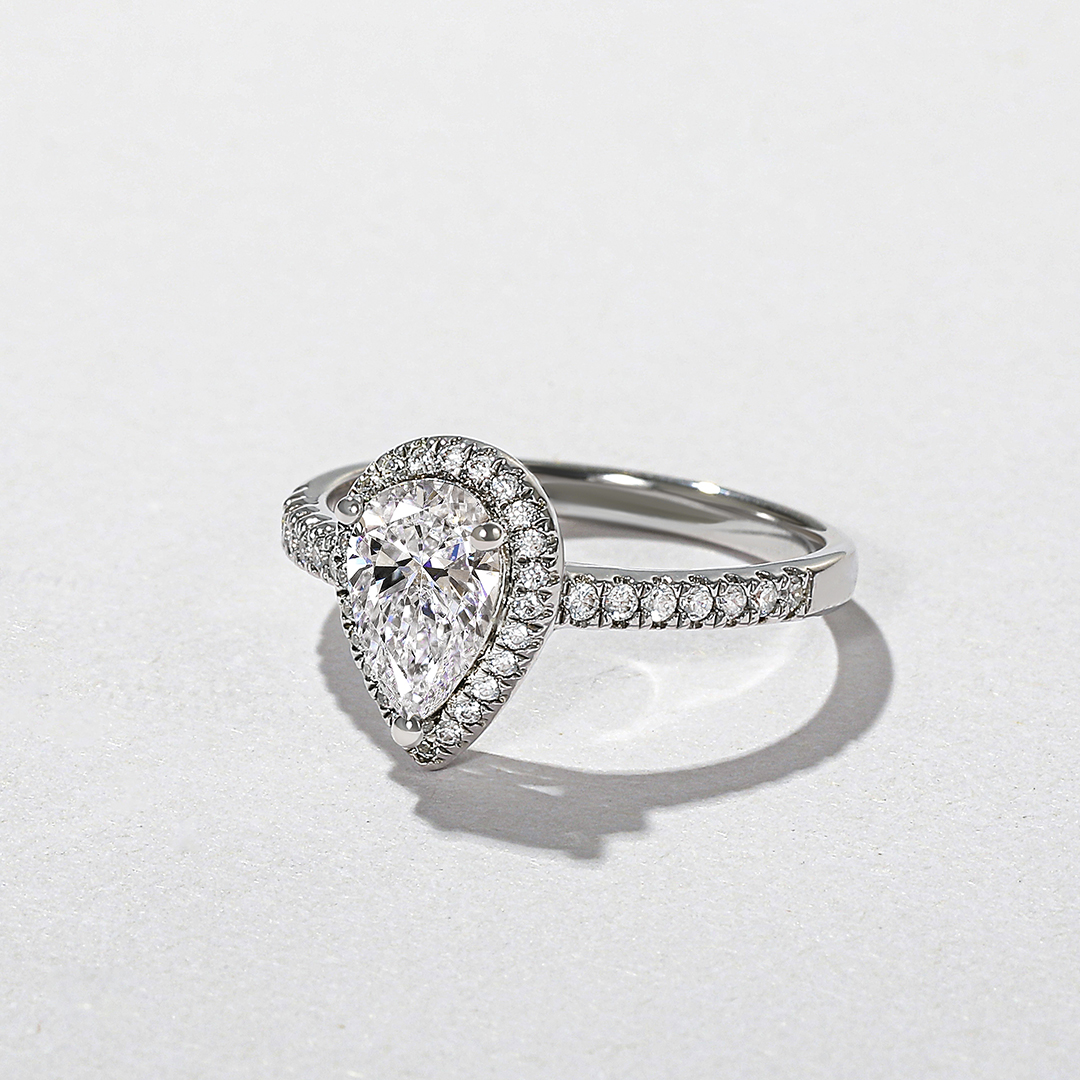
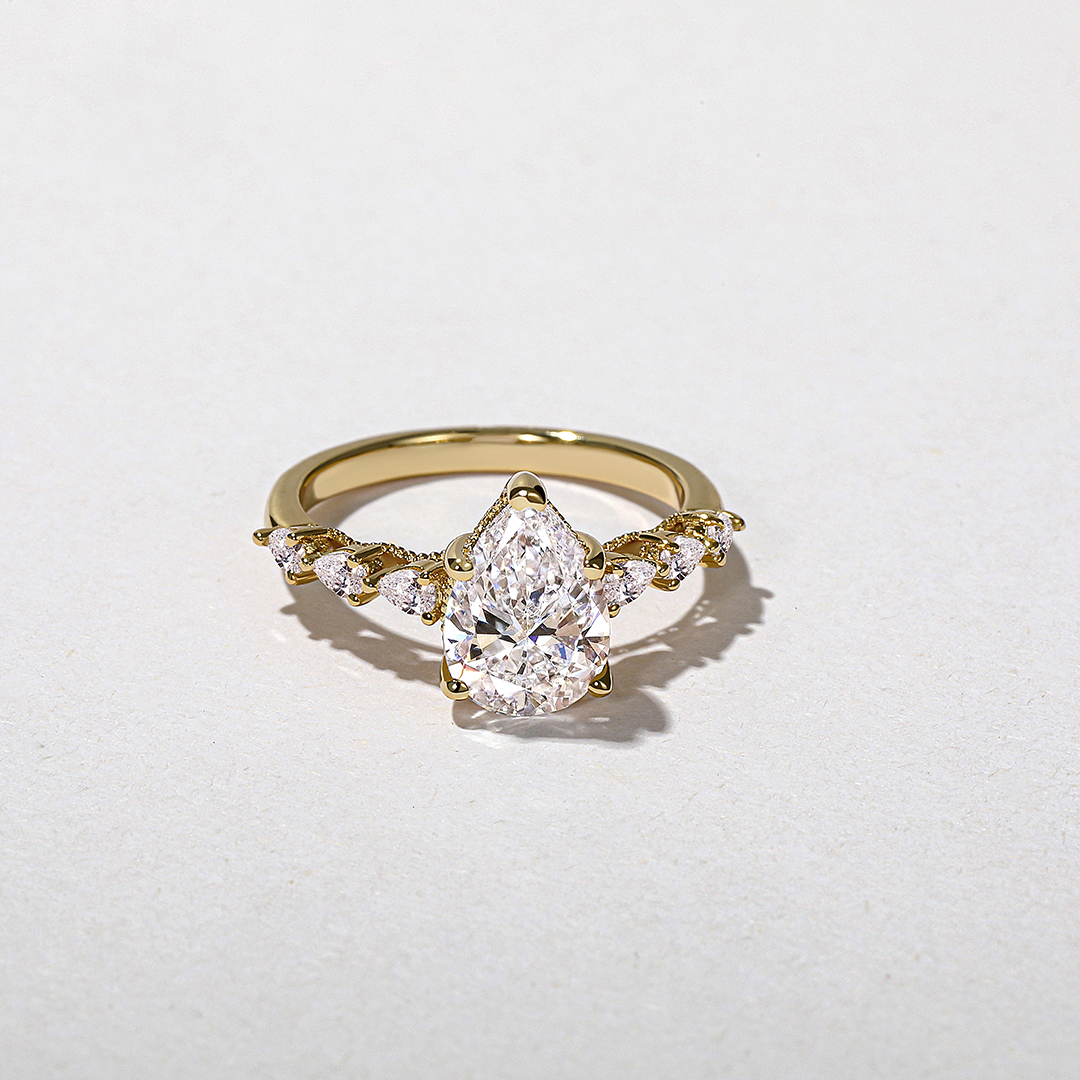
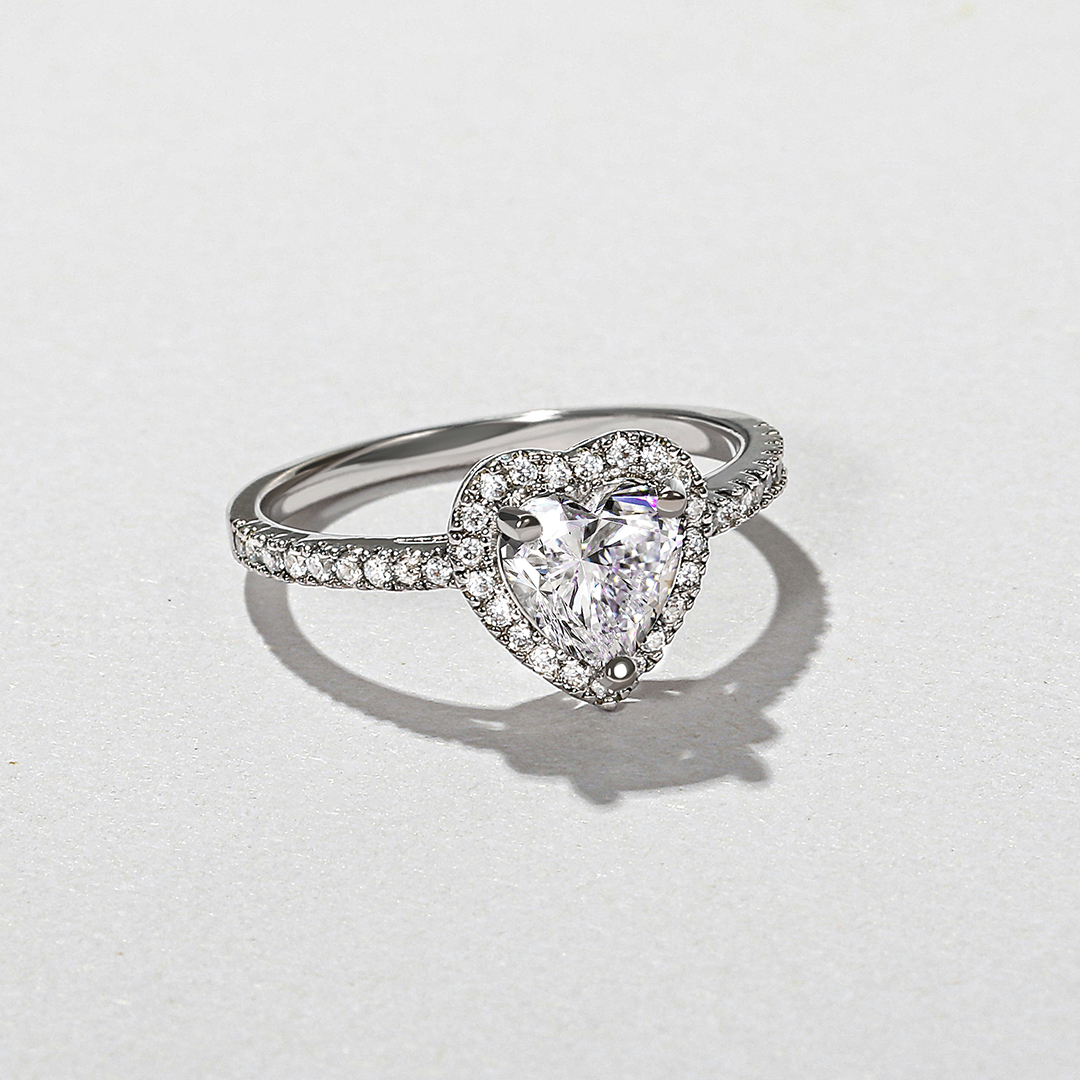
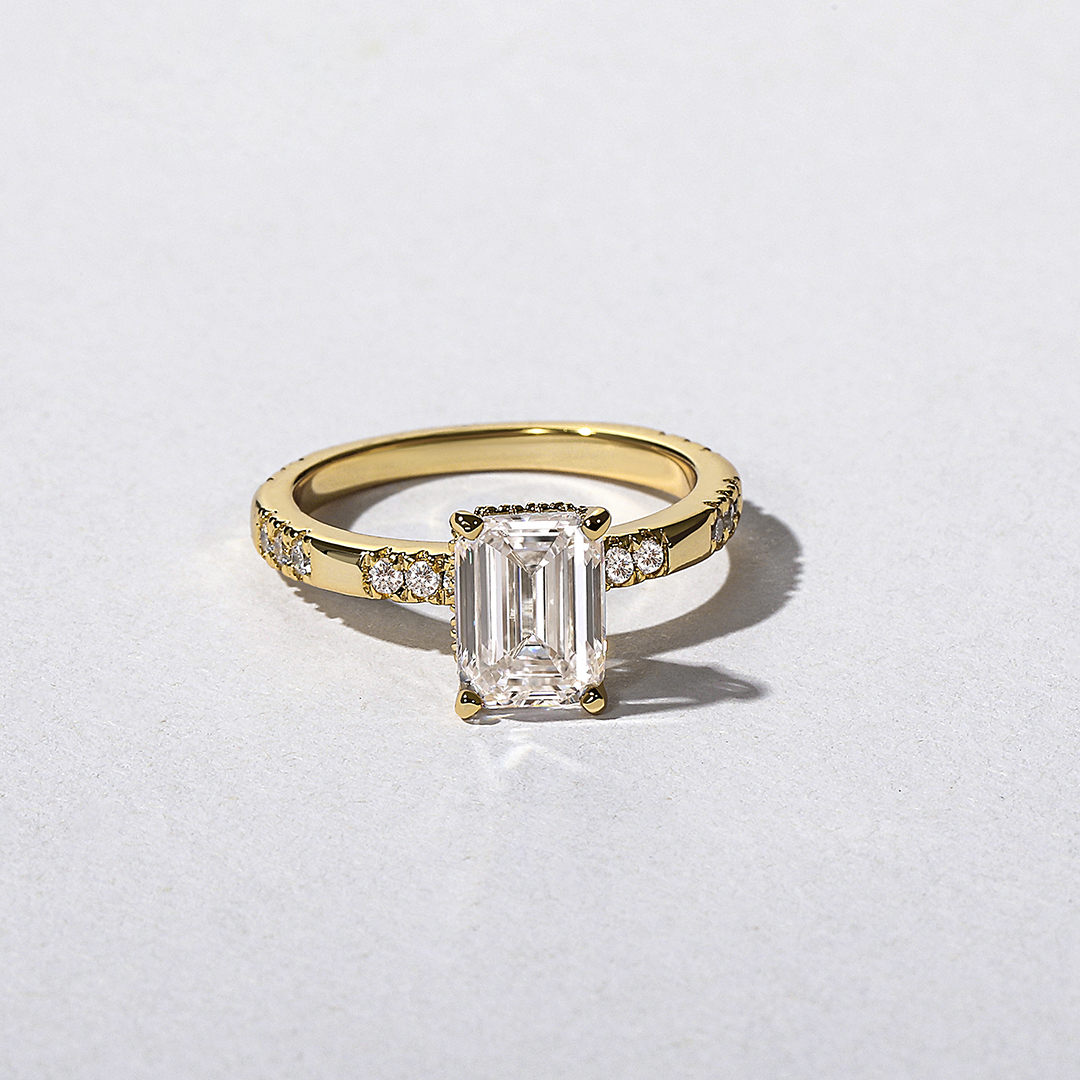
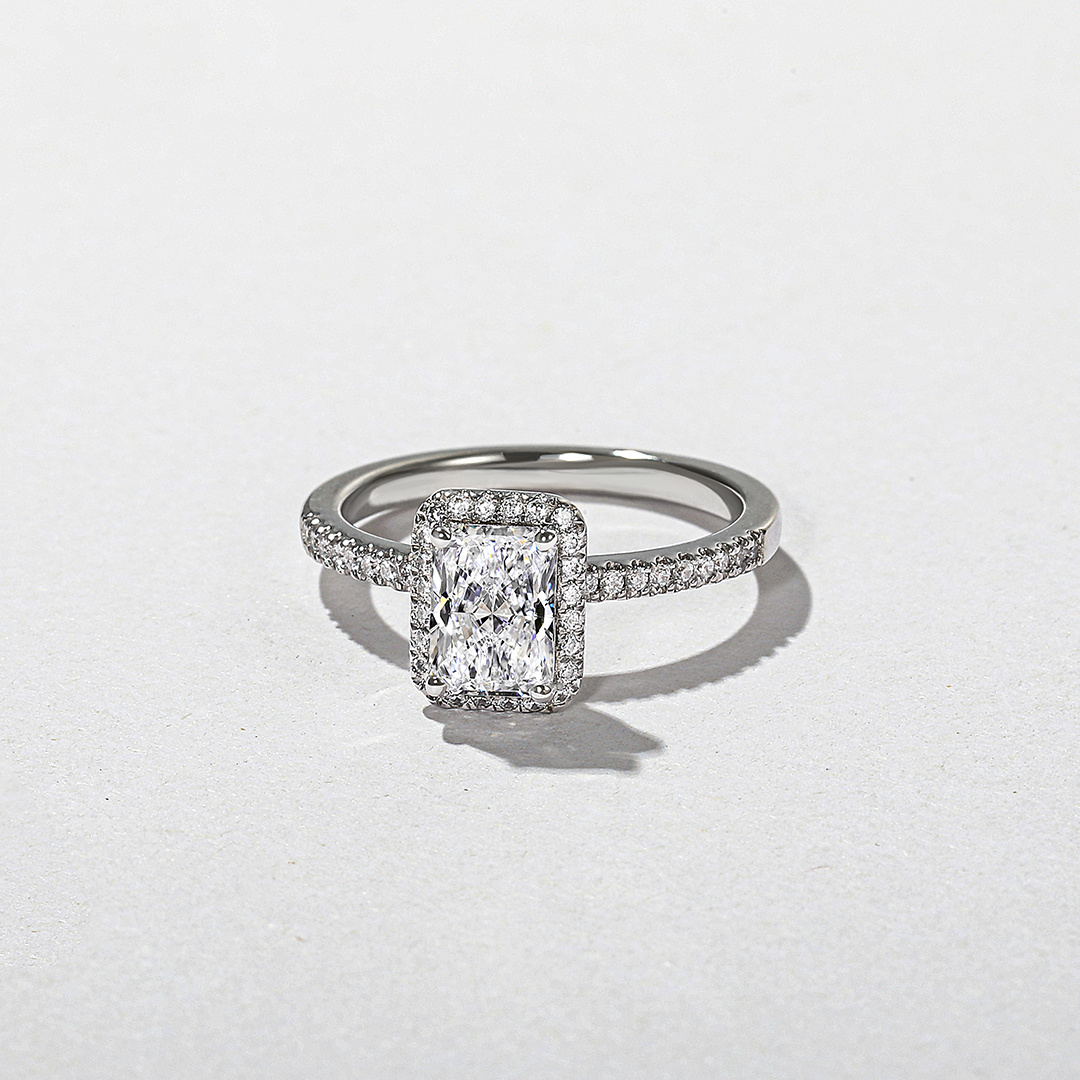
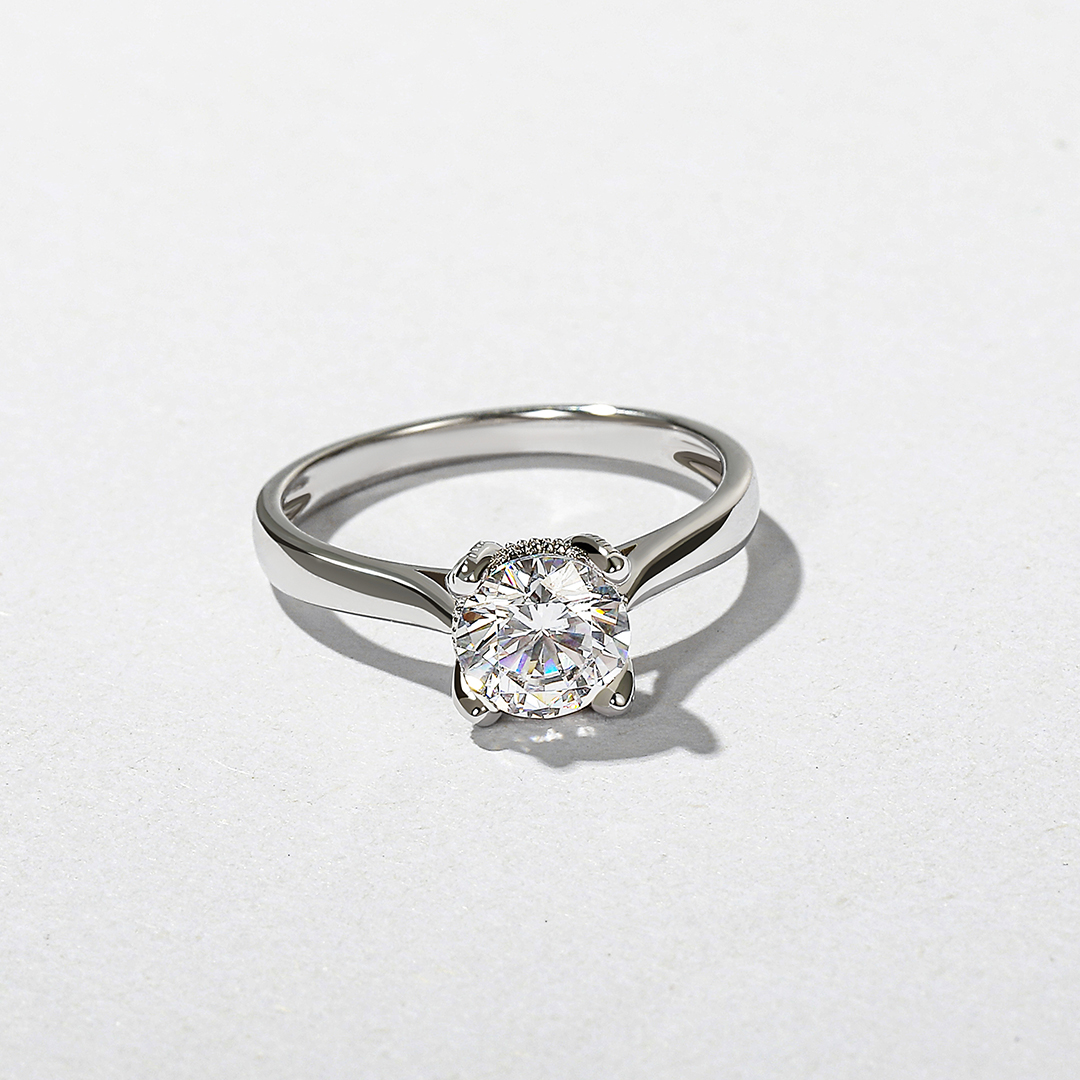
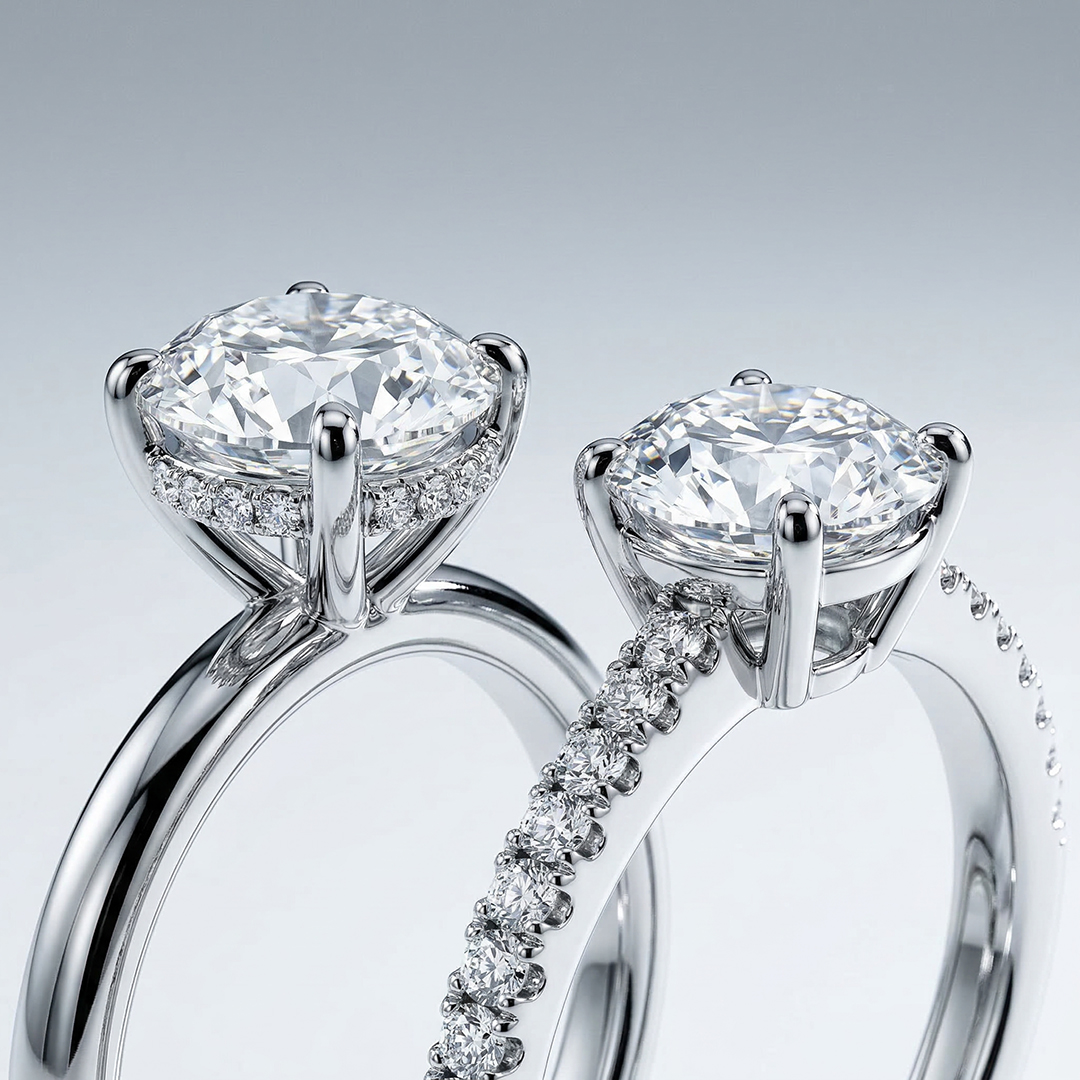
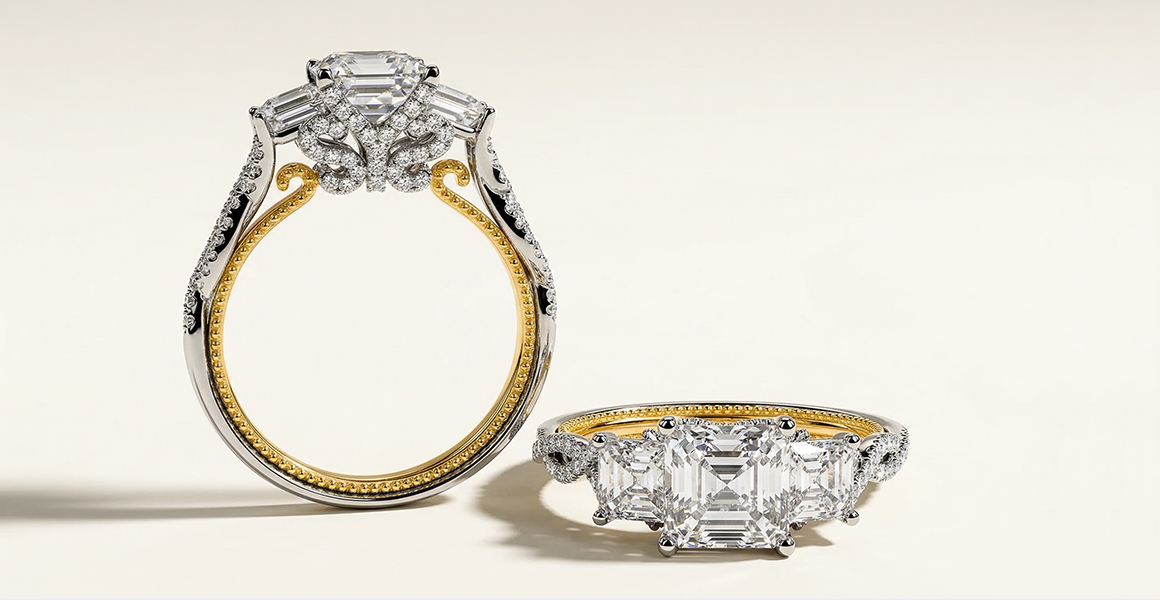
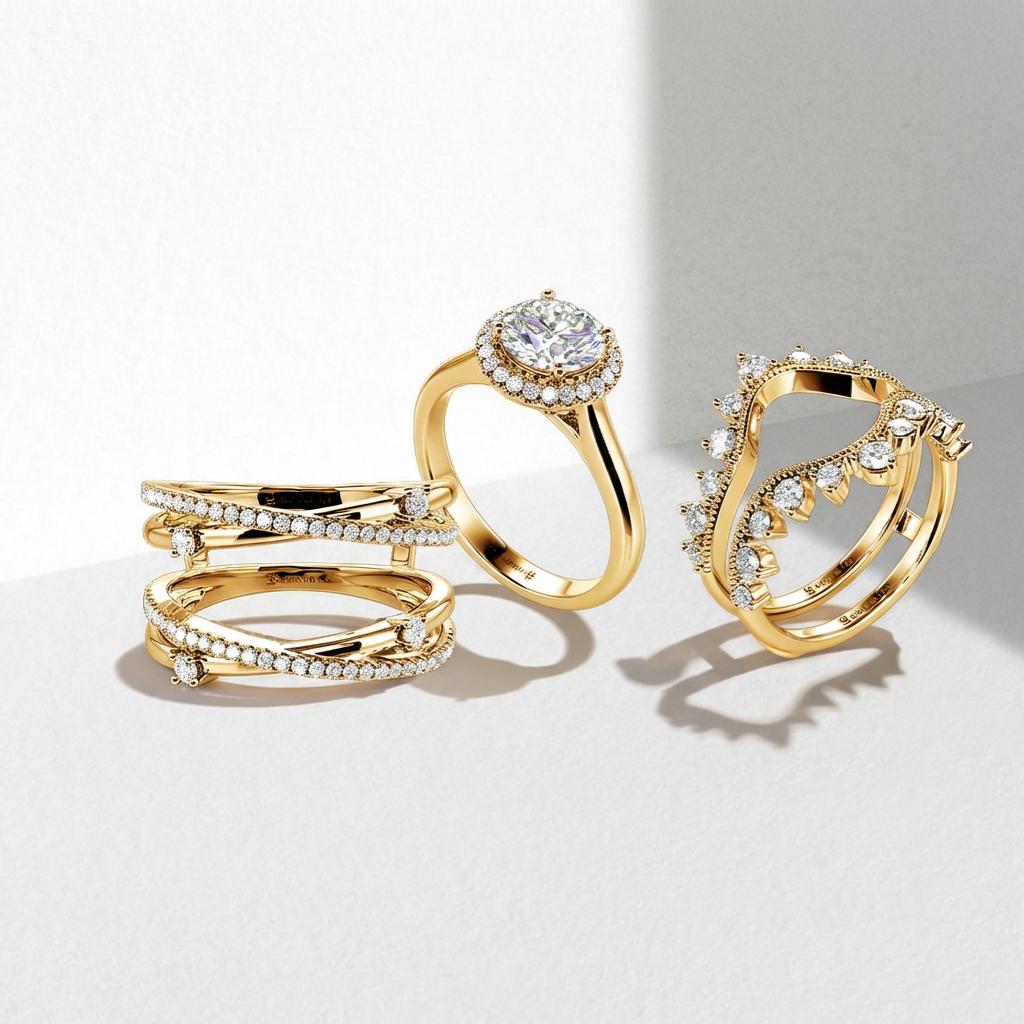
Moissanite is unquestionably a real gemstone. It is not cubic zirconia, glass, or a “fake”. It is a distinct mineral (silicon carbide) with its own unique identity, celebrated for a brilliance that surpasses diamond, exceptional durability, and remarkable value. Born from the stars and perfected in the lab, modern moissanite has emerged as a premier choice for engagement rings and fine jewelry, offering a compelling blend of fiery beauty, ethical clarity, and intelligent luxury for the conscious consumer.
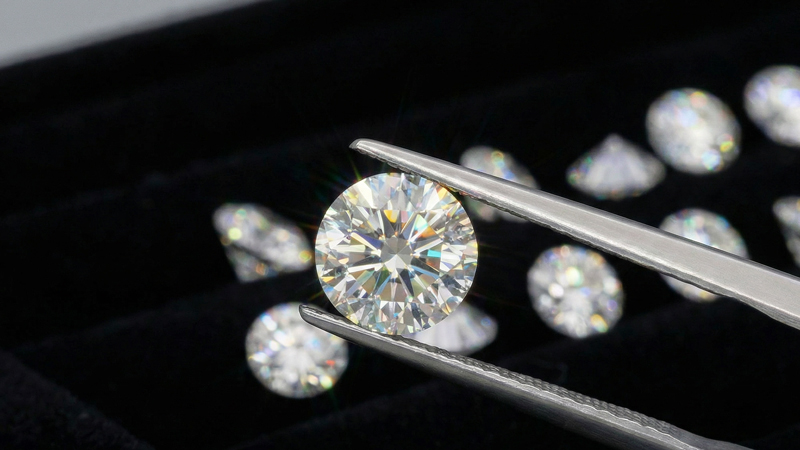
What is Moissanite?
The story of moissanite is as captivating as its sparkle. In 1893, Nobel Prize-winning scientist Dr. Henri Moissan discovered microscopic, shimmering crystals in the meteorite crater in Canyon Diablo, Arizona. He initially believed them to be diamonds, but a decade later identified them as silicon carbide (SiC), a mineral never before found on Earth. In his honor, the gem was named “moissanite”.
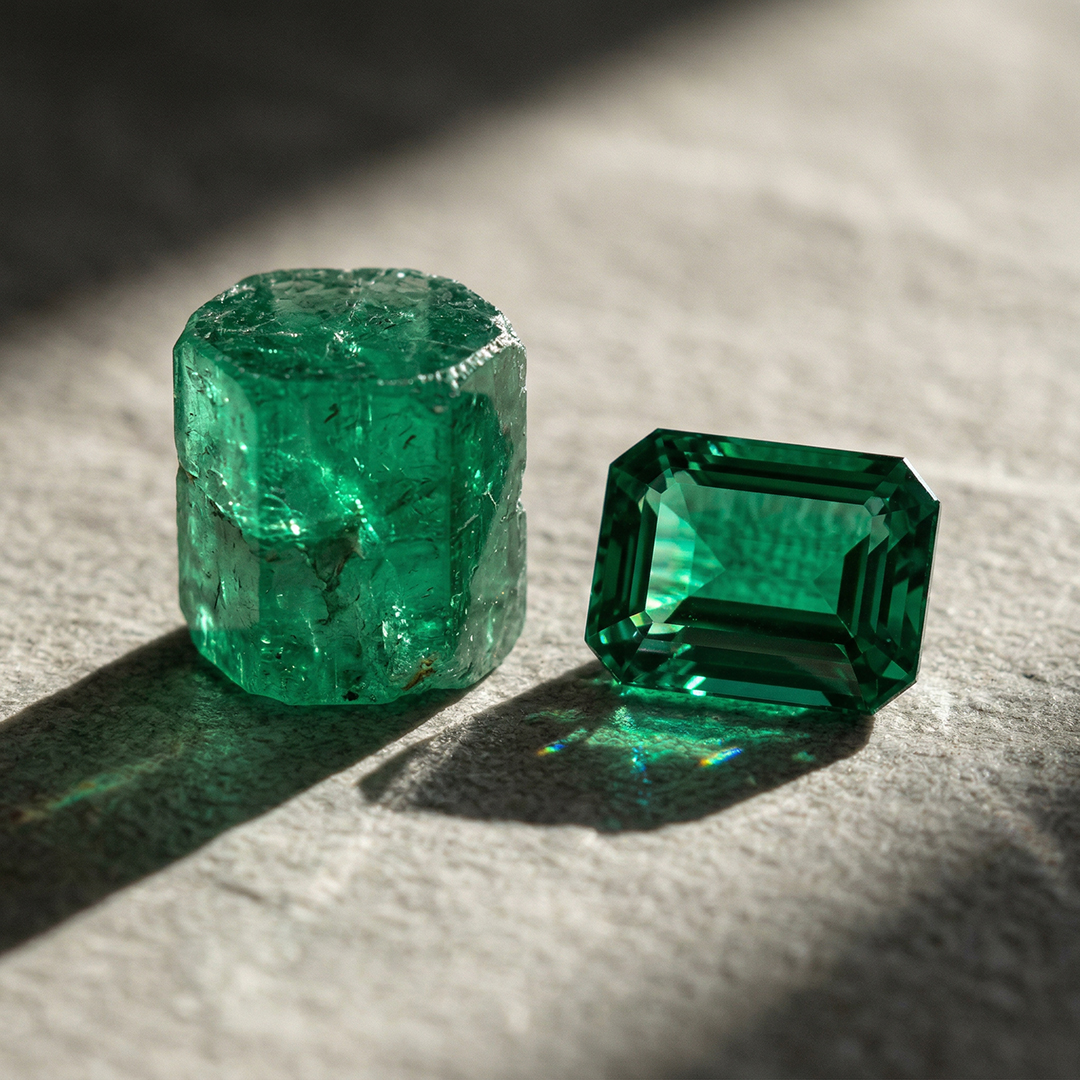
Naturally occurring moissanite remains incredibly rare, found only in trace amounts within certain meteorites and extreme geological sites. The moissanite gracing jewelry today is created in state-of-the-art laboratories. These gems are physically, chemically, and optically identical to their natural counterpart — but with flawless clarity and consistent quality. This lab-creation process ensures a sustainable, ethically sourced gemstone with a minimal environmental footprint.
Moissanite vs. Diamond: A Side-by-Side Analysis
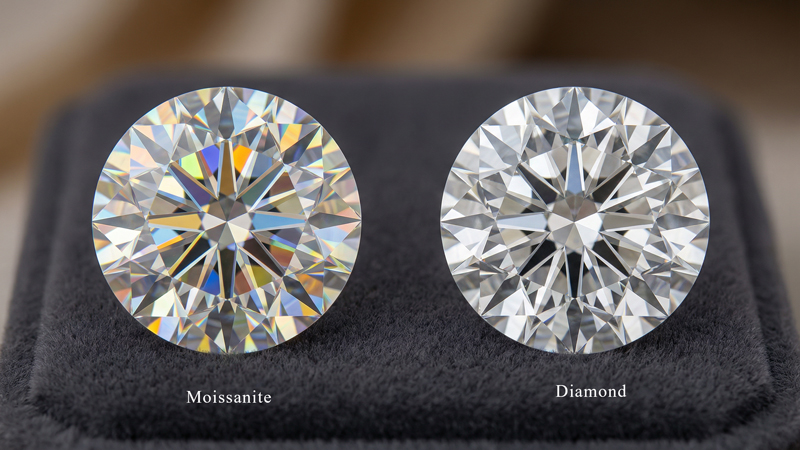
Understanding the key differences helps you appreciate moissanite on its own merits. Here is a clear, at-a-glance comparison followed by a detailed explanation.
| Feature | Moissanite | Diamond |
|---|---|---|
| Composition | Silicon Carbide (SiC) | Carbon (C) |
| Origin | Lab-Created (primarily) | Mined or Lab-Created |
| Hardness (Mohs Scale) | 9.25 | 10 |
| Refractive Index (Brilliance) | 2.65 – 2.69 (Higher) | 2.42 |
| Dispersion (Fire) | 0.104 (Higher) | 0.044 |
| Typical Color Grade | Colorless (D-F) to Near Colorless (G-I) | Colorless (D-F) to Various Grades |
| Clarity | Typically Eye-Clean (VVS/IF) | Varies (Included to Flawless) |
| Price (for comparable size) | Significantly Lower | Premium |
| Ethical & Environmental Impact | Minimal, Conflict-Free | Varies (Requires careful sourcing) |
Breaking Down the Table:
- Brilliance & Fire: Moissanite’s higher refractive index and dispersion mean it bends light more aggressively, creating more rainbow-colored flashes (“fire”) than a diamond. Its sparkle is intense and fiery.
- Durability: At 9.25 on the Mohs scale, moissanite is the second hardest gemstone used in jewelry. It is exceptionally resistant to scratching and ideal for everyday wear, just like a diamond.
- Color & Clarity: Top-grade moissanite rivals the best colorless diamonds. Due to its lab origin, it consistently achieves high clarity with minimal inclusions.
- The Value Proposition: This is moissanite’s most transformative advantage. It allows you to choose a much larger or higher-specification stone for your budget, or to invest in a more intricate custom setting.
The Pros and Cons of Choosing Moissanite
Pros:
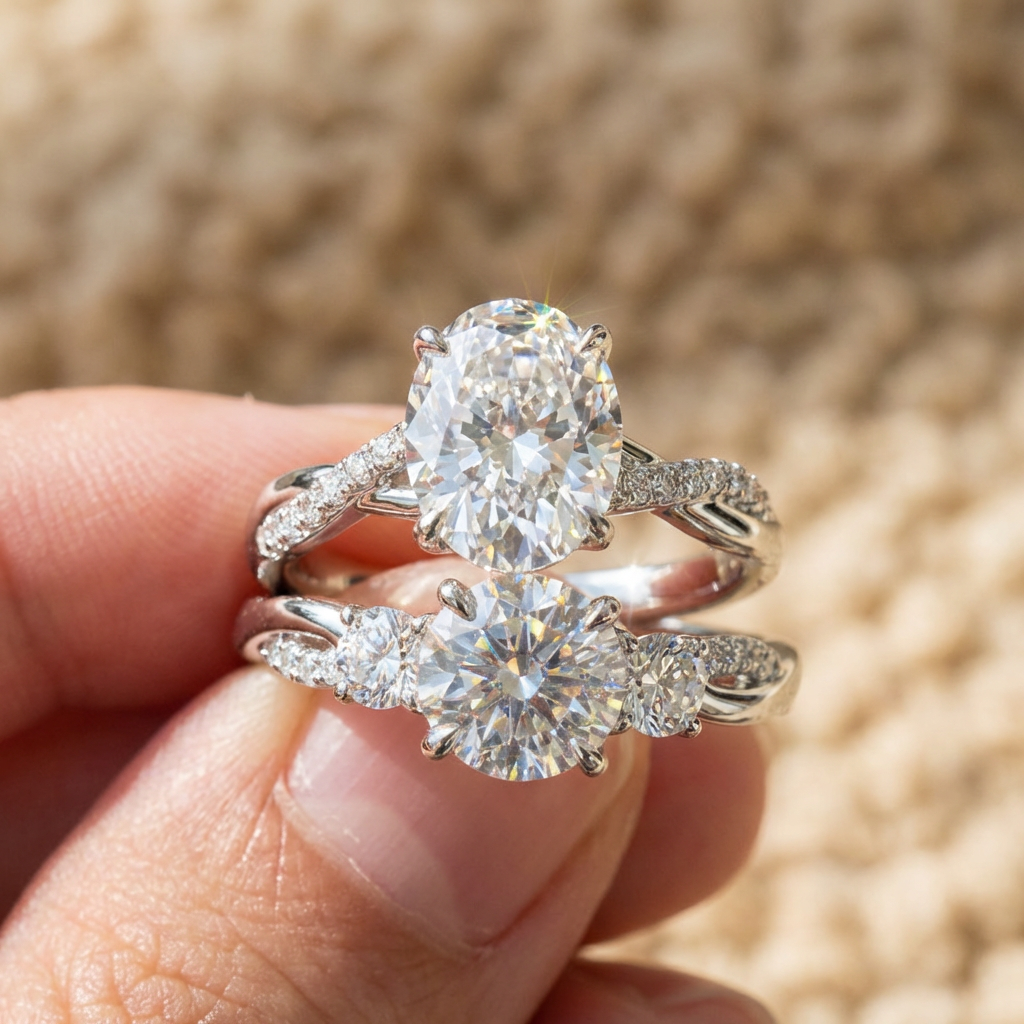
- Unrivaled Brilliance & Fire: Moissanite possesses a higher refractive index than diamond, resulting in exceptional fire—those vibrant rainbow flashes. It often appears more brilliant and sparkly to the naked eye, especially in dynamic lighting.
- Exceptional Value Proposition: This is its most practical benefit. You can acquire a stunning, large, and eye-clean moissanite for a fraction of a diamond’s cost. This frees your budget for a more intricate setting, a higher carat weight, or simply smarter financial planning.
- Ethically & Environmentally Sound: Every moissanite is lab-created, ensuring a 100% conflict-free origin. It’s a sustainable choice with a transparent supply chain, free from the ethical concerns sometimes associated with mined stones.
- Durable for Everyday Wear: Ranking at 9.25 on the Mohs scale, moissanite is exceptionally hard and highly resistant to scratching, making it perfectly suitable for a lifetime of daily wear in an engagement ring.
- Consistent, High Quality: Lab creation allows for superior control. You can consistently find premium moissanite in the best color (colorless ranges) and clarity (typically VVS/IF), eliminating the quality lottery of natural gems.
Cons:
- A Distinct Gemstone: It is chemically and optically different from a diamond. If tradition or the specific status of a natural diamond is paramount, moissanite is a conscious alternative, not a replica.
- A Different Type of Sparkle: Its distinctive fire and double refraction can be identified by a trained eye. Some adore this unique character, while others may prefer diamond’s classic white light return.
- Potential for Subtle Undertones: In rare cases, some stones may exhibit very faint cool (grayish/blueish) or warm hints in specific, direct lighting. Opting for a highest color grade (e.g., D-E-F) from a trusted vendor virtually eliminates this.
- Resale Value Perspective: As a lab-created gem, its primary value is in its beauty and upfront cost savings. It does not hold monetary value as a potential financial asset like a rare natural diamond might.
Is Moissanite Right for Your Engagement Ring?
Moissanite is a perfect match if your priorities are:
- Maximizing Brilliance and Size: You want incredible sparkle and presence for your budget.
- Making an Ethical Choice: You value transparency, sustainability, and conflict-free sourcing.
- Embracing Modern Luxury: You appreciate cutting-edge science and beautiful alternatives to traditional gems.
- Design Flexibility: The savings on the center stone can be redirected toward a more elaborate setting or finer metals.
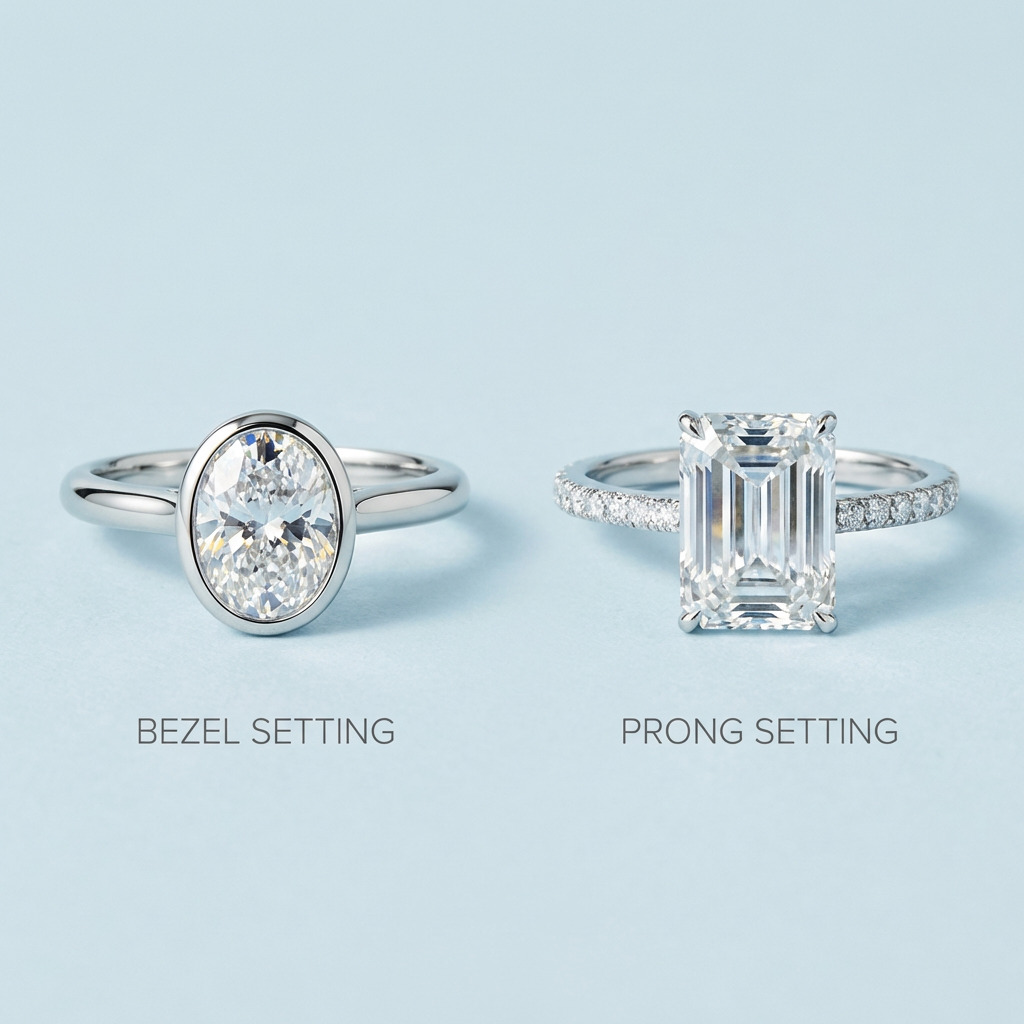
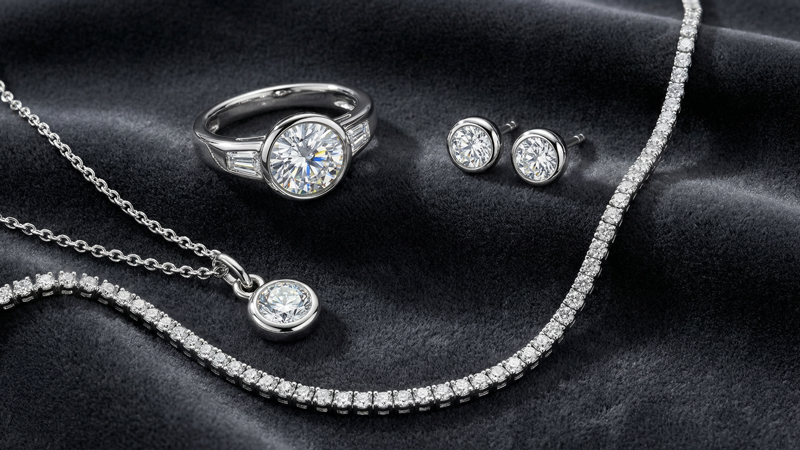
It performs spectacularly in all styles, especially those designed to maximize light: classic solitaires, brilliant halos, and vintage-inspired designs with pavé details.
Caring for Your Moissanite Jewelry
Thanks to its exceptional 9.25 hardness, moissanite is incredibly durable and low-maintenance. With a few simple habits, you can preserve its dazzling fire for a lifetime.
1. Easy Routine Cleaning:
For daily brilliance, soak your piece in warm water with a drop of mild dish soap. Gently brush with a soft toothbrush to clean under the setting, rinse thoroughly, and pat dry with a soft cloth.
2. Important Precautions:
Ultrasonic Cleaners: Generally safe for the stone, but use caution if your setting is delicate or includes other gems (e.g., emerald, opal).
When to Remove: Always take off your jewelry during heavy chores, gym sessions, swimming, or when applying lotions or harsh chemicals to prevent buildup and protect the setting.
3. Professional Maintenance:
For peace of mind, we recommend an annual check-up with a professional jeweler. They can ensure the prongs and setting are secure and perform a deep clean to restore maximum sparkle.
Simple care ensures your moissanite remains as radiant and meaningful as your most cherished moments.
Frequently Asked Questions (FAQs)
Q: Will moissanite look “fake” or turn cloudy over time?
A: No. High-quality moissanite has a transparent, diamond-like clarity that is permanent. Cloudiness is only caused by surface dirt or oils, which is easily cleaned away, restoring its full fire.
Q: Can it be detected by a standard diamond tester?
A: Yes. Most portable testers check thermal conductivity, on which moissanite reads differently than diamond. Jewelers use more advanced testers to distinguish between gems accurately.
Q: Does moissanite come in different shapes and colors?
A: Absolutely. It is expertly cut into all popular shapes (round, oval, cushion, emerald, etc.). Beyond classic white, it is available in stunning hues like champagne, yellow, gray, blue, and green.
Q: Is it true that moissanite has a “rainbow effect”?
A: Yes, this is its signature “fire”. Moissanite disperses light into spectral colors more than diamond. This results in vibrant flashes of rainbow light, which many find exceptionally beautiful and dynamic.
Q: Does moissanite come with a certification?
A: Moissanite is not graded by major diamond labs like GIA. Reputable sellers often provide a detailed grading report, most commonly a GRA certificate or an in-house quality report. This document verifies key specs like Cut, Color (e.g., D/E/F), and Clarity.
Conclusion
Moissanite has firmly established itself as a legitimate and brilliant gemstone in its own right. With its extraordinary fire, exceptional durability, ethical lab-created origin, and outstanding value, it offers a compelling and conscious choice for today’s discerning couples. It is not merely an alternative, but a forward-looking symbol of beauty and intelligence in fine jewelry.
Discover the Brilliance. Explore our curated moissanite collection to find your perfect ring.