People often use “pendant” and “necklace” as if they mean the same thing — and honestly, the lines do blur once a pendant is hanging from a chain. But if you’re shopping for jewelry or trying to describe what you want, the distinction matters more than you’d expect.
A necklace is the complete piece you wear around your neck. A pendant is the decorative part that hangs from it. Put them together and you get a pendant necklace. That’s the short answer — but there’s more to it if you’re deciding what to buy, how to style it, or which one makes the better gift. Let’s walk through it.
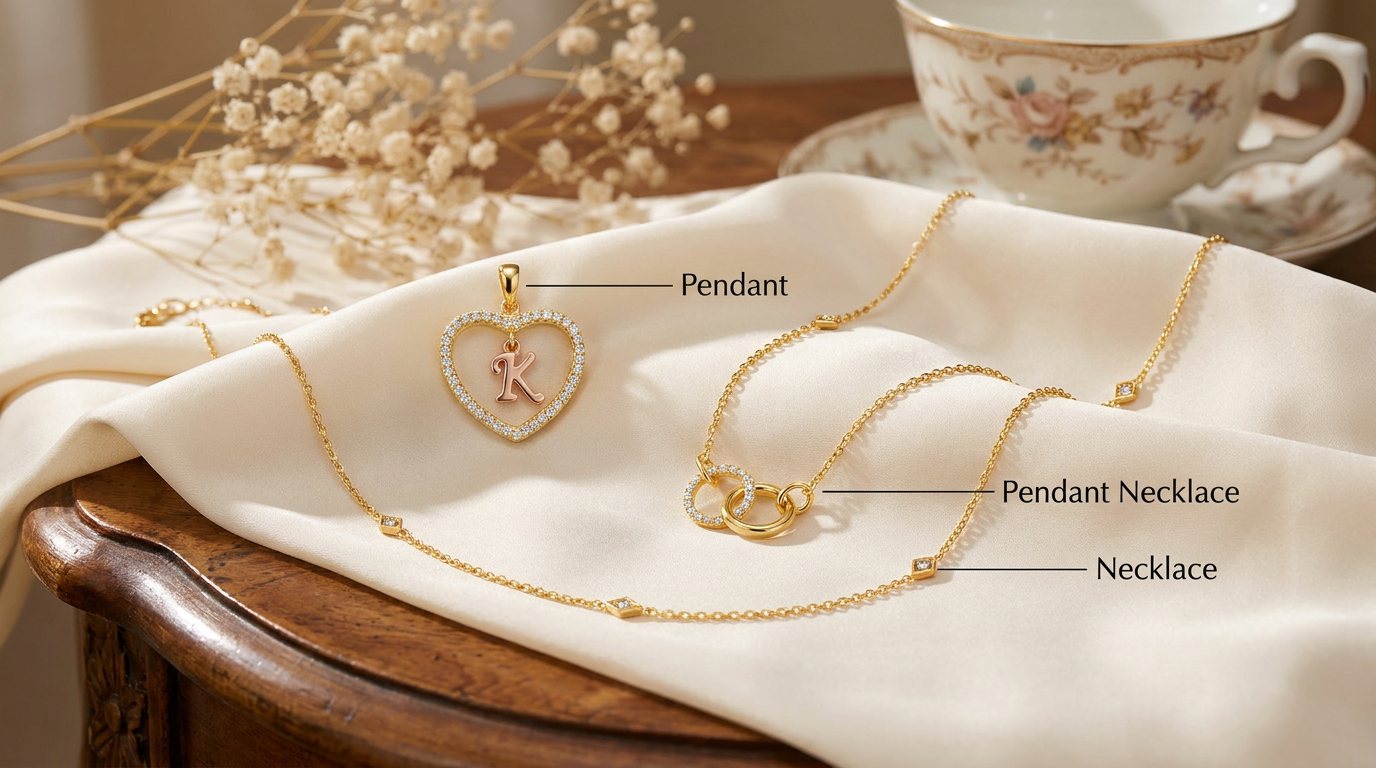
Necklace vs Pendant: Key Differences
What Is a Necklace?
A necklace is any piece of jewelry designed to be worn around the neck — chain, clasp, and all. It can be as simple as a plain gold chain or as elaborate as a full diamond tennis necklace. The key point is that a necklace is a finished piece: you take it out of the box, put it on, and you’re done. Some necklaces come with decorative elements built in, and some are just a chain — both count.
What Is a Pendant?
A pendant is a decorative piece that hangs from a chain or cord. On its own, it can’t be worn around your neck — it needs something to attach to. Most pendants connect through a small loop at the top called a bail, which lets them slide along the chain. Pendants range from diamond solitaires and lockets to initials, birthstones, and religious symbols. If it dangles from a chain, it generally falls into this category.
The simplest way to think about it: a necklace is the complete piece you wear around your neck. A pendant is the hanging ornament that becomes the focal point.
| Item | Necklace | Pendant |
|---|---|---|
| Definition | A complete piece of neck jewelry | A decorative element that hangs from a chain |
| Worn on its own? | Yes — ready to wear out of the box | No — needs a chain or cord |
| What it includes | Chain + clasp + (optional decoration) | Ornament + bail (hanging loop) |
| Function | Integrated, fixed design | Separate piece, meant to be attached |
| Versatility | Fixed style, not detachable | Can be moved between different chains |
| Examples | Pearl strand, cable chain, choker, tennis necklace | Diamond solitaire drop, locket, initial charm, cross |
What about a “pendant necklace”?
That’s the combination. When you thread a pendant onto a chain and wear them together, the whole thing is called a pendant necklace. Every pendant necklace has a chain. But not every necklace has a pendant. Think of the chain as the frame and the pendant as the picture — you can swap pictures without buying a new frame.
Popular Types of Pendant Necklaces
Pendants come in more varieties than most jewelry categories. Below are six styles that tend to come up most often — each with its own appeal depending on your taste, budget, and how you plan to wear it.
1.Solitaire Pendant

A single gemstone — usually a round brilliant cut diamond or moissanite — set in a simple metal basket. No side stones, no extra decoration. A solitaire pendant tends to be the go-to for everyday wear because it pairs easily with almost anything. On an 18-inch chain, it works under a blazer, over a t-shirt, or with a cocktail dress.
2.Halo Pendant
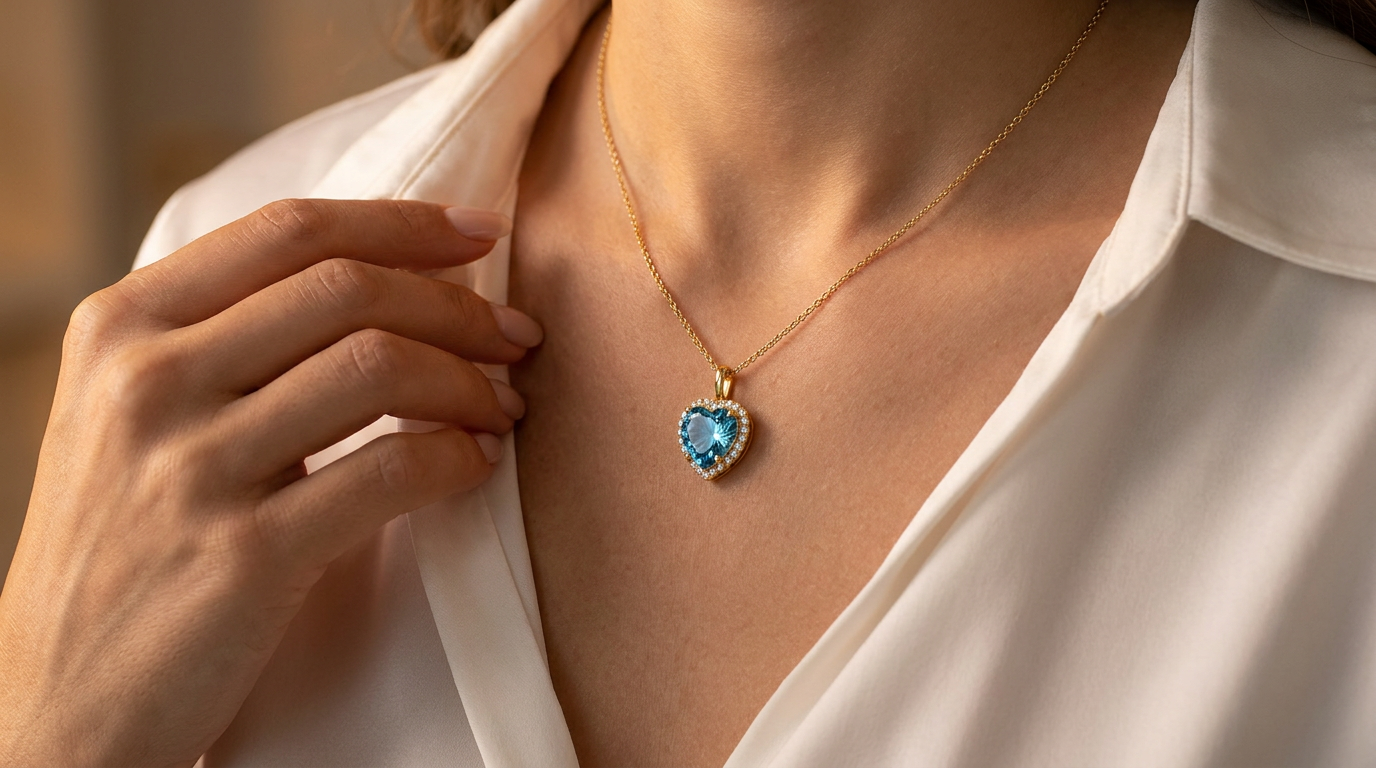
A halo setting surrounds the center stone with a ring of smaller accent diamonds or gemstones. The effect is a noticeable boost in visual size — a 1-carat center with a halo can look closer to 1.5 carats from a distance. Hidden halo designs, where the accent stones sit just beneath the center stone’s rim, offer a more subtle version of this look.
3.Initial and Name Pendants
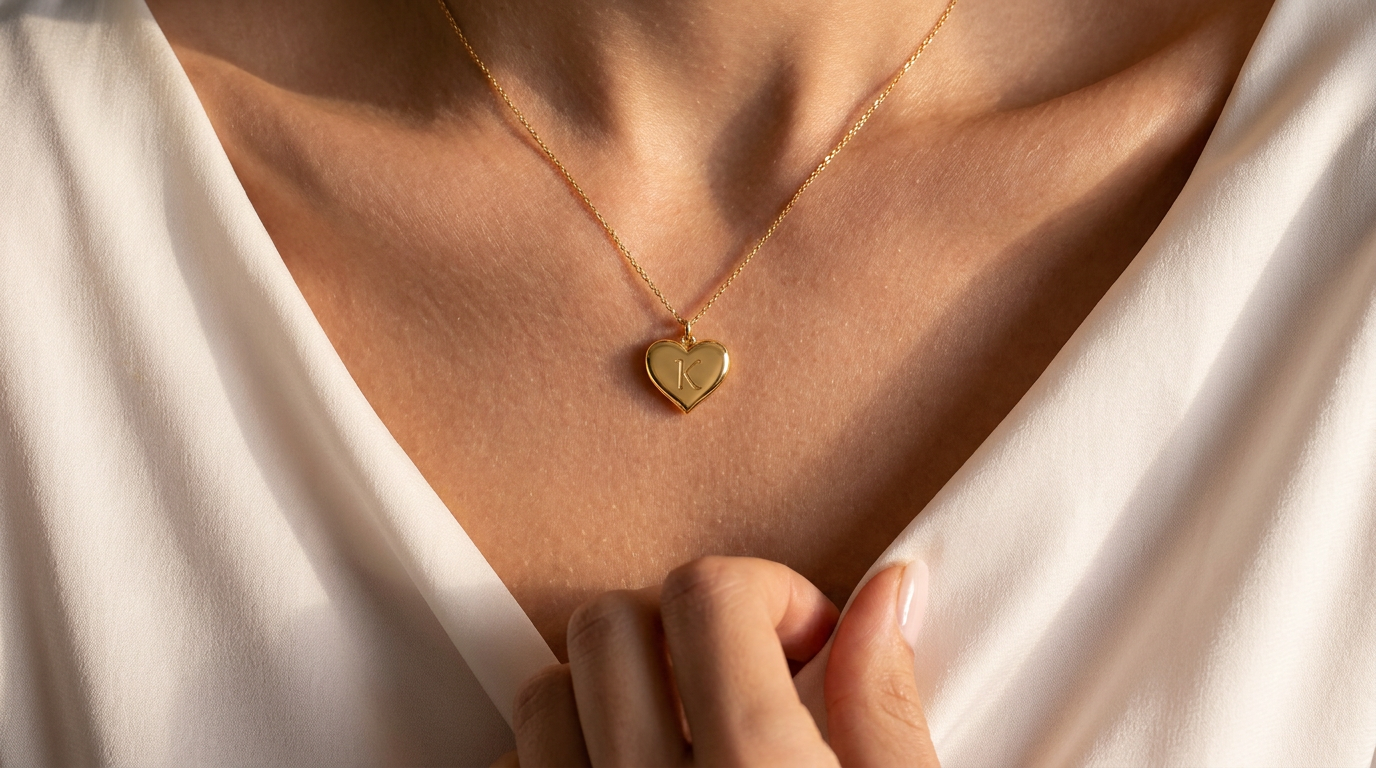
Initial pendants (one letter) and name pendants (a full name or word) have seen a surge in popularity over the past several years. They’re often worn on a delicate chain as a kind of daily signature. As gifts, they have a practical advantage: you don’t need to guess someone’s ring size.
4.Birthstone and Gemstone Pendants
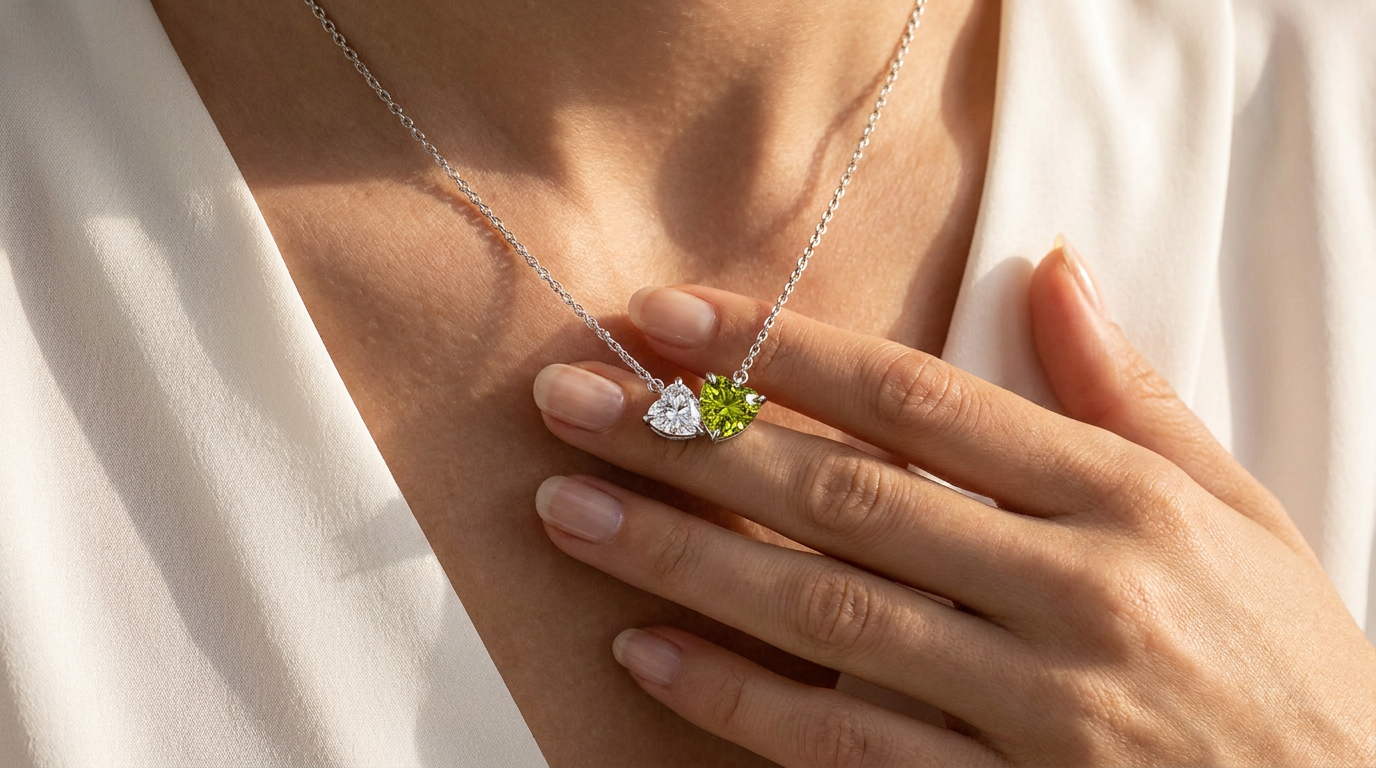
Each month has a corresponding gemstone, from garnet in January to blue topaz in December. Birthstone pendants carry personal meaning without requiring customization. If you like the look of a diamond but want to spend less, moissanite is worth a look — it rates 9.25 on the Mohs hardness scale and produces strong fire (the colorful flashes visible when the stone moves).
5.Statement Pendants
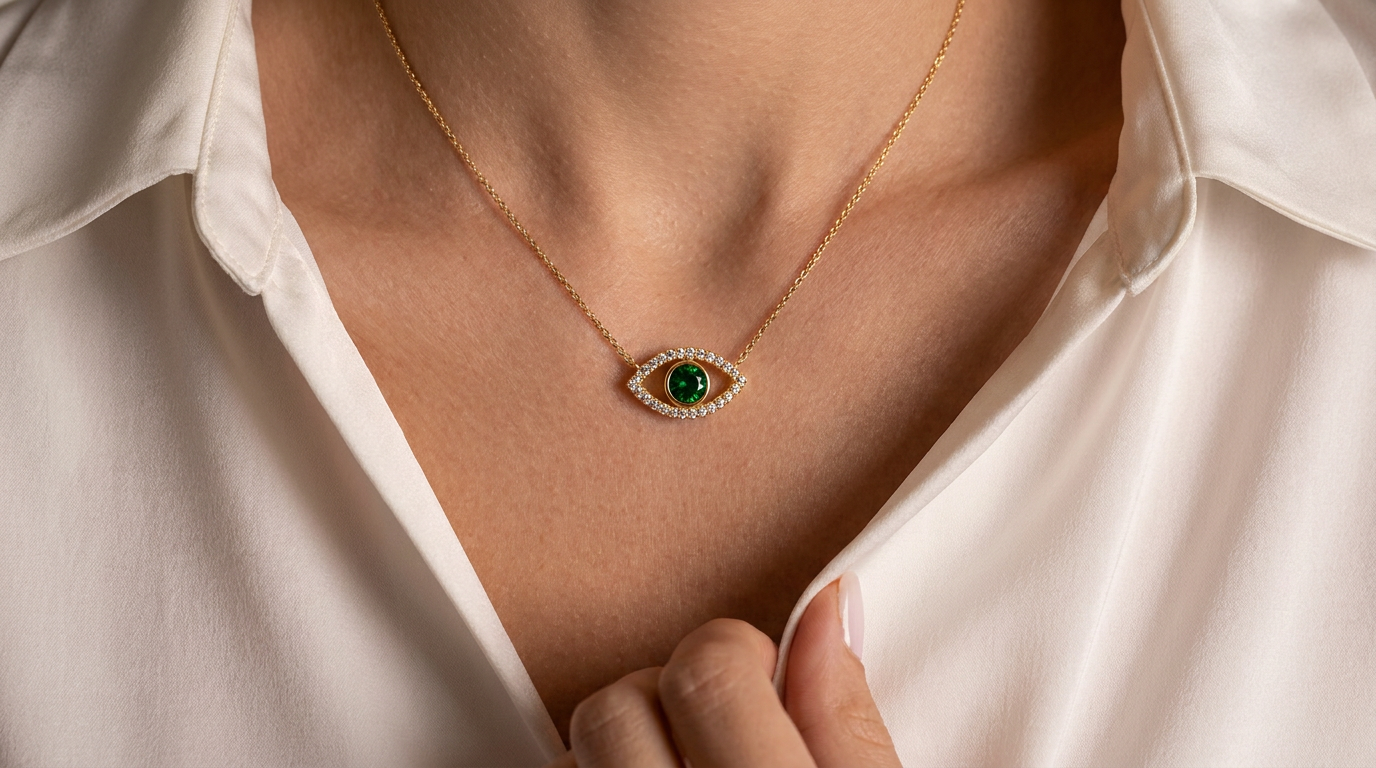
Oversized, eye-catching, and designed to anchor an outfit. Statement pendants lean into bold shapes, sculptural metalwork, or clusters of colorful stones. They’ve been trending toward larger sizes in 2025 and 2026, and they tend to work best when the rest of the outfit stays simple.
If you’re curious about what styles are popular right now, you can explore a deeper breakdown of current trends in our guide to trending necklaces.
Choosing the Right Chain Length
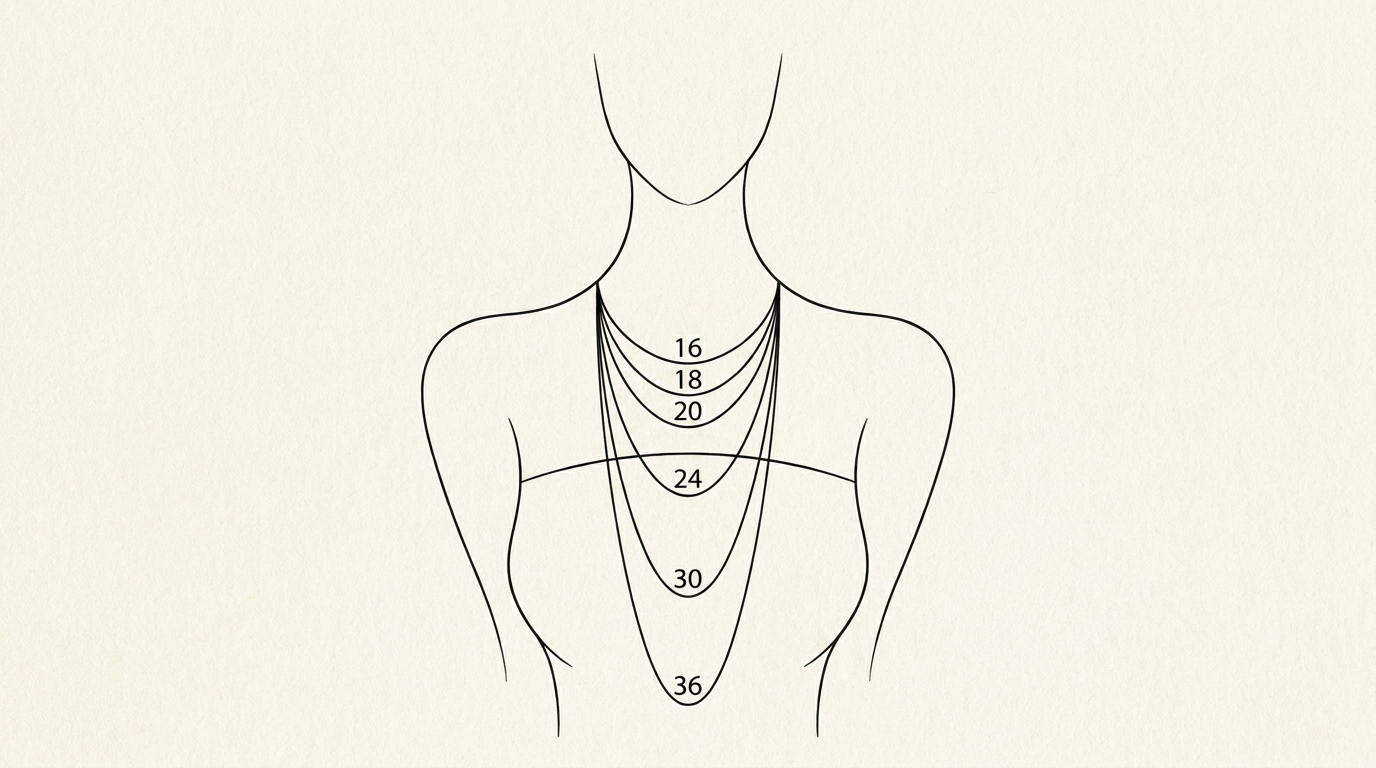
Chain length has a bigger impact on how a pendant looks than most people realize. The same pendant can appear entirely different on a 16-inch chain versus a 24-inch one. A chain that’s too short may tuck the pendant behind your collar; one that’s too long can lose it against your outfit.
Here’s what generally works at each length. A 14–16 inch chain (choker length) sits at the collarbone and suits small pendants in layered looks. The 17–18 inch range, often called princess length, lands just below the collarbone and tends to be the most versatile — it works with a wide variety of pendants and necklines. A 20–24 inch matinee chain falls above the bustline and pairs well with medium-to-large pendants or lockets. Longer chains in the 28–34 inch range (opera length) are often used for statement pendants or for layering over clothing.
A couple of practical notes: if you’re buying just one chain, 17 or 18 inches is a safe starting point. Also, chain thickness should match the pendant’s weight — a heavy gemstone on a very thin chain may not hold up well over time. A general guideline is to use a chain of at least 1.2mm thickness for pendants over 2 carats.
How to Style a Pendant Necklace
Matching Your Neckline
The right pendant for your outfit depends partly on the neckline you’re wearing. A few reliable pairings:
| Neckline | What Works | Chain Length |
| V-neck | Drop or elongated pendant that follows the V | 17–20″ |
| Round neck | Short pendant or choker that sits above the fabric | 14–16″ |
| Off-shoulder | Statement pendant or collar necklace | 16–18″ |
| Turtleneck | Long pendant worn over the fabric | 24–30″ |
| Open button-down | Medium pendant that fills the gap | 18–20″ |
The basic principle: your pendant should either sit above the neckline (on bare skin) or below it (visible against your chest). Getting lost inside the neckline is what you want to avoid.
Layering Tips
Layering pendant necklaces is one of the easiest ways to look styled without overthinking it. A few ground rules:
- Start short and go long. A 16-inch base chain, an 18-inch pendant, and a 22-inch longer pendant creates a natural tiered effect.
- Leave 2 inches between layers. Less than that and the chains start tangling. More than that and the spacing looks random.
- Pick one hero pendant. Let one piece be the star. The others should be simpler — thin chains, small pendants, or plain metal.
- Mixed metals are fair game. Wearing yellow gold, rose gold, and white gold together was once a “don’t.” It’s now one of the biggest jewelry trends of 2026, so go for it.
Work to Weekend
A solitaire diamond pendant on a 17-inch chain in 14K gold is the Swiss Army knife of jewelry. Under a blazer at the office, it reads polished and professional. Over a crewneck tee on Saturday, it’s effortless. With a dark dress and bare collarbone on Friday night, it’s elegant.
If you’re building a pendant collection from scratch, start there. Add a longer chain and a bolder pendant later, and you’ve got two completely different looks from one investment.
Best Pendant Necklaces for Gifting
Pendant necklaces are among the safest and most appreciated jewelry gifts you can give — if you pick the right style for the right person. Here’s a quick decision guide:
| Recipient | Go-To Style | Why It Works |
| Girlfriend or partner | Diamond solitaire pendant | Classic, romantic, zero risk of disappointment |
| Mother | Birthstone or locket pendant | Personal and emotionally resonant |
| Best friend | Initial or name pendant | Fashionable, meaningful, Instagram-worthy |
| Graduation or milestone | Simple gold pendant | Holds value, works with everything, ages well |
| Anniversary | Three-stone pendant | Symbolizes past, present, and future |
If you’re not sure about her taste: a round brilliant solitaire pendant in 14K white or yellow gold on an 18-inch chain is nearly impossible to get wrong. It’s the pendant equivalent of a little black dress — universally flattering and always appropriate.
Caring for Your Pendant Necklace
A few habits will keep your pendant necklace looking good for years:
- Take it off before swimming, showering, or exercising. Chlorine, salt water, and sweat can dull metal and loosen settings over time.
- Store it flat in a soft pouch or separate compartment. Chains tangle easily, and a tangled chain can kink or break.
- Clean it gently. Warm water, a drop of mild dish soap, and a soft-bristle toothbrush will handle most daily buildup. Skip the ultrasonic cleaners if your pendant has a delicate setting.
- Check the bail and clasp every few months. The bail (the loop that connects the pendant to the chain) takes all the weight. If it starts to thin or bend, take it to a jeweler before it breaks.
At the end of the day, understanding the difference between necklaces and pendants isn’t just technical—it changes how you choose and wear jewelry. A necklace gives you simplicity and ease, ready to go without second thought, while a pendant opens the door to mixing, matching, and personal expression. When you start thinking in terms of how pieces work together—chains, lengths, and interchangeable details—your jewelry naturally becomes more flexible and more “you,” adapting quietly to different moments in your life.
FAQ
What is the difference between a necklace and a pendant?
A necklace is a complete piece of jewelry worn around the neck. A pendant is a decorative charm or ornament that hangs from a chain. A necklace works on its own, while a pendant needs a chain to be worn. When combined, they create a pendant necklace.
Can you wear a necklace without a pendant?
Yes. Many necklaces are designed to be worn alone, such as simple gold chains, pearl strands, tennis necklaces, and chokers. A necklace does not need a pendant to be complete. Chain-only necklaces are one of the most popular everyday styles.
Can a pendant be worn without a necklace?
A pendant necklace is the combination of a chain and a pendant worn together as one piece. The chain serves as the base, and the pendant is the focal point. Many pendant necklaces allow you to remove or swap the pendant, giving you the flexibility to change your look without buying a new chain.
What type of chain is best for a pendant?
The best chains for pendants are sturdy link styles that can support the pendant’s weight without breaking or stretching. Popular choices include cable chains, box chains, wheat chains, and rope chains. Make sure the chain thickness matches the pendant’s bail size so the pendant slides on easily but sits securely.
Is a pendant the same as a charm?
No. A pendant hangs from a necklace chain using a bail and is typically a single, larger focal piece. A charm is smaller and usually attaches to a bracelet via a jump ring or charm holder. While both are decorative, pendants are designed for necklaces and charms are primarily for bracelets.