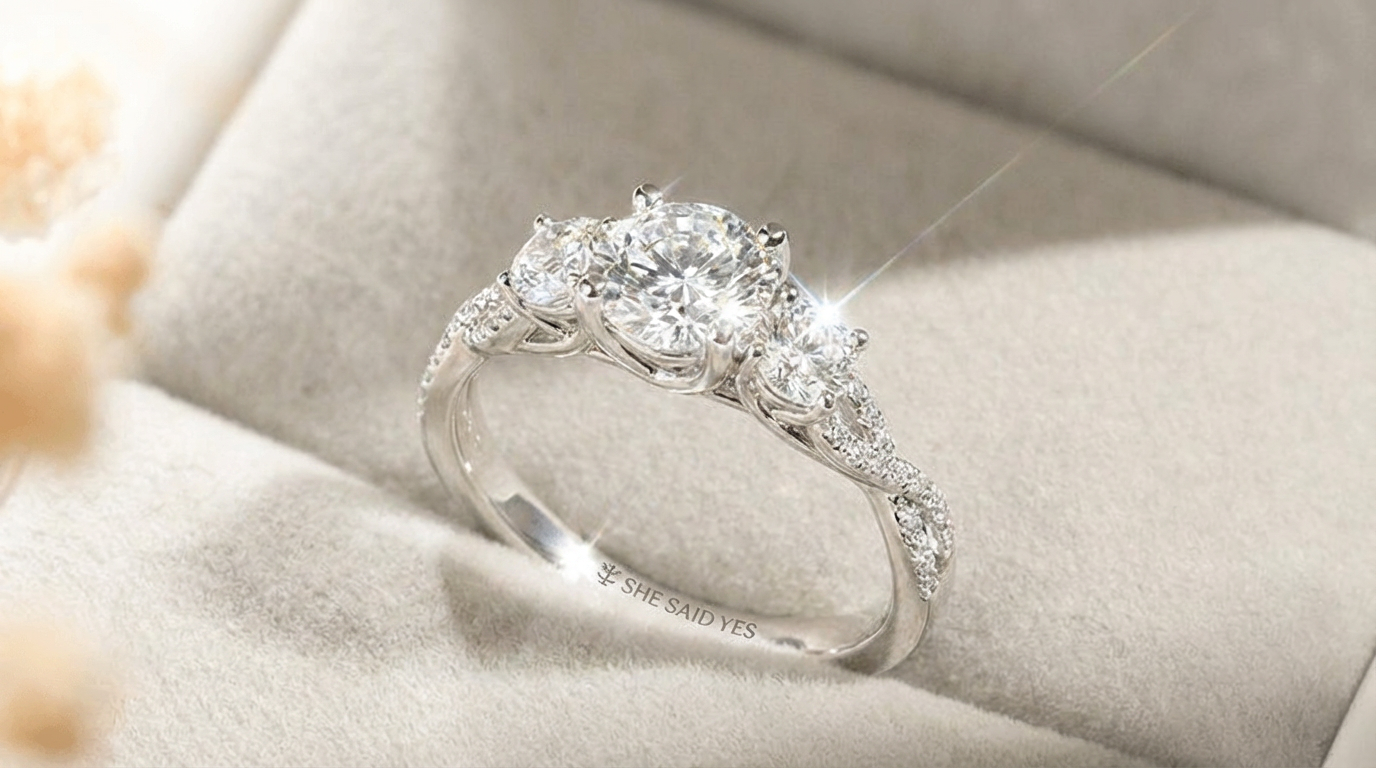
A three-stone engagement ring, also called a trilogy ring, gives your ring a story from the start. Each stone marks a moment: where you began, where you are now, and where you are going.
But you are not choosing it just for the meaning. The three-stone setting also changes how the ring sits on your hand, how it catches light in photos, and how the overall weight feels balanced. These small details are what make your ring look thoughtfully designed rather than just three diamonds placed side by side.
What Each Stone Represents
The most common interpretation is past, present, and future, and it’s a helpful place to start.
- Past: the history, memories, and experiences that brought you together
- Present: the love and commitment you share now, including the moment of the proposal
- Future: the plans, hopes, and life you are building together
This symbolism is simple but personal. It gives your ring a story, not just a design.
But you are not limited to one meaning. You can assign your own interpretation to the three stones. It might be three values that define your relationship, three important dates, or three places that shaped your journey. The ring gives you the structure, and you decide what it holds.
Some traditions add another layer. In Christian symbolism, the three stones represent faith, hope, and love. Others see them as two individuals, represented by the side stones, and the life you share in the center. Neither interpretation is fixed, but both add depth to what your ring can express.
Why Three Stone Rings Works Visually
The symbolism may draw you in, but the design is what keeps your attention. You get more finger coverage. With three stones set side by side, you cover more surface area across the top of your finger than a single diamond with the same total carat weight.For example, a 1-carat round solitaire is about 6.5mm wide. A three-stone ring using a 0.5-carat center with two 0.25-carat side stones can extend to 12mm or more. The carat total stays the same, but the visual impact nearly doubles.
You also get a natural framing effect. When the proportions are balanced, the side stones draw your eye toward the center diamond and make it feel larger. It works like a frame around a photograph, not changing the diamond itself, but changing how prominent it appears.
There is also better weight distribution. A single large stone can feel top-heavy on a narrow band, especially as the carat size increases. With three stones spread across the setting, the weight is shared more evenly, so the ring sits more comfortably and feels more stable in everyday wear.
The History Behind the Design
During the Victorian era (1837 to 1901), jewelers were already making three stone rings. They often featured a larger center gemstone flanked by two smaller stones, with color choices that carried meaning. A diamond center might be paired with rubies to represent passion, or sapphires to represent fidelity.
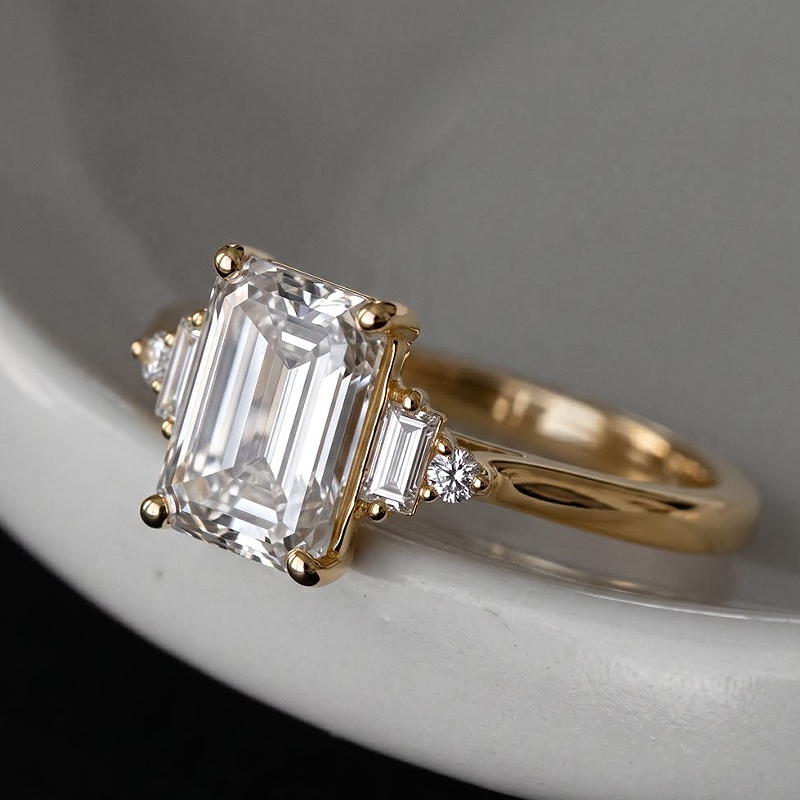
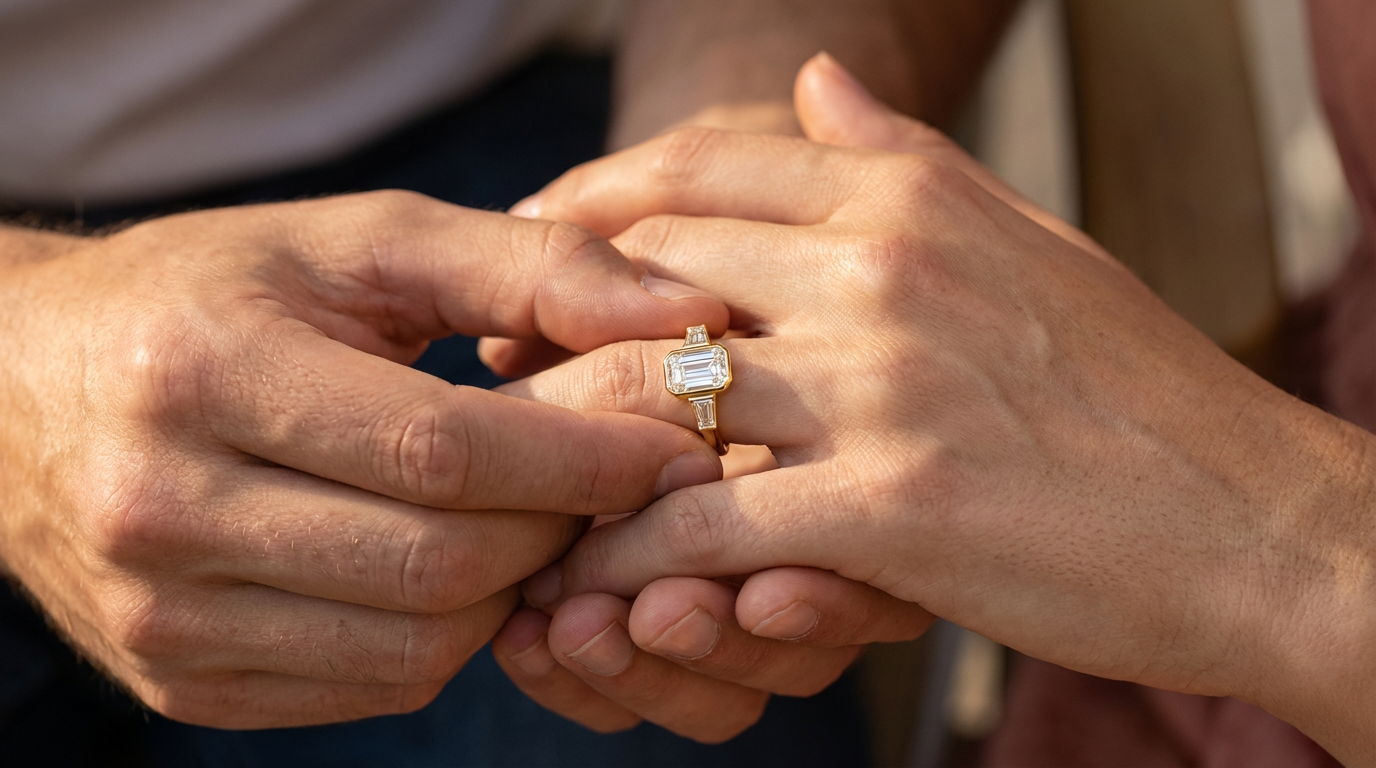
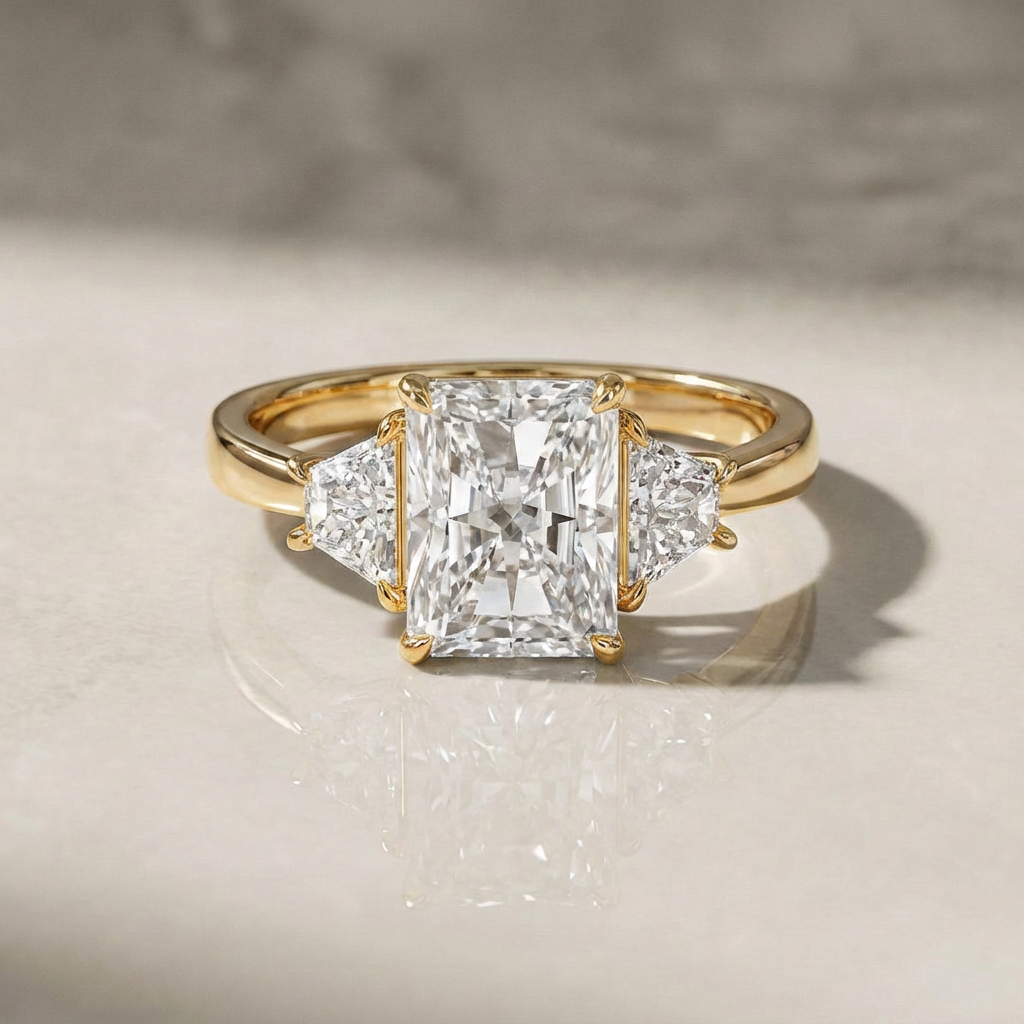
In the 1920s, Art Deco designers refined the look even further. They paired step-cut center stones with geometric side stones like trapezoids and baguettes, creating designs that still feel modern today. Many vintage three stone rings from this period are now highly sought after as estate pieces.
Taken together, the three stone ring has evolved from symbolic Victorian design to Art Deco geometry, yet the core idea has stayed the same: a simple structure that can carry layered meaning and timeless visual balance.
Proportion Rules for Three Stone Rings
This is where a three stone ring succeeds or falls short. Small proportion choices can completely change how it looks on your hand.
- The 25 to 50 percent rule: Each side stone should measure between 25% and 50% of the center stone’s face-up diameter, not its carat weight. If the side stones are below 25%, they become background accents and lose their role in the design. If they go above 50%, they start to compete with the center stone. At that point, the ring feels crowded and the focal point disappears.
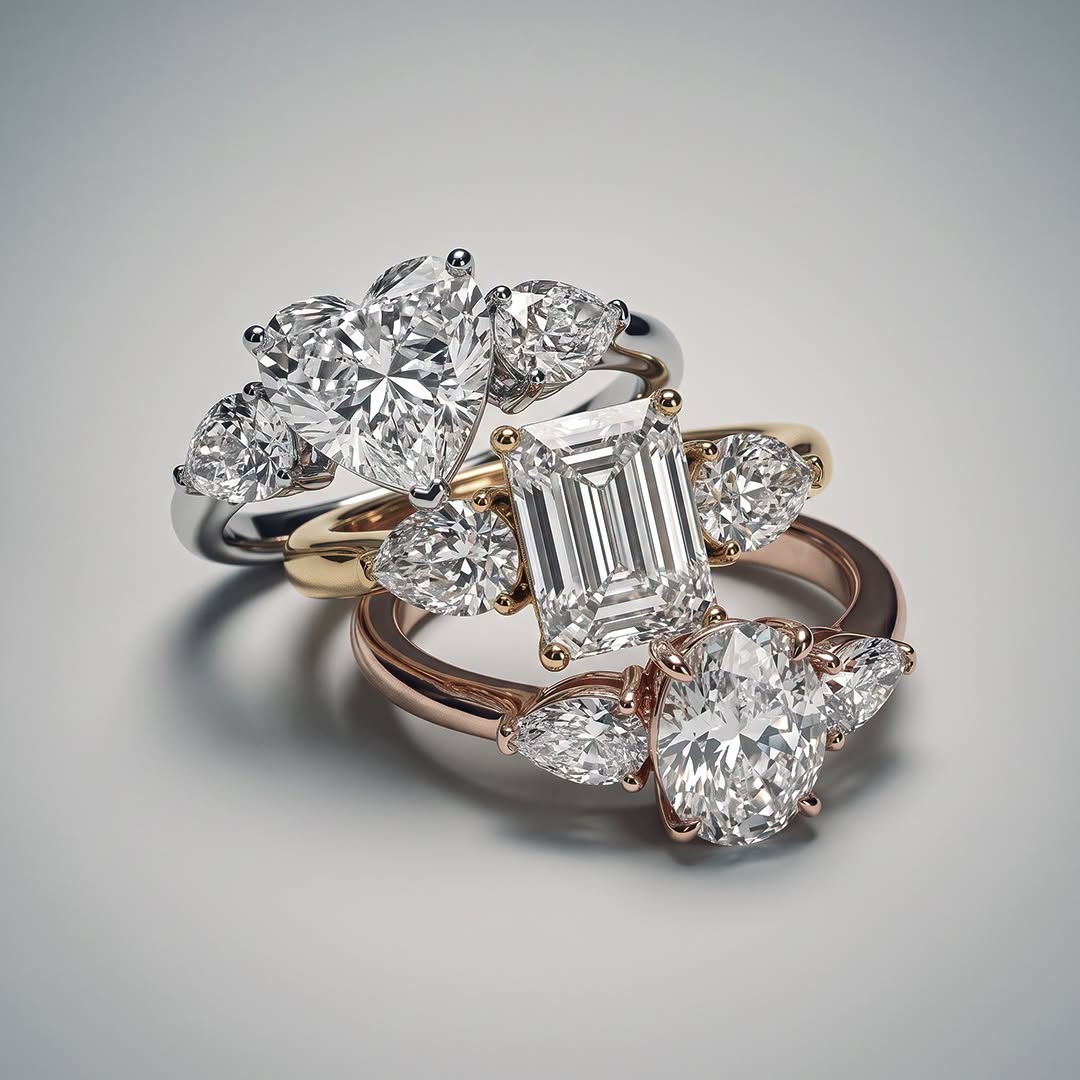
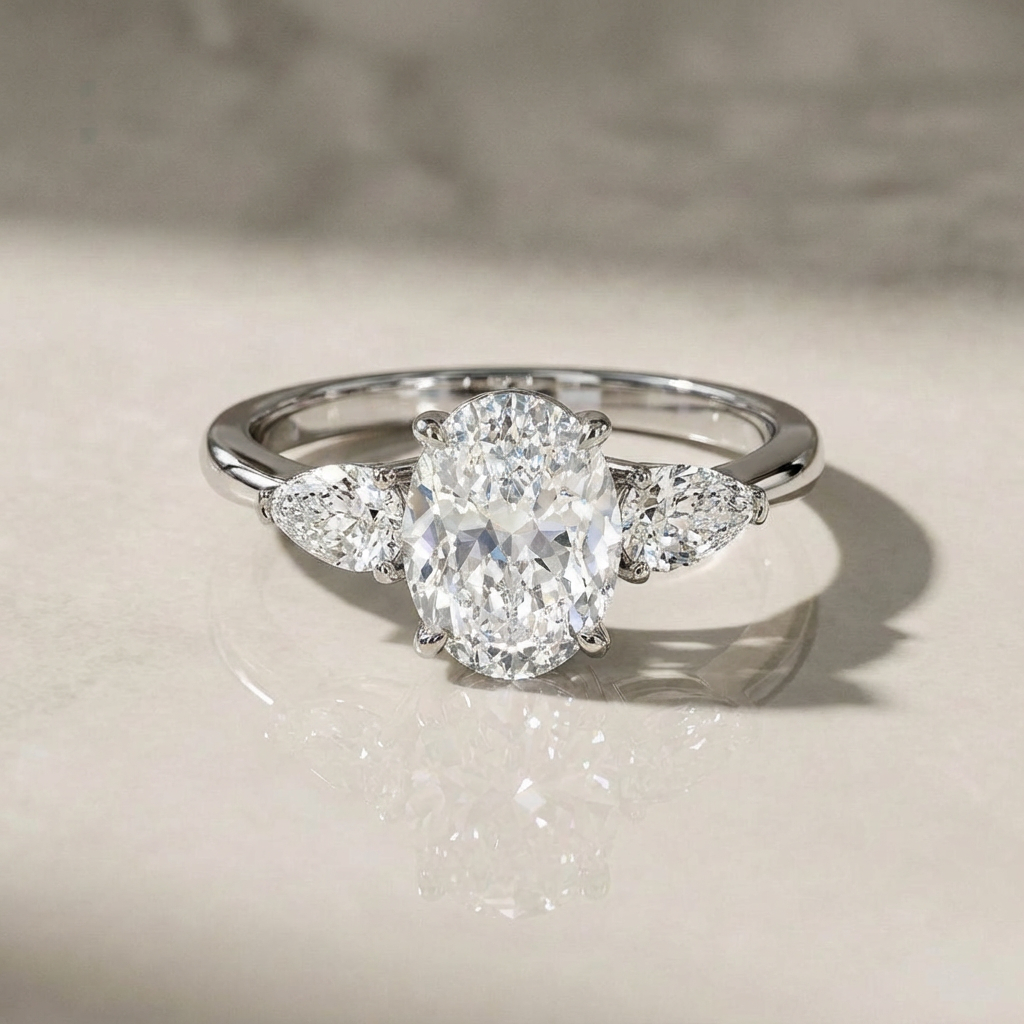
- Shape coordination over carat matching: Matching shapes creates a clean, unified look. Three rounds or three ovals usually feel the most classic and cohesive. Mixing shapes can work, but it needs intention. An oval center with pear-shaped sides often feels natural because the pears extend the visual line along your finger. An emerald cut with trapezoid sides leans into Art Deco geometry and feels structured and deliberate. The goal is simple: the combination should look designed, not assembled.
- Height alignment: All three stones should sit at the same level. If the center stone rises too high or one side sits lower than the other, the ring will look uneven from every angle. This is not a style preference, but a craftsmanship detail. Always check the ring from the side, not just from above.
- Color consistency: Color differences are easy to notice once the stones are next to each other. If your center diamond is G color and the side stones are J, the contrast can make the sides look slightly yellow in natural light. To keep the look cohesive, stay within one to two color grades across all three stones. The same idea applies to clarity, although the smaller size of the side stones makes minor differences less visible.
Shape Combinations at a Glance
Different pairings create different effects on your hand. Once you understand the pattern, you can quickly tell what a ring will look like before trying it on.
| Center Shape | Side Stone Shape | Effect |
|---|---|---|
| Round brilliant | Round | Classic, balanced, universally flattering |
| Oval | Pear (points outward) | Elongated, elegant, finger-slimming |
| Cushion | Trapezoid | Vintage structure, geometric contrast |
| Emerald cut | Baguette | Architectural, understated, Art Deco influence |
| Radiant | Half-moon | Contemporary, bold, uncommon |
| Round | Marquise (points outward) | Floral, romantic, distinctive |
Round with round sides is the safest choice. It’s the most balanced and the least likely to look off in person.
Oval with pear sides is currently the most popular combination. The outward-pointing pears extend the visual line of the ring, which naturally elongates your finger.
More unusual pairings, like radiant with half-moons, feel more intentional and design-driven. They work best when you already have a clear direction and want something less conventional.
Popular Three stone Engagement Rings
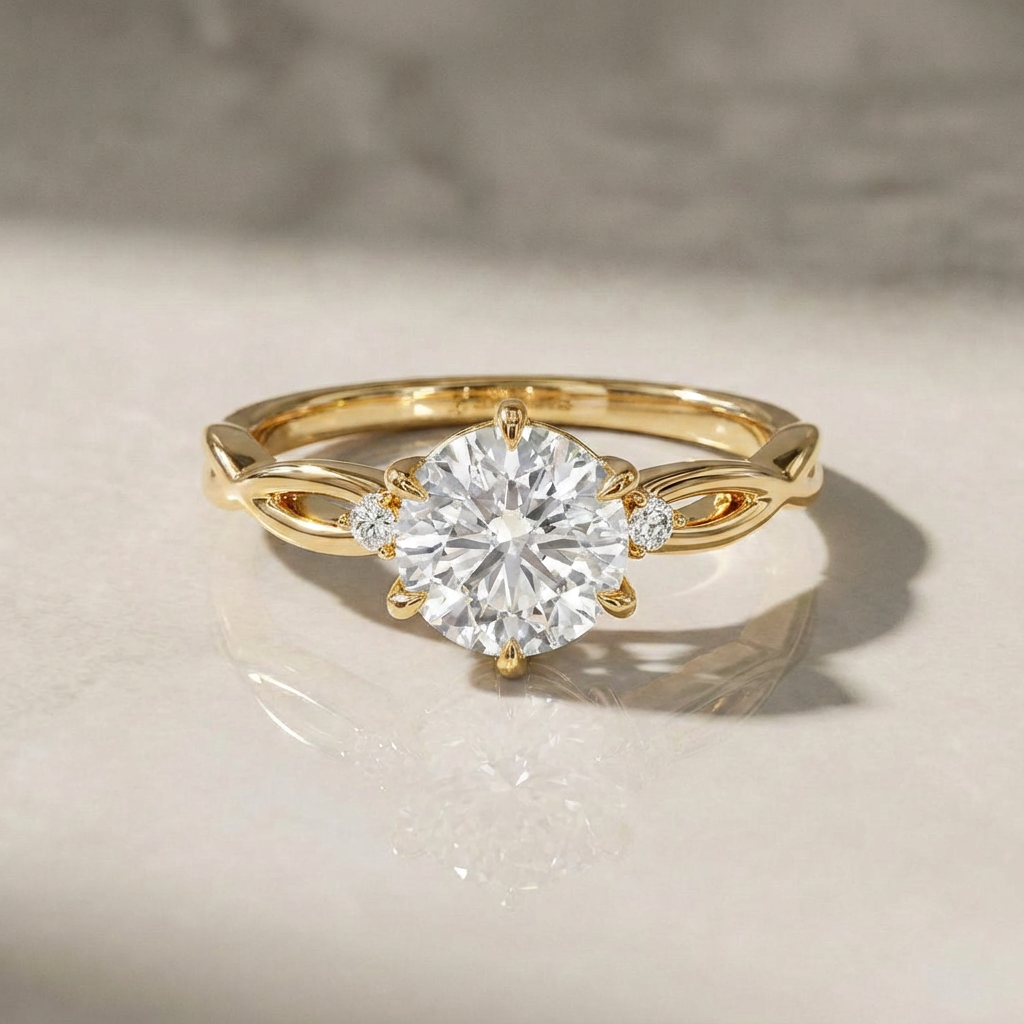
How Setting Choice Changes the Look
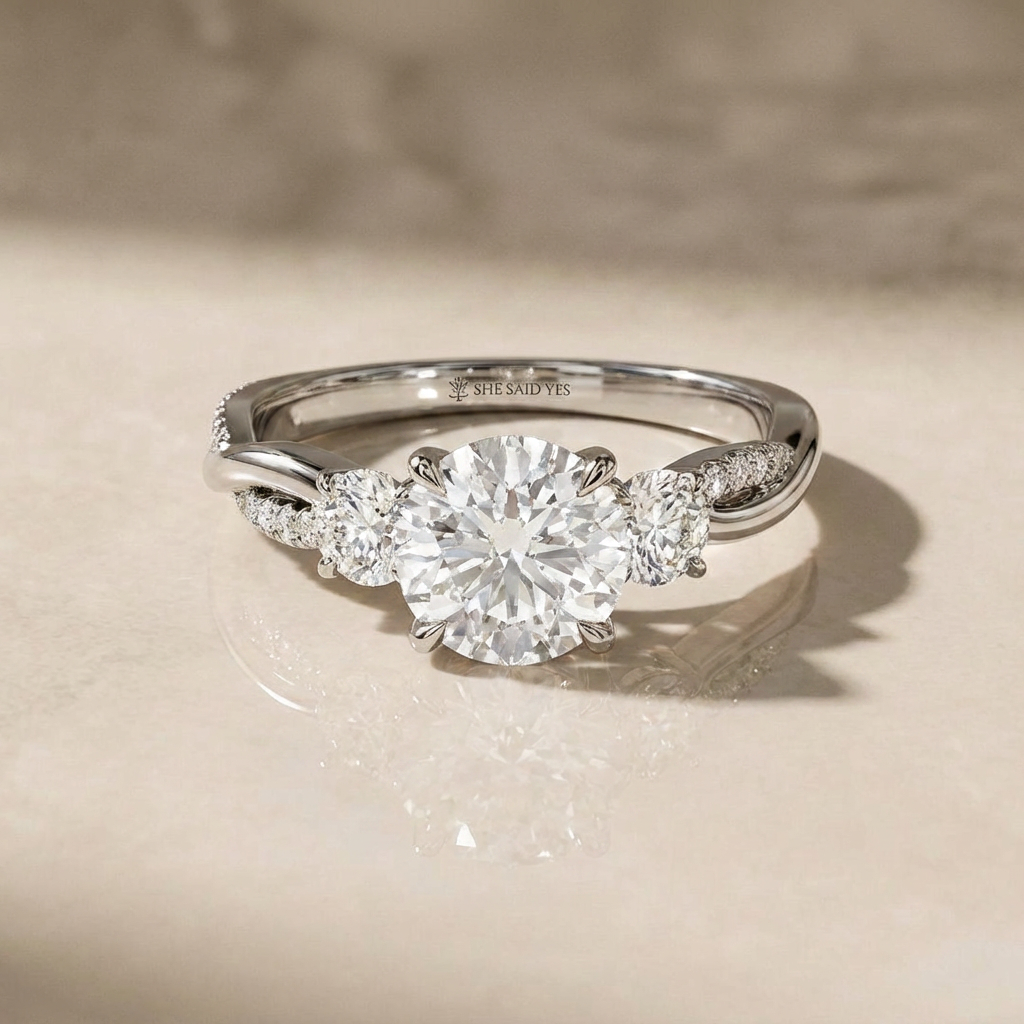
The setting changes how the three stones sit together and how you experience the ring visually. A shared prong setting places a single prong between each stone, letting them sit very close and form a continuous line of diamonds across the finger. Individual prongs give each stone its own support, creating more separation and making every stone feel distinct. A bezel setting wraps each stone in a thin metal rim for a smooth, modern look. Channel-set sides place the side stones inside a metal channel while the center stone is raised, keeping the focus on the middle. Each option changes how connected or defined the three stones feel when you look at the ring.
When you choose, think about how you want the ring to read at a glance. If you prefer a seamless, flowing look, tighter settings like shared prongs tend to feel more cohesive. If you want each stone to feel clearly defined, individual prongs work well. If you lean toward a modern, structured style, bezel or channel settings will guide the design in that direction.
What to Check Before You Buy
Five practical steps for shopping a three stone ring:
- Choose the center stone first. Its shape, size, and quality set the standard. Side stones should complement it, not compete with it.
- Check color matching in natural light. Store lighting flatters everything. Step outside or ask to view the stones near a window. Color differences that disappear under halogen can become obvious in daylight.
- Inspect the side profile. All three stones should sit level. The gallery beneath the stones should be symmetrical and clean, not rough or uneven.
- Ask for specifications on all three stones. A reputable seller provides cut, color, clarity, and carat weight for every stone, not just the center. If they can’t, ask why.
- Follow a budget split. Roughly 50-60% on the center stone, 20-30% on the side stones, 10-20% on setting and metal. If the center takes much more than 60%, the side stones start to look like an afterthought.
Other Moments Worth a Three Stone Ring
The trilogy ring isn’t limited to engagement rings.
Anniversaries. A three stone ring given on a milestone anniversary recognizes the years that have passed and the years ahead. Some couples upgrade from a simpler engagement ring to a three stone design at a significant anniversary.
Push presents. The three stones can represent the parents’ history, the new child, and the family’s future together.
Vow renewals. Exchanging three stone rings during a renewal adds another layer: the original commitment, the marriage lived, and the promise renewed.
Every relationship has a past, a present, and a future. A well-chosen three stone engagement ring puts all three where you can see them.
Frequently Asked Questions
Do all three stones need to be diamonds?
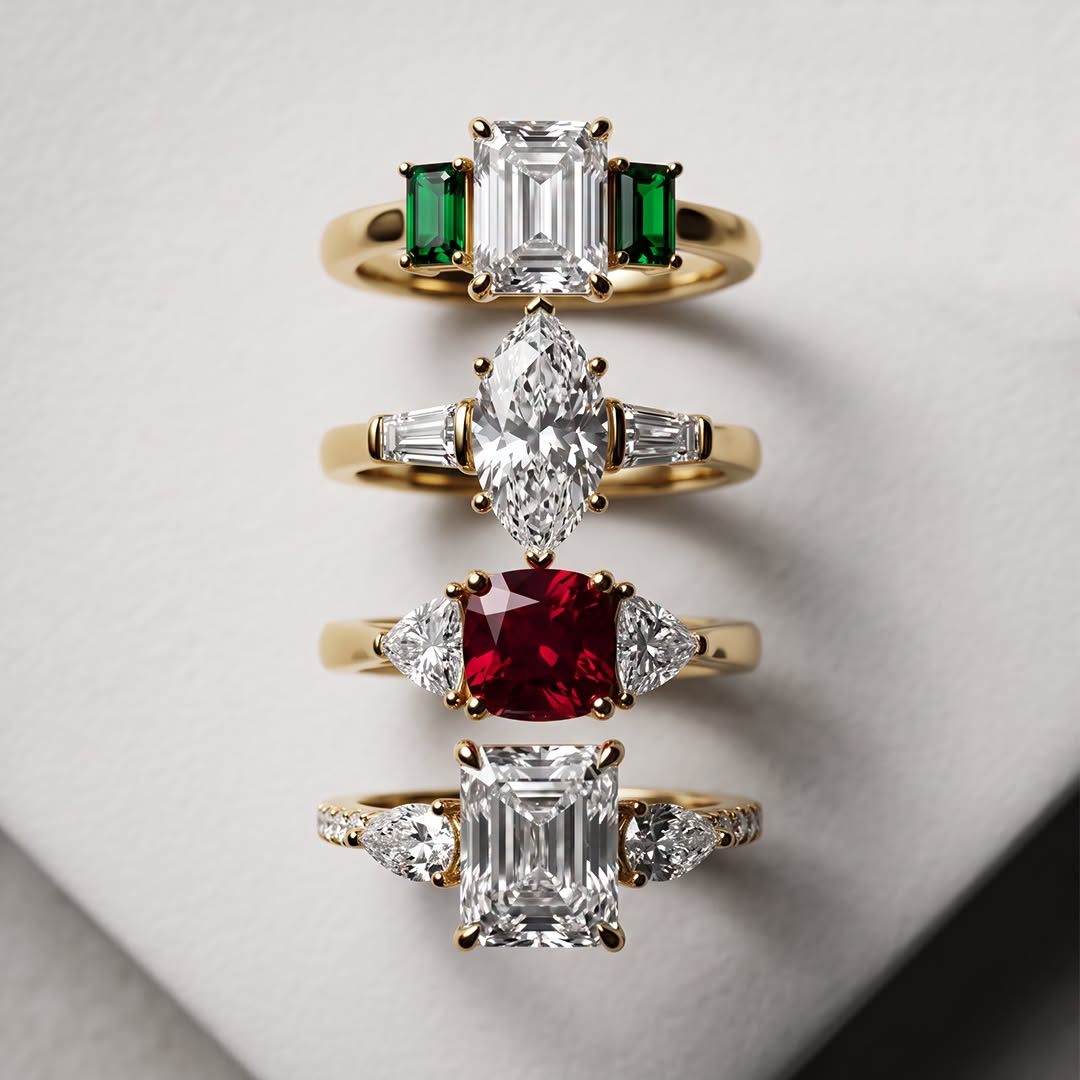
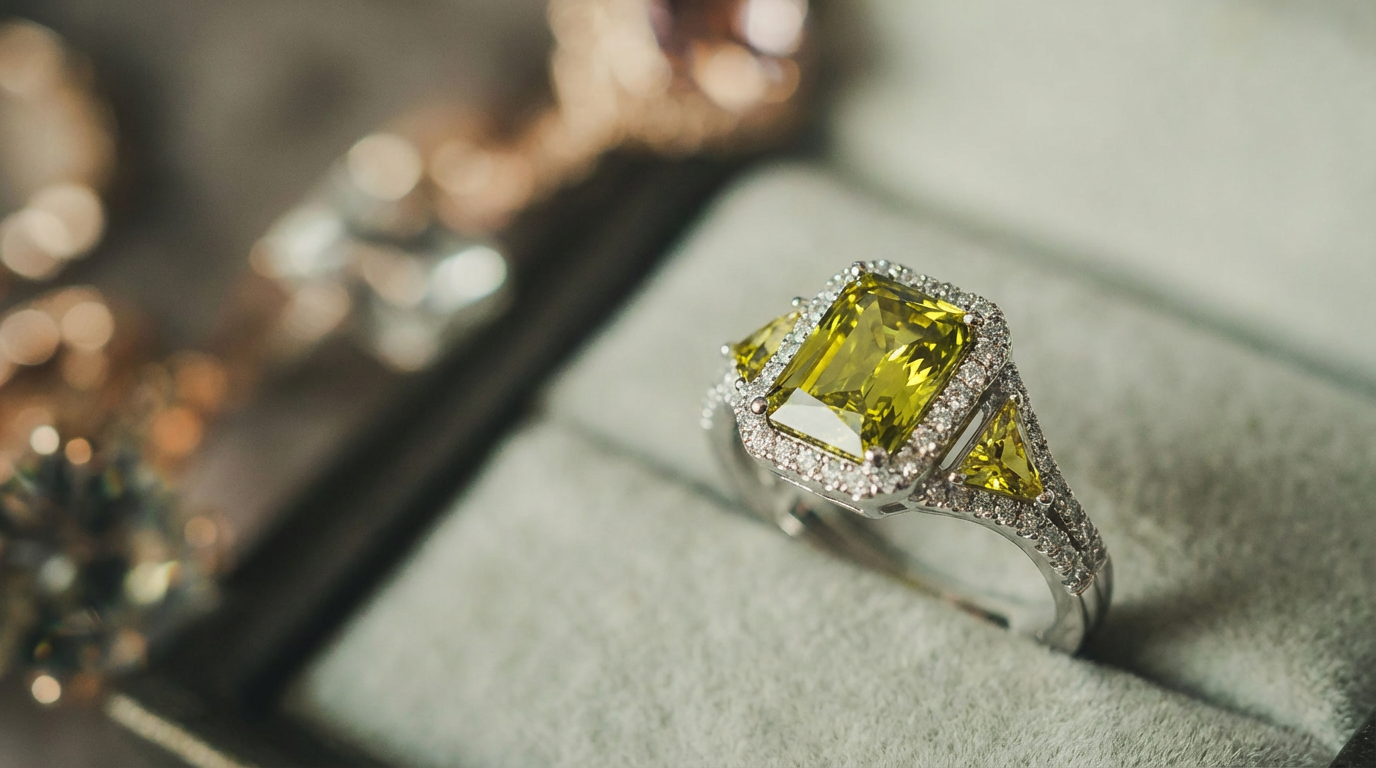
No. A diamond center with sapphire, ruby, or emerald sides is common. Some designs use three colored gemstones with no diamonds at all.
Is a three stone ring more expensive than a solitaire?
It depends. Three small stones can cost less than one large stone of equivalent total weight. But three high-quality stones at meaningful sizes cost more. Budget allocation matters more than total spend.
What does it mean when worn on the right hand?
A three stone ring on the right hand typically marks a personal milestone rather than an engagement: an anniversary gift, a self-purchase, or a celebration that isn’t romantic.
Can the side stones be different sizes?
Yes, but asymmetric three stone rings are harder to design well. Visible size differences between the side stones can make the ring look lopsided. If you want asymmetry, work with an experienced jeweler who can make it look intentional.
Are three stone rings harder to maintain?
Slightly. More stones mean more prongs or bezel edges to check. Shared prong settings need particular attention because one loose prong can affect two stones. Have a jeweler inspect the setting every 6 to 12 months.