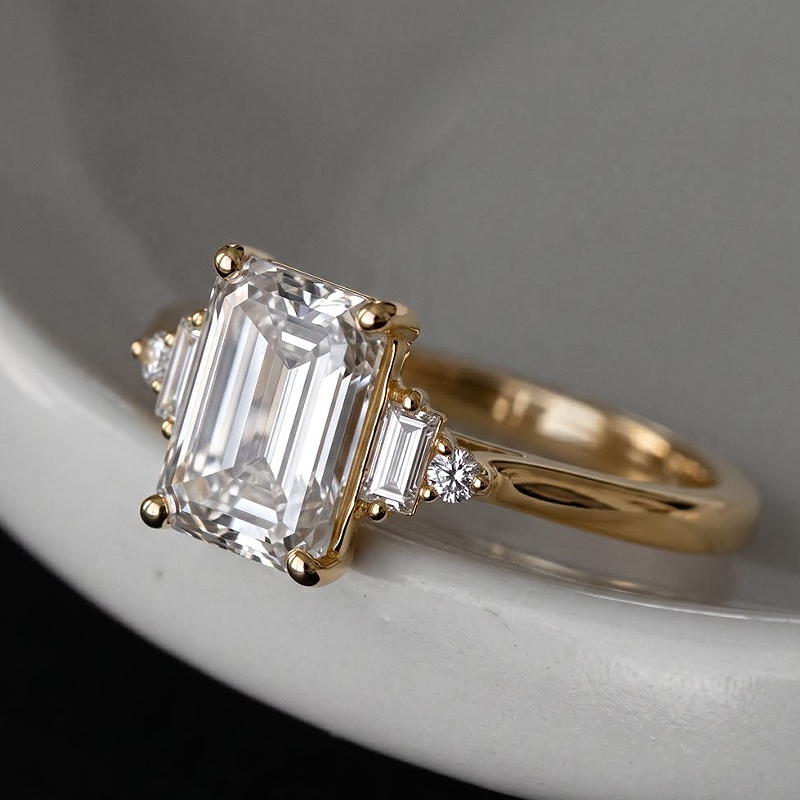
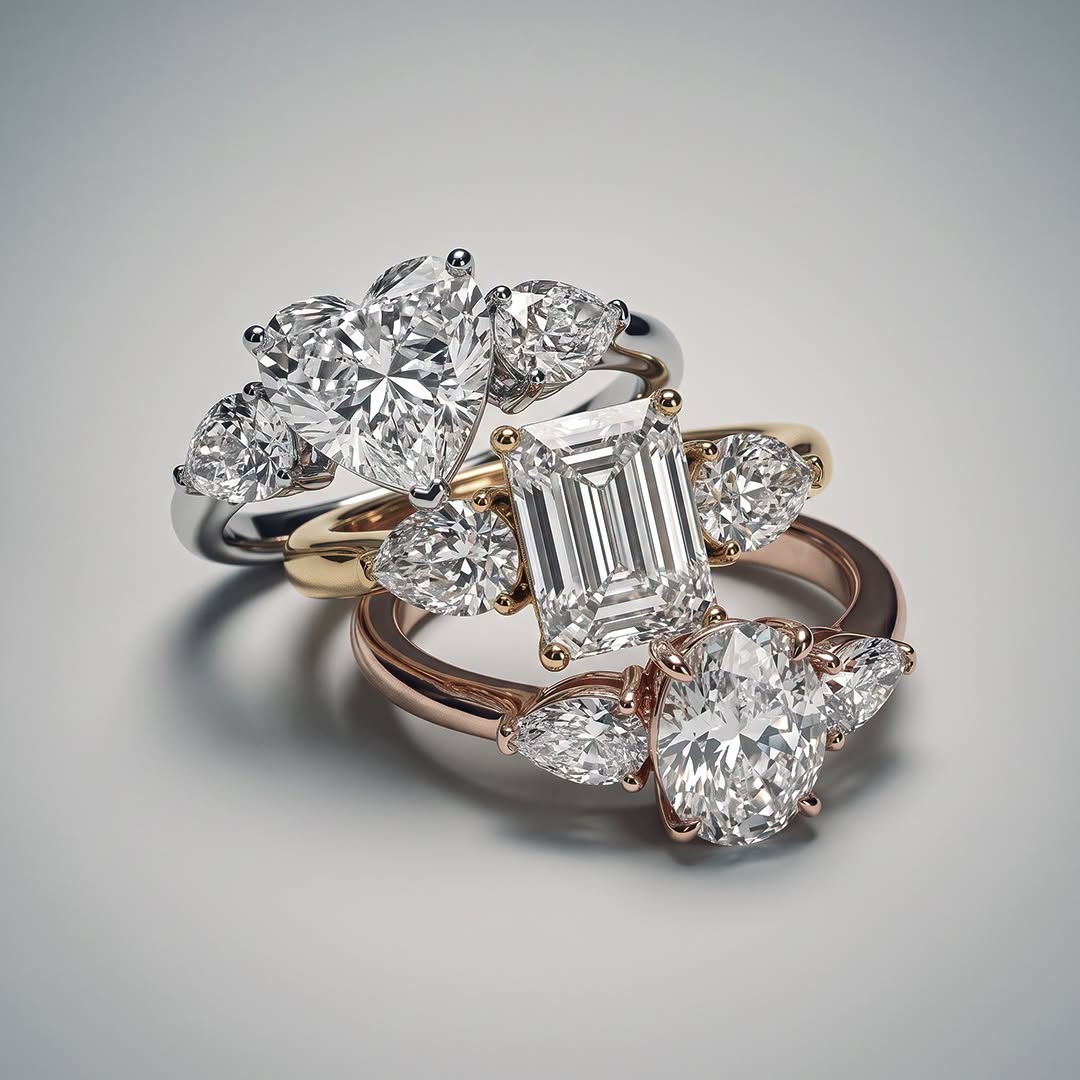
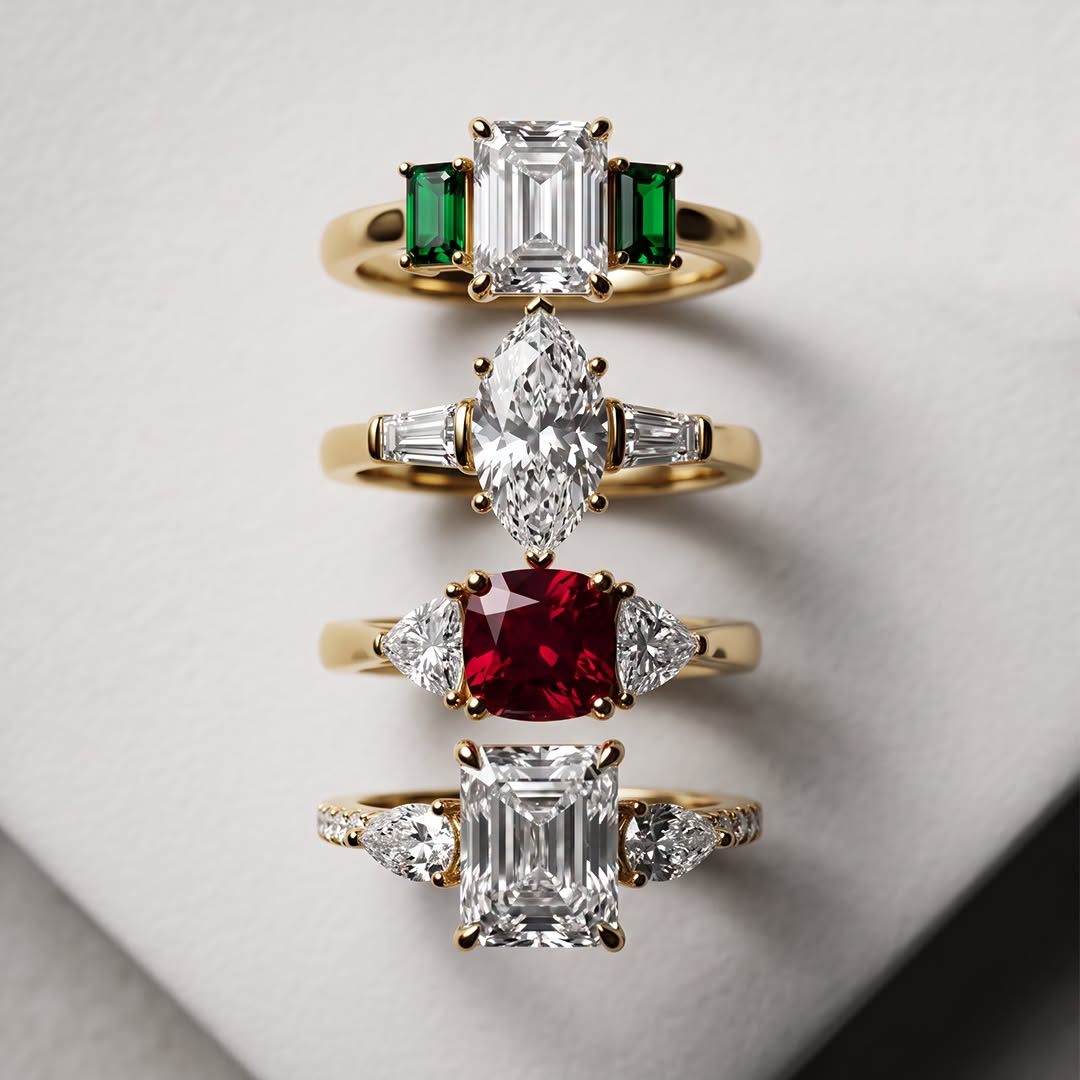
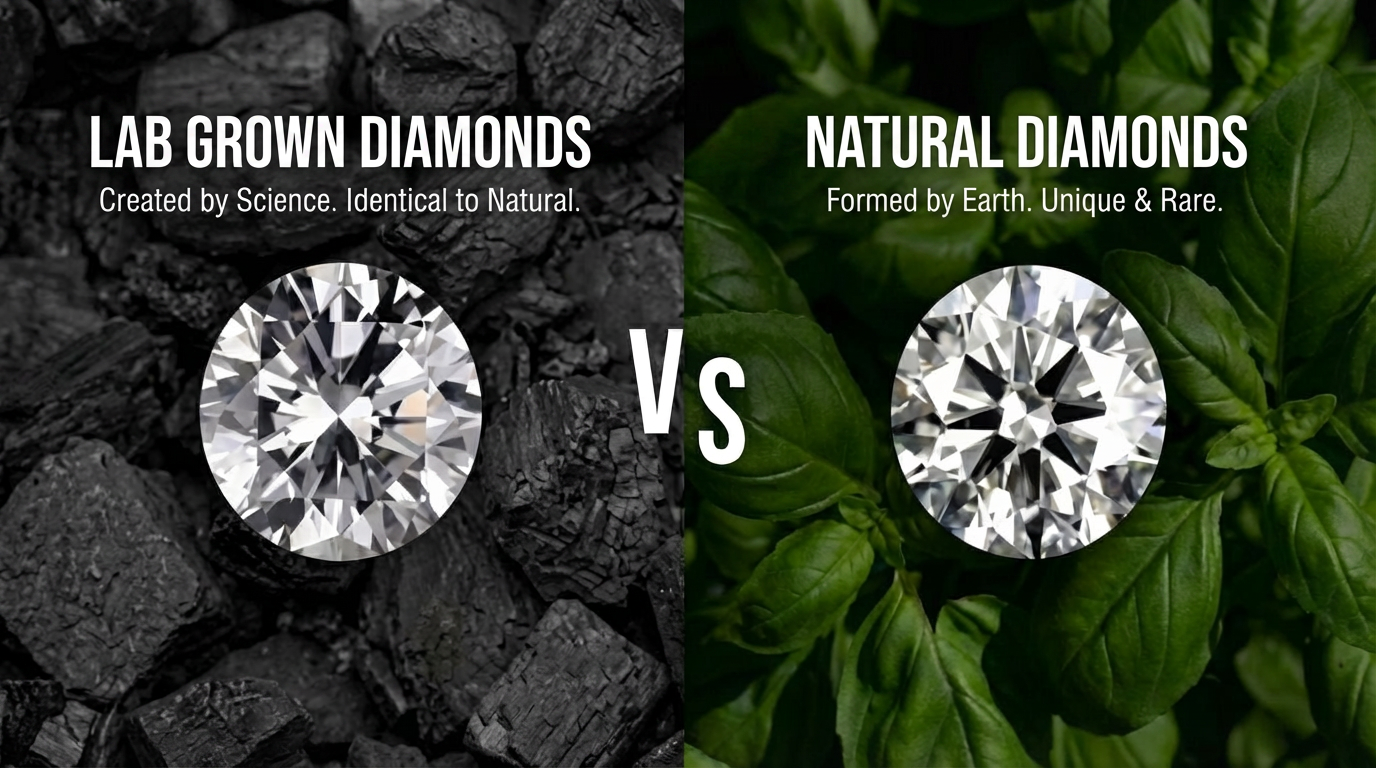
Lab-grown diamonds or natural diamonds? When you choose an engagement ring, this question may puzzle you. Price is usually the first factor that influences your decision. While both options are real diamonds with identical physical, chemical, and optical properties, their pricing structures are fundamentally different, especially when broken down by carat weight. In our guide, we will break down why these price differences exist, how carat weight plays a role, and what this choice means for your wallet and your future.
Why Carat Weight Changes the Price So Much
When it comes to diamonds, the relationship between size (carat weight) and price isn’t a straight line—it’s an exponential curve. This is particularly true for natural diamonds, but it affects the lab-grown market as well, albeit less dramatically.
The Rarity Factor
In nature, small diamonds are relatively common. However, as diamonds get larger, they become exponentially rarer. It is significantly harder to find a clean, high-quality 2-carat rough stone in a mine than it is to find two 1-carat stones. Because of this rarity, the price “jumps” at certain weight thresholds (like 1.0ct, 1.5ct, and 2.0ct).
The Exponential Leap
If a 1-carat natural diamond costs $6,000, you might logically assume a 2-carat diamond would cost $12,000. In reality, that 2-carat stone could cost $20,000 or more. This is known as “step pricing.”
In the lab-grown world, weight still increases price because larger crystals take longer to “grow” in the plasma reactor and require more machine time. However, because lab-grown diamonds aren’t bound by the “rarity of nature,” the price jumps between carats are much shallower. This allows buyers to move from a 1-carat to a 2-carat stone for a fraction of the additional cost compared to natural stones.
Price Comparison by Carat (U.S. Market Overview)
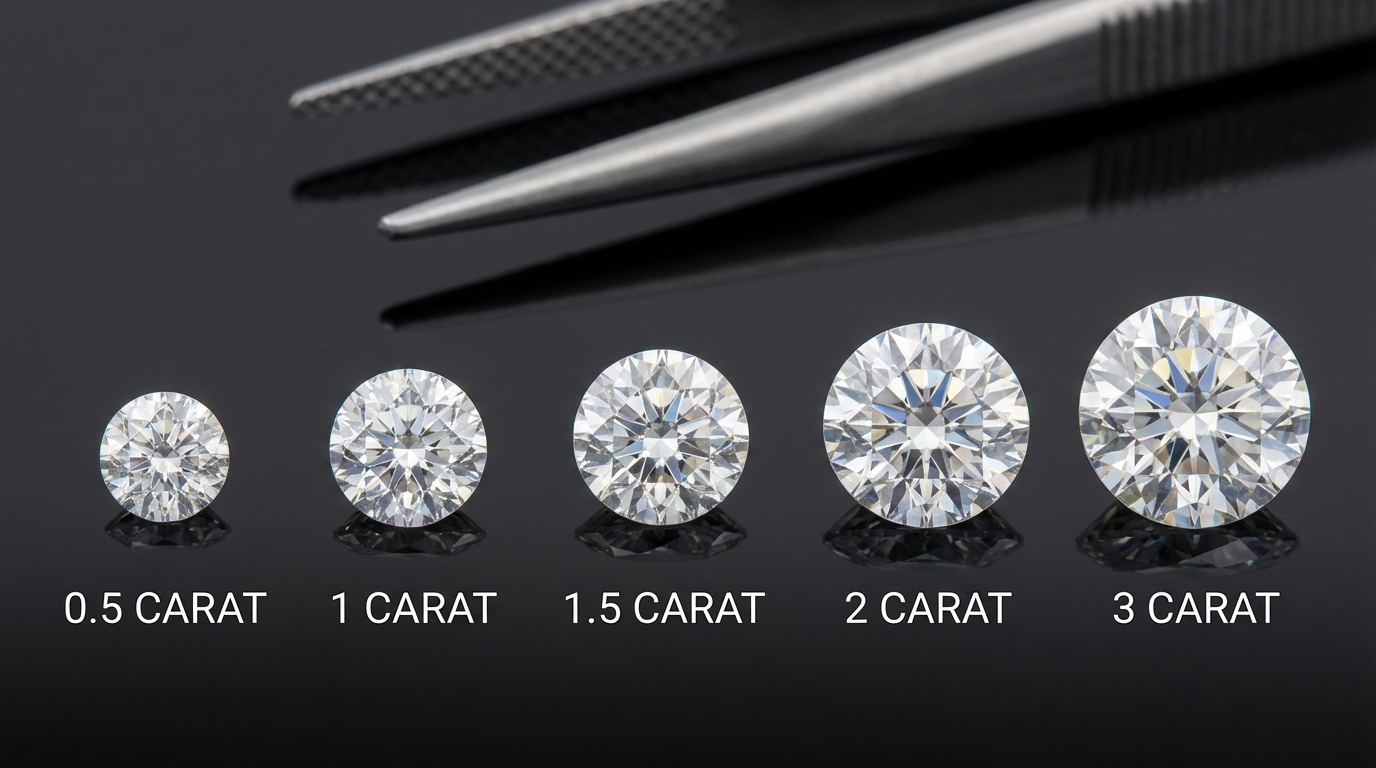
To visualize the massive gap in pricing, let’s look at the current U.S. market trends. The following table compares high-quality (typically G color, VS1 clarity, Excellent cut) round brilliant diamonds.
| Carat Weight | Natural Diamond Price (Est. Range) | Lab-Grown Diamond Price (Est. Range) | Price Difference (Approx.) |
|---|---|---|---|
| 0.50 Carat | $1,500 – $2,500 | $300 – $500 | ~80% Less |
| 1.00 Carat | $5,000 – $8,500 | $800 – $1,200 | ~85% Less |
| 1.50 Carat | $9,000 – $15,000 | $1,200 – $1,800 | ~88% Less |
| 2.00 Carat | $16,000 – $25,000 | $1,500 – $2,500 | ~90% Less |
| 3.00 Carat | $35,000 – $55,000 | $2,500 – $4,500 | ~92% Less |
Note: Prices are estimates based on 2024 market averages and are subject to change based on specific diamond grading (Color, Clarity, Cut) and retailer margins.
As the table illustrates, the “savings gap” widens as the carat weight increases. While a 1-carat lab diamond saves you a few thousand dollars, a 3-carat lab diamond can save you the price of a luxury vehicle.
Why Lab-Grown Diamonds Are Cheaper Than Natural Diamonds
A common misconception is that lab-grown diamonds are cheaper because they are “fake” or made of plastic. This is false. Lab diamonds are pure carbon, just like natural ones. The price difference is driven entirely by supply chain logistics, production costs, and market scarcity.
- No Mining Costs: Natural diamonds require massive infrastructure. To find a single carat of gem-quality natural diamond, miners must move hundreds of tons of earth. This involves heavy machinery, thousands of laborers, land leases, and complex environmental restoration projects. Lab diamonds, conversely, are grown in controlled laboratory environments using either High Pressure High Temperature (HPHT) or Chemical Vapor Deposition (CVD) methods.
- A Shorter Supply Chain: A natural diamond travels a long road: Mine -> Rough Sorter -> Cutter -> Wholesaler -> Jewelry Manufacturer -> Retailer. Each “hand” that touches the diamond adds a margin. Lab-grown diamonds have a much more vertical supply chain. Often, the facility that grows the diamond also cuts it and sells it directly to the retailer or consumer, removing several layers of markup.
- Technological Advancement: Like all technology, the cost of producing lab diamonds has plummeted as the science has improved. Ten years ago, lab diamonds were only marginally cheaper than natural ones. Today, the efficiency of reactors and the “yield” of high-quality crystals have reached a point where mass production is possible, driving prices down for the end consumer.
- Infinite Supply vs. Finite Supply: Natural diamonds are a finite resource. There hasn’t been a major new diamond mine discovered in decades. Lab-grown diamonds, however, have a potentially infinite supply. As long as there is electricity and carbon, we can create more. In economics, when supply is not capped by rarity, the price inevitably stays lower.
What This Means for You as a Buyer
The price difference between lab and natural diamonds presents a unique “problem” for modern buyers: Do you want a larger, more perfect stone for less money, or a rarer, more expensive stone that holds a different kind of value?
The “Bigger Bang for Your Buck” Factor
For the average couple, lab-grown diamonds offer a level of luxury that was previously unattainable. You can walk into a jewelry store with a $3,000 budget and walk out with a stunning, high-quality 2-carat ring. If you chose natural with that same budget, you might be looking at a 0.50-carat stone with visible inclusions.
Ethical and Emotional Value
Some buyers find “value” in the billion-year history of a natural stone—the idea that it is a piece of the earth’s ancient past. Others find value in the “clean” origin of a lab stone, free from the historical baggage of the mining industry. Your personal values will dictate which “price” is worth paying
Conclusion
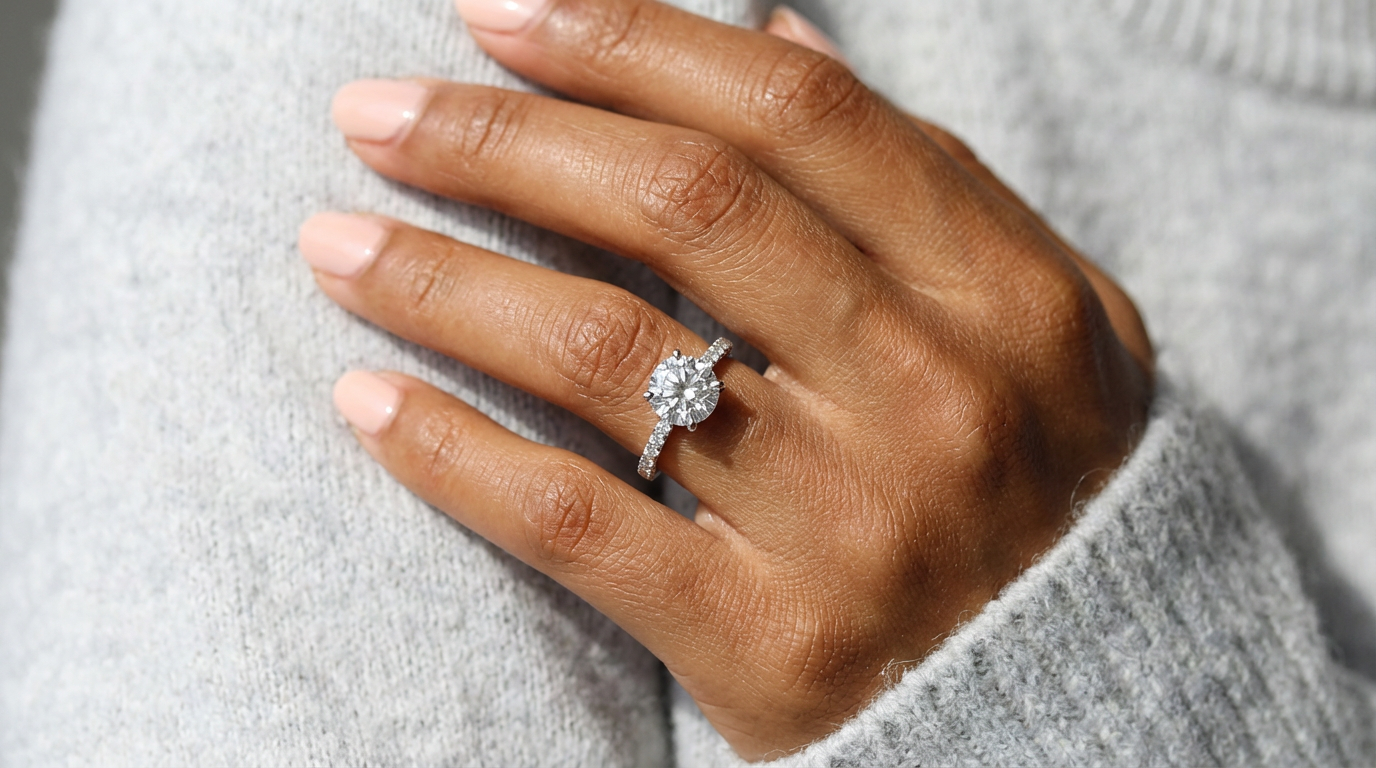
Lab-grown diamond pricing gives you more freedom to choose a engagement ring that truly fits your expectations without putting pressure on your budget. When you make your decision, it becomes less about following tradition and more about what feels right for you, and that is often where the real meaning comes from.
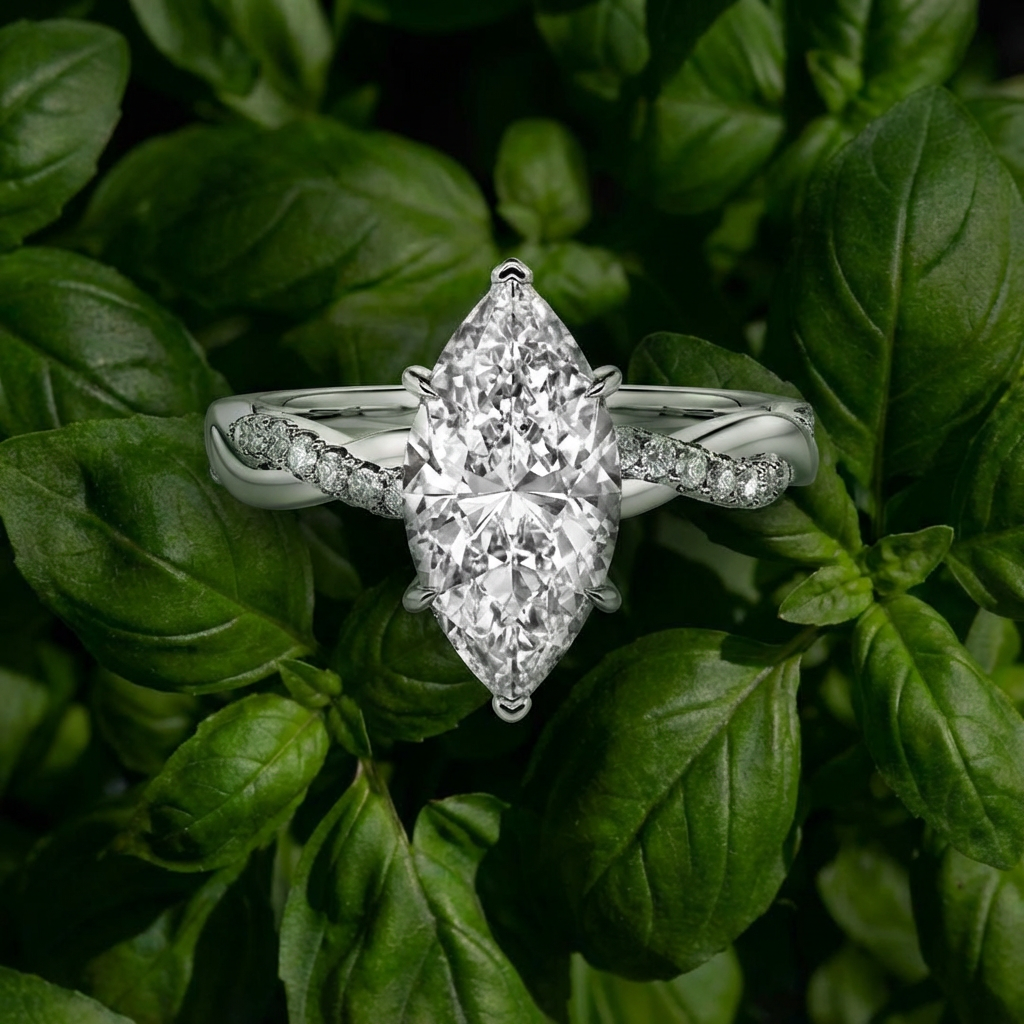
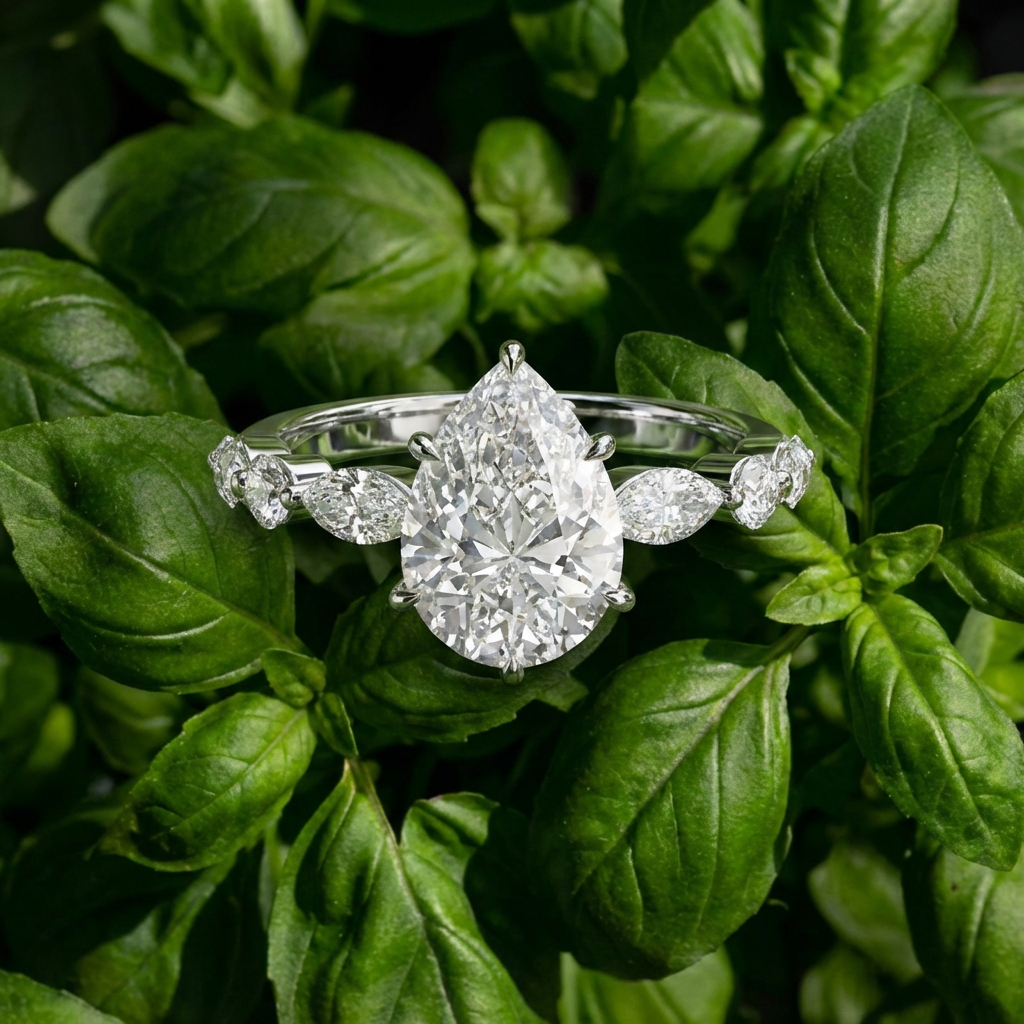
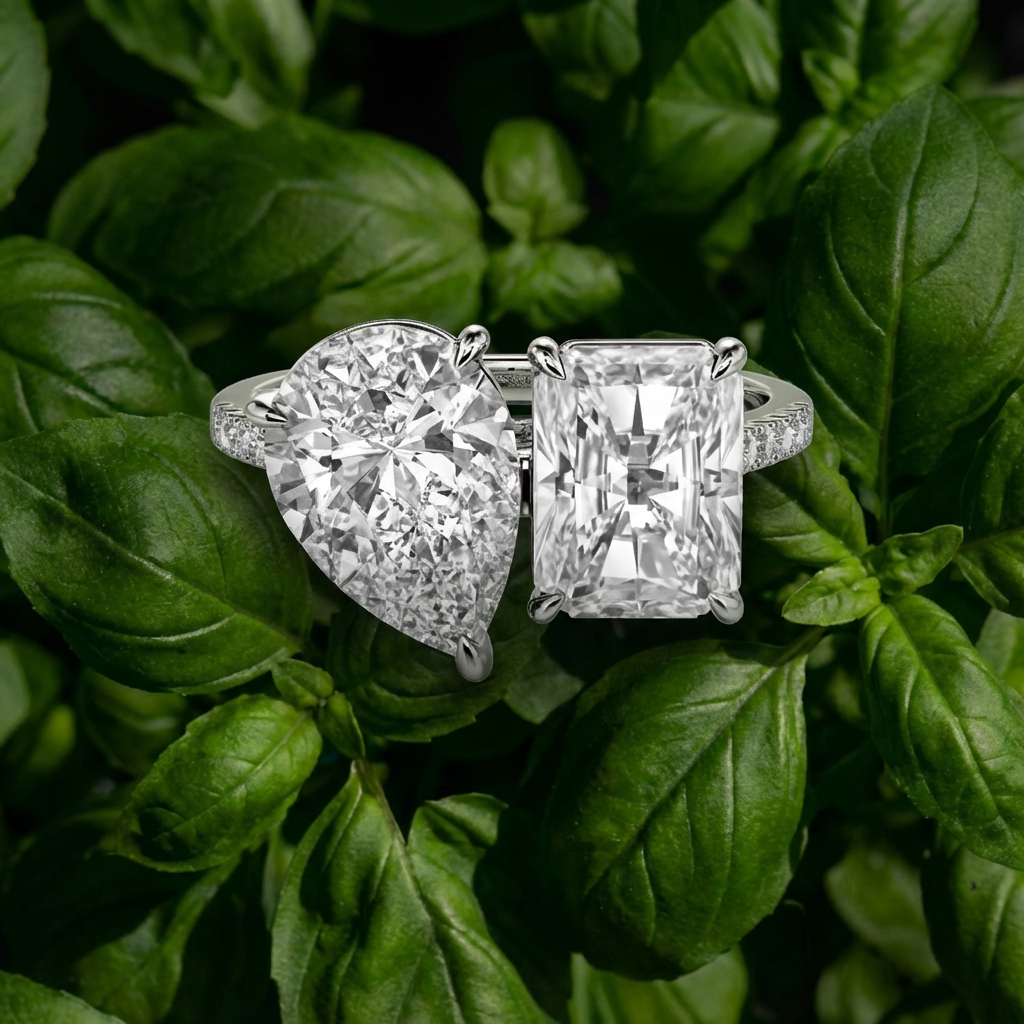
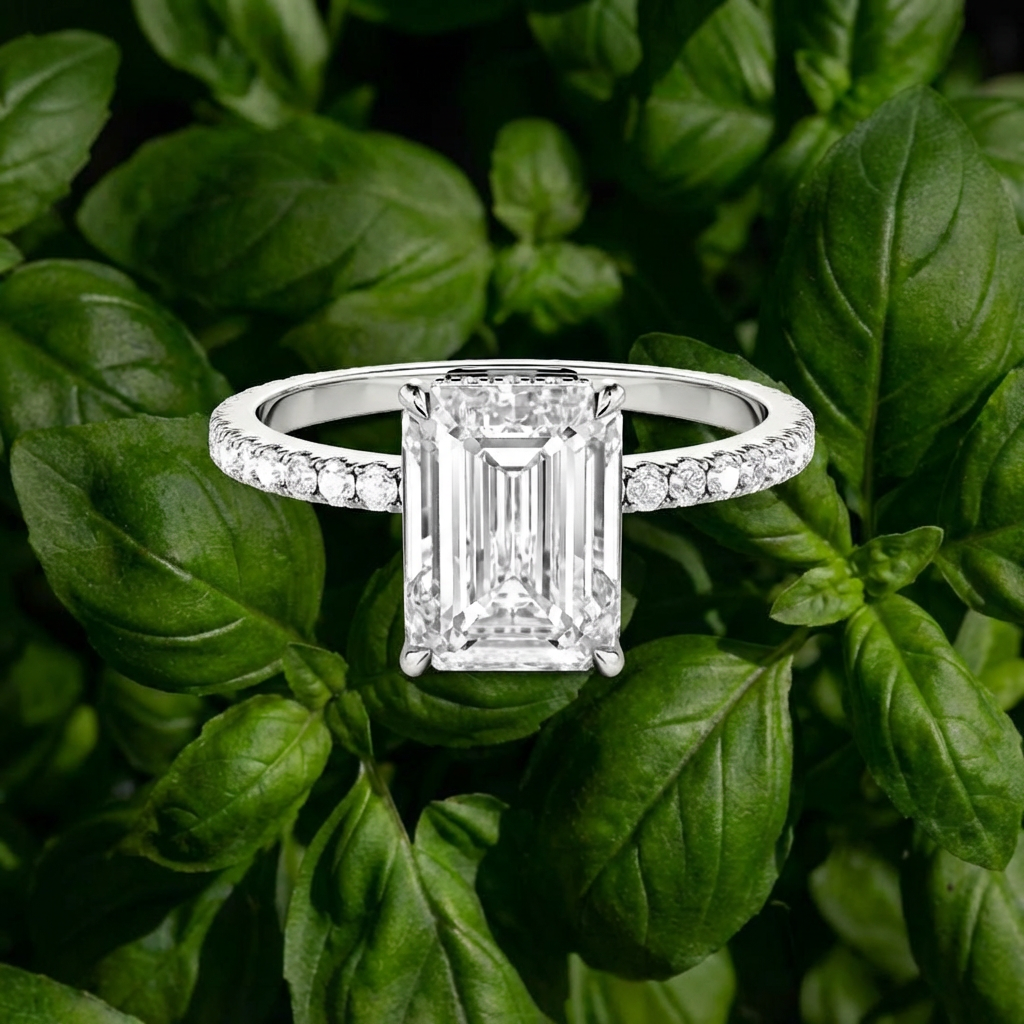
Popular Lab-Grown Engagement Rings
FAQ
How to tell the difference between a lab-grown and a natural diamond?
You cannot reliably tell the difference with the naked eye. Lab-grown and natural diamonds look identical in brilliance and structure.The most reliable method is to check a certified grading report from labs like GIA or IGI, which clearly states the origin.
Are lab-grown diamonds really diamonds?
Yes, lab-grown diamonds are real diamonds. lab-grown diamonds have the same hardness, brilliance, and durability as natural diamonds. They are also graded by the same standards and certified by recognized gemological laboratories.
Is a lab grown diamond the same as cubic zirconia or moissanite?
No. Cubic zirconia and moissanite are diamond simulants with different chemical compositions. Lab grown diamonds are actual diamonds — pure crystallized carbon.
Can you wear lab-grown diamonds every day?
Yes, you can wear lab-grown diamonds every day. They have the same hardness and durability as natural diamonds, ranking 10 on the Mohs scale, which makes them highly resistant to scratching and suitable for daily wear.