You know that feeling when you’re shopping for something meaningful and suddenly every option looks the same? That’s where most people land when they start looking at eternity rings. Open any guide and you’ll get a wall of information — stone grades, metal comparisons, setting terminology — most of which tells you what exists but not what actually helps you pick the right one.
So instead of giving you everything, let’s walk through the seven questions that narrow it down. Answer these honestly, and you’ll know exactly what you’re looking for.
1. What Exactly Is an Eternity Ring — And Why Does It Matter?
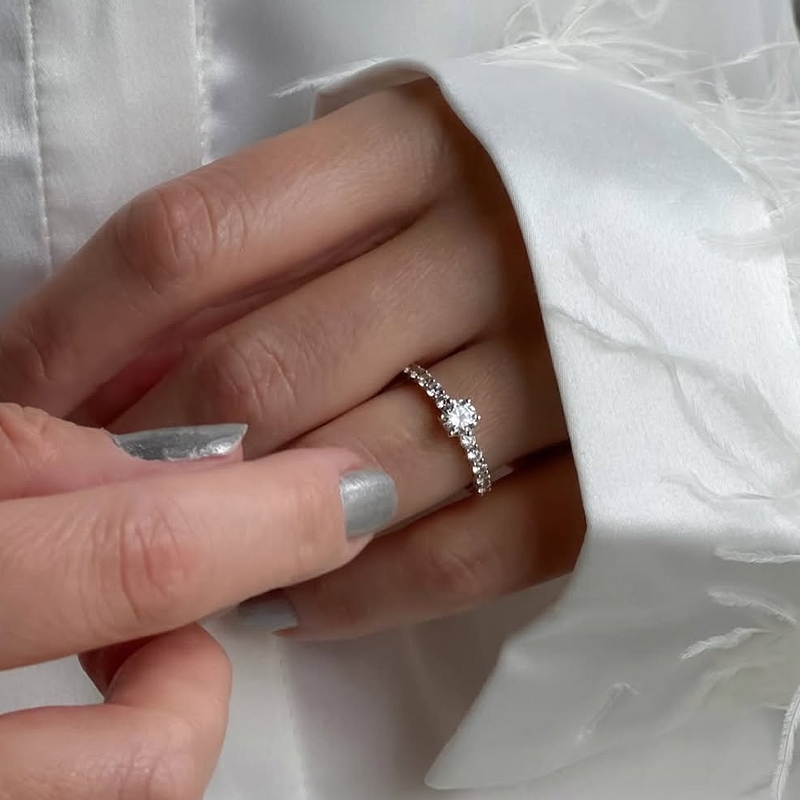
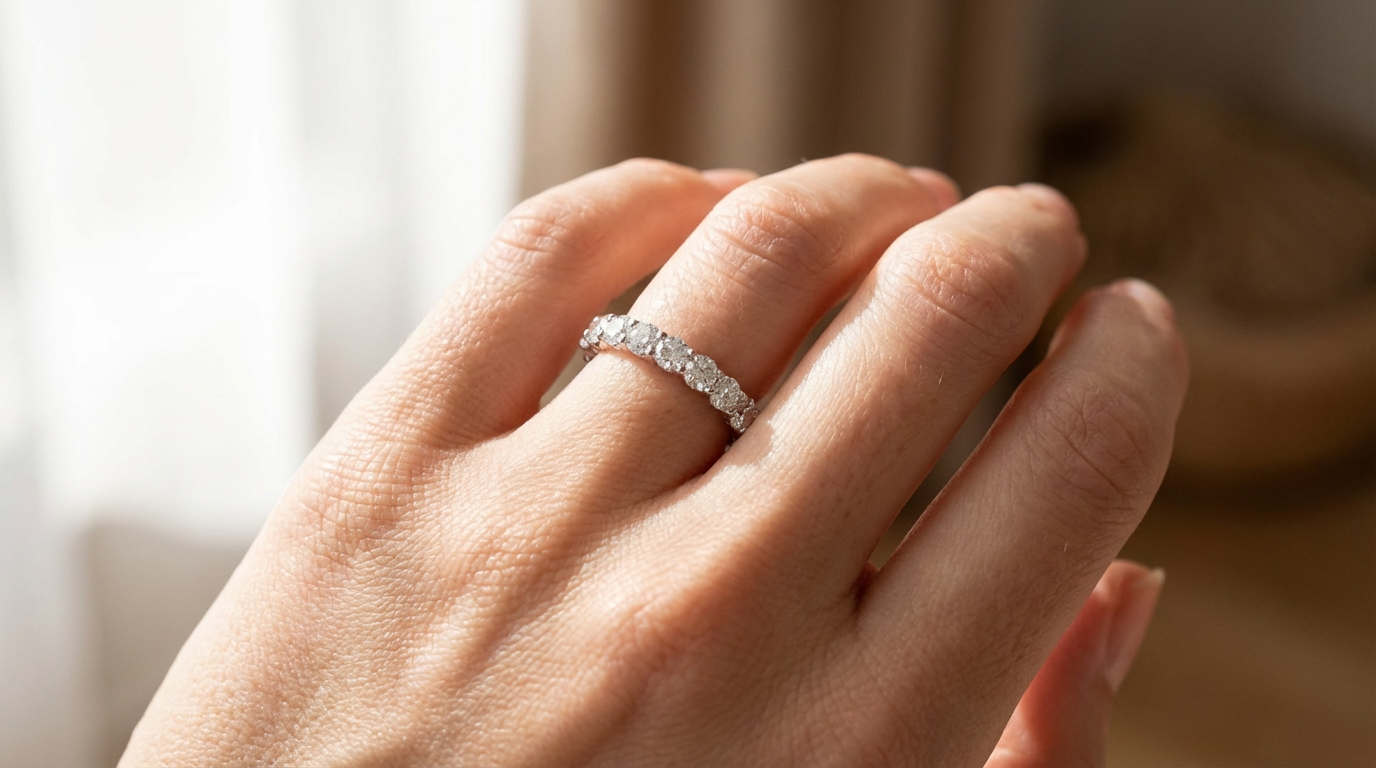
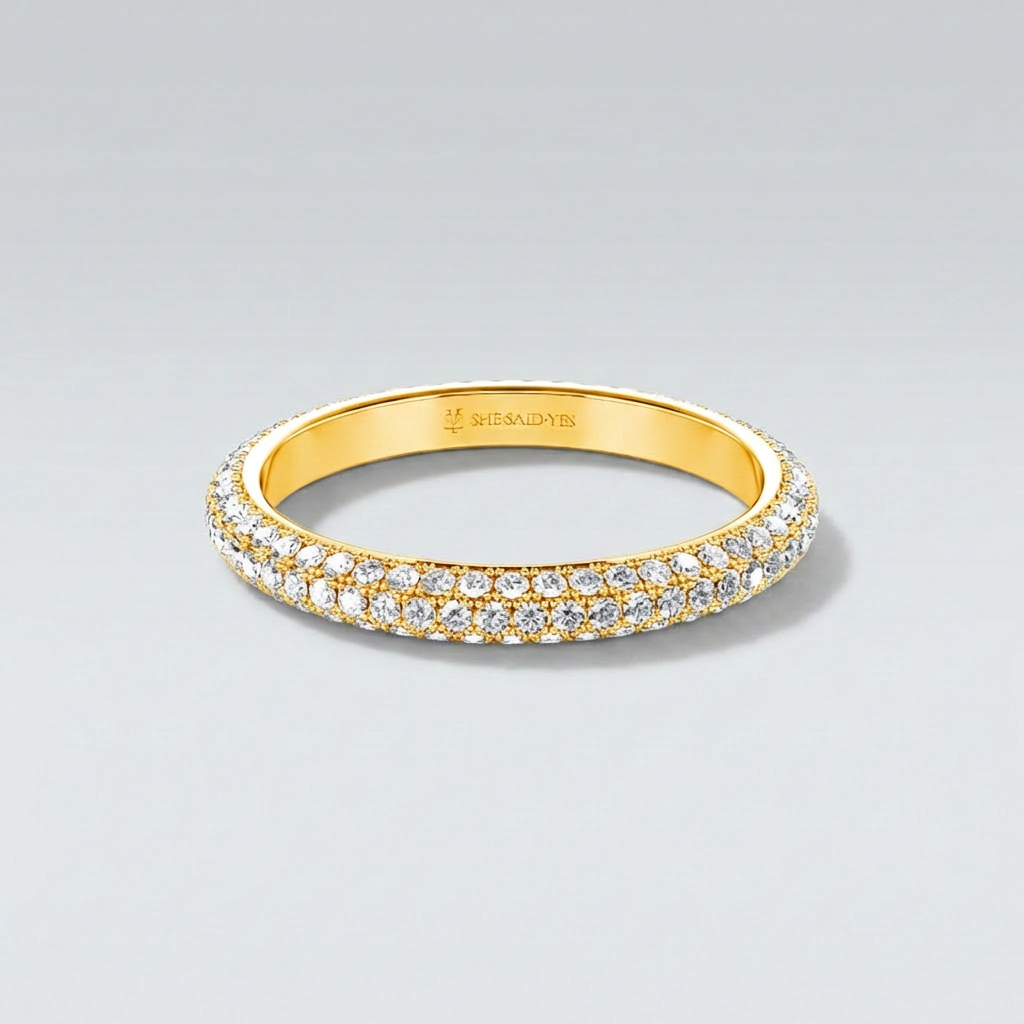
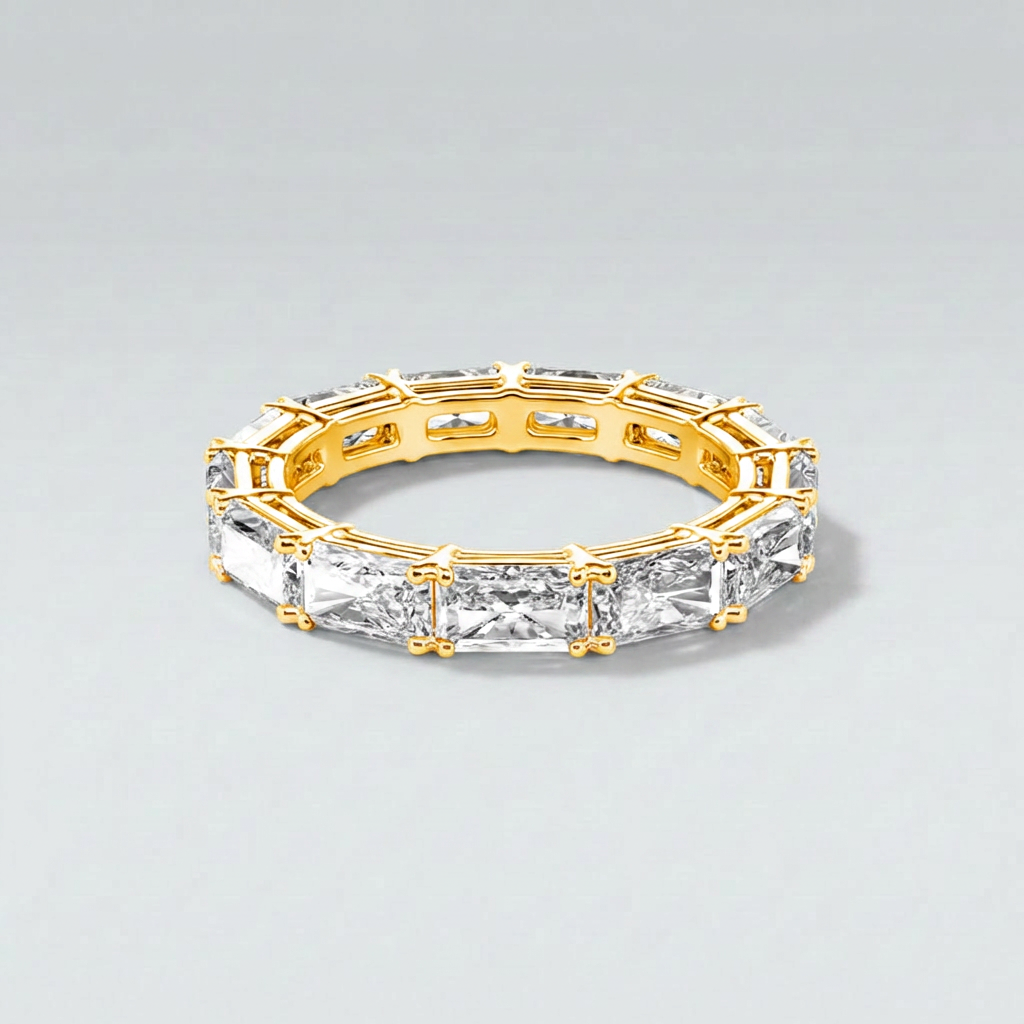
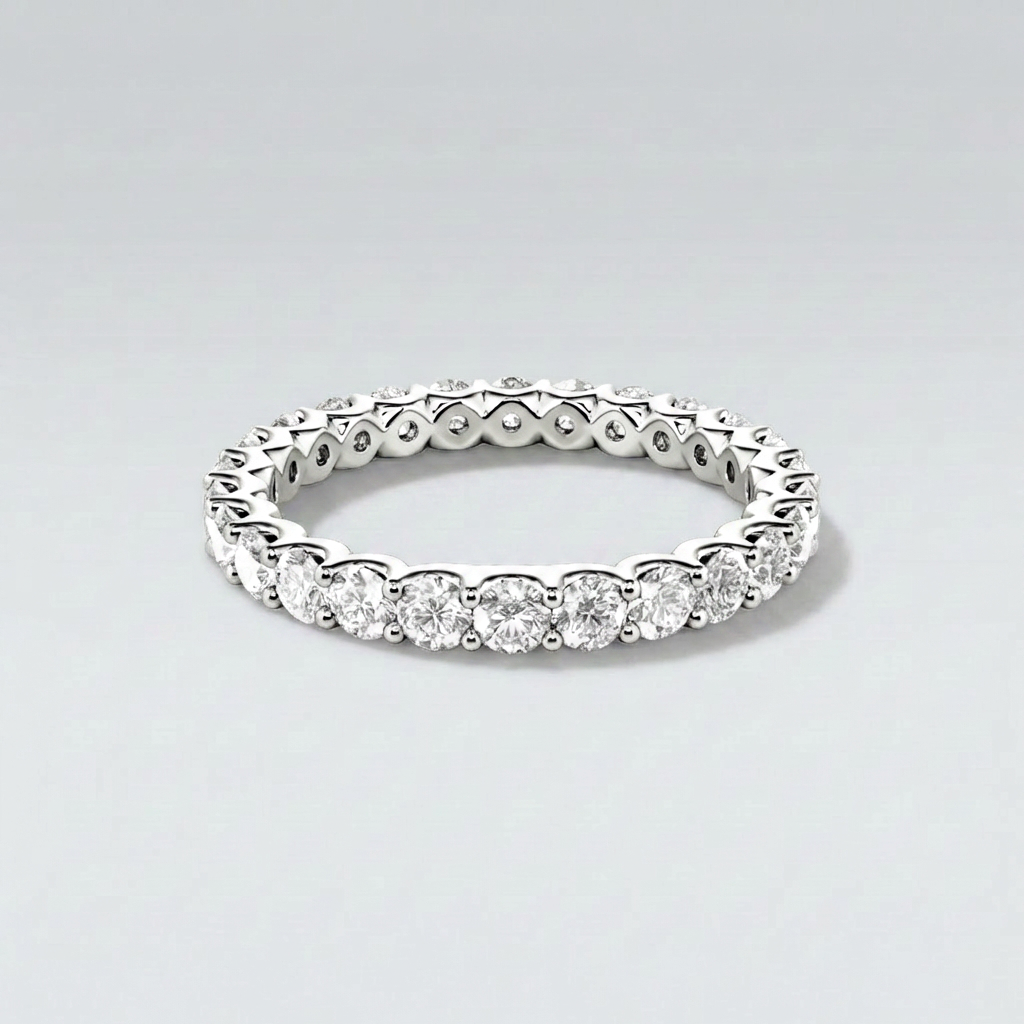
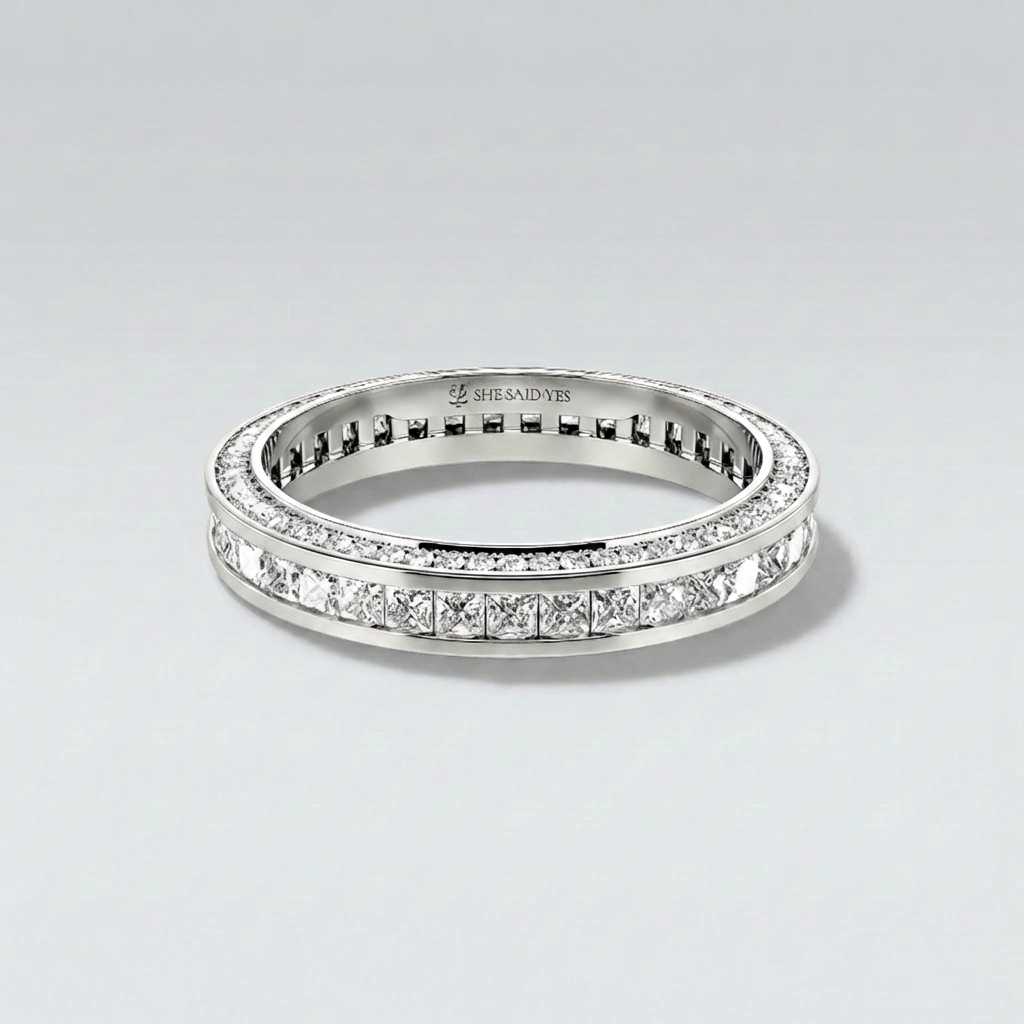
An eternity ring is a band with gemstones — usually diamonds, moissanite, or colored stones — set in an unbroken circle around the finger. Every stone sits side by side, forming a complete loop with no gaps.
That continuous circle is the entire point. It’s not just decorative. It represents something: every stone a moment you’ve shared, the unbroken loop meaning your story doesn’t have an endpoint.
If an engagement ring says “I want to build a life with you” and a wedding band says “I’m committing to that life right now,” an eternity ring says something quieter and more confident: “After everything, I’d still choose you.” It arrives after the milestones — or in the middle of them — as a confirmation rather than a promise.
2. Is There a “Right” Time to Give One?
Not really. The tradition points toward wedding anniversaries — the first, fifth, or tenth are the most common — and that’s a beautiful choice. But it’s not the only one. Many couples mark the birth of a child with an eternity ring, each stone representing a new chapter in their growing family. Others choose one for a milestone birthday, a career achievement, or a moment that only makes sense to the two of you.
Some people buy eternity rings for themselves. A personal milestone. A quiet celebration of something they’ve earned or survived or grown through.
If you’re waiting for a calendar to tell you the moment is right, you might be waiting longer than you need to. The right time is whenever you feel it.
3. Which Stone Fits the Person You’re Shopping For?
This is where an eternity ring becomes personal, because the stone you choose says something about who it’s for.
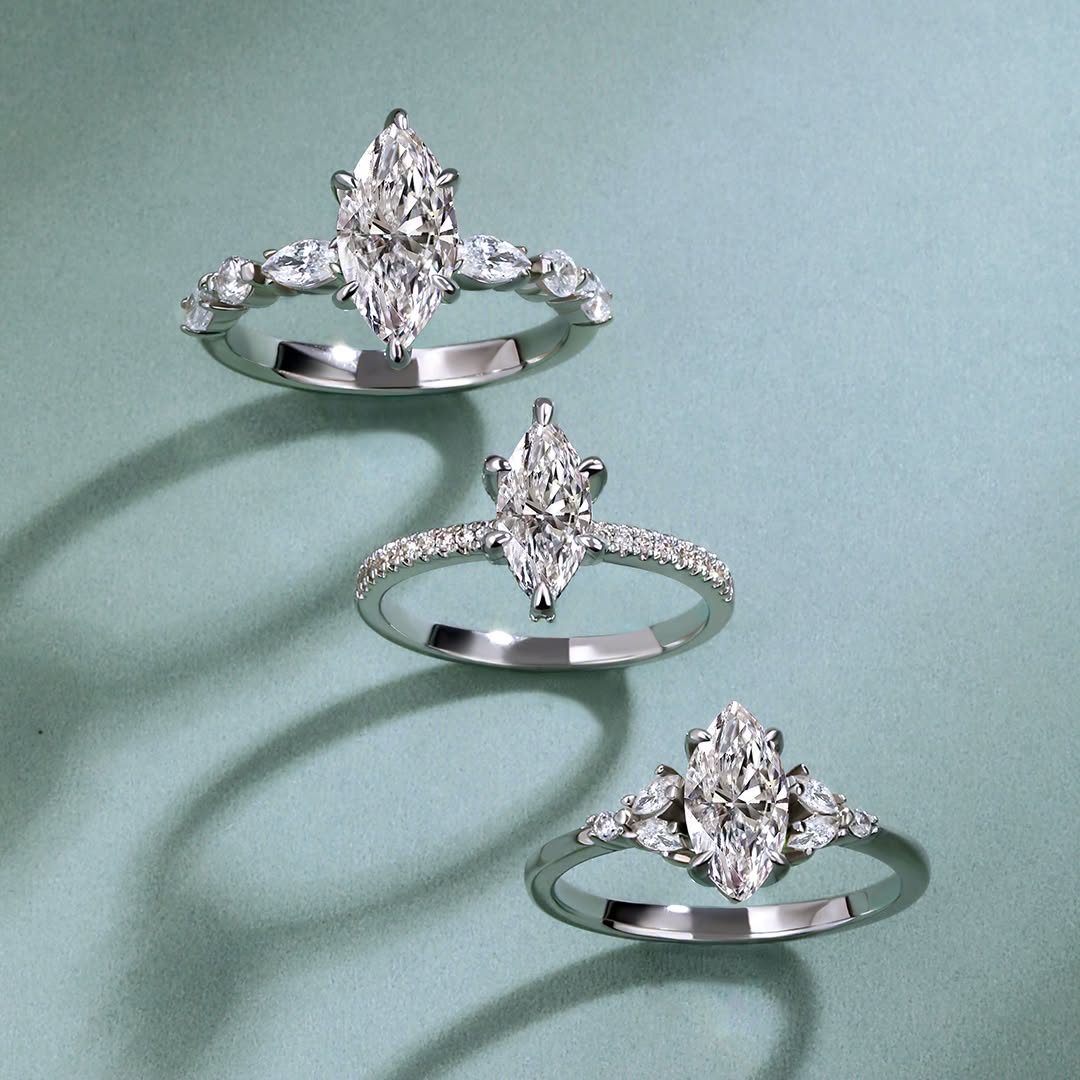
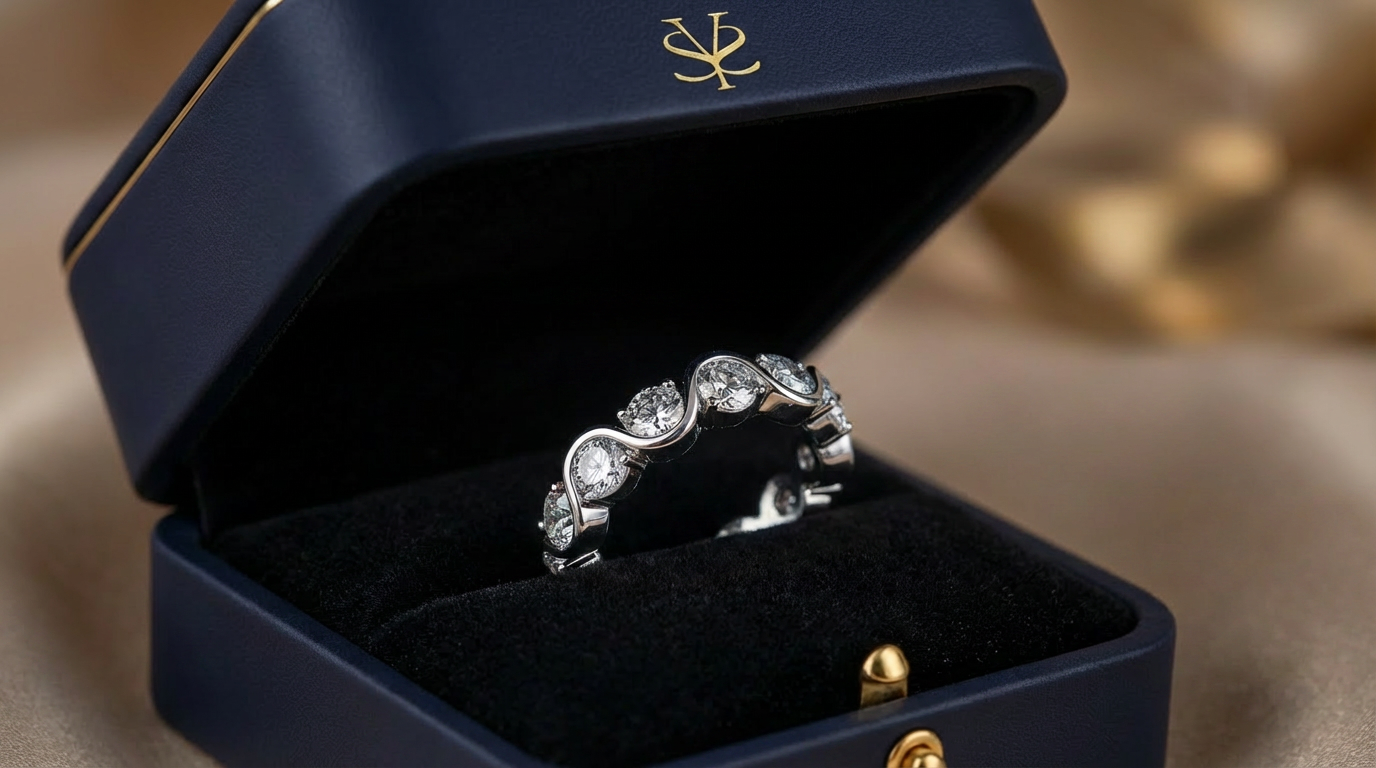
Diamonds are the classic answer — brilliant, enduring, and universally loved. If you’re choosing between natural and lab-grown, know that they’re optically and chemically identical. Lab-grown diamonds simply give you access to better quality or larger stones at a more approachable price point, which matters especially on an eternity ring where you’re buying many small stones rather than one large one.
Moissanite is worth considering if the person loves sparkle above all else. Its refractive index (2.65) actually exceeds diamond’s (2.42), which means it produces more fire — more of those rainbow flashes that catch light from across a room. At roughly a tenth of the cost and a hardness of 9.25 on the Mohs scale, moissanite delivers extraordinary brilliance for everyday wear.
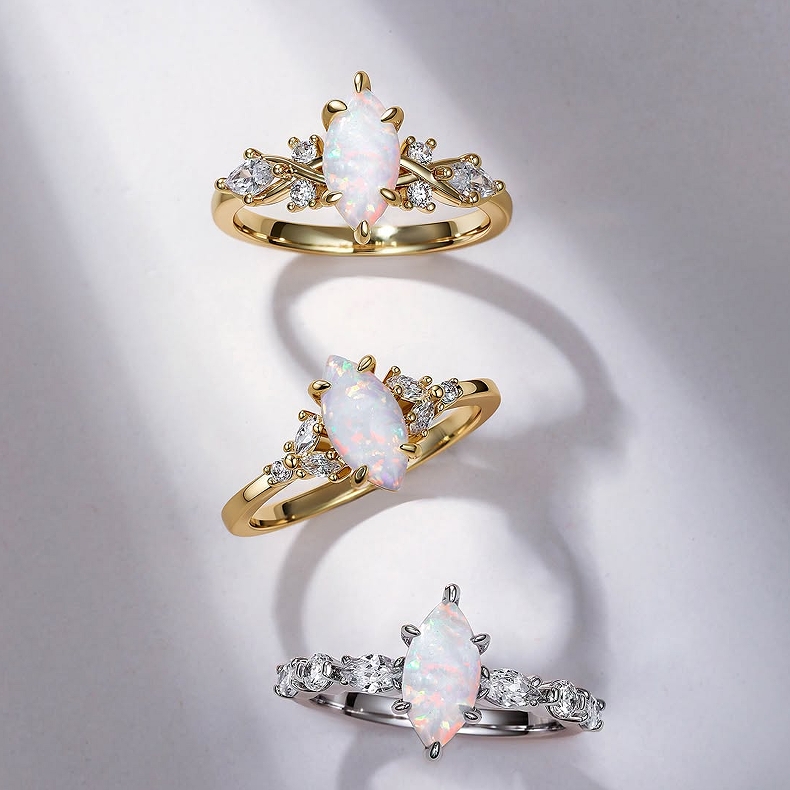
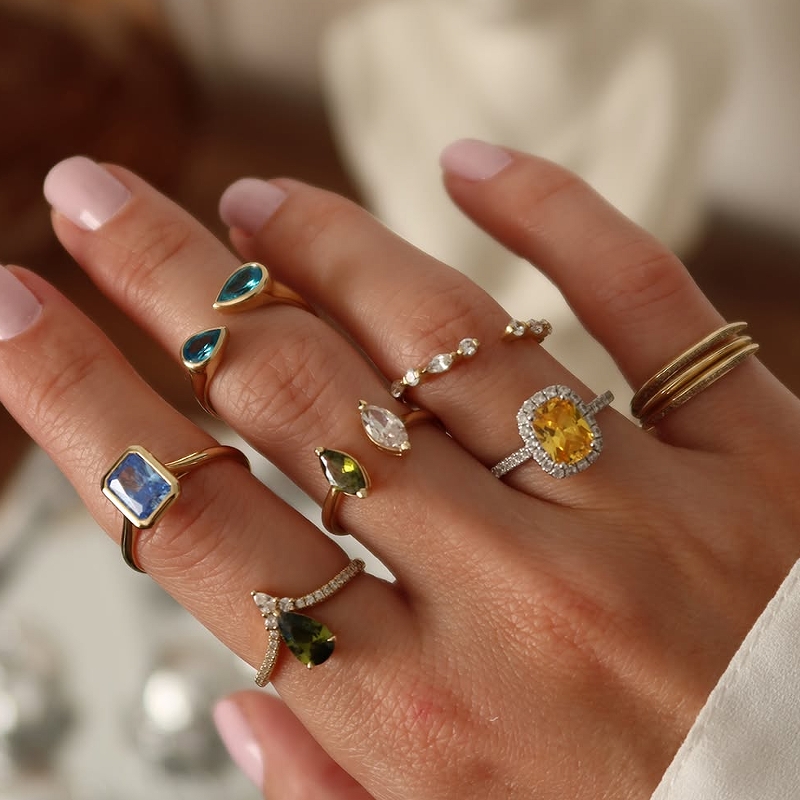
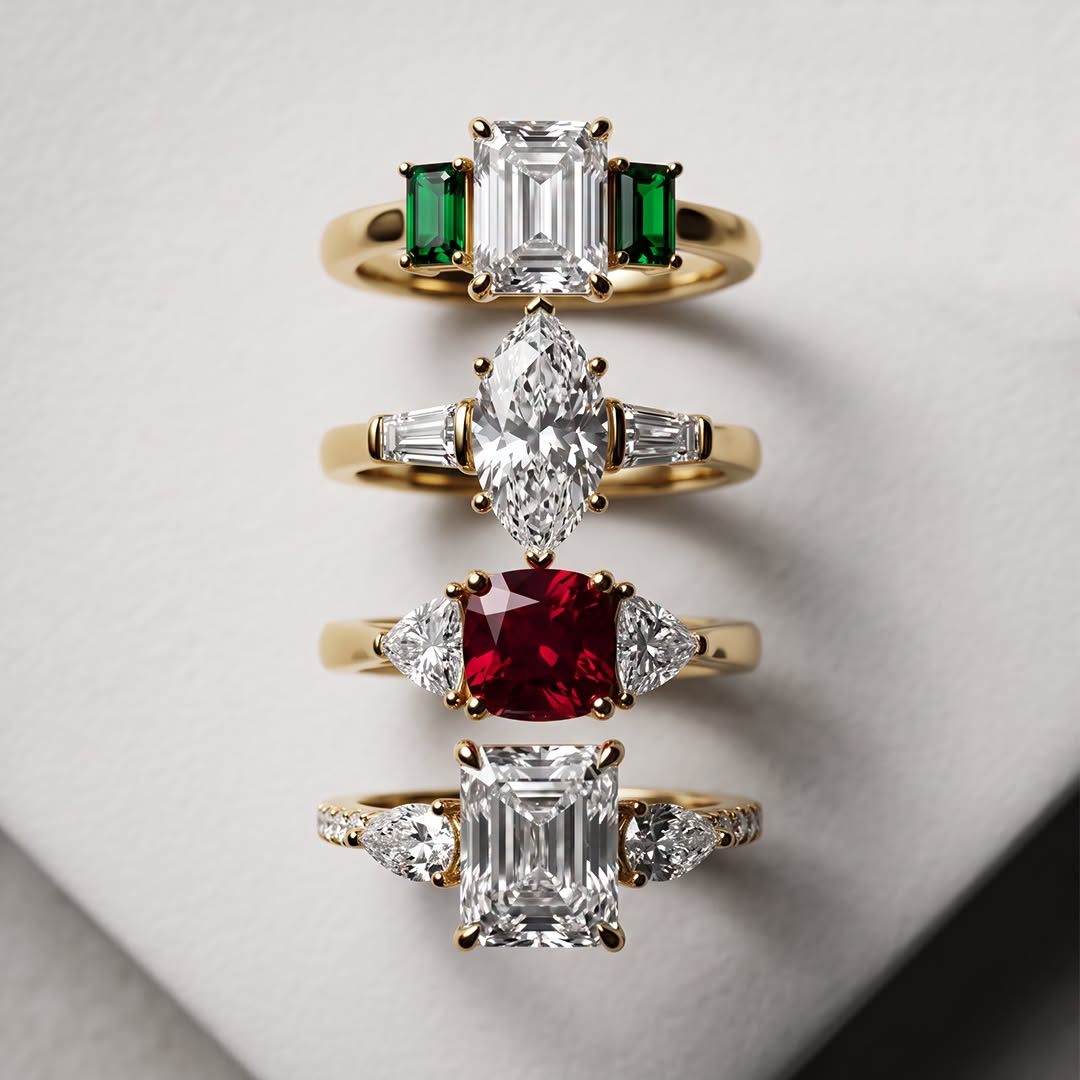
Colored gemstones are for someone who wants meaning written in color. Deep blue sapphires for loyalty, rich red rubies for passion, vibrant green emeralds for growth. You can even alternate stones — diamonds and sapphires, or a birthstone sequence that tells your family’s story in gems.
4. What Metal Works With What They Already Wear?
Here’s a practical tip that saves a lot of second-guessing: look at the rings they already wear every day.
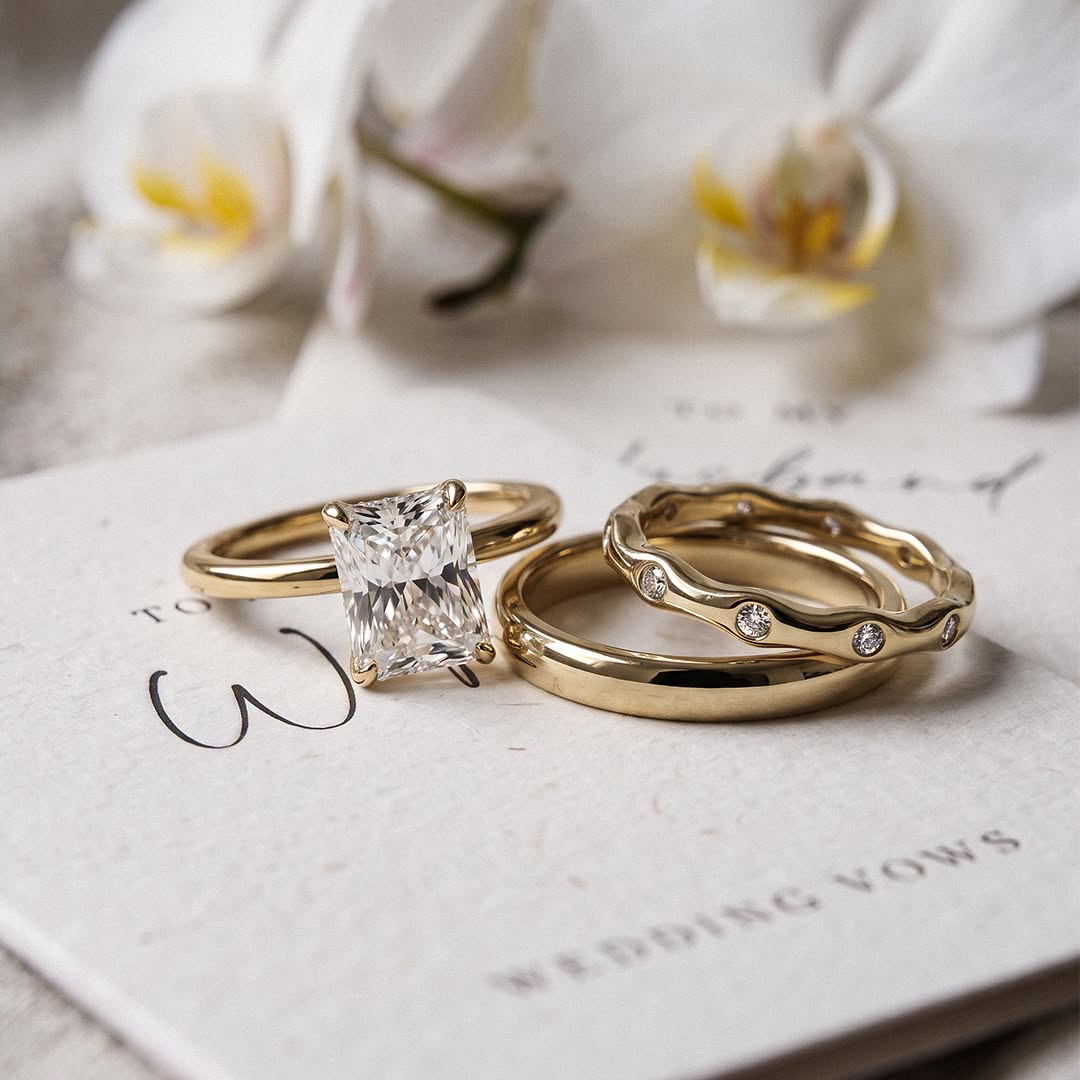
If their engagement ring and wedding band are white gold or platinum, stay in that cool white family. The eternity ring will sit alongside those rings, and matching the metal color creates a cohesive stack that looks intentional rather than accidental.
White gold and platinum make diamonds and moissanite appear brighter. Yellow gold brings warmth and pairs naturally with sapphires and rubies. Rose gold adds a romantic softness that flatters nearly every skin tone.
If you’re unsure, white gold in 14K is the most versatile choice — it complements most stones, pairs well with existing jewelry, and sits at a comfortable price point.
5. Full Circle or Half — Which One Makes Sense for Your Life?
This question comes up every time, and the answer depends less on symbolism and more on how the ring will actually be worn.
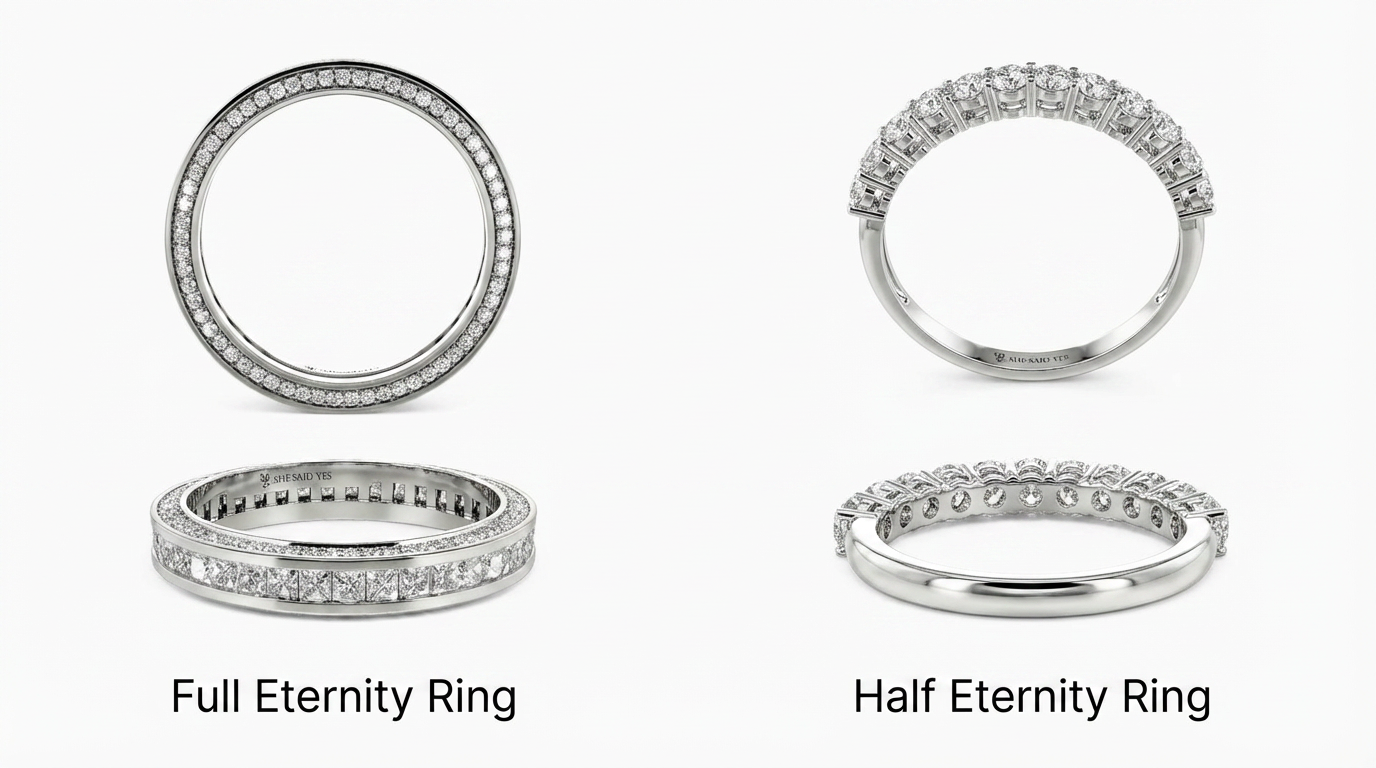
A full eternity ring has stones encircling the entire band. No matter which way it turns on your finger, you see brilliance. The symbolism is complete — nothing missing, nothing interrupted. It’s the choice that leans into the romantic ideal.
A half eternity ring sets stones across the top portion of the band — the part visible when your hand rests naturally. The underside is smooth metal, making it more comfortable for typing, gripping, and all the small tasks that fill a day. It can also be resized if fingers change over the years, which a full eternity ring cannot.
If you’re buying for someone who works with their hands, plays sports, or prefers comfort over symbolism — half eternity is the thoughtful choice. If the gesture itself is the point and you want the purest symbol — full eternity delivers that.
Neither is better. They’re just better for different people.
6. What Setting Style Matches Your Everyday Life?
The setting affects two things: how much the stones sparkle and how securely they’re held.
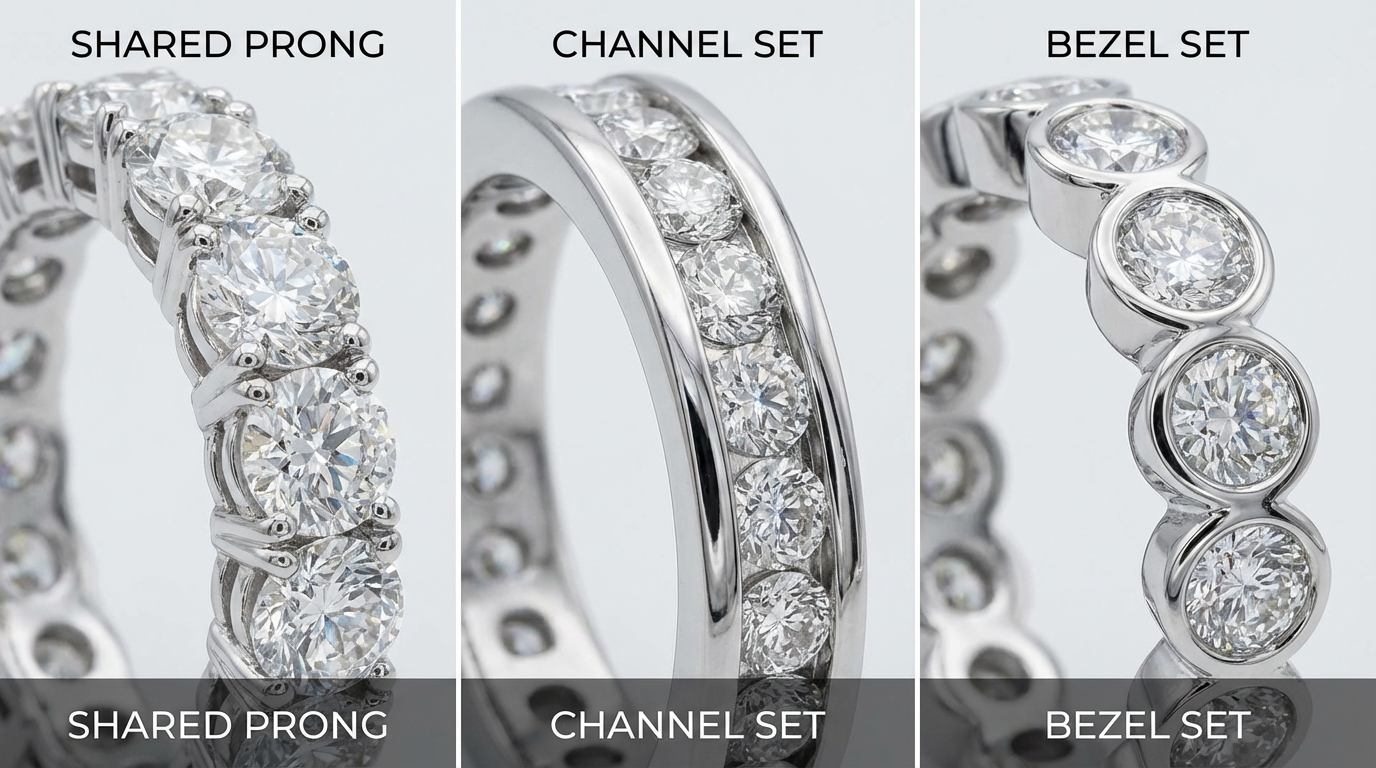
Shared prong settings use small metal claws between each stone, letting maximum light reach every surface. The result is maximum sparkle. If brilliance is the priority, this is the one.
Channel set stones sit flush within metal walls on either side, creating a sleek, smooth surface that protects each stone beautifully. It’s a clean, modern look that works well for active hands.
Bezel set surrounds each stone with a thin metal rim — the most secure option and an excellent choice if the ring will be worn through workouts, gardening, or anything hands-on.
Trust your lifestyle. If you’re choosing a ring meant to be worn every single day, the setting should match the reality of that life — not just how it looks in a jewelry box.
7. How Do You Know If You’re Spending the Right Amount?
There’s no “right” number. But there is a practical way to think about it. Decide what matters most first — is it stone size, stone quality, or the completeness of the circle? You usually get to pick two of three.
If you want a full circle of substantial stones, lab-grown diamonds or moissanite let you get there comfortably. A moissanite half eternity ring in 14K gold can start under $200 — genuine brilliance in an ethical, wearable piece. A lab-grown diamond full eternity ring in 14K gold typically lands between $1,000 and $3,000. Natural diamond full eternity rings start higher and scale with size and quality.
The smartest approach: set your budget, then choose the stone and setting that makes the most of it. A well-chosen moissanite ring in a setting you love will bring more joy than a diamond ring in a setting you settled for.
A Ring Worth Choosing
An eternity ring isn’t about carat weight or metal purity — it’s about marking a moment that matters. Whether you’re celebrating ten years of marriage, the birth of a child, or a Tuesday that felt like it deserved something special, the right ring is the one that fits the story behind it.
At She Said Yes, every eternity ring is crafted with ethically sourced stones set in 100% recycled gold — designed to honor your moment and the world around it. Explore the collection to find the one that speaks to yours, or start a custom design that’s entirely your own.
Newest Eternity Rings
FAQ
What is the meaning of an eternity ring?
An eternity ring symbolizes endless love and commitment. The continuous circle of stones represents an unbroken bond — every stone a shared moment, the complete loop meaning no beginning and no end.
When should you give someone an eternity ring?
Wedding anniversaries are the most traditional occasion. But many people give eternity rings to celebrate a child’s birth, a milestone birthday, or any moment that holds personal significance. There’s no single right time — just the right feeling.
Are moissanite eternity rings a good choice?
Yes. Moissanite produces more fire and brilliance than diamond (refractive index 2.65 vs 2.42), rates 9.25 on the Mohs hardness scale for daily durability, and costs roughly a tenth of the price. It’s one of the smartest choices for a full-circle sparkle.
What’s the difference between full and half eternity rings?
Full eternity rings have stones all the way around the band (360°) and can’t be resized. Half eternity rings have stones across the top portion, are more comfortable for daily wear, and can be resized. Both carry the same meaning.
How do you wear an eternity ring with other rings?
Most people wear it stacked with their engagement ring and wedding band on the same finger. It can go closest to the palm (traditional), between the other two rings, or worn alone on the right hand. Matching the metal color to your existing rings creates a cohesive look.