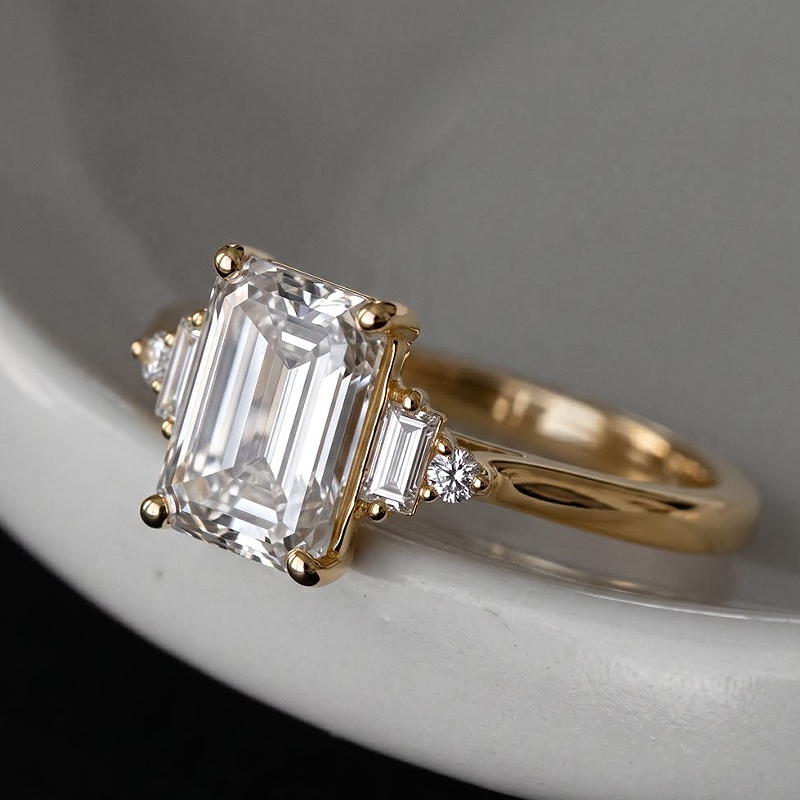
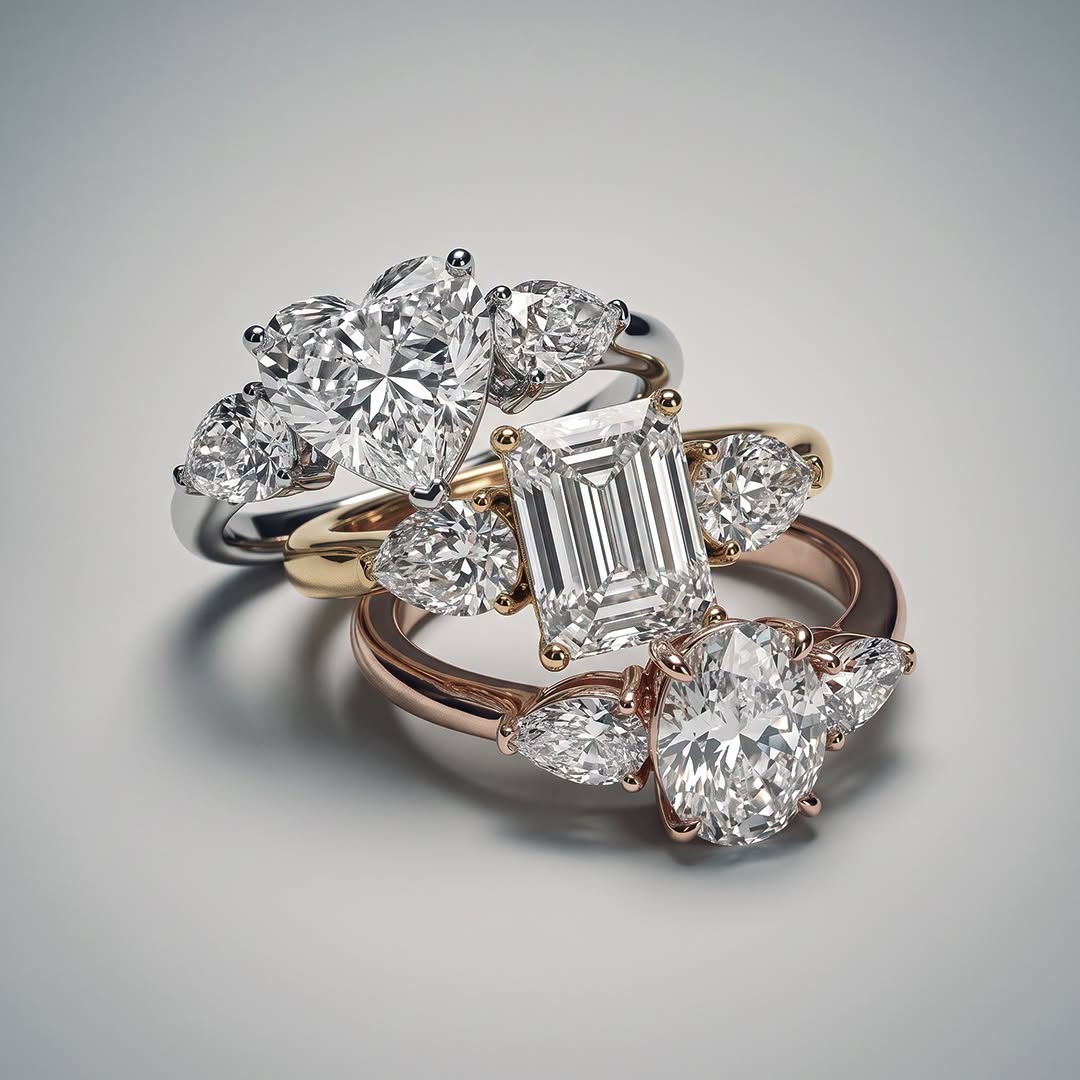
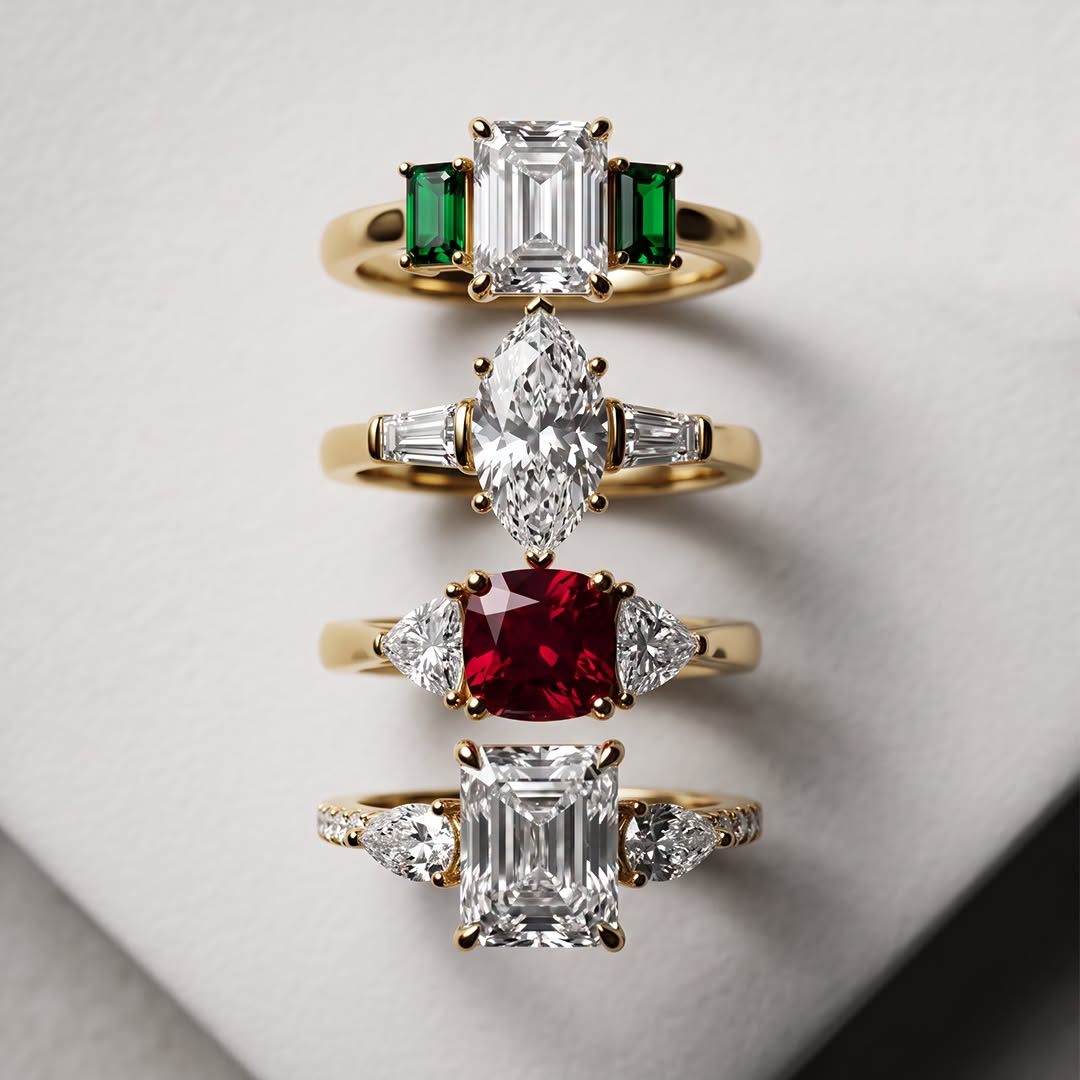
Diamonds have long symbolized love, luxury, and lasting beauty. Maybe you’re admiring the center stone of an engagement ring, inspecting a vintage piece you inherited, or simply taking a closer look at a recent purchase. Whatever brought you here, the question is probably the same: is this a real diamond? While only a professional can confirm authenticity with complete certainty, you can get a few simple ways to identify the characteristics of a genuine diamond and spot some of the most common stones.
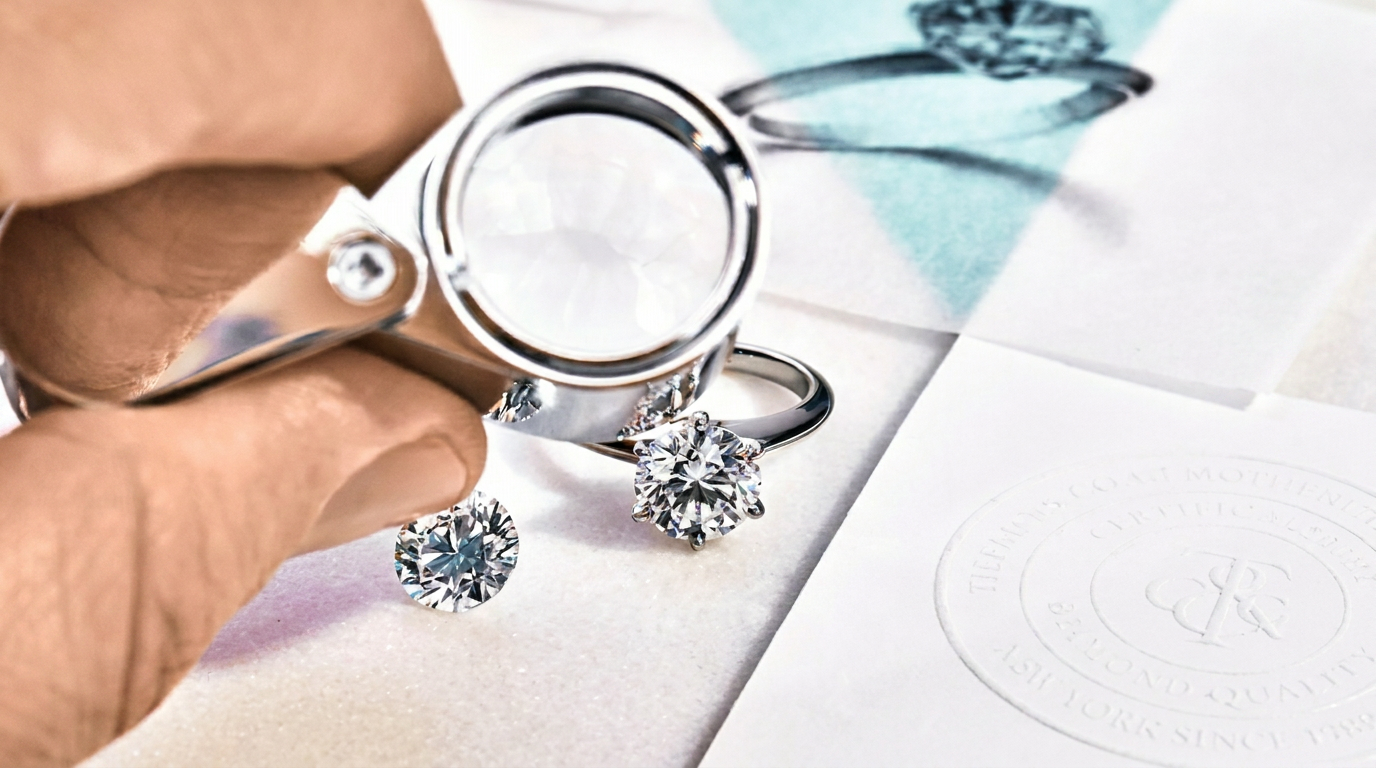
What “Real” Actually Means
Here’s where most conversations about diamonds go sideways: people use “real diamond” to mean only one thing—mined from the earth. Everything else gets lumped into “fake.” That’s wrong. And it matters.
If you’re planning to buy a diamond, one of the most important things to consider is what you’re actually buying. Is it a natural diamond, a lab-grown diamond, or moissanite? The price differences between these stones can be significant, so it’s important to understand exactly what you’re paying for before making a purchase. Once you know which type of stone you have, you can then start determining.
Real Diamond vs. Other Gemsstone: Side-by-Side
| Property | Natural Diamond | Lab-Grown Diamond | Moissanite | Cubic Zirconia (CZ) | Glass |
|---|---|---|---|---|---|
| Is it a real diamond? | Yes | Yes | No (different mineral) | No (simulant) | No (simulant) |
| Chemical composition | Pure carbon | Pure carbon | Silicon carbide | Zirconium dioxide | Silica/oxides |
| Hardness (Mohs scale) | 10 | 10 | 9.25 | 8–8.5 | 5.5 |
| Refractive index | 2.42 | 2.42 | 2.65–2.69 | 2.15–2.18 | 1.5–1.6 |
| Cost per carat | $3,000–$20,000+ | $300–$2,500 | $300–$1,000 | $15–$30 | Negligible |
| Durability | Lasts forever | Lasts forever | Excellent | Good (scratches easier) | Poor (scratches easily) |
How to tell if a diamond is real: 7 Home Tests
None of these require special equipment. Each one can give you clues—some stronger than others. Think of them as a screening process, not a final verdict.
1. The Fog Test (Fastest Screening)
Breathe gently onto the stone like you’re fogging a bathroom mirror.
What to look for: Real diamonds disperse heat almost instantly. The fog clears in about 1-2 seconds. Simulants hold onto heat, and the cloudy layer lingers for 3-5 seconds or longer.
Why it works: Diamond is an excellent conductor of heat. Fake materials like CZ and glass insulate heat, so they keep that breath condensation visible.
Reliability: ★★★ — Quick and usually accurate, but not foolproof. Extremely thin diamonds or those with certain coatings might behave unexpectedly.
2. The Water Test (Simple but Less Reliable)
Drop the stone into a glass of water.
What to look for: A real diamond sinks to the bottom. Many simulants float or hover mid-water due to lower density.
Why it works: Diamond has a higher density (3.52) than most fake materials, so gravity pulls it down faster.
Reliability: ★★ — Helpful as a first filter, but some simulants also sink. Don’t rely on this alone.
Limitation: If the stone is in a setting with metal, the whole thing probably sinks anyway.
3. The Read-Through Test (Fold a Newspaper)
Place the stone on a printed line of text.
What to look for: Real diamonds bend light (refract it) so severely that you *can’t* read the text clearly through the stone. Simulants are more transparent, and you’ll see the letters.
Why it works: Diamond has a refractive index of 2.42, which bends light dramatically. CZ (1.92) and glass (1.5-1.6) don’t bend it as much, so light passes through more directly.
Reliability: ★★★ — One of the better home tests. Clean, loose stones work best.
Limitation: Heavily included diamonds (lots of internal flaws) might let some light through. Color and saturation in the stone can also affect what you see.
4. The Dot Test (Center-Placed Stone)
Place a small dot (pen mark or printed dot) on white paper. Set the stone directly over it.
What to look for: In a real diamond, the dot appears blurry or distorted when you look through the top. In a simulant, the dot shows up sharply and you can see it clearly.
Why it works: Same refraction principle as the read-through test. Diamond bends light so much that the dot gets warped. Fake materials with lower refraction let the image come through more clearly.
Reliability: ★★★ — Solid home test when done carefully with a loose stone.
Note: This works best with stones over 0.5 carats and lower colors (as colorless stones show the effect more clearly).
5. The UV Light Test (What Color Under Blacklight?)
Expose the stone to a UV lamp in a dark room.
What to look for: Many diamonds fluoresce (glow) under UV, but what color they glow varies. Simulants often glow different colors or not at all.
Why it works: Fluorescence happens when certain impurities or lattice defects in the crystal absorb UV and re-emit visible light. Each material has its own signature.
Reliability: ★★ — Helpful context but inconsistent. Most diamonds fluoresce blue or colorless, but 30% don’t fluoresce at all. That doesn’t mean they’re fake.
Limitation: Simulants vary too much in their UV behavior to be a definitive test. This test is more “interesting to know” than “proof.”
6. The Sparkle Pattern Test (Look at the Rainbow)
Tilt a loose stone under light and observe the colors it throws.
What to look for: Real diamonds throw mostly white light (scintillation) with flashes of color at the edges. Simulants—especially CZ—throw bright rainbow colors throughout.
Why it works: Diamond breaks white light into spectral colors (dispersion) but less dramatically than CZ. The sparkle pattern is different.
Reliability: ★★ — Good for comparing two stones side-by-side, but tricky for beginners. Lighting and angle matter hugely.
Limitation: Moissanite also throws more color than diamond, so this won’t distinguish them. Cut quality also affects sparkle, so a poorly cut diamond might look different from what you expect.
7. The Magnification Test (30x Loupe)
Use a jeweler’s loupe (magnifying glass, typically 10x magnification, though 30x is better) and look inside the stone.
What to look for: Real diamonds often show inclusions (tiny internal flaws, clouds, feathers). Simulants like CZ are usually much clearer or show different types of marks (scratches, wear patterns on the surface).
Why it works: Diamonds form under extreme pressure over time and almost always have internal characteristics. Perfect clarity is actually suspicious. GIA uses inclusion patterns to help identify stones.
Reliability: ★★★★ — Extremely helpful when you know what to look for. Professional gemologists use this as a primary screening.
Limitation: You need to know what “real” inclusions look like. A learner might mistake scratches or dirt for internal features. Flawless or VVS diamonds are rare, so don’t assume zero inclusions means it’s fake.
Professional evaluation: Diamond Testers
A diamond tester measures thermal conductivity (how quickly heat moves through the material). Real diamonds conduct heat extremely fast. Most simulants don’t.
You can touch the tester’s probe to the stone. It measures heat transfer. If heat disperses quickly, it reads “Diamond.” If it reads slow, “Not Diamond.”
Entry-level testers ($15-$30): Small handheld devices that work for basic screening. Good for a quick answer if you’re testing at home.
Professional testers ($200+): Higher precision, fewer false positives, dual-mode (can separate diamonds from moissanite).
Certification & Girdle Number: The most reliable verification method. A certified diamond comes with a grading report from organizations such as GIA or IGI, and many certified nature stones have a unique laser-inscribed number on the girdle. Matching this number to the certificate confirms the diamond’s identity and grading information.
Which Test Should You Use? A Practical Guide
Scenario 1:
You’re at home, no special tools, just want a quick answer: Use the fog test + the read-through test together. If both suggest “real,” you’ve got decent confidence. If both suggest “not real,” you’ve probably got a simulant.
Time investment: 2 minutes.
Scenario 2:
You want faster certainty and don’t mind spending $20: Buy an entry-level diamond tester online. Run it on the stone. If it reads “Diamond,” great. If it reads “Not Diamond,” you’ve got your answer.
Time investment: 5-10 minutes (plus shipping time to get the tester).
Scenario 3:
High-value stone, inheritance, or you need absolute certainty: Go to a professional gemologist or jeweler. Ask them to check for a GIA or IGI certificate. Ask them to look at the girdle under magnification for the laser inscription. If it’s there, verify it online.
If the stone came without certification (especially older stones), a professional can refer it to GIA or IGI for grading ($100-$500 depending on the stone, but you get a certificate you can trust forever).
Time investment: One appointment, 30-60 minutes.
Conclusion: Know Before You Wear
Whether you’re holding an heirloom, making a purchase, or just satisfying curiosity, knowing what you actually own matters. You now have seven ways to screen a stone at home, a tool option if you want faster results, and the definitive method—certification.
Here’s what I’d do if I were in your shoes: Start with the fog test and read-through test. They’re free, quick, and surprisingly reliable. If you want more confidence, pick up a basic diamond tester. And if it’s a significant stone (engagement ring, inheritance, high investment), get it certified or verified by a professional.
One final thought: if you’re shopping for a new diamond or considering lab-grown as an ethical, affordable alternative, make sure it comes with GIA or IGI certification. That paperwork is your guarantee of authenticity. It’s the difference between guessing and knowing.