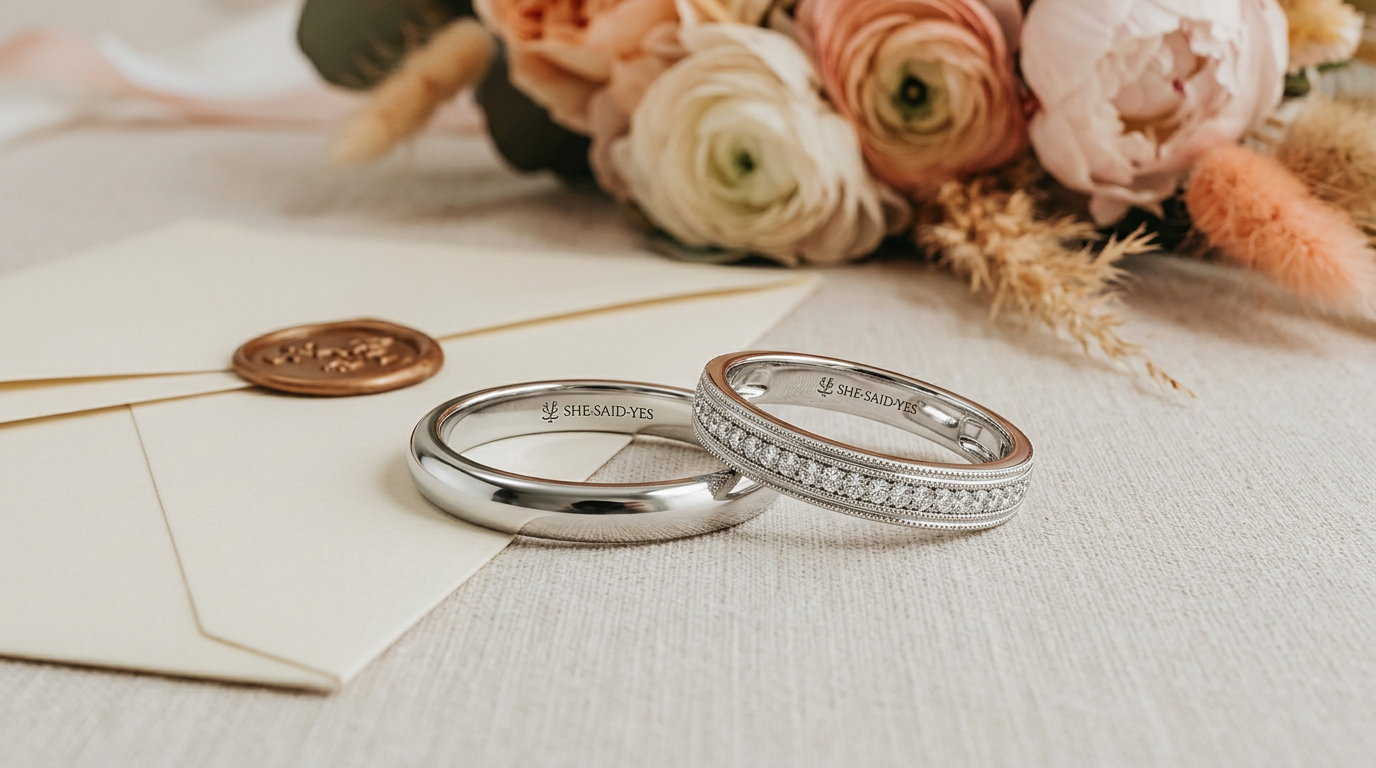
The most classic wedding rings are plain precious-metal bands. The point is that “classic” covers more ground than most people think. A plain polished yellow-gold band is classic. So is a platinum band with milgrain edging. So is a thin pavé diamond band that sits flush against a solitaire engagement ring. What ties them together is restraint—clean lines, quality materials, and a design that doesn’t need to explain itself.
At a Glance

1. A classic wedding ring is defined by simplicity, quality materials, and a design that will not look dated in 30 years — not by the absence of all decoration.

2. Classic styles include plain metal bands, milgrain bands, and pavé or eternity bands, all unified by clean structure and symmetry rather than ornament for its own sake.

3.Classic wedding rings are typically made from precious metals, as they need to balance long-term durability, symbolic meaning, and everyday wearability. The most common choices include yellow gold, white gold, platinum, and rose gold.

4.Width, profile  and finish change how a ring looks and feels more than most people expect.

5. The right classic ring matches your daily life, sits well next to your engagement ring, and fits a budget that leaves room for the rest of the wedding.
Below, you will find the styles that have actually earned the word “classic,” the metals that hold up over decades of daily wear, and the details (width, profile, finish) that make the difference between a ring you tolerate and one you forget you are wearing — in the best way.
What Counts as a Classic Wedding Ring?
Classic does not mean one specific design. It means a ring that has stayed relevant across generations — not because tradition demands it, but because the design works. Clean lines. Honest materials. Nothing that screams a particular decade. Three styles fit that definition.
The Plain Metal Band
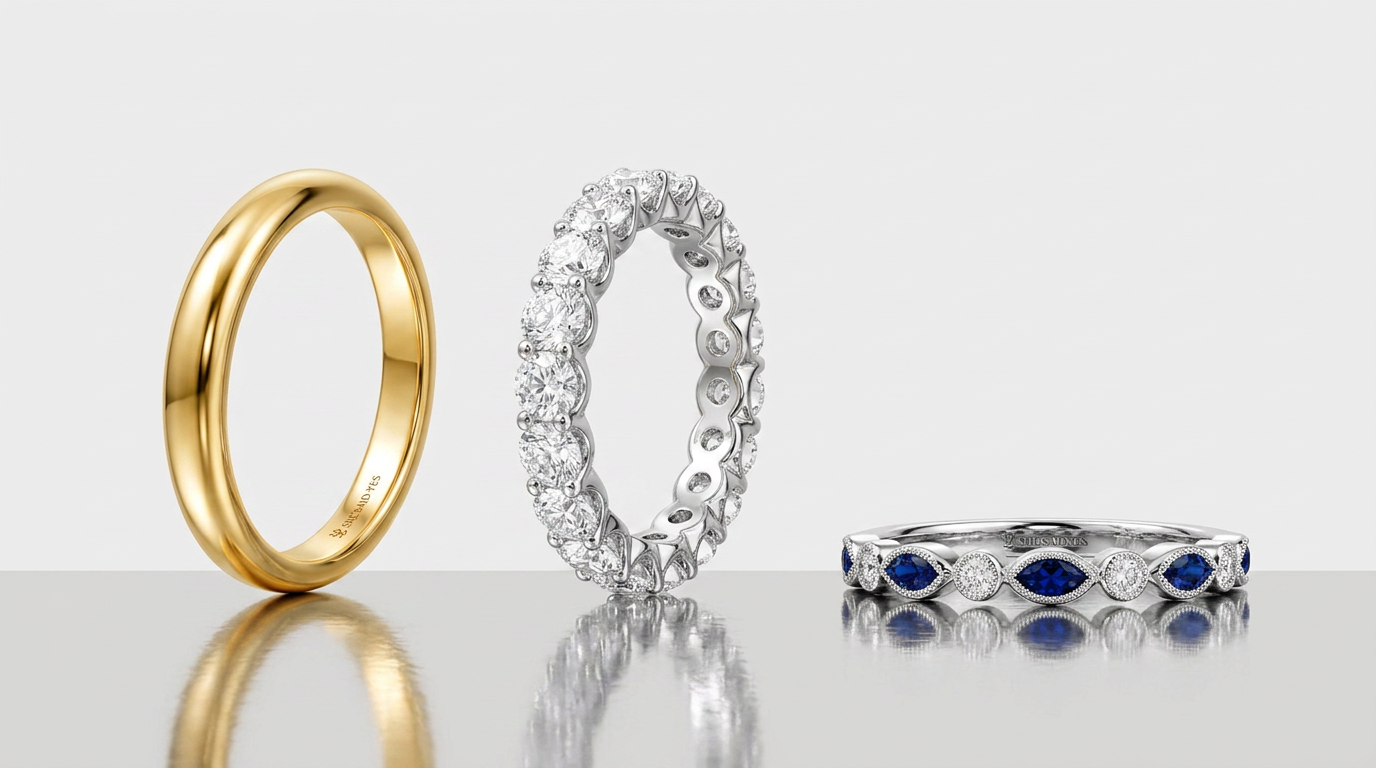
A smooth circle of gold or platinum with no stones, no engraving, no embellishment. It has been the default for thousands of years, starting with ancient Egypt, where rings of braided reeds were exchanged as symbols of eternal commitment. The materials changed. The idea did not.
A plain band works because it does not compete with anything. It sits next to an engagement ring without drawing attention away from it. It looks the same at a black-tie dinner and at the gym. And it ages well — a polished gold band develops a soft patina over years of daily wear that many people prefer to the original shine.
- What it looks like: A single, continuous band of precious metal. Usually 2mm to 6mm wide. Surface is either polished (mirror-like) or brushed (soft, satiny).
- Who it suits: Anyone who wants a ring that works with everything and needs almost zero maintenance. Also the best choice if you work with your hands — no stones to loosen, no details to catch.
- Typical price range: $200–$800 in 14K gold; $500–$1,500 in platinum.
The Milgrain Band
Milgrain is the tiny bead-like texture that runs along the edges of a band — a technique that dates back to Edwardian and Art Deco jewelry. It adds detail without bulk. The effect is subtle: up close, you see the craftsmanship. From across a room, it reads as a clean, elegant band.
Milgrain bands bridge the gap between “plain” and “ornate.” They carry a sense of history that a completely smooth band does not, but they are still restrained enough to pair with almost any engagement ring style.
- What it looks like: A metal band — usually domed — with small beaded edges. Some designs combine milgrain with a satin or brushed center for contrast.
- Who it suits: Someone who appreciates vintage craftsmanship and wants a band with more character than a plain band but the same everyday wearability.
- Typical price range: $300–$1,000 in 14K gold, depending on complexity.
The Pavé and Eternity Band
A pavé band features small diamonds set closely together along the top portion of the ring. An eternity band takes that concept all the way around — stones encircling the entire band in an unbroken line.
These are classic styles with history behind them. The eternity ring, in particular, has carried the symbolism of unending love since the 1960s, when diamond merchant De Beers popularized the concept. What makes them “classic” rather than trendy is the symmetry and continuity — the stones are uniform, evenly spaced, and set close to the band so the overall silhouette stays low and streamlined.
- What it looks like: A metal band lined with small round or baguette-cut diamonds. Half-pavé covers the top half; full eternity covers the entire circumference.
- Who it suits: Someone who wants sparkle but still values a clean, structured look. Also a popular choice for women who want the wedding band to hold visual weight next to a larger engagement ring.
- Typical price range: $500–$3,000+ depending on stone type and coverage. Lab-grown diamond pavé bands start around $500. Moissanite versions come in even lower.
Choosing the Metal
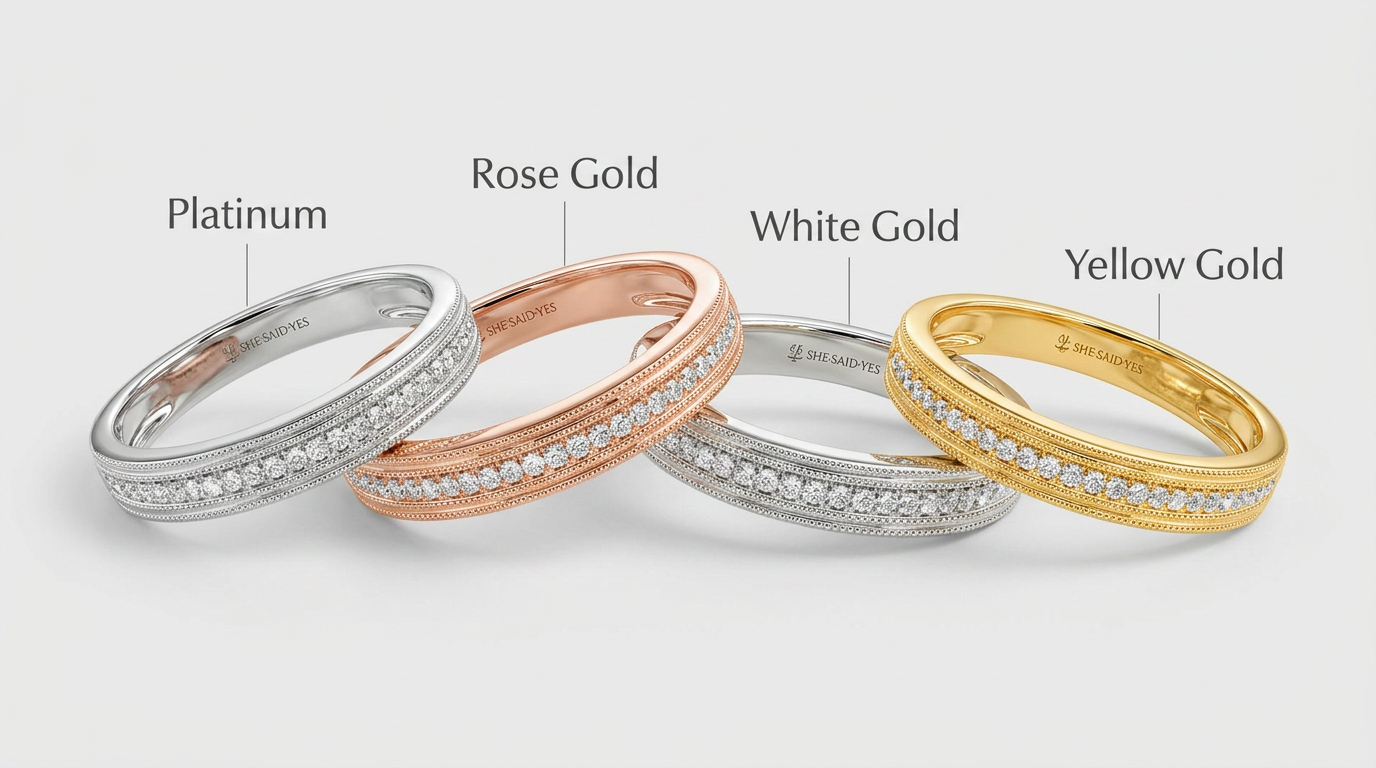
When choosing metals, classic wedding rings typically center around four main options: yellow gold, platinum, white gold, and rose gold, which together form the core of traditional wedding band aesthetics.
Yellow gold is the most historically rooted choice. Its warm tone comes from the natural color of the metal itself, and over time it develops a soft, lived-in patina, making it especially appealing to those who appreciate a ring that gains character with wear.
Platinum leans toward a more understated and durable option. It naturally has a cool white tone, does not fade, and does not require frequent replating, making it ideal for those who want a wedding band that maintains a stable appearance over the long term. If budget allows, platinum is often considered a premium choice that balances both quality and durability. However, if platinum exceeds your budget, white gold can be a practical alternative. Visually, white gold closely resembles platinum with its clean, silvery-white appearance, offering a modern and minimalist look. In essence, it is an alloy of gold and is usually coated with rhodium to enhance its brightness and whiteness. This makes it more affordable, though it may require periodic replating over time to maintain its original luster.
Rose gold, on the other hand, introduces a softer, more modern romantic touch within the classic spectrum. Its pinkish hue comes from the copper content in the alloy, giving it a warm and gentle character that complements a wide range of skin tones and personal styles.
While these metals differ in appearance and maintenance needs, they share a common quality: they are all durable, structurally stable, and capable of maintaining an elegant, timeless presence in everyday wear.
Width, Profile, and Finish
In the selection of classic wedding rings, width, profile, and finish are usually guided by three core principles: comfort, timelessness, and everyday wearability.
For width, most people choose a thin to medium range of 2mm–4mm as a standard option. This proportion feels light on the hand, does not overwhelm the finger in daily wear, and pairs well with an engagement ring. Men, or those who prefer a stronger visual presence, more commonly choose 5mm–7mm bands, which offer a more substantial and balanced look when worn on their own.
For the ring profile, the most common classic choices are domed shapes and comfort-fit interiors. A domed exterior is soft and traditional in appearance, while a comfort-fit design features a slightly rounded inner surface that makes the ring easier to wear for long periods. This has become a very popular modern upgrade for wedding bands due to its improved comfort.
As for finish, classic wedding rings typically come in polished, brushed, or matte surfaces. Polished rings are the most traditional and reflective, but they tend to show scratches more easily over time. Brushed and matte finishes, on the other hand, are more understated and durable in appearance, making them better suited for everyday wear. Overall, modern classic wedding rings increasingly favor a combination of a comfort-fit profile, medium width, and a low-maintenance finish, striking a balance between aesthetics and practicality.
Classic Bands for Him and Her
What Most Women Choose
The most popular women’s classic wedding band is a 2mm–4mm polished domed band in the same metal as the engagement ring. That is the baseline. From there, the most common upgrades are half-pavé diamond bands (for sparkle) and milgrain bands (for vintage character).
Slim bands (2mm–3mm) work best when the engagement ring is the focal point. Slightly wider bands (4mm) give the wedding ring more independent presence — useful if you sometimes wear the band on its own.
What Most Men Choose
Men’s classic bands lean toward 5mm–7mm widths, comfort-fit interiors, and a finish that hides everyday wear. The most popular metal is 14K white or yellow gold, followed by platinum.
Brushed and matte finishes are more common for men’s bands than for women’s — not because of any rule, but because they tend to look better after years of daily use. A polished men’s band in 6mm yellow gold will develop visible scratches within months of regular wear. A brushed band in the same metal will look essentially the same after a year.
Do Your Bands Need to Match?
Some couples love the symmetry of matching bands, while others are drawn to different metals, finishes, or proportions. A wedding ring is worn by an individual every day, so comfort and personal style often matter just as much as tradition. Whether your rings mirror each other or take their own paths, what matters most is that each feels right on the hand that wears it.
FAQ
What is considered a classic wedding ring?
A simple band made from precious metal — gold or platinum — with clean lines and a design that does not rely on trends. The most common versions are plain polished bands, milgrain bands, and pavé diamond bands with symmetrical stone settings.
Are plain wedding bands still popular?
Yes. Plain metal bands have been the most popular wedding ring style for decades. They work with every engagement ring style, need almost no maintenance, and look the same at year 30 as they do on day one.
What metal is best for a classic wedding band?
14K gold offers an excellent balance of durability, appearance, and value, making it a popular choice for everyday wear. Platinum is the premium option, valued for its naturally white color, exceptional durability, and low-maintenance nature, as it never requires rhodium re-plating.
How much should a classic wedding ring cost?
Classic wedding rings are available at many price points. Simple gold bands are often more affordable, while wider bands and diamond styles typically cost more.
Classic wedding rings earn that word because they work. They do not ask for attention, they do not go out of style, and they hold up to the one thing no other piece of jewelry has to withstand — being worn every single day for the rest of your life.
Whether that means a plain yellow-gold band, a platinum ring with milgrain edges, or pavé band that gives you the classic look with modern values behind it, the right choice is the one you stop thinking about once it is on your finger. If you are looking for a classic wedding ring, Browse our classic wedding ring collection to see what timeless actually looks like.