The pear shape has a way of drawing attention instantly. Something about that soft curve narrowing into a sharp point stands out in a way few diamond cuts do. Maybe that is why pear-shaped rings appear on so many red carpets. Ariana Grande, Cardi B, and Sophie Turner have all worn pear-shaped engagement rings.
But finding a wedding band that actually fits can be challenging. The pointed tip extends past the band, creating a gap that bothers some wearers. The good news is that there are several elegant solutions, and the best one is to buy the engagement ring and wedding band as a designed set.
This guide covers the pear shape itself, how to spot a well-cut stone, and most importantly, how to build a ring set that looks like it was always meant to be together.
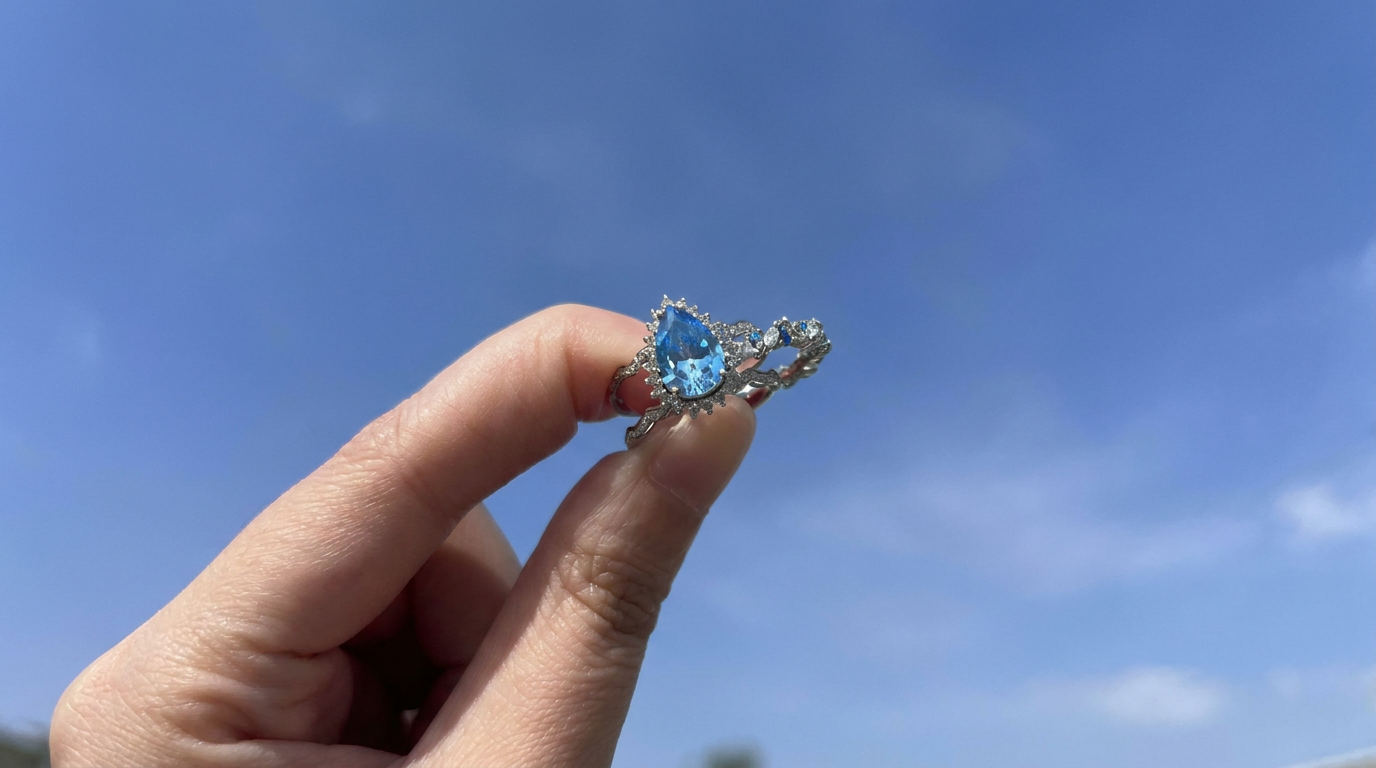
What Makes the Pear Shape Unique
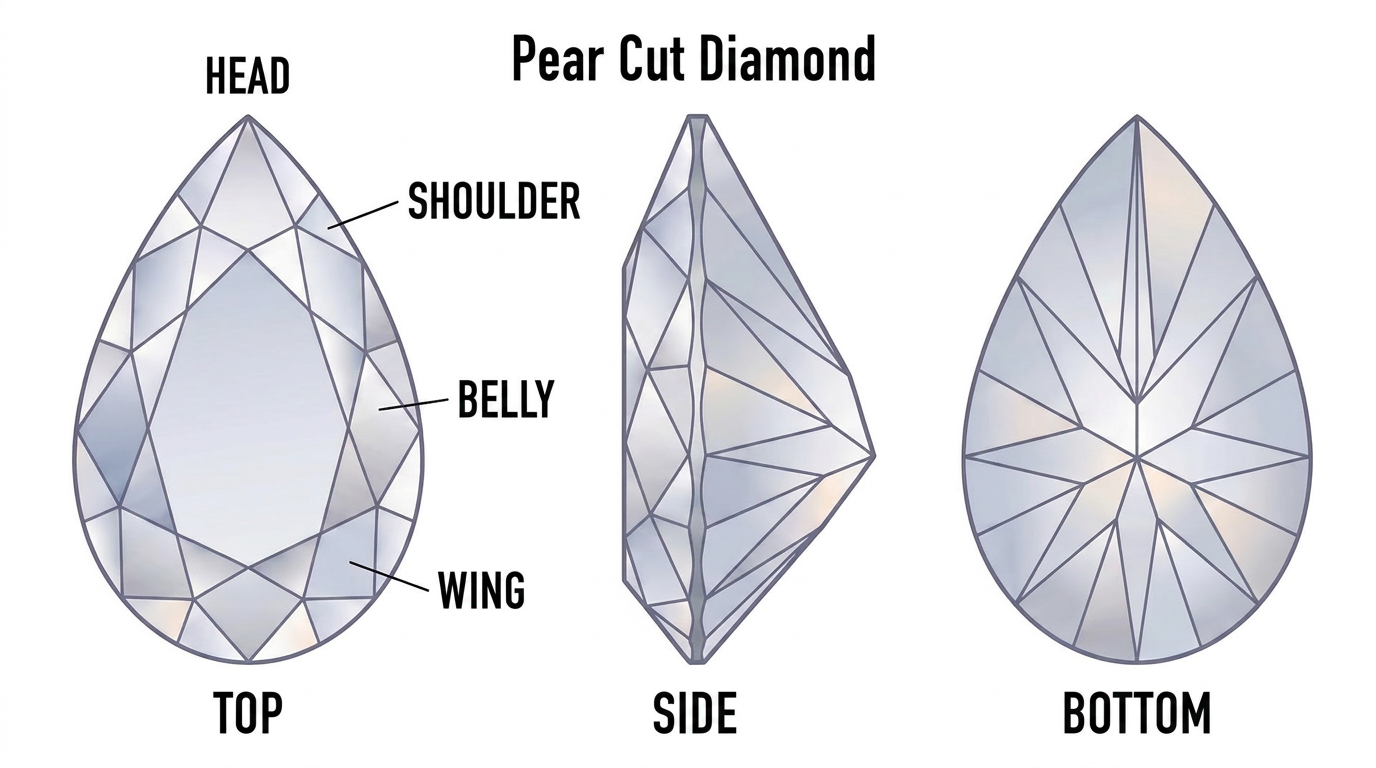
A pear-shaped diamond is a hybrid. One end is a rounded curve (taken from the round brilliant) and the other is a single point (borrowed from the marquise). It is also called a teardrop cut, though the industry term is pear-shaped brilliant.
Most pear diamonds have 56 to 58 facets arranged in a modified brilliant pattern. The length-to-width ratio generally falls between 1.50 and 1.80, with 1.60 to 1.70 considered the sweet spot for a balanced silhouette.
The shape does two practical things well. First, it elongates the finger more effectively than almost any other cut. Second, it costs 15 to 30 percent less per carat than a round brilliant because the cutting process wastes less rough diamond.
Pairing a Wedding Band With a Pear Shaped Ring
This is where pear-shaped rings differ from rounds or ovals. The pointed tip extends beyond the band, which creates a visible gap. Here are the options, ranked by how well they solve the problem:
| Solution | How It Works | Pros | Cons |
| Curved/contoured band | Band curves inward to nestle against the pear | Seamless fit, looks intentional | Must be designed for your specific ring |
| V-shaped band | Band has a V-notch matching the tip | Unique geometric detail | Limited style options |
| Thin straight band | Slim diamond band sits close | Simple and versatile | Small gap at the tip |
| Stacked bands | 2-3 thin bands stacked together | Trendy, customizable | Requires careful sizing |
| Spacer ring | A thin plain band worn between the two | Closes the visual gap | Adds a third ring to the stack |
The contoured or curved band is the most popular choice for good reason. It follows the exact outline of the pear shape, creating a unified look. The catch is that you need to buy or design the band specifically for your ring. Off-the-shelf curved bands rarely align perfectly with a different ring profile.
That is why buying a matched set from the start makes so much sense. When the engagement ring and wedding band are designed together, the curves align perfectly, the visual weight is balanced, and you do not have to hunt for a compatible band months later.
How to Tell if a Pear Shape Looks Balanced
Two pear diamonds can have the same carat weight but look very different once worn. A well-balanced pear should appear symmetrical, with a smooth rounded end and a pointed tip that aligns cleanly through the center of the stone. If one side looks wider or the tip pulls off-center, the shape can feel uneven in a setting.
The shoulders of the diamond also matter. These are the areas where the rounded end narrows into the point. A good pear shape tapers gradually instead of narrowing too sharply, which creates a softer and more elegant silhouette. Most people prefer a length-to-width ratio between 1.60 and 1.70 because it balances elongation with a natural teardrop appearance.
Which Way Should the Pear Point?
There are three ways to wear a pear-shaped ring:
Tip pointing toward the fingernail (traditional) — The most common orientation. It follows the natural line of the finger and looks like a single water droplet.
Tip pointing toward the hand (alternative) — Less common but gaining popularity. Some say it symbolizes the heart pointing toward you. Visually, it creates an unexpected, eye-catching look.
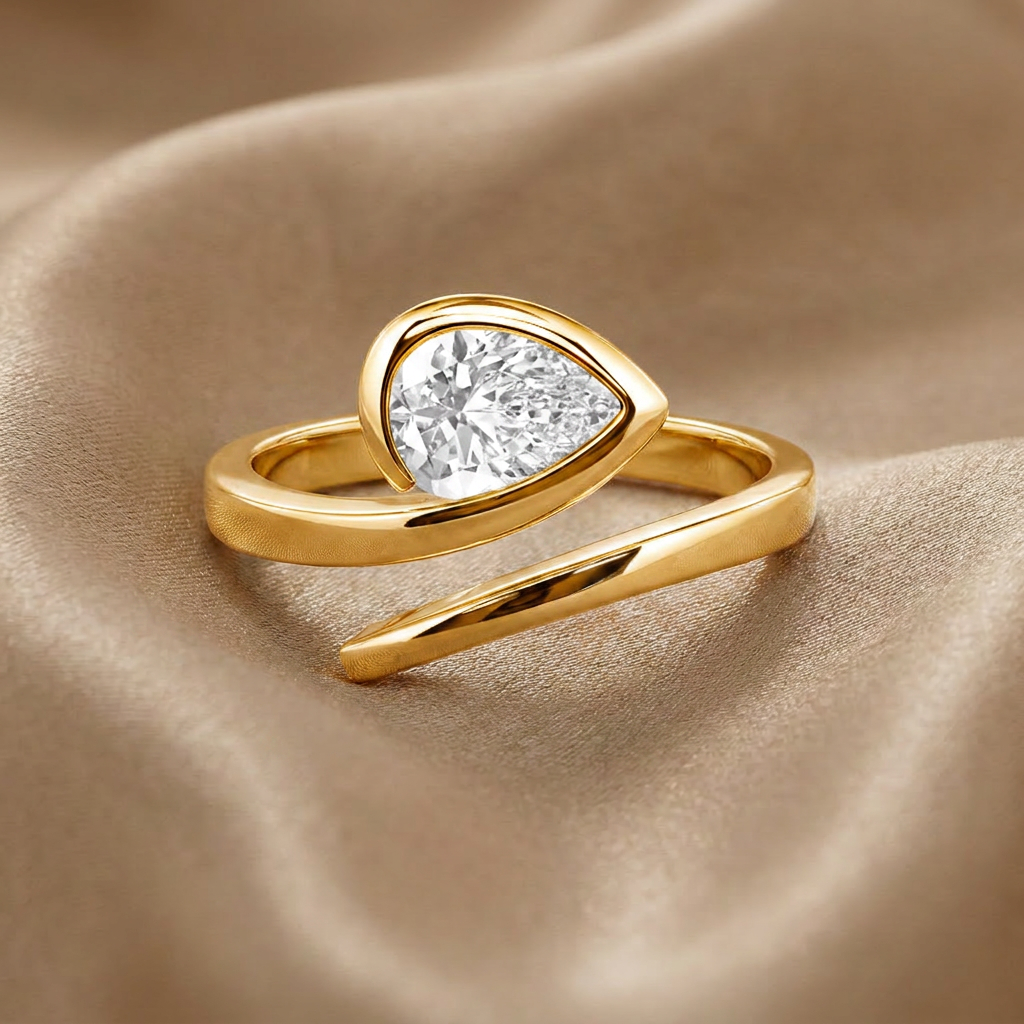
East-west (horizontal) — The pear is set sideways. This is the boldest choice and the most modern. It works especially well in bezel or halo settings.
Best Settings for Pear Shaped Rings
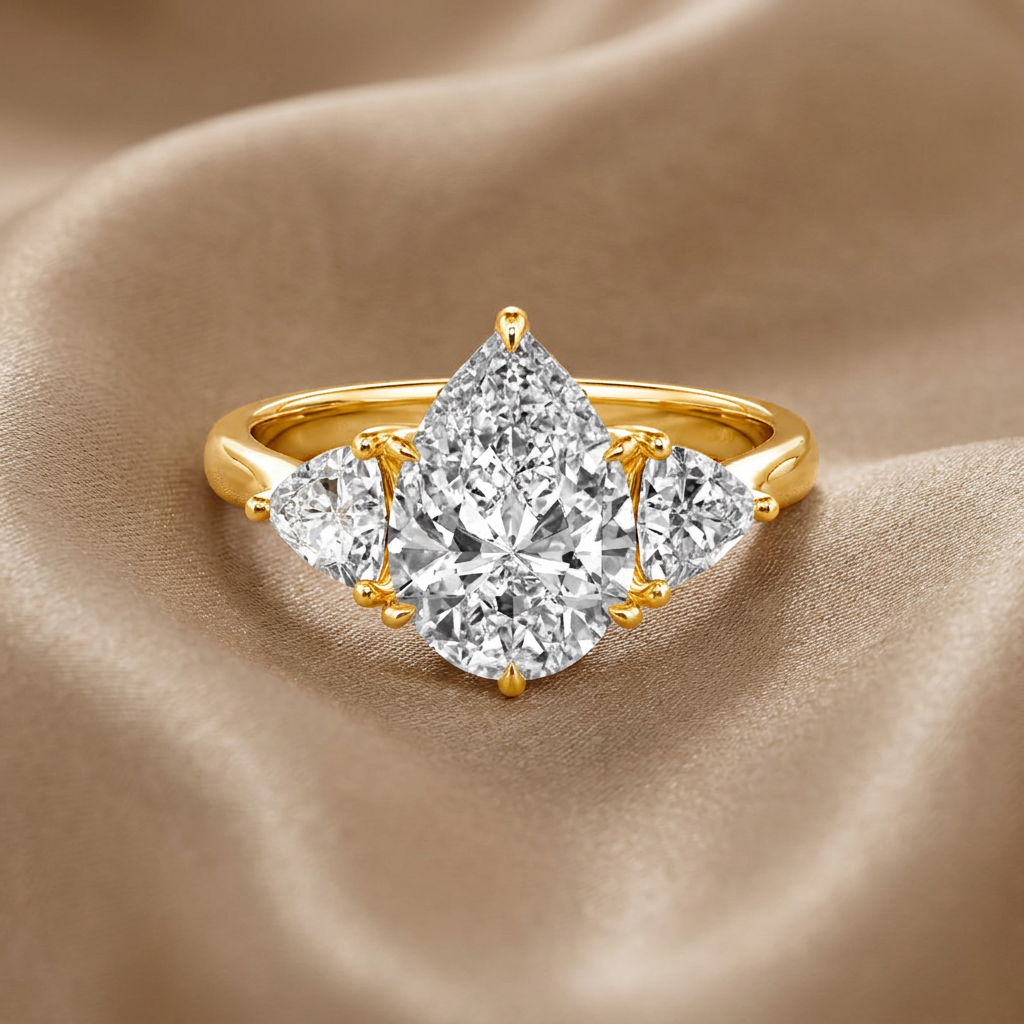
Five-prong setting — One prong on the pointed tip, two on each side of the curve. The pointed tip gets its own dedicated protection, which matters because that is the most vulnerable part of the stone.
Halo — A ring of small diamonds tracing the pear outline. This dramatically increases the visual size and adds sparkle along the curved edge. A pear halo is one of the most impactful looks in engagement rings.
Bezel (partial) — Metal wraps around the pointed tip for maximum protection at the most vulnerable point, while the curved side remains open.
Three-stone — Flanking the pear with smaller pear or round side stones. Symmetrical and statement-making.
For metal, white gold or platinum is the most popular pairing. Rose gold adds a romantic warmth that complements the teardrop silhouette.
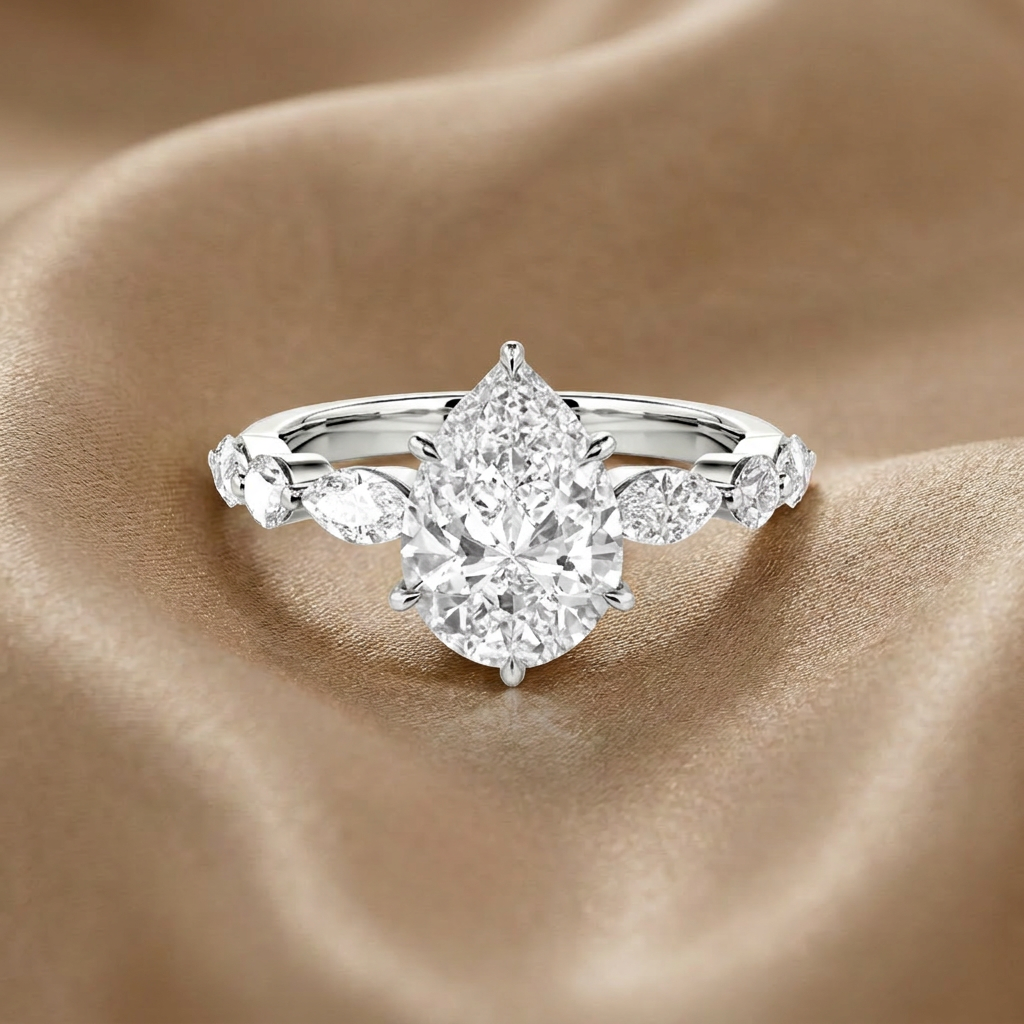
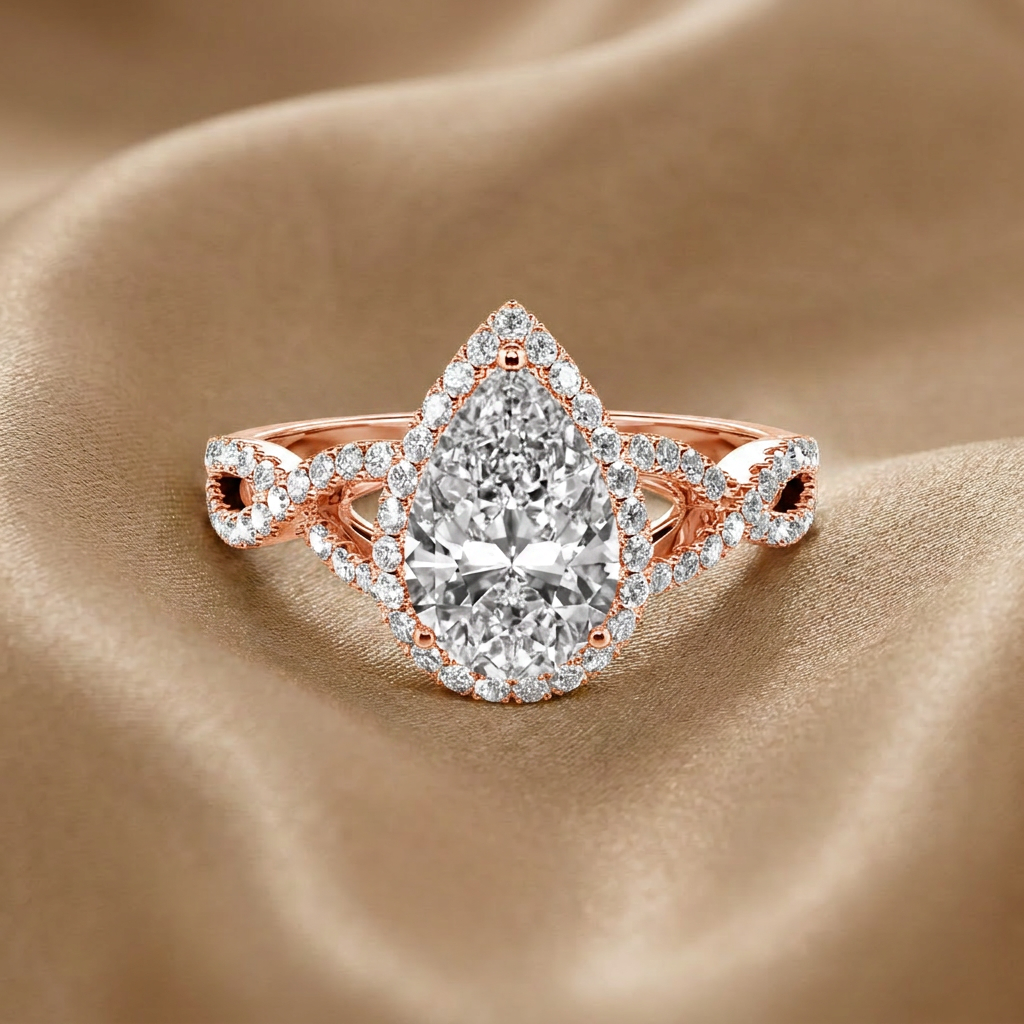
Pear Shaped Ring Set Pricing
| Carat | Natural Diamond | Lab-Grown Diamond | Moissanite |
| 0.5 ct | $700-$1,300 | $180-$350 | $70-$180 |
| 1.0 ct | $2,000-$4,500 | $500-$1,000 | $130-$350 |
| 1.5 ct | $3,500-$8,000 | $800-$1,800 | $220-$550 |
| 2.0 ct | $6,000-$13,000 | $1,300-$2,800 | $300-$700 |
Pear shapes offer strong value relative to round brilliants. A 1.5-carat pear in lab-grown diamond at H color and SI1 clarity typically runs $800 to $1,800. The same specifications in natural diamond: $3,500 to $8,000.
When pricing a ring set, factor in the wedding band. A matching curved diamond band in 14K gold typically adds $400 to $1,200 depending on the diamond quality and metal. Buying the set together is usually 10 to 15 percent cheaper than purchasing the pieces separately.
Pear-shaped engagement rings stand out because they balance softness and structure in a way few cuts can. The key is not just choosing a beautiful diamond, but building a setting and wedding band that work together from the beginning. A well-cut pear with minimal bow-tie, paired with a properly fitted curved band, creates a ring set that feels balanced, comfortable, and intentional. When the pieces are designed as one complete set, the result looks effortless now and still timeless years later.
Frequently Asked Questions
Which way should a pear ring point?
Traditionally, the tip points toward the fingernail. But some wear it tip-down, which is said to symbolize the heart pointing toward you. There is no wrong answer. Pick what looks and feels right.
Do all pear diamonds have a bow-tie?
Most have a slight one, which is normal. The key is finding a stone where the bow-tie is minimal. Avoid stones with a prominent dark band across the center. Always view the diamond in video or person before buying.
How do you pair a wedding band with a pear ring?
The best option is a curved or contoured band designed to nestle against the pear shape. Buying the engagement ring and wedding band as a matched set guarantees a perfect fit.
Is a pear shaped diamond cheaper than a round?
Yes, 15 to 30 percent less per carat. The elongated shape also makes the diamond appear larger, so you get more visual impact per dollar compared to a round of the same carat weight.