There is something undeniably captivating about a pear-shaped ring. With its graceful teardrop silhouette, it combines the brilliance of a round cut with the elegance of a marquise, creating a look that feels both classic and refreshingly modern. It is the kind of ring that naturally draws attention, but wearing it well is about more than simply putting it on your finger.
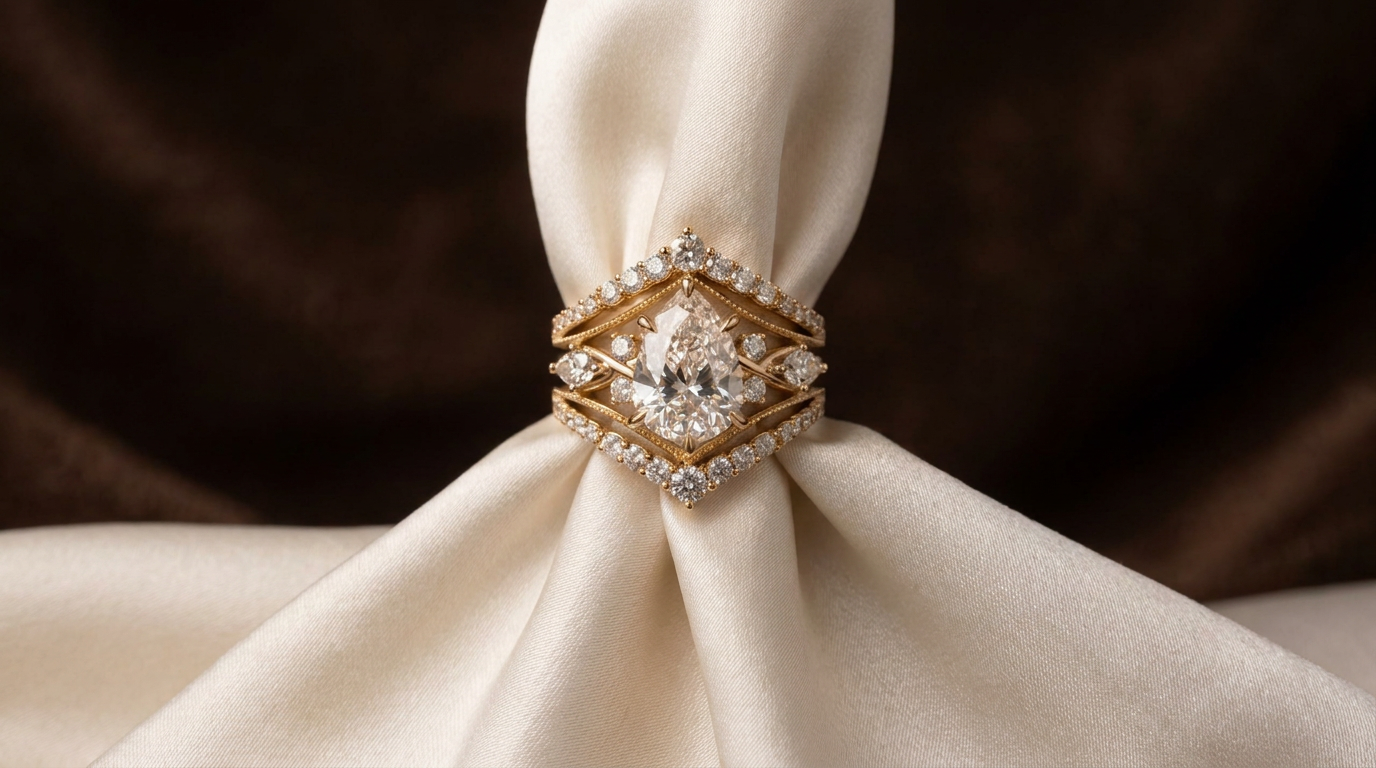
If you have recently fallen in love with a pear-shaped engagement ring, received one as a meaningful gift, or are considering buying one for yourself, you may have already discovered that there is more to it than meets the eye. Questions about which direction the tip should face, how to pair it with a wedding band, or how to keep it from constantly rotating are surprisingly common.
This guide covers everything you need to know about wearing a pear-shaped ring with confidence. We will walk through the best orientation for the stone, styling ideas for stacking and pairing, practical tips for keeping it secure and comfortable, and what to look for when choosing a setting that protects the delicate tip. By the end, you will have a much clearer sense of how to make the most of this beautifully distinctive cut.
Which Way Should the Point Face?
This is the question that divides every pear-ring owner. There’s no wrong answer, but there is a traditional one — and once you know why it exists, the choice gets easier.
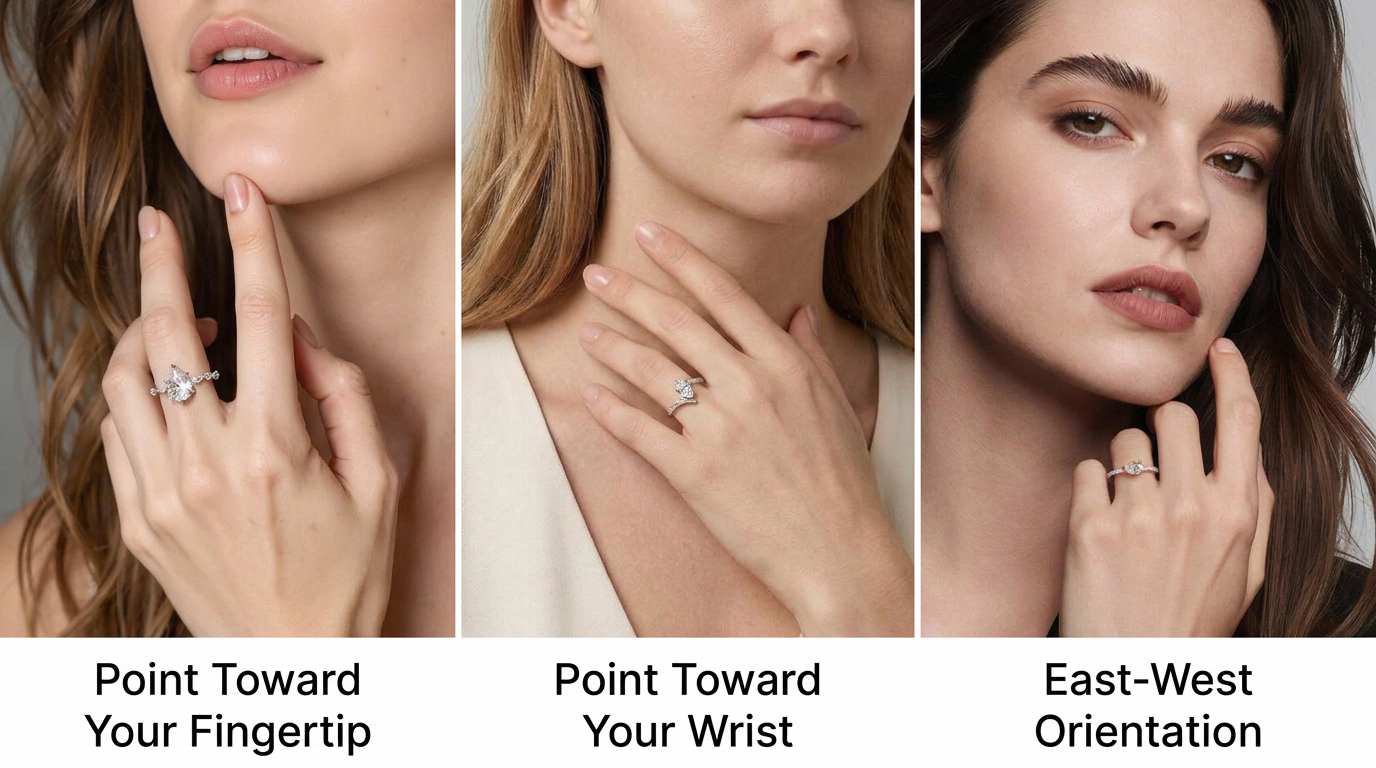
A pear cut is designed to be read with the point up, the way a teardrop falls. How you rotate that teardrop on your finger changes both the silhouette and the symbolism. Here are the three most popular ways to wear a pear-shaped ring.
Point Toward Your Fingertip (The Classic Look)
Wearing the point toward the tip of your finger is the most common orientation, and for good reason. The vertical line draws the eye outward, which makes the finger look longer and slimmer. It also shows off the stone the way the cutter intended — the broad facets at the rounded end face you, throwing light back as your hand moves.
Best for: most hands, especially shorter fingers, where the elongating effect reads strongest.
Point Toward Your Wrist (The Inward Look)
Flip the ring so the tip aims at your wrist and the round end sits high on the finger. It’s rarer, and that’s exactly the point. Some people love the symbolism — the tip aimed toward the heart. Others simply like the way the rounded bulk sits on top of the hand, a little bolder and more sculptural than point-up.
Best for: long fingers, where the visual weight on top balances the hand.
Diagonal or East-West Orientation (The Modern Look)
Some east-west and tilted settings are intentionally designed to position the pear diagonally across the finger rather than pointing straight up or down. This contemporary orientation feels fresh, distinctive, and fashion-forward while showing off the stone from a completely different angle.
Best for: Anyone looking for a modern, unconventional style that stands out.
What Does a Pear-Shaped Ring Symbolize?
A pear-shaped ring is often associated with love, individuality, and new beginnings. Its distinctive teardrop shape symbolizes a balance between strength and emotion, while the pointed tip represents ambition and the rounded end reflects compassion. Many people also see it as a symbol of confidence and personal style, making it a meaningful choice for engagement rings and milestone gifts alike.
How to Pair a Pear Ring With a Wedding Band?
So you’ve settled on a direction. The next decision is the one that frustrates new pear-ring owners more than any other: the wedding band gap.
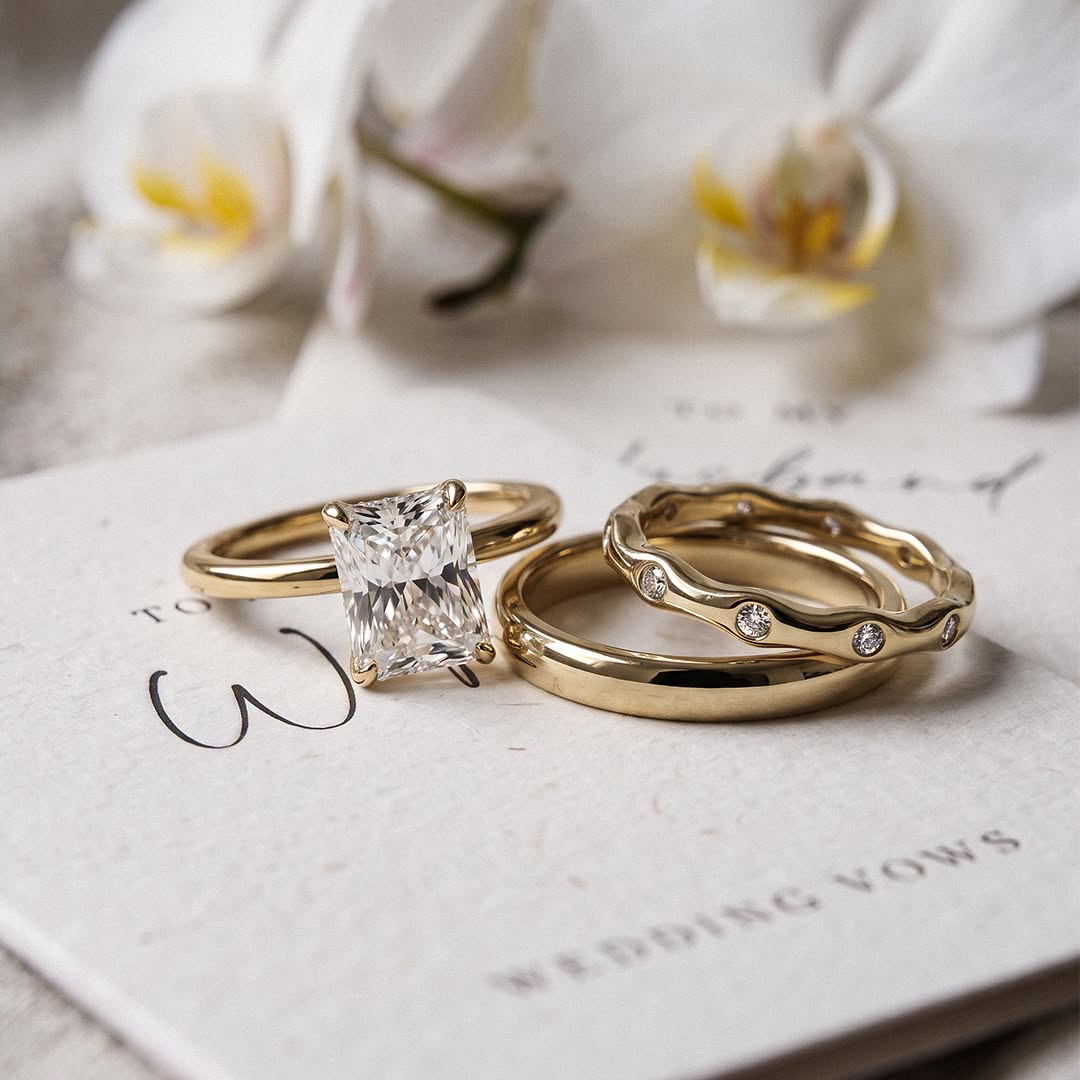
A straight wedding band sitting beside a pear often leaves a visible gap where the pointed tip meets the band. Some people can’t stand it. Others don’t mind at all. There’s no single right answer, but there are three common ways to handle it.
| Pairing Style | What It Does | Best For |
| Curved / contour band | Follows the pear’s rounded base for a flush fit | A clean, no-gap bridal set |
| Straight band (embrace the gap) | Lets the tip sit above the band | A casual, modern layered look |
| Chevron / notched band | Cradles the tip with a V-shape | A precise, custom-fit finish |
Curved and contour bands are the most popular fix. A gentle curve in the metal follows the pear’s rounded base, so the two rings sit flush with no gap. This works especially well when your pear sits in a higher basket. If you’re shopping for one, our curved wedding bands are designed to nest against pointed shapes.
Straight bands leave a gap, and that’s fine if you like the look. A plain gold band beside a pear creates a casual, stacked feel — and some people actively prefer it over the matched bridal-set aesthetic. The ring still looks like yours, just a little more relaxed.
Chevron and notched bands take the curve further, with a V-shape that cradles the tip itself. They give the most precise fit, but they usually need to be made or selected to match your specific ring’s proportions.
How to Keep Pear-Shaped Ring From Spinning?
Because a pear-shaped diamond carries more weight toward its rounded end, it is naturally more prone to turning on your finger than symmetrical cuts. Fortunately, a few simple adjustments can make a noticeable difference.
The first step is making sure your ring fits correctly. It should slide over your knuckle with slight resistance and sit securely at the base of your finger without feeling too tight. If resizing is not ideal, your jeweler may recommend sizing beads or a spring insert to help keep the ring centered.
The setting also plays a role. Low-profile settings that sit closer to the finger are generally more stable than high-set designs. If you plan to wear your engagement ring with a wedding band, choosing a curved or V-shaped band can provide additional support and help keep the pear facing the right direction throughout the day.
Choosing a Setting That Protects the Tip
Here’s something most people don’t think about until it’s too late: the pointed tip of a pear is the most fragile part of the stone.
It’s where the diamond or moissanite tapers to a fine edge, and a hard knock against a door or counter can chip it. The Gemological Institute of America (GIA) notes that pointed fancy shapes — pears, marquises, hearts — need protective settings more than rounded ones. So the setting isn’t just about style. It’s your insurance for the tip.
A V-tip prong is the standard answer: a single prong shaped to wrap the point, covering the tip without blocking much light. A bezel setting offers even more security by encircling the entire stone with metal, though it trades some sparkle for safety. Halo settings surround the pear-shaped center stone with a circle of smaller diamonds, adding extra brilliance and creating the illusion of a larger center stone. They are a popular choice for anyone who loves maximum sparkle and a more glamorous look.
If you work with your hands, lean toward a V-tip prong in a lower basket. If the ring is for occasional wear and you want maximum drama, a halo delivers.
Tips for Wearing a Pear-Shaped Ring
A few things we’ve learned from fitting pear rings over the years:
Clean the tip often. Soap and lotion collect at the point first, which dulls the sparkle there before anywhere else. A soft brush and warm water bring it right back.
The pear runs large visually. Its elongated shape covers more finger than a round stone of the same carat weight, so you can size down in carat and still get real presence on the hand.
Watch the length-to-width ratio. A ratio around 1.50–1.70 reads as classic; longer ratios look elegant, shorter ones look plump. Most people land happiest near 1.60.
Mind your knuckles. The pointed end catches on gloves, pockets, and knitwear. Taking the ring off at night and for heavy tasks keeps both the stone and your clothes in better shape.
Conclusion
Wearing a pear-shaped ring really comes down to a few thoughtful choices: point the tip in the direction that flatters your hand, make sure the ring fits comfortably and stays in place, pair it with a band that suits your style, and protect the tip with the right setting. Get those right, and the ring does the rest.
If you’re still choosing, She Said Yes crafts pear-shaped engagement rings in 100% recycled gold with conflict-free lab-grown diamonds — each one set with a V-tip prong to protect that delicate point.